
Padel betting odds 2026: how the price is built and what each bookmaker keeps
 Available in US
Data current as of 27 October 2026 and checked against the Gambling Commission’s public register of remote operating licences.

Padel has moved from a Spanish club pastime to a global professional tour in a decade, and the betting market has followed it. A handful of British bookmakers now price Premier Padel and the FIP Tour events alongside tennis and football, the same Bet Builders and in-play consoles used elsewhere on their sites. Padel is not a stat-heavy game in the way football is: there are no expected-goals models, fewer player props, and most markets reduce to a handful of options per match. That thinness shapes the odds more than the bookmaker does, and the price a bettor sees is as much a function of how few people are betting on the match as of how the firm has priced it. This page looks at where padel can be bet on with a GB-licensed bookmaker, how the odds are built, and what an offer from any of those firms really costs once turnover, minimum prices and deadlines are written in.
Safer gambling controls every licensed UK padel bookmaker must offer
Every online bookmaker serving customers in Great Britain holds a Gambling Commission remote operating licence, and that licence carries obligations the operator cannot opt out of. They are the floor a bettor steps on, not the ceiling, and the same controls cover padel as cover every other sport on the site.
Identity is checked before the first deposit or wager, including with a free bet or bonus, since 7 May 2019. Name, date of birth and address are run against public records. There is no anonymous play at a licensed site, and no credit-card deposit either: credit cards were banned for all gambling in Great Britain on 14 April 2020, including credit-card-funded e-wallet top-ups. Debit cards and bank transfers are not covered by that ban.
Self-exclusion runs through GAMSTOP, the national multi-operator scheme that has been a mandatory licence condition for online operators since 31 March 2020. A self-exclusion period of six months, one year, five years, or five years with auto-renewal can be set, and once the minimum period has elapsed the exclusion stays in place for a further seven years unless the customer asks GAMSTOP to remove it. GAMSTOP covers online sites and apps; high-street betting shops use a separate self-exclusion service.
Deposit limits are the customer’s choice and a licence requirement. Operators must offer a gross deposit limit on a fixed time frame, and the customer can ask for it to be tightened at any time. A state-set ceiling on deposits or losses does not exist for sports betting; the limits are what each punter sets.
Affordability checks run in tiers. Since 30 August 2024 a financial vulnerability check applies to licensed remote betting once a customer’s deposits minus withdrawals exceed £150 in a rolling 30 days (the threshold applied since 28 February 2025). It is a public-record check, looking for events such as a bankruptcy or a county court judgment. It is not a credit-reference check and not an income check. A further “financial risk assessment” — the affordability check of the headlines — has been announced in a staged plan, with no start date written in.
Help is one tap away on every licensed site: GamCare runs the National Gambling Helpline, GambleAware funds treatment and education, the NHS runs gambling clinics, and Gamblers Anonymous runs peer-support meetings. Licensed operators link to them directly. None of those controls guarantee a punter will not lose more than intended; they make losses visible and limit the tools that make runaway play possible.
Padel as a sport and as a betting market
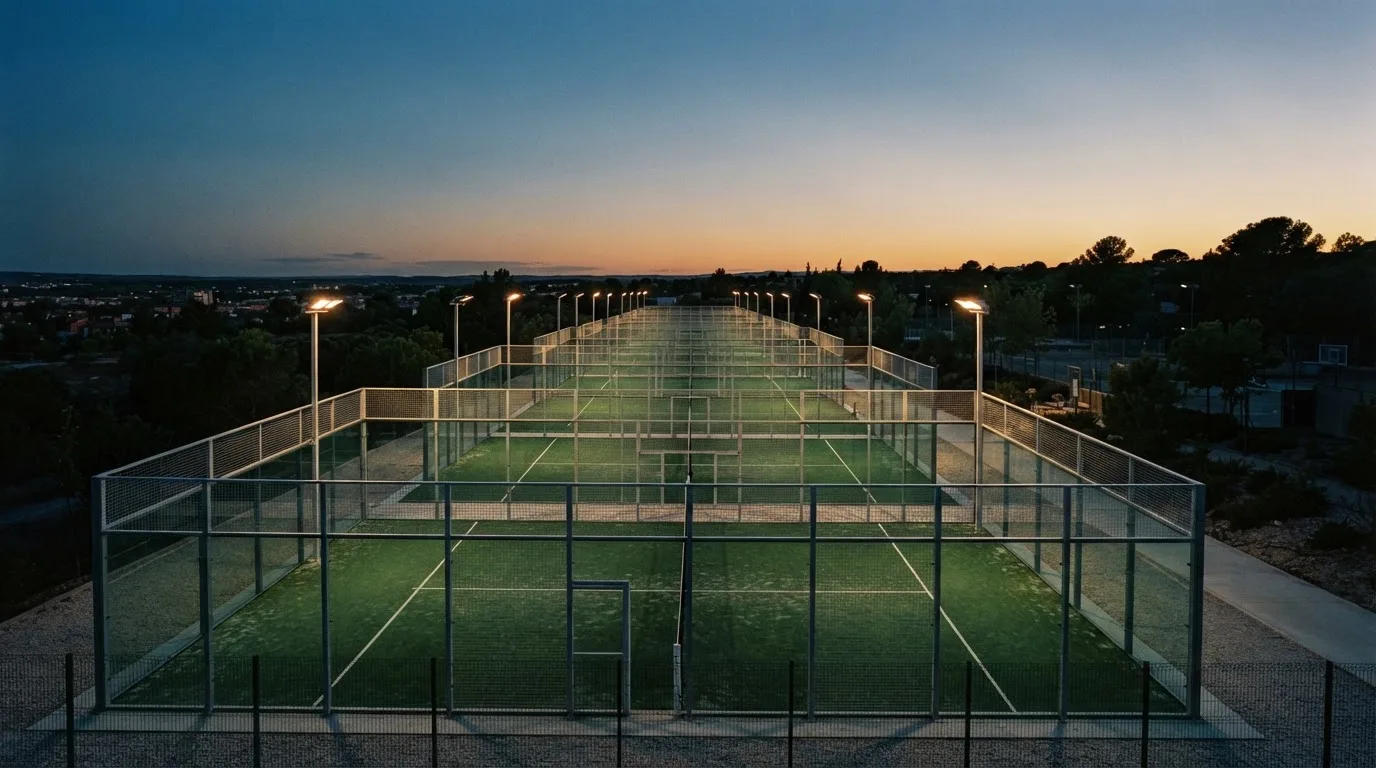
Padel is usually played as doubles on a 10 m by 20 m court enclosed by walls and fencing, with a net 88 cm high at the centre. Scoring follows tennis: the same 15-30-40-game structure, the same set and tie-break rules, and at major tournaments a golden point may replace advantage at deuce. Doubles is the standard form, which means a single match has fewer player-specific storylines than a tennis match does — there is no obvious “player A versus player B” duel to anchor a market.
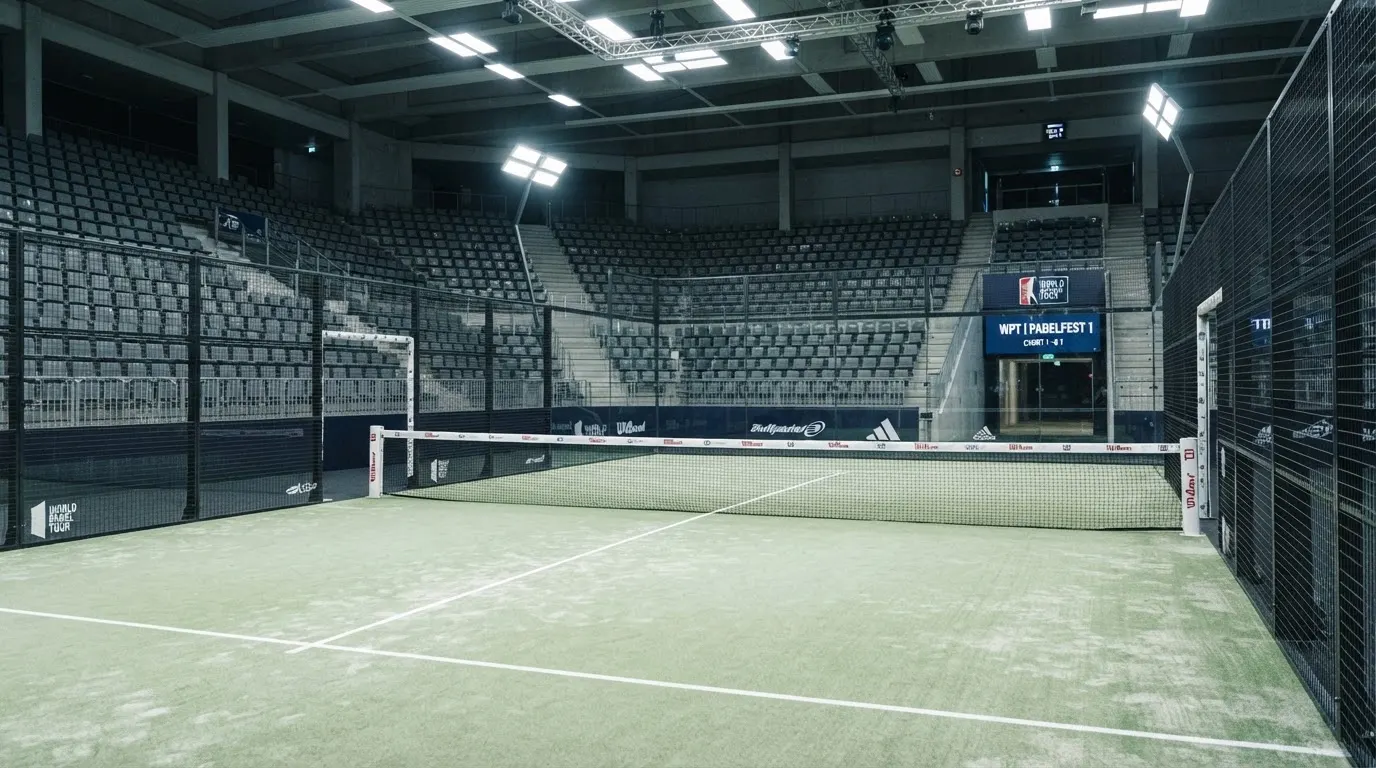
The professional game runs on two tours. Premier Padel became the unified global tour after Qatar Sports Investments acquired the World Padel Tour in 2023, with the change taking effect in the 2024 season. The FIP Tour runs alongside it, organised by the International Padel Federation (FIP), which states that there are more than 35 million active padel players in more than 150 countries as of 2025. The two tours share players and most of the same venues; the calendar is the part that differs.
What that shape does to the odds
A market with thin liquidity prices like a market with thin liquidity. Three consequences a bettor actually feels:
- Markets per match are narrower than in tennis. Match winner, set winner, total games, handicap games and a handful of set-score lines are the common set; outright winner of a tournament runs for the length of the event. Player props — aces, double faults, first-serve percentage — are rare, because doubles makes player-level data less meaningful.
- The bookmaker’s margin is harder for outsiders to compare because the published odds are often the only public signal. Tennis has decades of price history on every circuit; padel has a few seasons on the Premier Padel tour.
- In-play pricing reacts to match state more sharply than pre-match pricing does, and the firm with the smaller in-play console will tend to suspend markets earlier on break points.
For a British punter, the practical reading is that padel odds should be treated more like a niche market than like football or tennis odds. The price is the price; the live movement is the live movement.
The top 10 licensed UK bookmakers for padel betting odds 2026
The set below is drawn from the Gambling Commission’s public register of remote operating licences, and every brand named is checked against that register. The list is not a ranking by quality and not a recommendation to sign up. It is a working set for a punter who wants to know which firms have a GB licence for padel-style sports betting and what each one’s own terms say about the small handful of points the page covers.
| Bookmaker | Gambling Commission remote licence number and licence holder | What the operator’s own terms state on the key’s subject |
|---|---|---|
| BetMGM | 039198-R-319450-029 (account 39198); LeoVegas Gaming PLC | Sports welcome offer is four £10 free bets for new UK customers who deposit £10 or more and place a sports bet within 7 days (two football accumulators of 4+ selections, two sports multiples of 2+), valid 7 days, with minimum odds and opt-in required |
| Octobet | 062545-R-337248-006 (account 62545); Octopus Game Limited | Sportsbook welcome offer is 50% back as a free bet up to £50, plus a £10 casino bonus for new customers |
| Smarkets | 039173-R-319366-011 (account 39173); Smarkets (Malta) Limited | Open-bank-transfer deposits are instant from £10 to £10,000, withdrawals processed within 6 hours from £10 to £100,000; UK debit-card deposits are instant from £10 to £15,000 |
| LiveScore Bet | 056859-R-332720-005 (account 56859); LiveScore Betting and Gaming (Gibraltar) Limited | Bet Builder allows up to 10 selections across match result, both teams to score, corners, total goals, player scoring and card markets |
| Betboro | 044181-R-324363-007 (account 44181); Webmedia Development N.V. | Sports welcome offer is a 100% matched free bet up to £25 on the first qualifying wager, requiring a debit-card deposit of at least £10 and a first bet of £5 to £25 with at least three selections each at 3/5 (1.60) or higher |
| Bar One Racing | 056516-R-332750-007 (account 56516); Bar-One Racing Limited | Irish independent bookmaker rebranded as BAR 1 Betting, with shops across Ireland and horse racing sponsorships at Dundalk, Fairyhouse, Navan, The Curragh, Curraheen Park and Cork |
| VBet | 044662-R-324273-022 (account 44662); SCGO Limited | Sports welcome offer is a £10 free bet if a new, verified customer stakes £10 or more on a first-ever bet that loses |
| Bet Ahoy | 100094-R-341742-003 (account 100094); Bet Ahoy Ltd | Welcome offer is “Bet £10 & Get £10 in Free Bets” — a £5 sports bet and a £5 acca |
| Midnite | 101839-R-342850-001 (account 101839); Midnite Limited | Sports welcome offer: new customers who bet £5 or more on pre-match odds of EVS (2.0) or greater within 14 days of sign-up receive £25 in free bets and 50 free spins, valid for 7 days |
| Fitzdares | 000400-R-103839-030 (account 400); Fitzdares Limited | App offers cash out, accumulators, Lucky 15s, specials and ante-post markets on horse racing, football, tennis, rugby, cricket, golf and American football, with in-play live odds |
How the comparison below is built
The table is built around four working columns: the brand name as the punter sees it on its own homepage and app; the Gambling Commission remote operating licence number and the company that holds it (which is the legal check a punter can run from the Commission’s public register); and a single column stating what the operator’s own terms say on the subject the page is about, which is padel betting odds and the small handful of facts that bear on the cost of an offer. The licence column does the licence job; the terms column carries the figure or rule that would otherwise have to be sourced from a price-comparison page.
A few columns the page considered and rejected: “decimals or fractions only” was rejected because every GB bookmaker prices in both forms on the same slip; “in-play depth” was rejected because each firm’s in-play console changes event by event and the column would have been half empty; “padel outrights offered” was rejected because research does not name an outright market for any brand and a column of dashes is no information at all.
What the spread looks like:
- The four smallest offers — Bet Ahoy’s £5+£5, VBet’s £10 refund, Midnite’s £25 with a 14-day window and a minimum EVS price, and Octobet’s 50%-back-up-to-£50 — sit in a tight cluster by headline value. They differ more sharply on the conditions attached: a minimum price, a window measured in days, an opt-in, a deposit method.
- BetMGM and Betboro sit a tier up on headline, and the conditions are heavier to match: BetMGM’s four £10 free bets are tagged to specific bet types; Betboro’s matched free bet requires three selections at 3/5 or higher.
- Smarkets stands apart as the only betting exchange in the set; its offer language is the deposit and withdrawal time, not a free-bet headline, and the price of a padel market on an exchange is built differently from a bookmaker’s.
- LiveScore Bet, Bar One Racing and Fitzdares do not centre their marketing on a padel-specific offer; they carry the offer their padel pages offer alongside football, tennis and racing, and the column reflects that.
The bookmakers, one by one
BetMGM
BetMGM runs on a Gambling Commission remote general betting standard (real events) licence held by LeoVegas Gaming PLC, with the Commission’s account number 39198 and the full licence number 039198-R-319450-029. The sports welcome offer for new UK customers is four £10 free bets — two football accumulators of four or more selections and two sports multiples of two or more — to a customer who has deposited £10 or more and placed a sports bet within 7 days, with minimum odds and opt-in required and a 7-day validity on the free bets.
For padel, the practical reading is that an acca-style offer of that shape only lands if Premier Padel or the FIP Tour schedules enough matches on a given week to fill a multi-leg slip. Football accas, on which most of the bonus weight sits, are the more practical use of the free bets. The £10 deposit floor is low; the 7-day window from sign-up is the binding constraint.
Octobet
Octobet is licensed for remote general betting standard (real events) under Commission account 62545 and licence number 062545-R-337248-006, held by Octopus Game Limited. The sportsbook welcome offer is 50% back as a free bet up to £50, with a £10 casino bonus attached for new customers.
A 50%-back offer is the shape of a refund, not a credit, and the upper cap at £50 is the headline ceiling. On padel, that ceiling sits comfortably above most Premier Padel stakes; a losing £100 first bet would qualify for the £50 free bet. The casino bonus is a second product tied to the same sign-up; mixed-product promotion rules came into force in Great Britain on 19 January 2026, and that date is the only fixed reference point.
Smarkets
Smarkets is licensed as a remote betting intermediary under Commission account 39173 and licence number 039173-R-319366-011, held by Smarkets (Malta) Limited. A betting intermediary licence is the licence for a betting exchange — back and lay bets, peer-to-peer matching — and Smarkets is the only brand in the set running on one.
Open-bank-transfer deposits are processed instantly from £10 up to £10,000 and withdrawals within 6 hours from £10 up to £100,000; UK debit-card deposits are instant from £10 up to £15,000. On a betting exchange the price a punter sees is set by other punters; the platform’s commission, not a margin in the bookmaker sense, sits on top of winnings. Padel outrights and match markets are listed on the exchange when there is liquidity; the depth of those markets is set by how many other customers are on the other side, and a small field of padel betters on a Tuesday in March is the working constraint.
LiveScore Bet
LiveScore Bet is licensed under Commission account 56859 and licence number 056859-R-332720-005, held by LiveScore Betting and Gaming (Gibraltar) Limited. The Bet Builder allows up to 10 selections and covers match result, both teams to score, corners, total goals, player scoring and card markets.
A 10-leg Bet Builder is a wider cabinet than most bookmakers offer, and the player-scoring market is unusual outside the football and basketball feeds. For padel, the question is whether those legs are available on the padel match list. Player scoring markets on a doubles sport are rarer than the headline suggests; the page cannot say which legs populate on a given Premier Padel fixture without checking the slip.
Betboro
Betboro is licensed under Commission account 44181 and licence number 044181-R-324363-007, held by Webmedia Development N.V. The sports welcome offer is a 100% matched free bet up to £25 on the first qualifying wager, with a debit-card deposit of at least £10 and a first bet of £5 to £25 carrying at least three selections, each at 3/5 (1.60) or higher.
Three selections at 3/5 minimum is a stricter filter than a free-bet headline usually implies: a single padel match is one selection, an acca of three Premier Padel matches is three, and the price floor at 3/5 (1.60 decimal) is the kind of line that survives on a favourites-heavy accumulator. The matched-up-to-£25 figure is mid-table by headline; the conditions carry most of the weight.
Bar One Racing
Bar One Racing is licensed under Commission account 56516 and licence number 056516-R-332750-007, held by Bar-One Racing Limited. The firm has rebranded as BAR 1 Betting and runs as an Irish independent bookmaker with shops across Ireland, with horse racing sponsorships at Dundalk, Fairyhouse, Navan, The Curragh, Curraheen Park and Cork.
The racing-shop heritage shapes the calendar: when the page talks about padel it is talking about the sportsbook side of the firm, and on that side BAR 1 Betting runs in the same general-betting-standard licence as the others. Irish shop sponsorship is the brand signal; the GB licence is the legal signal. The sportsbook does list padel events when they are scheduled; the depth is a question the punter checks on the slip.
VBet
VBet is licensed under Commission account 44662 and licence number 044662-R-324273-022, held by SCGO Limited. The sports welcome offer is a £10 free bet if a new, verified customer stakes £10 or more on a first-ever bet that loses.
The phrase “if … loses” is the one to read carefully: the free bet is a refund of a losing first stake, not a refund in cash. The stake is not returned on a win. That distinction is what the marketing line “free bet if your first bet loses” usually conceals, and on a niche sport like padel where the odds are thinner, the refund is what catches the punter out on the bet they actually placed.
Bet Ahoy
Bet Ahoy is licensed under Commission account 100094 and licence number 100094-R-341742-003, held by Bet Ahoy Ltd. The welcome offer is “Bet £10 & Get £10 in Free Bets” — a £5 sports bet and a £5 acca.
A £5+£5 split is a small headline and a tight one. The constraint is that the £5 acca requires more than one selection; on padel, that means at least two Premier Padel or FIP Tour matches need to be running in the same window. For a sport with a calendar that swings in and out by week, that is the binding test.
Midnite
Midnite is licensed under Commission account 101839 and licence number 101839-R-342850-001, held by Midnite Limited. The sports welcome offer gives £25 in free bets and 50 free spins to a new customer who bets £5 or more on pre-match odds of EVS (2.0) or greater within 14 days of sign-up, with the free bets valid for 7 days.
A 14-day window from sign-up is wider than most; the minimum EVS (2.0) is a price filter that excludes longshots on a single match. For padel, where heavy favourites on a Premier Padel match sit around 1.40 to 1.60, the EVS minimum is the binding constraint rather than the calendar. The 50 free spins are a casino product tied to the same sign-up and fall under the same mixed-product rules that came into force in January.
Fitzdares
Fitzdares is licensed under Commission account 400 and licence number 000400-R-103839-030, held by Fitzdares Limited. The app offers cash out, accumulators, Lucky 15s, specials and ante-post markets on horse racing, football, tennis, rugby, cricket, golf and American football, with in-play live odds.
Padel is not on the list the app’s own description names; it sits inside the “football, tennis, rugby, cricket, golf and American football” set in the sense that it is a sport priced in the sportsbook, but is not specifically called out. For a punter, that means checking the betting slip rather than the homepage for a padel event. The licence account number 400 is one of the older entries on the Commission’s register.
How padel betting odds work and what the margin does to the price
Every price a bookmaker publishes contains a margin. The margin is the cut the firm keeps of every pound bet on a market, and the rest — the “payout share” — is what returns to winning punters in aggregate. The thinner the market, the more freedom the firm has to set that margin, and a thin sport like padel on a Tuesday afternoon is a market with thin liquidity.
The arithmetic behind a single price
Take an illustrative two-way market priced at decimal odds of 1.90 on each side (fractional 9/10, “9-to-10” against). That price is a fair price once a margin is taken into account: a market priced at 2.00 on each side (evens on both) would pay back exactly the same in aggregate as was staked, with the bookmaker keeping nothing. A market priced at 1.90 on each side pays back less than was staked.
For a two-way market with two outcomes:
- Payout share = 1 ÷ (1 ÷ odds₁ + 1 ÷ odds₂)
- Margin = 1 − payout share
At 1.90 / 1.90:
- 1 ÷ 1.90 = 0.5263, twice
- 0.5263 + 0.5263 = 1.0526
- Payout share = 1 ÷ 1.0526 = 0.9501, or 95.0%
- Margin = 1 − 0.9501 = 0.0499, or 5.0%
So a market priced at 1.90 / 1.90 keeps about 5 pence of every pound bet on it. A market priced at 1.85 / 1.85 keeps about 8 pence; a market priced at 1.95 / 1.95 keeps about 2.5 pence. The lower the prices on both sides, the larger the margin; the higher the prices on both sides, the smaller the margin.
What that looks like on a padel market
The 1.90 / 1.90 example is an illustration, not a price pulled from a current Premier Padel slip; research does not name a published padel price for any specific event on any specific date, and the page does not invent one. As a band, the margin on a two-way pre-match padel market at a GB-licensed bookmaker is usually somewhere between roughly 4% and 8%, with in-play markets typically wider because of the liquidity risk the bookmaker is pricing.
Three things move the band:
- How many other bookmakers are also pricing the same match. A Premier Padel main-draw match with full coverage carries a tighter band than a Tuesday-morning FIP qualifier.
- How the in-play console behaves. A firm with a live console will keep markets open through point-by-point swings, which costs the bookmaker when one punter has information the other doesn’t.
- How the firm sources its prices. A firm that builds its own in-play model from scratch will keep a wider margin than a firm that buys a feed from a specialist supplier; the price the punter sees is the supplier’s price with the firm’s margin layered on top.
The band the page settles on — roughly 4% to 8% — is the working range a GB punter should expect to see on a padel two-way match market. Anything much tighter than that is either a price-boosted headline or a market the firm is using to draw sign-ups; anything much wider is a market the firm has not priced seriously.
What an offer does to the cost
A free bet or welcome offer looks like a discount. It is not. A free bet is the firm paying the punter to place a bet, and the value of that free bet depends on what the punter does with it.
A free bet whose stake is not paid back with a win has a value that is roughly:
- Free-bet value = free-bet amount × (odds − 1) ÷ odds × payout share
A £10 free bet at decimal odds of 3.00 (fractional 2/1), on a market with a 95% payout share:
- (3.00 − 1) ÷ 3.00 = 0.6667
- 0.6667 × 0.95 = 0.6333
- 0.6333 × £10 = £6.33
So a £10 free bet used at 3.00 on a market with a 95% payout share is worth about £6.33, not £30. The £10 stake is not returned on a win; the £20 profit on the price is.
This is the part the marketing line skips. “£10 free bet” reads as £10 of value; it reads £10 less accurately once the price is named. Used on a longshot at 6.00 the free bet is worth more; used on an odds-on favourite at 1.50 it is worth much less. The free bet is worth roughly its face value only at very long prices.
What turnover does to a cash bonus
A cash bonus carries a wagering requirement: a multiplier, usually written as “x”, that the bonus must be turned over before the bonus or its winnings can be withdrawn. In Great Britain, since 19 January 2026, the wagering requirement on bonuses is capped at 10x; a £10 bonus at 50x needs £500 of bets, and under the cap no more than £100. A £50 bonus at 10x means £500 of qualifying bets; a £100 bonus at 10x means £1,000.
The required turnover is:
- Required turnover = bonus base × wagering factor
Where the base is the bonus alone or the bonus plus the deposit, depending on the offer. The number of bets depends on the stake per bet:
- Bets needed = turnover ÷ stake per bet
A £50 bonus at 10x with a £5 stake per bet on padel: 10 × £50 = £500, £500 ÷ £5 = 100 bets. Each of those bets must clear, on padel, the minimum price the offer names — usually EVS (2.0) or longer — for the stake to count.
What that costs the punter is the question. The expected cost of clearing a bonus is roughly:
- Expected cost = required turnover × margin of the market
£500 turnover at a 5% margin: £500 × 0.05 = £25. The punter gives back about £25 of expected value to the bookmaker while clearing £50 of bonus. The net is positive if the bonus is worth more than £25 once wagered; it is not always.
The offer is a deal, not a gift. The margin is what makes it so.
The licence check: how to see whether a bookmaker holds a Gambling Commission licence
Every brand named above is on the Gambling Commission’s public register of remote operating licences. The register is the test. A brand with a GB-licensed padel betting offer has the licence behind it; a brand without the licence has no business accepting a bet from a customer in Great Britain. Since the Gambling (Licensing and Advertising) Act 2014 an operator whose remote facilities are used in Great Britain needs a Commission licence wherever it is based.
The check is straightforward:
- Open the register search on the Gambling Commission’s website.
- Search by business name, trading name, domain or account number.
- The result gives the licence number, the categories the licence covers, and the company that holds it.
- Confirm that “remote general betting standard (real events)” or “remote betting intermediary” (for an exchange) appears in the licence categories.
What the register does not show:
- It does not show offers, odds, or bonuses.
- It does not show whether a particular sport is priced this week.
- It does not show whether the licence is currently suspended or under review. The Commission’s news page covers that.
What the register does show, and what the punter reads as the binding test: a brand named on the register against a real licence category with a real account number is licensed; a brand not on it is not. The page never names a brand as “the only” licensed one. Several brands can run under one licensee, and a register search lists far more brands than any article features.
What a GB licence means for the punter
A GB licence comes with the obligations this page has already walked through: identity checks before the first deposit, GAMSTOP, deposit limits, financial vulnerability checks above £150 net in 30 days, advertising rules under the CAP Code, and the 10x bonus wagering cap. The bonus cap and the £150 check apply to GB-licensed operators; offshore operators do not bind themselves to either.
A GB licence does not mean a punt cannot lose. It means the loss is bounded by tools the operator must provide and by protections the operator cannot withdraw. The boundary is the floor, not the ceiling.
What an offshore or unlicensed bookmaker costs
A bookmaker serving customers in Great Britain without a GB licence is committing an offence under section 33 of the Gambling Act 2005. On summary conviction the offence carries up to 51 weeks’ imprisonment, a fine up to level 5, or both (six months in Scotland), aimed at the operator. A customer who bets on an unlicensed site does not commit an offence as far as research has established; the cost is protection, not prosecution.
What an unlicensed site does not have:
- No GAMSTOP coverage.
- No Commission complaints route.
- No approved dispute-resolution body.
- No British consumer redress if funds are withheld.
- No binding 10x bonus cap.
- No £150 financial vulnerability check.
Enforcement is disruption: cease-and-desist notices, search-engine referrals, work with registrars, hosts and payment providers, and court-order DNS blocking powers the Commission has been given or is about to receive. ISP blocking is not in operation as a permanent measure. The honest framing is that a GB-licensed bookmaker runs inside the framework this page has walked through; an unlicensed one runs outside it, and the punter’s protection lives or dies on that boundary.
What a padel betting slip looks like in practice
A padel match at a GB bookmaker usually carries the following markets on a main-draw Premier Padel fixture: match winner (two-way), set winner, total games in the match, handicap games, and a handful of set-score lines (6-0, 6-1, 6-2, 6-3, 6-4, 7-5, 7-6 on each side). Outrights run for the length of the tournament. In-play markets reopen at the start of each set and may be suspended through the closing games.
What the punter reads on the slip:
- The price, in both decimal and fractional form. Fractional 4/6 means decimal 1.67; fractional evens means decimal 2.00; fractional 11/4 means decimal 3.75. The conversion is a/b → a ÷ b + 1.
- The market type. A match-winner bet is two-way; a set-score bet on 6-4 / 4-6 / 6-4 in three sets is a different market with its own margin.
- The stake and the potential return. Return = stake × odds; net profit = stake × (odds − 1). A £10 stake at 2.50 returns £25, a net profit of £15.
- The minimum stake and maximum stake, which the bookmaker sets and which can change event to event.
For an acca (accumulator), the prices multiply into one price: a four-leg padel acca at 1.80 / 2.10 / 1.65 / 2.40 has combined odds of 1.80 × 2.10 × 1.65 × 2.40 = 14.95. A £5 stake on the acca returns £74.75 if all four legs win.
What a bet builder looks like for padel
A bet builder combines markets from one event into a single bet. LiveScore Bet allows up to 10 selections. For padel, the practical combinations are limited: match winner plus total games, set winner plus handicap games, set score plus match winner. Three or four legs is the working ceiling on a padel bet builder because the markets themselves are narrower than on football.
What in-play pricing looks like
In-play pricing on padel moves with the score. A firm with a live console will keep the match-winner market open through most points and reset the price after each rally; a firm without a live console will suspend the market on break points and reopen at a new interval. The margin on the in-play price is wider than the margin on the pre-match price because the firm is pricing more uncertainty with less information.
Markets and prices: the parts of the padel offer
Match winner
The most common market, a two-way bet on which pairing wins the match. A Premier Padel main-draw match between two top-20 pairs will price the favourite in the 1.40 to 1.70 range and the outsider in the 2.10 to 2.80 range, with the exact line set by the bookmaker and the head-to-head history.
Set betting and set score
Set betting is a market on the final score in sets: 2-0 or 2-1 in best-of-three. Set score is a market on the score within each set: 6-0, 6-1, 6-2, 6-3, 6-4, 7-5, 7-6. Set betting usually has tighter margins than set score because the outcomes are fewer.
Total games and handicap games
Total games is an over/under on the total games played across the match; handicap games is a spread on the games won by one side. Both run on Premier Padel main-draw matches; both are usually absent from qualifier matches where the bookmaker has not priced the full match.
Outrights
Outright winner is a market on who wins the tournament, priced before the event starts and updated as the event progresses. Premier Padel and the FIP Tour both carry outrights at most licensed bookmakers, with the favourites priced at the top of the market and the field priced in bands below.
Player props
Player-specific markets are rare in padel because doubles makes player-level data less meaningful. A “player to serve an ace” market exists on some books but is not standard; the page does not name one.
The legality and the regulation behind the page
The Gambling Commission is a non-departmental public body sponsored by the Department for Culture, Media and Sport, and licenses the whole commercial market under the Gambling Act 2005, which covers Great Britain: England, Scotland and Wales. Northern Ireland is outside the Act and has its own older law. The page uses “GB-licensed” rather than “UK-licensed” because the GB test is what matters for an online bookmaker serving customers in those three nations.
Since the Gambling (Licensing and Advertising) Act 2014, an operator whose remote facilities are used in Great Britain needs a Commission licence wherever it is based; a Curaçao, Maltese or Gibraltar licence is not a substitute. Sections 33 and 36 of the 2005 Act, as amended, carry the relevant offence and the licensing power. There is no state monopoly and no cap on the number of licences.
Betting licence types are the categories the Commission issues: remote general betting standard (real events), remote general betting standard (virtual events), remote general betting limited, remote pool betting, and remote betting intermediary. A betting exchange runs on a betting intermediary licence; a fixed-odds bookmaker runs on a remote general betting standard (real events) licence. Several brands can run under one licensee; the page never presents them as independent operators.
Minimum age is 18. Identity verification before the first deposit has been a licence condition since 7 May 2019, including for free bets and bonuses. No statutory list of permitted bets or markets exists; operators offer markets under their own rules and the Licence Conditions and Codes of Practice (LCCP). In-play betting is offered by GB bookmakers under the operator’s licence conditions and customer-protection duties.
Tax
The punter pays no tax on betting winnings in Great Britain. General Betting Duty is the operator’s tax on gross profits, currently 15%; from 1 April 2027 a new remote betting rate of 25% applies within it, while remote bets on UK horse racing, bets on self-service betting terminals in licensed premises, pool betting and in-person betting stay at 15% (HM Government policy paper of 26 November 2025). Until 1 April 2027 the remote rate stays at 15%; whether operators pass duty on through odds is not established. Spread betting has its own rates: 3% financial, 10% other.
Advertising
Advertising is not licensed by the Commission; it runs through the CAP Code (non-broadcast) and BCAP Code (broadcast), enforced by the ASA, alongside the LCCP marketing conditions. CAP Code section 16 is the relevant rule: marketing must be socially responsible, must not be of strong appeal to under-18s, and no one who is or seems to be under 25 may be featured gambling or play a significant role, with an exception for marketing placed where a bet can be made directly. That rule concerns who may appear in the advertisement, not who may bet.
Promotion rules in force since 19 January 2026 cap wagering requirements on bonuses at 10x and ban mixed-product promotions: an offer that requires gambling on two or more product types such as betting, casino, bingo and lottery — for example, “bet on football to get free spins” — is no longer permitted. Whether it applies to free bets with no wagering condition, and any cap on the money value of a bonus, are not established.
“Whistle-to-whistle” is an industry code, not law: since 1 August 2019 betting advertisements are not shown on TV from five minutes before a live sporting event to five minutes after it, before the 9pm watershed, with horse and greyhound racing excluded. The Premier League clubs’ withdrawal of gambling sponsorship from the front of matchday shirts from 2026/27 (sleeves and hoardings remain) is voluntary, not law.
What it costs the punter
The arithmetic is plain. A two-way match market at 1.90 / 1.90 keeps about 5 pence of every pound bet on it. A £10 stake returns £19 on a win, and the punter keeps £9 of profit, but the punter also keeps roughly £0.50 of expected loss to the bookmaker’s margin on that single bet — a sum that compounds across many bets and across many events. The bonus that the bookmaker offers is the price it pays the punter to keep playing; the wagering requirement is the price the punter pays back.
What the angle of this page — cost — says about the comparison:
- A tighter margin on the same market is more valuable than a larger free bet with a heavier wagering requirement, because the margin is paid on every bet and the bonus is paid once.
- A free bet used at a longer price is worth more than a free bet used at a shorter price, because the stake is not paid back and the value scales with (odds − 1) ÷ odds.
- A licence does not make a bookmaker cheaper; it makes the loss bounded. The punter who loses more than intended still loses; the difference is that GAMSTOP, deposit limits and the bonus cap are tools the operator must hand over.
A padel betting slip at a GB-licensed bookmaker is one of the safer slips a punter can place, in the sense that the operator has met a regulatory test the punter can verify. It is not, and never has been, a slip that pays for itself. The price is the price; the offer is the offer; the cost is what the player decides to put on the slip.
Frequently asked questions about padel betting odds in Great Britain
Can you bet on padel in Great Britain?
Yes. Padel is offered by GB-licensed bookmakers as a sportsbook market on Premier Padel and FIP Tour events, with match winner, set betting, total games and outrights as the standard set of markets. A bookmaker serving customers in Great Britain needs a Gambling Commission remote operating licence to do so.
How can it be checked that a bookmaker holds a Gambling Commission licence?
The Commission’s public register can be searched by business name, trading name, domain or account number, and it lists the licence number, the categories the licence covers, and the company that holds it. A brand with a real licence category — “remote general betting standard (real events)” or “remote betting intermediary” — and a real account number is licensed; a brand not on it is not.
How is the return on a bet worked out from the stake and the odds?
Return = stake × odds. Net profit = stake × (odds − 1). A £10 stake at decimal odds of 2.50 returns £25, a net profit of £15. For an accumulator the prices of the legs multiply into one combined price.
What is the bookmaker’s margin and how can it be seen in the odds?
The margin is the cut the firm keeps of every pound bet on a market. For a two-way market with prices p₁ and p₂, the payout share is 1 ÷ (1 ÷ p₁ + 1 ÷ p₂) and the margin is 1 − payout share. A market priced at 1.90 / 1.90 has a margin of about 5%; a market at 1.85 / 1.85 has a margin of about 8%.
How do fractional odds such as 5/1 convert to decimal odds such as 6.00?
The conversion is a/b → a ÷ b + 1. Fractional 5/1 is 5 ÷ 1 + 1 = 6.00; fractional 11/4 is 11 ÷ 4 + 1 = 3.75; fractional evens (1/1) is 1.00 + 1.00 = 2.00. The decimal form multiplies the stake by the price; a £10 stake at 6.00 returns £60, a net profit of £50.
Which tools for controlling play does a licensed UK bookmaker have to offer?
Identity check before the first deposit or wager, GAMSTOP self-exclusion (six months to five years with auto-renewal), deposit limits set by the customer, a financial vulnerability check once deposits minus withdrawals exceed £150 in a rolling 30 days, and links to GamCare, GambleAware, the NHS gambling clinics and Gamblers Anonymous. From 19 January 2026, bonuses are capped at 10x wagering and mixed-product promotions are banned.
Tennis, darts & cue sports – Best betting exchange
Content created by the «Best betting exchange» team
