
Cricket betting tips: what a tip actually contains, what a value bet really means, and why the odds sit where they do
 Available in US
A cricket betting tip is rarely a name and a price. It is a small bundle of reasoning — recent form, head-to-head record, pitch and weather, team news, the shape of the competition — packaged so a punter can place a bet without doing the reading themselves. That bundle is what the market sells, and it is what the odds quietly discount before the bet is ever struck. The page below works through what a tip contains, what a tip does not contain, why the bookmaker’s margin sits inside every price, and what it actually costs to act on a tip on a Great Britain licensed site during the 2026 season.
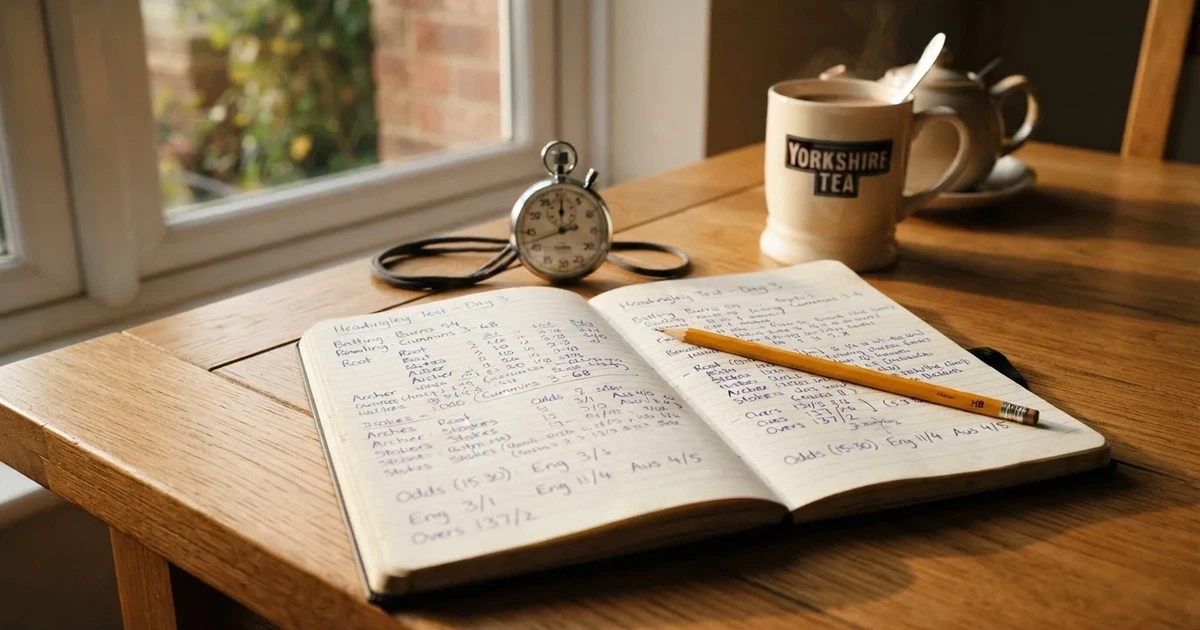
The data is current as of 27 October 2026, and the operator licences were verified against the Gambling Commission’s public register.
Looking after yourself before you look at the odds
Cricket is a long game — five days in Tests, hours in ODIs, around three hours in a T20 — and the temptation to keep staking on it through a run of bad results is real. Two things in Great Britain shape the way a punter can act on that temptation. One is GAMSTOP, the national multi-operator self-exclusion scheme that every online bookmaker licensed by the Gambling Commission is part of, and that covers betting sites and apps across the whole market rather than just one firm. The other is the set of safer-gambling tools each operator offers on its own platform — deposit limits, time-outs, product restrictions, self-exclusion from a single brand, reality checks, and links to GamCare, the National Gambling Helpline, GambleAware and Gambling Therapy. None of those tools is a tip, and none of them turns a tip into income.
A few practical rules precede any reading of form or fixtures. Set a deposit ceiling before the first bet and treat it as the month’s gambling budget, not a target. Decide the unit stake (one to three per cent of the bankroll is the common rule) and use the same unit whether the tip looks like a banker or a long shot. Keep a written record of every bet — selection, price, stake, result — so the bankroll is auditable rather than remembered. If a session goes against the plan, stop; another match starts tomorrow, next week, next month.
Help that does not depend on the bookmaker is one tap away. GamCare runs the National Gambling Helpline on 0808 8020 133, free and confidential, 24 hours a day. The NHS gambling clinics offer face-to-face treatment in several cities. Gamblers Anonymous runs local meetings in most parts of the country. GAMSTOP itself is the right route when the issue is online access — registering stops new account opening and marketing from every GB licensed operator for six months, one year or five years, with the minimum period extending by a further seven years unless the customer asks for it to be lifted. None of these services judges the size of the bankroll; they exist for the moment the bankroll stops being a choice.
What a “free bet” really pays back
Free bets are the most marketed cricket offer and the most expensive to misunderstand. A free bet is a token the bookmaker credits to a customer — usually after a qualifying bet at minimum odds, often after a deposit, in many cases as part of a wider welcome package — which can be used to back a selection without risking the punter’s own cash on that bet. The token is paid back only as winnings when the bet wins; the stake is almost never returned with it. A £10 free bet at decimal odds of 4.00 (3/1 fractional) returns £40 if it wins; the punter’s profit is £30, not £40, because the original £10 never comes back.

This matters at larger prices. A free bet on a heavy outsider at decimal odds of 10.00 (9/1) returns £100 if it wins, but the punter has risked nothing of their own and so the punter’s profit is the full £100; the headline number on a price like that can look enormous until the stake is subtracted. The bookmaker records the offer in marketing as “£30 in free bets” because it is the headline number that pulls the eye, not the eventual payout.
Promotion rules in force in Great Britain since 19 January 2026 cap the wagering requirement on any bonus at 10x — that is, a £10 bonus that must be turned over fifty times before withdrawal (£500 of qualifying bets) is no longer permitted, and the maximum turnover requirement is £100 for a £10 bonus. Mixed-product promotions that require gambling on more than one product type at once — for example “bet on cricket to get free spins” — are out for GB licensed operators. Whether the cap applies to free bets without a wagering condition and whether there is a cap on the money value of a bonus are not settled in the public rules and vary by operator. Read the terms of the specific offer before claiming it; the marketing headline and the small print describe two different things.
| Brand | What the operator’s own terms state on the key’s subject |
|---|---|
| Paddy Power | Bet Builder+, Popular Bet Builders, Super Sub (a bet rolls over to the replacement if a selected player is substituted), expanded Win More markets, player and ACCA stats on the app. |
| Ladbrokes | Odds boosts on horse and greyhound racing, Best Odds Guaranteed on UK and Irish racing, in-play betting, Acca Boosts. |
| Fitzdares | Cash out, accumulators, Lucky 15s, specials, antepost markets across horse racing, football, tennis, rugby, cricket, golf and American football, with in-play live odds. |
| Lottoland | Combines casino, lottery betting, sports betting and scratchcards; states it is licensed by the Gambling Commission for customers in Great Britain. |
| Swifty Sports | Best Odds Guaranteed, Cash Out on selected markets including horse racing and football, daily price boosts, live streaming, in-play betting; Bet Builder listed as coming soon. |
| Hollywoodbets | Welcome offer for new players: deposit £10 or more by card, get the stake back as a free bet of up to £30 on a first qualifying losing accumulator (stake £10+, 3+ legs, odds of 4/1 or greater, settled within 7 days); one free bet per customer. |
| 888sport | Pre-match and in-play betting, Cash Out, Bet Builder, racing streams, BetFinder form tools, a live bet feed, daily boosted odds. |
| BetTom | Welcome offer: 50% back as a free bet of up to £50, with a matching 50% back up to £50 as free slot funds for casino play; full terms apply. |
| Sky Bet | Welcome offer for new customers: £30 in free bets, credited as three £10 free bet tokens after a deposit of at least £5 and a first single or each-way bet of at least 5p at odds of 1/1 or greater. |
| BetGoodwin | Best Odds Guaranteed on all UK and Irish horse and greyhound racing, up to £1,000. |
The cricket betting app: browser, handset, same market
Most cricket betting in Great Britain is done on a phone. The browser version of a bookmaker’s site and its iOS or Android app carry the same markets in most cases, but the app trades some flexibility for convenience — biometrics for sign-in, push notifications for innings breaks and wickets, a one-tap bet slip, and alerts on price moves and acca legs. The browser version is the one to use on a shared device, on a desktop, or when a feature the app lacks is the reason for the visit; the app is the one to use when placing a bet is a one-handed act in the stands.
A few structural points hold across the major operators. Live streaming of selected cricket fixtures — usually international white-ball cricket and major franchise leagues — is offered by several GB licensed bookmakers through the app; a funded account or a recent bet is normally the condition. Bet Builder (also called a same-game multi on some brands) lets the punter combine several selections from the same match into one price, and the cumulative margin on the legs is the cost of that combination. Cash Out and partial Cash Out let the punter settle a bet before the match is over at a price the bookmaker sets in play; the price moves with the game and the trade-off is convenience against the punter’s own forecast of the closing position.
A cricket-specific note on the app: ball-by-ball markets on T20 and ODI fixtures are intense — overs tick over every few minutes — and the app experience during a live match is the comparison that matters, not the home screen. Some operators stream the match inside the app while the bet slip is open, others pin a separate stream tab; some offer a one-tap edit of an open accumulator that one leg has unsettled, others force a full re-build. The cricket page of the bookmaker’s app is the surface that gets clicked on over a thousand times a season, and the surfaces differ.
In-play cricket and cash out: the live market
In-play cricket betting has become the bulk of the live market in Great Britain — over-by-over, ball-by-ball, sometimes market-by-market. The bookmaker opens an in-play feed when the first ball is bowled, refreshes prices continuously, and lets the punter back or lay selections until the innings closes (and on some exchanges, until the match is over). The price on every selection moves with the scoreline: a wicket drops the batting side’s price sharply, a partnership rebuilds it, the chasing side’s required run rate shortens the match winner market and lengthens the chasing-total one.
Cash Out is the other half of the live market. When the punter opens a bet, the bookmaker offers a live settlement value that changes with the in-play price and the live state of the bet’s legs; the punter takes that value and exits, or holds to settlement. The punter effectively sells the bet back to the bookmaker at the offered price, less a margin the bookmaker keeps. On an acca, partial Cash Out lets the punter settle some of the stake and leave the rest to run. The mechanic is convenient — a winning position can be banked before the final over — but the offered Cash Out price is the bookmaker’s price, and it is rarely as favourable as the same selection’s market price would be to a punter laying off on an exchange.
A live-bet edge takes discipline, not speed. The punter who chases every wicket with a fresh stake on the next ball ends the session with twice the bets and half the bankroll, and the bookmaker’s in-play margin is typically higher than the pre-match margin to compensate for the faster refresh. The rule is the same as the pre-match rule: pre-set the stake, place the bet the tip justifies, log it, move on.
How a tip is actually built — and why no tip is certain
A cricket betting tip is a conclusion dressed as a price. Reading it means pulling the reasoning apart and asking whether the conclusion justifies the bet.
Form is the first move: results in the last five to ten matches, with venue, opposition quality and home advantage stripped out. A side that has won eight of ten in similar conditions is a different proposition from a side that has won eight of ten mostly at home against weaker attacks. Head-to-head record is the next move, but it is noisy — a five-year-old result against a touring XI tells a punter little about today’s contest. Pitch and weather shape the match before a ball is bowled: a dry pitch at a Test ground favours spin, a green seamer assists pace, an overcast day in England is a different match from a flat one. Toss and innings order matter in white-ball cricket — dew in the second innings under lights in the subcontinent makes chasing easier. Team news, when it arrives an hour before the toss, often moves the price by more than the form table did.
Statistics is where a serious punter adds edge. Recent scores, strike rates, economy rates, batting averages by position and phase, bowling averages against left- and right-handed batters — all are available through the operator’s own stats pages on major fixtures and through independent cricket databases elsewhere. The punter who knows a strike rate of 150 in the death overs against a specific bowler has information the market may not yet have discounted.
The bookmaker’s odds are the last input — and the most important to understand. The market’s published price is the market’s estimate of probability, adjusted for the bookmaker’s margin; the punter’s task is to form their own probability and compare. A punter who thinks India is a 55% chance to win a match and the market has them at 1.90 (47% implied after margin) sees no value. A punter who thinks India is 60% and the market is at 2.10 (48% implied) sees value at the available price — the gap between the punter’s estimate and the market’s is the edge. This is the meaning of “value bet”, and it is what a tip is supposed to deliver.
No tip is ever certain. The bookmaker’s margin guarantees that, the format guarantees that, and the variance of a sport played on a 22-yard strip with a small ball guarantees that. The punter who treats a tip as a thing to be acted on with one stake is one tip away from a loss; the punter who treats a tip as a data point among several is the punter who stays in the game long enough for an edge to matter. Bankroll discipline, staking the same unit, logging every bet and reviewing the record every month are the boring half of the craft; they are the half that decides whether a real edge is paid out or worn away by variance.
One hard rule precedes the rest: never bet more than the bankroll can lose across a defined period, and never chase a loss with a larger stake. The bookmaker’s welcome offer does not need to be claimed on day one; the deposit can sit for a week while the punter reads the rules.
Bet types, odds and how a price is read
A cricket betting market is a set of mutually exclusive outcomes, each priced in decimal or fractional form. A single is one selection; an accumulator (acca) is a chain of two or more, where every leg must win for the bet to pay out. A double is two; a treble is three; an accumulator of four or more is sometimes called a four-fold, a five-fold and so on. Each leg’s odds multiply into one price, so an acca of three legs at 2.00, 3.00 and 4.00 returns the stake times 24.00. Permutations like the Trixie (4 bets), Patent (7), Yankee (11), Lucky 15, Super Yankee (26), Heinz (57) and Goliath (247) cover the legs in different combinations; the total stake on a Lucky 15 at a £1 unit, for instance, is £15.
Each-way is two bets of equal stake — one on the win, one on the place — and the place terms vary by event and operator (a quarter of the win odds is a common place fraction in horse racing, with extra places offered on big-field handicaps). BTTS (both teams to score) is a football marker that survives in some cricket derivative markets; in cricket the equivalent is usually both sides to pass a run line or both sides’ top batters to score a given number of runs. Spread betting on cricket is a different product — Paddy Power’s spread betting arm is one example — and is regulated by the Financial Conduct Authority, not by the Gambling Commission, with the result that losses can exceed the deposit.
Reading a price: decimal odds of 3.00 mean every £1 staked returns £3 if the selection wins (£2 profit plus the £1 stake returned). Fractional odds of 2/1 mean a £1 stake returns £3 (£2 profit plus the £1 stake). The conversion is decimal = (a ÷ b) + 1, so 9/10 fractional (a punter wagers £10 to win £9) becomes 1.90 decimal. A starting price (SP) is the odds the horse (or in cricket, the selection) starts at on course when betting closes; best odds guaranteed (BOG) means the punter is paid at the higher of the SP and the price taken when the bet was placed.
The bookmaker’s margin is the second thing the price contains, and it is invisible until the punter looks for it. Take an illustrative two-way market at decimal odds of 1.90 on each side: the implied probability of each outcome, before margin, is 1 ÷ 1.90 = 0.5263, so the two probabilities add to 1.0526 — about 5.3% over 1.00 (or 100%). That overround is the bookmaker’s margin on this market. As a band, that figure falls to around 2-4% on heavily liquid markets like the match winner on a marquee international fixture, rises to 5-8% on most pre-match markets on a smaller fixture, climbs above 10% on niche props and on most in-play markets, and runs to 20% or more on the long tail of novelty markets. The punter who works out a margin on the markets they bet on finds the price to beat and knows what edge a tip has to offer.
Cricket formats, competitions and what each one means for the bet
Cricket is three sports wearing the same shirt. The three international formats decide how the match is read and how the market is priced.
A Test match lasts up to five days, with up to four innings in total — a maximum of two per side — and a minimum of ninety overs scheduled per day. A Test that neither side wins is a draw, and the draw is itself a third outcome on the match winner market, not a push; the price on the draw reflects how often a result is expected. A Test side has fifteen players in a squad, eleven on the field, with a twelfth (the substitute) allowed in limited circumstances. The longer format rewards patience: a session’s slow over rate becomes a fifth-day target, a fifth-day collapse becomes a fourth-innings chase.
A One Day International (ODI) gives each side a fixed 50 overs. A chase that ends with the scores level when the batting side is all out or runs out of overs is a tie; the tie is its own outcome on the match winner market and is usually priced separately. In rain-affected ODIs the Duckworth-Lewis-Stern method (DLS, the modern form of the older Duckworth-Lewis) usually sets the target or result; if too few overs are bowled (typically fewer than 20 in an ODI) the match is a no result and most bets on the match winner are voided.
In Twenty20 (T20) each team bats a maximum of 20 overs — 120 legal deliveries, no more than four overs per bowler — and a tied match is decided by a super over. T20 is the format of the franchise leagues (the Indian Premier League, the Big Bash, the Caribbean Premier League, The Hundred in England and Wales) and of the ICC’s T20 World Cup. India won the 2026 ICC Men’s T20 World Cup (7 February to 8 March 2026, co-hosted by India and Sri Lanka, 20 teams), beating New Zealand by 96 runs in the final.
The ICC governs the international game. Twelve full members hold Test status, and the World Test Championship has run its league cycles since its inaugural season in 2019; the top two contest the final at the end of each cycle. Below the international game sit the franchise leagues (IPL, BBL, CPL, PSL, The Hundred), the domestic first-class competitions (County Championship in England and Wales, the Sheffield Shield in Australia, the Ranji Trophy in India), the domestic white-ball competitions (the Vitality Blast, the T20 Blast equivalent in Australia, the 50-over domestic cups) and women’s cricket (the Women’s Premier League, the Women’s Big Bash League, the Hundred women’s competition). The market prices marquee international fixtures tightly, prices franchise league fixtures more loosely, and prices domestic cricket thinly — the punter should know which fixtures they are reading when they look at a price.
The ten reviewed bookmakers at a glance
The table below places the ten bookmakers reviewed in this guide against the only point that defines the comparison: the licence number from the Gambling Commission’s public register and the holder of that licence, alongside a one-line statement on what each operator’s own terms describe as the cricket-relevant feature. The licence is the floor: every brand listed below is on the Commission’s public register for remote general betting standard (real events) and is part of GAMSTOP. The features listed are each operator’s own description of what it offers cricket punters, drawn from each operator’s site and its app page in the GB App Store; the audit was done in October 2026.
| Brand | Gambling Commission remote licence number and licence holder | What the operator’s own terms state on the key’s subject |
|---|---|---|
| Paddy Power | 039439-R-319330-013 — PPB Counterparty Services Limited | Bet Builder+, Popular Bet Builders, Super Sub, expanded Win More markets, player and ACCA stats on the app. |
| Ladbrokes | 054743-R-330863-014 — LC International Limited | Odds boosts on horse and greyhound racing, Best Odds Guaranteed on UK and Irish racing, in-play betting, Acca Boosts. |
| Fitzdares | 000400-R-103839-030 — Fitzdares Limited | Cash out, accumulators, Lucky 15s, specials, antepost markets across cricket, horse racing, football, tennis, rugby, golf and American football, with in-play live odds. |
| Lottoland | 038991-R-319408-020 — EU Lotto Limited | Combines casino, lottery betting, sports betting and scratchcards; states it is licensed by the Gambling Commission for customers in Great Britain. |
| Swifty Sports | 058957-R-334734-006 — Swifty Global (UK) Ltd | Best Odds Guaranteed, Cash Out on selected markets, daily price boosts, live streaming, in-play betting; Bet Builder listed as coming soon. |
| Hollywoodbets | 053028-R-330019-013 — Hollywoodbets International UK Limited | Welcome offer: stake back as a free bet of up to £30 on a first qualifying losing accumulator (stake £10+, 3+ legs, odds of 4/1 or greater, settled within 7 days). |
| 888sport | 039028-R-319297-014 — 888 UK Limited | Pre-match and in-play betting, Cash Out, Bet Builder, racing streams, BetFinder form tools, a live bet feed, daily boosted odds. |
| BetTom | 064959-R-339314-003 — Bet Tom Limited | Welcome offer: 50% back as a free bet of up to £50, with a matching 50% back up to £50 as free slot funds for casino play. |
| Sky Bet | 067370-R-341330-005 — SBG Sports Limited | Welcome offer: £30 in free bets, three £10 tokens after a deposit of at least £5 and a first bet of at least 5p at odds of 1/1 or greater. |
| BetGoodwin | 002927-R-327985-008 — Goodwin Racing Limited | Best Odds Guaranteed on all UK and Irish horse and greyhound racing, up to £1,000. |
A note on the list itself. The Gambling Commission’s public register lists every operator with a remote betting licence; the ten above are the set this guide covers, not the whole field, and many more licensed brands exist. A licence is not a recommendation and a place in the comparison table is not a ranking.
Spreadex
Spreadex is a hybrid firm: a sports spread betting and fixed-odds sportsbook. Spread betting losses can exceed the deposit, which is the single structural difference from a fixed-odds bookmaker — the punter can owe Spreadex more than they put in if a spread runs against them. Spread betting on financial indices is regulated by the Financial Conduct Authority, not by the Gambling Commission. For a punter considering Spreadex, the test is whether the spread product is one they are equipped to manage: stop-loss discipline, margin calls, and the moment a spread gapes are different from the moment a fixed-odds price moves.
Kalooki Sportsbook
Kalooki Sportsbook is operated by Kalooki Sports Book Ltd (company number 12938274), licensed by the Gambling Commission under account number 57730, and is a GAMSTOP member. It sits squarely inside the regulated GB market — verification on sign-up, deposit limits, self-exclusion, GAMSTOP coverage, the 10x bonus cap. The cricket offering from a smaller-scale licensed brand can be thinner than the offering from the larger firms; the operator’s own site is the place to see the current cricket programme.
Midnite
Midnite’s site cites Gambling Commission licence 101839 and shows in-play events, an acca builder, popular accas and price boosts with maximum-stake limits. The mid-sized licensed bookmaker with an acca builder and price boosts is a particular shape: heavy on the small-stake, frequent-customer side of the market, lighter on the deep prop menu that a Paddy Power or Sky Bet would offer. For a punter who bets accas on cricket, Verdict: a streamlined platform focused on the acca-builder who prefers a focused cricket programme.
Unibet
Unibet states it has operated since 1999; its UK site is run by Platinum Gaming Limited, Gibraltar, under Gambling Commission account 45322. The safer-gambling tools on the site include deposit limits, a Player Profile test, product restrictions and self-exclusion, with live chat support and links to BeGambleAware, GamCare, GAMSTOP, Gambling Therapy and the BGC. Unibet is the established international bookmaker with a full GB licence; for a punter who wants a deep cricket programme from a brand that has been in the UK market for over two decades, Unibet is the comparison point.
Paddy Power
Paddy Power’s app offers Bet Builder+, Popular Bet Builders, Super Sub, expanded Win More markets, and player and ACCA stats. Paddy Power is the GB bookmaker best known for novelty markets and irreverent marketing; on cricket, the suite is the same — Bet Builder across formats, Super Sub to roll a bet onto a replacement player, and a stats layer on the top-tier fixtures. Verdict: a strong choice for the acca-builder who values detailed player stats and frequent promotional price boosts.
Ladbrokes
Ladbrokes offers odds boosts on horse and greyhound bets, Best Odds Guaranteed on UK and Irish horse races, in-play betting and Acca Boosts. Ladbrokes is a long-established high-street chain with a deep GB licence; the cricket programme sits inside a football-and-racing-led menu. Verdict: a solid betting experience for the racing fan who occasionally places cricket bets and wants familiar accumulator-boosting features.
Fitzdares
The Fitzdares app offers cash out, accumulators, Lucky 15s, specials and antepost markets across horse racing, football, tennis, rugby, cricket, golf and American football, with in-play live odds. Fitzdares is one of the GB licensed bookmakers with an antepost menu — bets placed well in advance of a tournament or season — and that antepost depth is its distinguishing feature on cricket as well as racing. Verdict: a premium option for the punter who focuses on antepost markets and appreciates a cash-out mechanic throughout the tournament.
Lottoland UK
Lottoland UK’s app combines casino, lottery betting, sports betting and scratchcards; the operator states it is licensed by the Gambling Commission for customers in Great Britain. Lottoland is the lottery-led brand that has extended into sports and casino; a punter who is already on Lottoland for lottery can reach cricket from the same account, with the same GAMSTOP coverage and the same deposit limit. Verdict: a convenient all-in-one platform for the lottery player who wants to add sports bets to their existing account.
Swifty Sports
Swifty Sports offers Best Odds Guaranteed, Cash Out on markets including horse racing and football, daily price boosts, live streaming and in-play betting; Bet Builder is listed as coming soon. For the punter who wants the full modern bookmaker menu and is OK that the Bet Builder is the missing piece for the moment, Verdict: a modern-platform choice for the punter who prioritizes daily price boosts and Best Odds Guaranteed.
Hollywoodbets
Hollywoodbets’ sports welcome offer is £10 or more by card deposited, stake returned as a free bet of up to £30 on a first qualifying losing accumulator (stake £10+, 3+ legs, odds of 4/1 or greater, settled within 7 days); one free bet per customer. The structure is a stake-back if a first acca loses, with the 4/1 minimum odds and seven-day settlement window defining what “qualifying” means. Verdict: an acca-focused welcome package that provides a second chance for the punter who can meet the 4/1 minimum odds requirement.
888sport
888sport offers pre-match and in-play betting, Cash Out, Bet Builder, racing streams, BetFinder form tools, a live bet feed and daily boosted odds. 888sport is one of the GB licensed multi-product bookmakers with a deep cricket programme on the major fixtures and a BetFinder form tool to back the punter’s reading of the market. Verdict: a data-rich experience that integrates form tools and in-play cash-out options for the regular cricket bettor.
BetTom
BetTom’s sports welcome offer is 50% back as a free bet of up to £50, with a matching 50% back up to £50 as free slot funds for casino play; full terms apply. The shape is a cricket-and-casino split welcome, and the punter who wants both parts is the target. Verdict: a dual-purpose welcome offer tailored to the punter who explores sports betting and casino gaming from a single account.
Sky Bet
Sky Bet’s welcome offer for new customers is £30 in free bets, credited as three £10 free bet tokens after a deposit of at least £5 and a first single or each-way bet of at least 5p at odds of 1/1 or greater. The 5p minimum stake and 1/1 minimum odds make the qualifying bet the smallest in the GB licensed market; the three £10 tokens are the headline payout. Verdict: an accessible entry point for the cricket punter looking for a wide in-play menu and a competitive free-bet bundle.
BetGoodwin
BetGoodwin pays Best Odds Guaranteed on all UK and Irish horse and greyhound racing, up to £1,000. The BOG cap of £1,000 is one of the higher caps among GB licensed bookmakers; for a punter who bets cricket alongside horse and greyhound racing and wants BOG on the racing leg, BetGoodwin is the comparison point. Verdict: a specialized choice for the racing fan who bets on cricket and wants to benefit from the £1,000 BOG cap.
BetWright
BetWright states it is licensed in the UK and provides responsible gaming tools; its customers must be aged 18 or over. Verdict: a straightforward betting platform for the punter who appreciates a no-frills, licensed experience.
London.bet
London.bet is published by Thistle Bet Limited, states it is licensed and regulated in the UK, and its app carries a 17+ App Store age rating. London.bet is the GB licensed multi-product bookmaker serving the London and wider UK market from Thistle Bet. Verdict: the licensed bookmaker for the punter who knows the brand and wants the GB licence and the standard safer-gambling tooling alongside it.
The legal frame around the bet
Cricket betting is legal in Great Britain for adults aged 18 and over. The Gambling Commission (UKGC), a non-departmental public body sponsored by the Department for Culture, Media and Sport, licenses the whole commercial market under the Gambling Act 2005, which covers England, Scotland and Wales. Northern Ireland sits outside the 2005 Act under older legislation; a GB licence does not regulate betting in Northern Ireland, and this guide writes about Great Britain only. Since the Gambling (Licensing and Advertising) Act 2014 an operator whose remote facilities are used in Great Britain needs a Commission licence wherever it is based — sections 33 and 36 of the 2005 Act as amended — and a Curaçao, Maltese or Gibraltar licence is not a substitute. The Commission’s public register can be searched by business name, trading name, domain or account number; that register is the whole test of whether a brand holds a GB licence. Quote no count of licensed operators without an access date.
Licence types in this market are remote general betting standard (real events), remote general betting standard (virtual events), remote general betting limited, remote pool betting and remote betting intermediary (the category for betting exchanges). Several brands can run under one licensee — Ladbrokes and Coral under LC International, Paddy Power and Betfair under PPB Counterparty Services — and the licence holder is the legal entity, not the trading brand. Most of the brands reviewed here sit under a dedicated licensee named for them.
Identity verification is required before the first deposit: name, address and date of birth are checked before a customer can deposit or gamble at a GB licensed site, in force since 7 May 2019, and that verification applies to free bets and bonuses as well as cash deposits. The credit-card ban is in force: credit cards are not allowed for gambling in Great Britain (in force since 14 April 2020), including credit-card-funded payments through an e-wallet; debit cards and bank-based payments are not affected. There is no statutory cap on stakes in sports betting — operators set their own maximum stakes and may restrict individual customers.
GAMSTOP is mandatory for online operators since 31 March 2020. Periods are six months, one year, five years, or five years with auto-renewal; after the minimum period the exclusion stays in place for a further seven years unless the customer asks GAMSTOP to remove it. GAMSTOP covers online sites and apps; betting shops use a separate self-exclusion service. A financial vulnerability check (LCCP condition 3.4.4, in force since 30 August 2024) applies to licensed remote betting when a customer’s deposits minus withdrawals exceed £150 in a rolling 30 days (since 28 February 2025): it is a public-record check (for example bankruptcy or county court judgments), not an income check and not a credit reference check. Financial risk assessments — the “affordability checks” of the press — were announced in a Commission article of 7 July 2026 in a staged plan with no start date; the rule has been announced, staged, and not in force at the time of writing.
Advertising around cricket betting in Great Britain runs through the CAP Code (non-broadcast) and BCAP Code (broadcast), enforced by the ASA, alongside the LCCP marketing conditions at the Commission. CAP Code section 16 sets the tone: marketing must be socially responsible, must not be of strong appeal to under-18s, and no one who is or seems to be under 25 may be featured gambling in the advertisement (with an exception for marketing placed where a bet can be made directly); the rule is about who may appear, not who may bet. The “whistle-to-whistle” code is an industry commitment: since 1 August 2019 betting advertisements are not shown on TV from five minutes before a live sporting event to five minutes after it, before the 9pm watershed (horse and greyhound racing excluded). The Premier League clubs’ withdrawal of gambling sponsorship from the front of matchday shirts (from the 2026/27 season; sleeves and hoardings remain) is a voluntary club decision, not a law.
Bonuses and free bets in the GB licensed market are subject to the promotion rules in force since 19 January 2026: a 10x cap on the wagering requirement on any bonus (a £10 bonus at 50x, needing £500 of bets, is no longer permitted; under the cap the maximum turnover on a £10 bonus is £100), and a ban on mixed-product promotions that require gambling on two or more product types. Whether the 10x cap applies to free bets without a wagering condition and whether there is a cap on the money value of a bonus are not settled in the public rules and vary operator by operator.
On tax: the player pays no tax on betting winnings in Great Britain. General Betting Duty is the operator’s tax on gross profits, currently 15%; from 1 April 2027 a new remote betting rate of 25% applies within it, while remote bets on UK horse racing, bets on self-self-service betting terminals in licensed premises, pool betting and in-person betting stay at 15% (HM Government policy paper of 26 November 2025). Until 1 April 2027 the remote rate stays at 15%; whether operators pass duty on through the odds is not established, and never write that the player is charged duty.
Offshore bookmakers (those whose only licence is Curaçao, Malta, Gibraltar or another non-GB jurisdiction) cannot lawfully accept remote bets from customers in Great Britain without a GB licence; providing gambling facilities in Great Britain without the licence the Act requires is an offence under section 33 of the Gambling Act 2005 (on summary conviction, up to 51 weeks’ imprisonment, a fine up to level 5, or both; six months in Scotland) — the offence is aimed at the operator. No offence aimed at the customer who merely bets on an unlicensed site was found: the cost of using an unlicensed brand is the loss of protection — no GAMSTOP coverage, no Commission complaints route, no approved dispute-resolution body, no British consumer redress if funds are withheld, not bound by the 10x bonus cap and not bound by the £150 vulnerability check. Honest framing: a GB licence means checks, limits, GAMSTOP coverage, the bonus cap and a complaints route, but also identity verification before the first bet; an unlicensed brand means none of those protections, and the possible loss of funds if the operator decides not to pay out.
The shape of the comparison
Cost — what the bet costs the punter — is the question this guide is built around, and the comparison table above names the visible cost at each operator (the licence fee the operator pays to the Commission on turnover is invisible to the punter; the margin on the odds is the visible cost, plus the deposit-and-verify friction). The welcome offers are not the comparison’s main measure: a £30 in free bets headline is the same headline on a brand that closes the qualifying bet at 5p and a brand that closes it at £5, and the headline hides the qualifying bet, the wagering requirement, the minimum odds and the deadline. The features column on the table is each operator’s own description; the punter’s task at each operator is to read the same page and price the same bet before committing.
The licensed market has more than the ten brands above. Several well-known GB licensed bookmakers sit on the register and are not covered in this guide because the editor’s set is finite. The Commission runs the public register as the live source of truth; the punter who wants the longest shortlist searches it.
Counting what a bet really costs: a margin calculation
A worked example on the margin calculation given in the section on reading a price: a two-way cricket market at decimal odds of 1.90 on each side (fractional 9/10 on each). Each side implies a 1 ÷ 1.90 = 52.63% probability, the two sides add to 105.26%, and the difference from 100% is 5.26% — the bookmaker’s margin on this market. As a band, a margin of 5.26% on a two-way market at even-money is the median of the GB licensed market; tighter (2-4%) on the most-liquid fixtures, wider (8-15%) on in-play and smaller-event markets. The 5% the page has just calculated is the comparative figure: a market with a 5% margin pays back 95 pence for every pound wagered across the two outcomes combined, in the long run, before the punter’s own edge is applied. A punter who reads a price without working out the margin is reading the label without reading the contents.
A worked example on the return calculation: a £10 single at decimal odds of 3.50 (5/2 fractional) returns £35 if it wins (£25 profit plus the £10 stake). A £5 each-way at the same price is two £5 bets (a £10 total stake): one on the win, one on the place; the win leg pays £17.50 (£12.50 profit, plus the £5 stake) and the place leg at a quarter of the win odds (1/2 fractional, 1.25 decimal) pays £6.25 (with the £5 stake on that leg returned in the £6.25). The total return on the win is £17.50; the total return on a place at the quarter fraction is £6.25 plus £5 (the place leg payout) plus the £5 stake on the win leg returned in the win leg payout, minus the £5 stake on the place leg (which is also returned). The calculation resolves to: return = stake × odds; profit = stake × (odds − 1). For a combination bet, the legs multiply into one price.
Frequently asked questions
How do I bet on cricket in Great Britain?
Pick a bookmaker licensed by the Gambling Commission — search its name on the Commission’s public register to confirm — open an account with a debit card or bank transfer, complete the identity check (name, address, date of birth) before the first deposit, deposit using a debit card or e-wallet that is not funded by credit, find the cricket fixture you want, choose a market and place a bet from your bankroll within your pre-set deposit limit. The credit-card ban and the verification requirement are the two GB-specific differences from a casual assumption of how betting works.
How does a cricket bet actually settle?
A single bet pays the stake × the decimal odds if the selection wins, and loses the stake if it does not. An accumulator pays the stake × the multiplied odds of every leg if every leg wins, and loses the stake if any leg loses; partial Cash Out lets the punter settle part of an open acca while leaving the rest to run. An each-way bet is two bets of equal stake on the same selection — one on the win, one on the place at a fraction of the win odds (often a quarter for horse racing, with extra places on big fields); both legs are independent.
How do I win at cricket betting?
You can’t, with certainty. What a disciplined punter does is find prices that underestimate a team’s chance of winning — that is what a value bet is — and stake the same unit on each bet so that the long-run return is positive. The arithmetic works through variance: most weeks end flat or down, and the winning months more than pay for them. The craft is bankroll discipline, the unit stake, the record, and stopping at the pre-set limit when the bankroll is gone for the week.
What is a value bet, and why is no tip ever certain?
A value bet is a price higher than the punter’s own estimate of the selection’s true probability (with the bookmaker’s margin subtracted). If the punter thinks India is a 60% chance to win and the bookmaker has India at decimal odds of 2.10 (an implied probability of 48% after margin), the edge is positive. The bookmaker’s margin guarantees the market is rarely generous; the variance of cricket guarantees the bet can lose anyway. No tip is ever certain for the same reason a forecast for next Saturday is not — the underlying event is uncertain, and a tip is a forecast.
What is the bookmaker’s margin, and how can it be seen in the odds?
The margin is what the bookmaker keeps of every unit bet on a market in the long run. Take a two-way market at decimal odds of 1.90 on each side: each side implies 52.63%, the two add to 105.26%, and the 5.26% overround is the margin. On a tighter market at 1.85 / 1.85 the margin is around 8%; on a one-sided market at 1.50 / 3.00 the margin is roughly 4-6%. In-play margins are higher than pre-match margins on the same fixture; the punter who works out the margin before placing the bet prices the bet against what the market is taking.
How is the return on a bet worked out from the stake and the odds?
Return = stake × odds. Profit = stake × (odds − 1). For a £10 single at decimal odds of 3.50 the return is £35 and the profit is £25; the £10 stake is returned with the profit. For an accumulator of three legs at odds 2.00, 3.00 and 4.00 the multiplied price is 24.00, and a £5 stake returns £120. For an each-way bet, both the win leg and the place leg use the same stake × odds formula independently.
Rugby, cricket & Gaelic – Best betting exchange
Content created by the «Best betting exchange» team
