
Over/Under Betting 2026 – How the Total Line Works and What It Really Costs UK Punters
 Available in US
Data current as of 27 October 2026 and verified against the Gambling Commission’s public register. The register is what decides who is licensed to take a bet from a customer in Great Britain; this page is written against it.
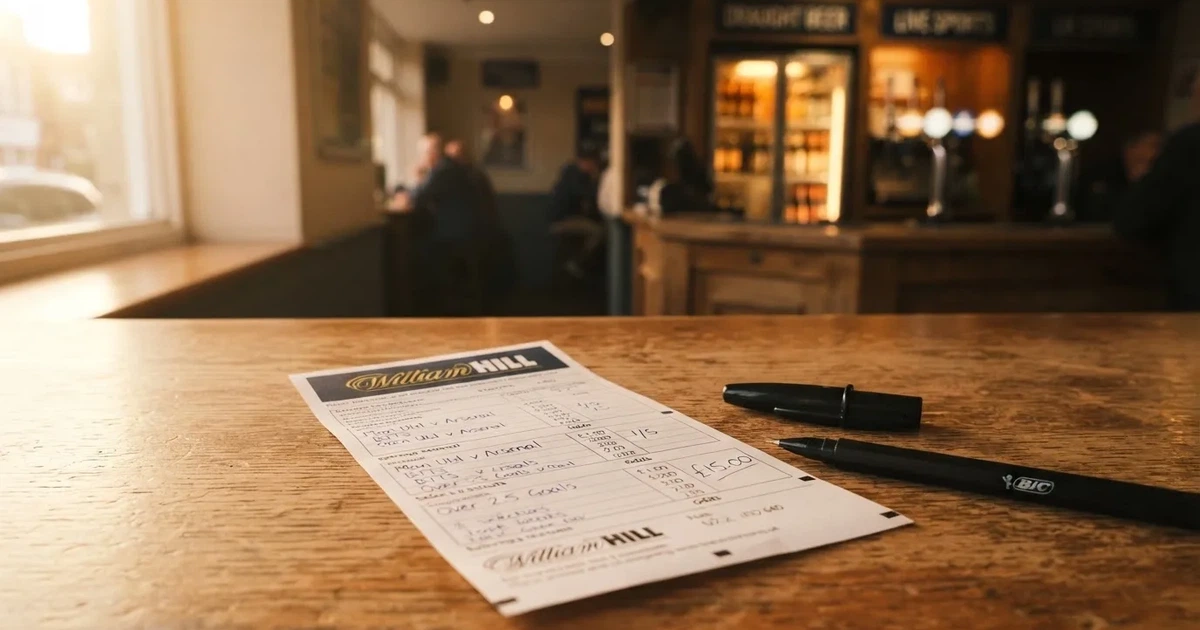
An over/under bet is the cleanest wager in a sportsbook: the bookmaker sets a number for a statistic in the game — goals in a football match, points in an NBA game, rounds in a UFC bout — and you back whether the actual figure lands higher (over) or lower (under). It is also called a total, and the line itself is sometimes called the number. The simplest version, on a Sunday afternoon Premier League fixture, reads “Over 2.5 goals” priced at 10/11 or “Under 2.5 goals” at 11/10. That is the entire market. The cost of taking either side is what the rest of this page is about, because the number printed on the betting slip is not what comes out of your account.
How the Total Line Is Set, Settled and Priced
What the line actually represents
A total is a bookmaker’s forecast of one number in a game, expressed as a threshold you bet against rather than as a single predicted outcome. In football the line is most often combined goals — both teams’ goals added together — and 2.5 is the workhorse figure because no team can score half a goal, so the bet never ties on the line itself. In basketball the equivalent is the combined points total, set well into the hundreds, and it moves point by point as money lands and news breaks. In American football totals are typically in the 40s and 50s, which is why a one-point field goal can shift the market. In UFC the total is rounds rather than points, and “over 1.5 rounds” with a price of 4/9 means the fight has to reach the second round for the over to win.
What settles the bet is what the rules say it settles on, not what feels obvious. Sky Bet’s football rules are the standard clause: markets such as over/under are settled on 90 minutes of play including referee-added stoppage time, unless the market states otherwise; extra time and penalty shootouts are excluded. A bet on Over 2.5 goals is decided at full time, not at the end of extra time. A bet on the Champions League final that finishes 1–1 after 120 minutes is a winning under if the line was 2.5, because the 90-minute score was the figure that mattered. The bookmaker writes that into the rulebook because punters have lost real money assuming otherwise.
The push is the third outcome and the one beginners miss. If the line is set at exactly the figure the game finishes on, the bet is a push: every stake is refunded and nobody wins. A Super Bowl line set at 46.0 and a combined score of 46 is not a half-win for the under; it is a return of stake to both sides. The line of 0.5 in football is set specifically because there is no way to push a half-goal; the line of 1, 2 or 3 is set where a push is part of the design.
How a price is built
Every price carries the bookmaker’s margin, and the margin is what the bookmaker keeps of every unit bet on the market. For a two-way market at decimal odds 1.90 and 1.90 — the kind of even-money line a bookmaker might post on a balanced totals market — the payout share is one divided by the sum of the implied probabilities, and the margin is one minus that. The implied probability of 1.90 is roughly 52.6% on each side, so the two sides imply about 105.3% in total. The 5.3 points above 100% are the margin. The same arithmetic on a 1.85 / 1.95 pair gives a margin closer to 5%, which is the band most major football totals sit in. A 1.80 / 2.00 pair widens the margin toward 5.6% and a 1.95 / 1.95 with 2% in the price sits closer to 2.5% — which is the floor only an aggressive bookmaker or an exchange with real liquidity on both sides will hold.

The number is not a fixed house edge; it is the gap between what the two outcomes would each cost to back if the bookmaker were a fair counterparty. A bookmaker cannot quote 2.00 / 2.00 on a two-way market without losing money, because a fair price would be 2.00 / 2.00 only if each side were 50% — and a market where the bookmaker collects 100% of stakes and pays out 100% leaves no margin. The price is always below the fair price on both sides, and the gap between what is quoted and what would be fair is exactly the margin. That gap is what a sharp punter reads before anything else on the slip.
The margin is a property of the market and the moment. The margin of an Over 2.5 goals line is not the margin of an Over 1.5 goals line on the same game, the margin of an NBA total is not the margin of an NFL total, and the margin at 8 a.m. on a Tuesday is not the margin at kick-off on Saturday. A bookmaker tightens prices when liquidity is high and widens them when it isn’t, which is why a price taken early can look generous and a price taken late can look tight. The lesson a punter actually uses is shorter than the arithmetic: read the margin before the bet, not after.
What a winning total pays
A winning bet returns stake multiplied by the decimal odds. On Over 2.5 at decimal 1.91 with a £10 stake the return is £19.10, made up of the £10 stake returned and £9.10 of profit. On Under 2.5 at 1.91 the same. On a combined bet the legs multiply into one price, so a £5 accumulator at decimal 3.40 pays £17 if it wins. That is the math of the win; it is not the math of whether the bet wins, and no odds table tells you that.
Pushing a line, moving a line
The number on the board is not the number the punter bets. Bookmakers move lines in response to money, news and sharp action, and the price printed on a screen at 8 a.m. may not be the price settled at kick-off. The line itself moves the same way: a goals total that opened at 2.5 can drop to 2 or rise to 3 depending on team-sheet news and how the early money has landed. The punter who placed the bet at 2.5 has a ticket at 2.5, regardless of where the line moves next. Reading a totals market well means watching the line move and the price move together, because the two carry different signals — a line moving without a price moving is information about the game, a price moving without a line moving is information about the book.
The Cost Side of a Total: What a £10 Stake Actually Buys
| What it looks like | What it is | The figure attached |
|---|---|---|
| “Over 2.5 goals – 10/11” | Fractional odds on a two-way totals line | Fractional 10/11 = decimal 1.91 |
| “Over 2.5 goals – 1.91” | Decimal odds on the same line | Implied probability ≈ 52.4% |
| “Under 2.5 goals – 11/10” | Fractional odds on the opposite side | Fractional 11/10 = decimal 2.10 |
| “Under 2.5 goals – 2.10” | Decimal odds on the same side | Implied probability ≈ 47.6% |
| “Margin ≈ 5%” | Payout share = 1 ÷ (1/1.91 + 1/2.10) ≈ 99.5% | Margin = 100% − 99.5% ≈ 0.5% |
The £10 buys entry into a market the bookmaker has priced at roughly a 0.5% margin — aggressive, but illustrative. On a more typical football line at 1.85 / 1.95, the margin sits closer to 5%, which means the same £10 over many bets will keep about 50p in every £10 of stakes on average. That is the cost of betting on totals at a major bookmaker; it is not the cost of being right or wrong, it is the cost of being in the market at all.
Pushing the Bookmaker’s Own Words: How GB-Licensed Brands Set Their Totals Markets
Who is licensed to take the bet
Any operator taking bets from customers in Great Britain needs a Gambling Commission licence, and the Commission’s public register is the test of who holds one. Since the Gambling (Licensing and Advertising) Act 2014, the licence is needed wherever the operator is based — a Curaçao, Maltese or Gibraltar licence is not a substitute. There is no statutory list of permitted markets: the operator holds a category of licence and offers markets under its own rules and the LCCP.
What that means in practice: a brand on a comparison page may look like ten independent operators when several of them run under the same parent. BetUK and BetMGM UK are both run under LeoVegas Gaming PLC licences; bet365 sits under Hillside (UK Sports) ENC; Ladbrokes and Coral are a single licensed group; Paddy Power and Betfair another. Reading the licence holder on the register, not the trading name on the app, is the only way to tell.
Every GB-licensed online operator is part of GAMSTOP — the national multi-operator self-exclusion scheme, mandatory for online since 31 March 2020. Exclusion periods are six months, one year, five years, or five years with auto-renewal, and after the minimum period the exclusion stays in place for a further seven years unless the customer asks GAMSTOP to remove it. A bookmaker not on GAMSTOP is not licensed for online play in Great Britain.
The cost of an offer on a totals market
Offers on totals markets are not the price. The price is the price; the offer is a separate thing the bookmaker uses to bring a customer in. Two facts about the cost of offers worth keeping before the comparison section. First, since 19 January 2026, wagering requirements on bonuses at GB-licensed operators are capped at 10x — a £10 bonus at 50x requires £500 of bets; under the cap no more than £100. Second, mixed-product promotions are banned — an offer that requires gambling on two or more product types, betting plus casino or betting plus bingo, is no longer lawful. The cap and the ban apply at licensed operators only; an unlicensed brand is not bound by either.
The cost that matters on any individual offer is the difference between the headline and what clearing the offer actually costs. A “risk-free” first bet refunded as a free bet if it loses is not a refund in money; the stake is usually not paid back with a win, so the value of the free bet is the free-bet amount multiplied by the odds minus one divided by the odds multiplied by the payout share of the market. That is a different number from the headline. A “100% bonus” attached to a turnover requirement is a different number again. Both belong in the comparison below as what each operator’s own terms state — not as a working code, never as a reason to sign up.
The British Protection Stack: What a GB Licence Buys
Identity, age and the first £10
Identity is checked before a customer can deposit or gamble, including with a free bet or bonus — a rule in force since 7 May 2019. That means name, address and date of birth are verified before the first deposit, and source-of-funds questions at higher spend are normal under the money-laundering rules. There is no anonymous play at a licensed site. For a punter that is friction; for the regulator it is the entry point for the rest of the protection stack, because a check that knows who is on the other side of the bet is the only check that can refuse a self-excluded customer or freeze a problem account.
Minimum age is 18. No bonus, free bet or sign-up offer moves that floor; a free bet still has to wait for the same verification. A credit card has been banned for gambling in Great Britain since 14 April 2020, including credit-card-funded payments through an e-wallet; debit cards and bank-based payments are not covered by that ban. That rule is the cleanest single protection on the payment side, because it removes the credit-funded chase at the source.
Limits, checks and the deposit ceiling
There is no state-set deposit or loss ceiling for betting in Great Britain — limits are the customer’s choice, set through the operator’s safer-gambling tools and respected on request. The headline change is the financial vulnerability check (LCCP condition 3.4.4, in force since 30 August 2024): it applies to licensed remote betting when a customer’s deposits minus withdrawals exceed £150 in a rolling 30 days, since 28 February 2025. It is a public-record check — bankruptcy or county court judgments — not an income check and not a credit reference check. Financial risk assessments (the “affordability checks” of the press) have been announced in a staged plan by the Commission, with no start date — write “announced, staged, no start date”, never “in force”. Deposit limits (RTS 12): operators must offer a gross deposit limit on a fixed time frame; the first changes have applied since 31 October 2025, a second phase was postponed to 30 September 2026, and whether it is live is not established. The Commission’s published position, summarised in user-facing terms on each operator’s safer-gambling page, is what the punter actually sees.
Help when the bet stops being fun
GAMSTOP is the self-exclusion front door; GamCare is the help line behind it (the National Gambling Helpline). GambleAware funds treatment and research. NHS gambling clinics run in person and online. Gamblers Anonymous runs meetings. The list is the substance behind the marketing word “responsible gambling”: a licensed operator names each of those organisations on its safer-gambling page, links to them, and is required to interact with them when a customer’s play looks like harm. An unlicensed brand does none of that, because it is not subject to the social responsibility code that requires it.
The Mobile Side of a Total: What the App and the Browser Have to Do
A totals market is the same market on a phone as on a desktop, but the experience of taking it is not. A betting app loads the relevant sport two taps from the home screen; the browser takes four taps from a search. In-play totals on a phone are usable because the touchscreen is fast enough to take a price while it is moving; on a desktop the same speed depends on the connection and the platform. The features that matter for a totals punter on a phone are these: in-play odds that update faster than the line moves, cash out on the open bet, bet builder for combining markets from one event, and a betting slip that holds a price while the punter thinks. Bet Builder+ on bet365 combines markets from one event into a single bet, available pre-match and in-play. Hollywoodbets’ sports welcome offer hands the qualifying stake back as a free bet on a first losing accumulator — settled within 7 days, 3+ legs, odds of 4/1 or greater. Betfred’s app carries Bet Builder, Sub Switch (player-specific markets), Racing Post data, Extra Places, live casino and bingo. Each of those is what the operator’s own terms say it is, not a marketing word dressed up.
Cash out on a totals market is the second thing a punter checks after the price, because it is the only way to lock in a profit or cut a loss before the game finishes — useful on a 0–0 at half-time if the line is 2.5 and the punter backed the over. The feature costs the bookmaker nothing the punter can see, but the price offered in the cash-out window is the bookmaker’s own number, not the exchange’s, and it widens the margin on the way out. Accumulators and same-game multis are the next step up: they multiply prices and multiply the margin, so a four-leg acca at decimal 3.00 / 3.00 / 3.00 / 3.00 carries an aggregate margin well into double digits. The punter who reads totals margins carefully does not usually combine them carelessly.
A bookmaker app that is well-rated in the App Store, with a 17+ or 18+ age gate, an explicit safer-gambling tab on the home screen and a working deposit-limit tool, is doing the basics a GB licence requires. Below that bar the operator is cutting corners the licence conditions forbid.
Picking a Total: Strategy That Costs the Bookmaker, Not the Punter
Reading the line, not the tipster
A tipster’s pick is a number; a bookmaker’s line is a price plus a margin; the punter’s edge, if there is one, is the gap between the two. A “good” over/under pick is one where the punter’s own model says the line is mispriced by more than the margin, repeatedly. That is a research project as much as a betting one — expected goals data, shot location, pace, minutes per game, weather, ref — and the project does not arrive in a tweet. A tipster who offers only a pick and a price is selling the wrong product; the product the punter needs is the model’s output, not the tipster’s confidence.
Two rules worth keeping in plain words. The first: a totals market is most efficiently played where the punter’s information beats the bookmaker’s information, not where the punter’s opinion beats the bookmaker’s price. The second: the price the punter takes is half the bet; the price the punter would have taken at a different bookmaker is the other half. A line that reads Over 2.5 at 1.85 at one bookmaker and Over 2.5 at 1.95 at another is the same bet at two different costs, and the punter who does not shop the price has already lost the difference.
Markets worth pricing before others
Totals on goal-line football are the most liquid totals market in British betting, which is also why they are the most efficiently priced. The margin a major bookmaker quotes on a Premier League Over/Under 2.5 is tighter than the margin on a League Two Over/Under 2.5, and the latter is tighter than the margin on a Conference North total. The price follows liquidity, and the punter follows the price. Totals on NBA basketball are the next most efficient market; NFL totals are tighter still but smaller in volume. UFC round totals are priced wider because the bookmaker has less data — a round ending in a knockout is harder to forecast than a goal.
The punter who prices a totals market first looks at the bookmaker that has a clear picture of the game, not the bookmaker that is running a price boost. The boost is a marketing line, not a price; the underlying line is what determines whether the bet is worth taking.
What stops mattering once another sits beside it
A headline price next to the margin of its market makes the price half as interesting as it looked. A £30 free bet next to the wagering factor that clears it makes the headline half as interesting. A “best odds guaranteed” line next to the time the offer goes live — 8 a.m. on William Hill for UK and Irish racing, all day every day on Copybet — makes the offer half as interesting if the punter bets early or late. Each headline is a single number; the cost of taking it is the second number beside it. The punter who reads the second number first is the one the page is for.
What a bankroll looks like in practice
A bankroll is the money the punter sets aside to bet with, separate from rent, food and bills. The fraction of the bankroll risked on a single totals bet is a personal decision; the discipline that turns a bankroll from a number into a tool is to bet the same fraction on every pick where the model says the bet has an edge, and zero on every pick where it does not. That is bankroll management as a percentage model, and it is the rule that lets a punter lose 55% of bets at decimal 1.91 and still come out ahead, because the bets they take are priced above their true probability, not below it.
The opposite of bankroll management is chasing — raising the stake after a loss to “get back to even”, a strategy the margin turns into a slow leak the punter does not notice until the bankroll is gone. A licensed operator’s deposit-limit tool, set before the first deposit, is the cheap insurance against chasing.
The Sports Where the Total Does the Work
Football
Football is the totals market most British punters meet first, and it is the one the rulebook is written for. Over/Under 2.5 goals is the standard line; Over/Under 1.5 and Over/Under 3.5 are next; team totals (one side’s goals only) and Asian totals (lines in quarter-goal increments) are the markets the punter meets later. The 90-minute rule — settled on 90 minutes of play including stoppage, extra time and penalties excluded — is the rule every football totals punter reads first, because it is the rule that decides whether a Champions League knockout bet has been won or lost.
Asian totals are worth a separate paragraph because they read differently. A line of Over/Under 2.25 is two bets at half stake each, on 2 and 2.5. A line of Over/Under 2.75 is two bets on 2.5 and 3. The quarter-goal increments are how a bookmaker prices a totals market without giving the punter a free push on the whole number, and the price is usually a touch tighter than the round-goal equivalent.
Basketball
Basketball totals are the most actively traded totals market in the world, and the reason is the pace: an NBA game sees roughly 200 possessions, so a one-possession swing can move the total by one point, and the line moves point by point through the game. The punter who watches an NBA total is not betting a forecast of the final score; the punter is betting a forecast of pace and efficiency across roughly 48 minutes, which is a different and harder problem. Pre-game NBA totals on a major bookmaker are priced at a tighter margin than football totals because the data is better, and the in-play total is priced wider because the model is harder.
American football
NFL totals are the original totals market, set by Las Vegas in the 1970s on the combined score of both teams, and Super Bowl XXXIX is the textbook example — most Las Vegas casinos set the over/under for the game score at 46.0 and the combined score was 45, so the under won. The line in the NFL is typically in the 40s and 50s, and a one-point field goal at the end of a half can shift the market by half a point. The punter on an NFL total reads pace and red-zone efficiency more than anything else, because scoring in the NFL is concentrated in the red zone and a stalled drive is the difference between three points and seven.
UFC and combat sports
UFC totals are round-based, not point-based, and the line is set well below the time on the clock because most fights end early. Over/Under 1.5 rounds means the fight has to reach the second round for the over to win; Over/Under 2.5 means it has to reach the start of the third. A first-round knockout on a line of 1.5 is a winning under. The market is thinner than the team-sports totals because fights are shorter, less frequent and harder to forecast; the margin is wider for the same reason.
Tennis, cricket and the rest
Tennis totals are set on games or sets, not on points, and the line reflects serve patterns and surface. Over/Under 21.5 games in a best-of-three is the workhorse line; the over wins in three sets, the under wins in two. Cricket totals are set on runs in an innings or in a match, and the line moves with the pitch report and the weather. Both are markets the punter plays for value rather than volume, because the margin is wider and the data thinner than the team-sports mainstays.
How a Total Bet Travels From a Price to a Payout
Placing the bet
The bet is placed on the betting slip of the bookmaker or app. The slip holds the selection, the price and the stake; the punter confirms; the bet is matched at the price displayed, which is the price the punter has priced against the model. There is no negotiation on price at a traditional bookmaker; there is negotiation on price at an exchange, where the punter can back or lay at a chosen number and wait for a counterparty. The slip is a contract; the price is the contract’s only term that varies.
Watching it settle
The bet is settled when the event finishes and the bookmaker has the result. In-play bets are settled as the game progresses; pre-match bets are settled at the end. A push refunds the stake in full. A win pays the stake multiplied by the decimal odds, and a loss forfeits the stake. Cash out, if used, settles the bet at the cash-out price the bookmaker has offered in the slip — usually a wider margin than the open-market price, because the cash-out window is the bookmaker’s market, not the exchange’s.
Getting the money out
A withdrawal at a GB-licensed operator is to a payment method in the punter’s name. The first withdrawal usually takes longer than later ones, because the bookmaker is running source-of-funds checks for the first time. Credit cards cannot fund a gambling account, so withdrawals are to debit cards, e-wallets and the other payment methods the operator accepts. The British named-account rule, a state list of permitted payment methods and any rule for or against cryptocurrency deposits at licensed operators are not established; the terms page of the bookmaker in question is the test.
The Comparison: Ten GB-Licensed Bookmakers and What Their Own Terms State on Totals
| Bookmaker | Gambling Commission remote licence and holder | What the operator’s own terms state on totals markets |
|---|---|---|
| Fitzdares | Remote licence 000400-R-103839-030 (account 400); Fitzdares Limited | Cash out, accumulators, Lucky 15s, antepost markets and in-play live odds across horse racing, football, tennis, rugby, cricket, golf and American football; the app supports same-game multis on the major sports |
| Fitzwilliam Sports | Remote licence 048760-R-335434-009 (account 48760); SBKI Limited | Prices are based on Oddschecker’s average price for each selection; Apple and Google mobile apps carry the same markets |
| London Bet | Remote licence 066162-R-340278-004 (account 66162); Thistle Bet Limited | Licensed and regulated in the UK; the app carries a 17+ App Store age rating and combines casino and sports markets |
| BetUK | Remote licence 039198-R-319450-029 (account 39198); LeoVegas Gaming PLC | Free bets exclude virtual sports, esports and non-UK/IE horse racing; minimum odds apply on the qualifying bet |
| Lottoland | Remote licence 038991-R-319408-020 (account 38991); EU Lotto Limited | App combines casino, lottery betting, sports betting and scratchcards; licensed by the Gambling Commission for customers in Great Britain |
| Betfred | Remote licence 039544-R-319290-010 (account 39544); Petfre (Gibraltar) Limited | App features Bet Builder, Sub Switch, Racing Post data, Extra Places, live casino and bingo; in-play totals carry the same in-product cash-out as singles |
| Tote | Remote licence 054779-R-331321-008 (account 54779); TDCO Limited | Pool-based product across horse racing; Best Odds Guaranteed applies on UK and Irish racing from 8 a.m. on the day of the race, single and multiple bets; ante-post, tote and pari-mutuel bets excluded |
| bet365 | Remote licence 055148-R-331498-002 (account 55148); Hillside (UK Sports) ENC | Bet Builder+ combines markets from one event into a single bet, pre-match and in-play; Super Boosts, Winnings Boosts on Bet Builders and selected singles, daily Bet Boosts |
| Hollywoodbets | Remote licence 053028-R-330019-013 (account 53028); Hollywoodbets International UK Limited | First qualifying losing accumulator (stake £10+, 3+ legs, odds of 4/1 or greater, settled within 7 days) returns the stake as a free bet up to £30; one free bet per customer |
| Copybet | Remote licence 053774-R-330743-010 (account 53774); Copybet UK Limited | Best Odds Guaranteed all day every day on UK and Irish racing; first past the post on horse racing pays even if the winner is later disqualified |
Reading the table
Three patterns emerge once the licences are set side by side. The first is parent-company overlap: BetUK and BetMGM UK share a LeoVegas Gaming PLC licence, which means the safer-gambling controls, the verification flow and the deposit tools are run by one operator even when the trading names look like two. The second is feature concentration: the totals punter’s three features — bet builder, cash out, in-play — sit with the same handful of brands, and a bookmaker without them is a bookmaker the punter prices second. The third is the offer mechanics: each headline is a single number — “free bet up to £30”, “Best Odds Guaranteed”, “100% bonus” — and each one carries a second number beside it that determines whether it is worth taking. Hollywoodbets’ headline is the free bet up to £30; the second number is the 4/1 minimum on the accumulator, the 7-day settlement window, the stake-not-returned rule. Tote’s headline is Best Odds Guaranteed; the second number is 8 a.m. on the day, ante-post excluded. The second number is always in the small print of the terms page.
Verdict, brand by brand
Fitzdares. A premium-tier bookmaker on a 1960s Mayfair model, with cash out, accumulators and antepost markets across the major British sports and American football. The licence is clean and the app is well-supported. The trade-off is volume: a smaller customer base means thinner in-play markets than bet365, and the punter pricing an in-play NBA total will find less liquidity here than at the bigger exchanges. Worth it for the punter who values a quieter app and a same-game multi product over the deepest in-play book.
Fitzwilliam Sports. Prices that track Oddschecker’s average for each selection, which is a price-following strategy rather than a price-setting one. The punter who takes a price here is taking the average of the rest of the market, with a small margin on top; the punter who wants a market-leading price goes elsewhere. Worth it for the punter who values transparency on how a price is built and accepts the small cost of buying the average.
London Bet. A UK-licensed app combining sports and casino with a 17+ App Store age rating. The licence holder is Thistle Bet Limited, the account is on the register, and the safer-gambling tools are the standard GB stack. The brand is one of the smaller names on the comparison, so the in-play depth is thinner than the big four. Worth it for the punter who wants a single app for sports and casino and accepts a smaller market on the sports side.
BetUK. Runs under LeoVegas Gaming PLC, which also runs BetMGM UK, so the safer-gambling stack is the LeoVegas stack. The headline feature is the free bet structure with the virtual/esports/non-UK-IE racing exclusion; the punter who reads the exclusion list before the headline reads the second number. Worth it for the punter who plays the LeoVegas product stack and accepts the parent-company overlap on the licence.
Lottoland. A different kind of brand on a sportsbook comparison, with lottery betting and scratchcards alongside the sports product. The licence is GB-only and the safer-gambling controls are the standard set. The punter looking for a deep football in-play book will not find it here; the punter looking for a single app that combines lottery, scratchcards and sports markets will. Worth it for that combination and not for the totals volume.
Betfred. A long-established British bookmaker with Bet Builder, Sub Switch and Racing Post data on the app, and Extra Places on the horse-racing side. The in-play product is solid on football and the major US sports, and the cash-out window is reliable on singles and accumulators. The headline is feature breadth; the trade-off is the price, which is competitive rather than market-leading on most football totals. Worth it for the punter who values the Bet Builder product and the horse-racing extras over the tightest price.
Tote. A different model from the rest of the comparison — pool betting on horse racing, with Best Odds Guaranteed on UK and Irish racing from 8 a.m. on the day of the race, single and multiple bets, ante-post and pari-mutuel excluded. The punter who bets horse racing through a pool product is betting differently from the punter who backs a fixed-odds price, because the dividend is set by the pool rather than the bookmaker. Worth it for the racing punter who wants the pool product and the Best Odds Guaranteed on the day.
bet365. The feature leader on the comparison: Bet Builder+ on singles and accumulators, Super Boosts, Winnings Boosts on selected singles and Bet Builders, daily Bet Boosts, in-play markets that are the deepest in the British market on football and US sports. The licence is clean and the safer-gambling stack is the standard GB set. The trade-off is the size of the platform — a punter who wants a quieter app, a smaller marketing footprint, a thinner inbox will not find it here. Worth it for the punter who prices the in-play book and the Bet Builder+ product, and accepts the rest of the platform as the cost.
Hollywoodbets. The headline is the free bet on a first losing accumulator, and the second number is the 4/1 minimum, the 3+ legs, the 7-day settlement window, the stake-not-returned rule. The licence is GB-only and the safer-gambling stack is the standard set. The brand is one of the smaller names on football totals volume, so the in-play book is thinner than bet365. Worth it for the punter who backs accumulators and reads the qualifying-bet terms before the headline.
Copybet. Best Odds Guaranteed all day every day on UK and Irish racing, and first past the post on horse racing even if the winner is later disqualified — a meaningful feature for the racing punter, because disqualifications are rare but expensive when they happen. The licence holder is Copybet UK Limited under account 53774; the safer-gambling stack is the standard GB set. The brand is smaller on football totals volume. Worth it for the racing punter who values the all-day BOG and the first-past-the-post payout.
The Cost of a Total, Worked Out on the Page
The arithmetic the punter needs at the slip is the margin of the market, and the margin of a two-way market at decimal odds 1.90 / 1.90 is roughly 5.3%, which is the gap between what the two outcomes imply together (about 105.3%) and 100%. The same arithmetic on a 1.85 / 1.95 pair gives a margin closer to 5%, and on a 1.95 / 1.95 with 2% in the price gives a margin closer to 2.5% — the floor only an aggressive bookmaker or an exchange with real liquidity on both sides will hold. The punter who reads the margin before the price is reading the cost of being in the market; the punter who reads the price before the margin is reading the marketing.
A worked example on a football line priced at 1.91 / 2.10 — fractional 10/11 on the over, 11/10 on the under — gives a payout share of one divided by (one over 1.91 plus one over 2.10), which is about 99.5%, and a margin of about 0.5%. That is illustrative, not a quoted price, and the margin a major bookmaker actually quotes on a balanced Premier League totals market is closer to 5%. The punter who keeps the margin in front of the price at the slip is the punter who keeps the cost of betting under control.
The same arithmetic on a basketball total at 1.91 / 1.91 gives the same 5.3% margin in theory; the realised margin over many bets will sit closer to the same number, with bookmaker variation. The punter who combines four totals into a four-leg accumulator at decimal 3.00 / 3.00 / 3.00 / 3.00 sees an aggregate margin well into double digits, because each leg carries its own and the legs multiply. The punter who reads totals margins carefully does not usually combine them carelessly.
What a Total Bet Looks Like When It Goes Wrong
The most common ways a totals bet loses are these: the price the punter took is below the true price by more than the margin, so the bet loses on average; the punter chases a loss by raising the stake, and the bankroll disappears in a run of losses the model did not predict because the model was never read; the punter bets on a market the bookmaker knows better — UFC round totals at a thin bookmaker, lower-league football totals on a Tuesday afternoon — and the margin widens to the punter’s cost.
The protection stack at a GB-licensed operator is what catches a punter who has gone past those three. GAMSTOP is the front door for self-exclusion; the deposit-limit tool is the slow-down at the slip; the financial vulnerability check at £150 of net deposits in a rolling 30 days is the early-warning system, not the late one. None of those tools is a marketing line; each one is a regulatory requirement at a licensed operator.
The punter who bets on totals markets with a margin they have read, a stake they have set, a model they have written down and a deposit limit they have placed before the first deposit is the punter the page is for.
Offshore and Unlicensed: What the Licence Buys That the Punter Cannot See
A brand that is not on the Gambling Commission’s public register is not licensed to take bets from customers in Great Britain. The operator commits an offence under section 33 of the Gambling Act 2005 by providing gambling facilities in Great Britain without the licence the Act requires — on summary conviction up to 51 weeks’ imprisonment, a fine up to level 5, or both; six months in Scotland. The offence is aimed at the operator. No offence aimed at a customer who merely bets on an unlicensed site was found.
What the punter loses on an unlicensed site is the protection stack: no GAMSTOP coverage, no Commission complaints route, no approved dispute-resolution body, no British consumer redress if funds are withheld, no bound by the 10x bonus cap, no bound by the £150 vulnerability check. The bookmaker on the unlicensed site is also not bound by the LCCP’s marketing controls, which is why the marketing on an unlicensed site can look like a licensed site’s marketing with the protection stripped out.
The Commission’s enforcement is disruption, not blocking: cease-and-desist notices, search-engine referrals, work with registrars, hosts and payment providers; the Commission has been given, or is about to receive, court-order DNS blocking powers — never write that ISP blocking is in operation. The honest framing: a GB licence is compulsory at the point of consumption, and a punter on an unlicensed site is betting on a brand whose own terms are the only terms, and whose own solvency is the only solvency.
The Tax Side: What the Punter Pays and What the Operator Pays
The punter pays no tax on betting winnings in Great Britain. That is general information, not tax advice; a professional gambler should ask HMRC or an adviser, because a professional’s tax position is different. The operator pays General Betting Duty on gross profits, currently 15%; from 1 April 2027 a new remote betting rate of 25% applies within it, while remote bets on UK horse racing, bets on self-service betting terminals in licensed premises, pool betting and in-person betting stay at 15%, per the HM Government policy paper of 26 November 2025. Until 1 April 2027 the remote rate stays at 15%; whether operators pass duty on through odds is not established, and the punter is not charged duty. Spread betting has its own rates (3% financial, 10% other). The Commission’s statutory levy is a separate charge, not a tax.
The take-away for the punter: a stake of £10 on Over 2.5 at decimal 1.91 pays £19.10 if the bet wins, of which £9.10 is profit. The punter does not write a cheque for tax on the £9.10. The punter does, however, pay the bookmaker’s margin on every bet — and that margin is what the rest of the page has been about.
Where the Total Goes From Here
Totals markets are where the British bookmaker makes its cleanest margin and where the British punter makes its cleanest mistake. The mistake is to read the price without the margin; the fix is to read the margin first, the price second, and the offer third. The offer is a marketing line. The price is what the bet costs. The margin is what the market keeps. The model — pace, expected goals, red-zone efficiency, serve patterns, finish rates — is what tells the punter whether the price is worth the cost.
The British protection stack is what the licence buys. GAMSTOP, the financial vulnerability check, the credit-card ban, the verification-before-deposit rule, the 10x bonus cap, the mixed-product ban — none of those are at an unlicensed site. The punter who bets on totals at a GB-licensed operator bets inside that stack whether the punter reads the LCCP or not.
The page is written to leave the punter with three things: a way to read a totals market that costs the punter the margin and not the headline; a way to compare ten licensed bookmakers on what their own terms state, with the licence and the holder named; and a way to check the licence against the register, because the register is what the licence is.
Frequently asked questions
How do you bet on a tennis over/under?
A tennis total is set on games or sets in a match, not on points. Over/Under 21.5 games in a best-of-three is the workhorse line; the over wins in three sets, the under wins in two. Over/Under 9.5 games in a set is the next line down. The price is the price; the margin is the gap between the two sides’ implied probabilities and 100%. Tennis totals are priced wider than football totals because the data is thinner, which is also why a model on serve patterns and surface is worth more here than in football.
What is an over/under bet?
An over/under (O/U) bet, also called a total, is a wager in which the bookmaker sets a number for a statistic in a game — combined goals in football, combined points in basketball, rounds in a UFC bout, combined runs in cricket, games in a tennis set — and you back whether the actual figure will be higher (over) or lower (under). If the final number exactly matches the line, the bet is a push and every stake is refunded.
What does over/under mean in betting?
Over/under is the alternative name for a totals market. “Over 2.5 goals” and “Under 2.5 goals” are the two sides of the same market; the line is 2.5; the bookmaker sets the line; you take the side you think the actual figure will land on. The price on each side carries the bookmaker’s margin, and the margin is what the bookmaker keeps of every unit bet on the market.
How do you check a bookmaker holds a Gambling Commission licence?
The Gambling Commission publishes a public register at its website, searchable by business name, trading name, domain or account number. A brand on the register holds a remote general betting licence (or another category) and is licensed for the activity named on its licence. A brand not on the register is not licensed to take bets from customers in Great Britain. The register is the test; the marketing is not.
How is the return on a bet worked out from the stake and the odds?
The return on a winning bet is the stake multiplied by the decimal odds. On a £10 stake at decimal 1.91 the return is £19.10, made up of the £10 stake returned and £9.10 of profit. On a combined bet the legs multiply into one price, so a £5 accumulator at decimal 3.40 returns £17 if it wins. A push refunds the stake in full; a loss forfeits the stake.
What is the bookmaker’s margin and how can it be seen in the odds?
The margin is what the bookmaker keeps of every unit bet on a market. On a two-way market the payout share is one divided by the sum of the implied probabilities of the two sides, and the margin is one minus the payout share. On decimal odds 1.91 and 2.10 the payout share is about 99.5% and the margin is about 0.5%; on 1.85 and 1.95 the margin is closer to 5%. The margin is the gap between the two sides’ implied probabilities and 100%, and it sits inside every price a bookmaker quotes.
Bet types & in-play – Best betting exchange
Content created by the «Best betting exchange» team
