
Where the value really sits in a UK betting site — and what it costs
 Available in US
Value in a betting site is not a generous welcome screen. It is the spread between the price on the slip and the true chance of the outcome, minus the cut the bookmaker has already tucked into every number on the page. The rest — the boost, the refund, the cash-out button — is decoration around that spread. This guide works through what value means in a UK context, how it is priced into fractional and decimal odds, where the bookmaker’s margin sits in those numbers, and which licensed brands make the cost of betting visible to the punter rather than burying it in the small print. Every figure comes from the Gambling Commission’s public register, operator terms and the arithmetic of an odds sheet; nothing here comes from a marketing claim at face value.
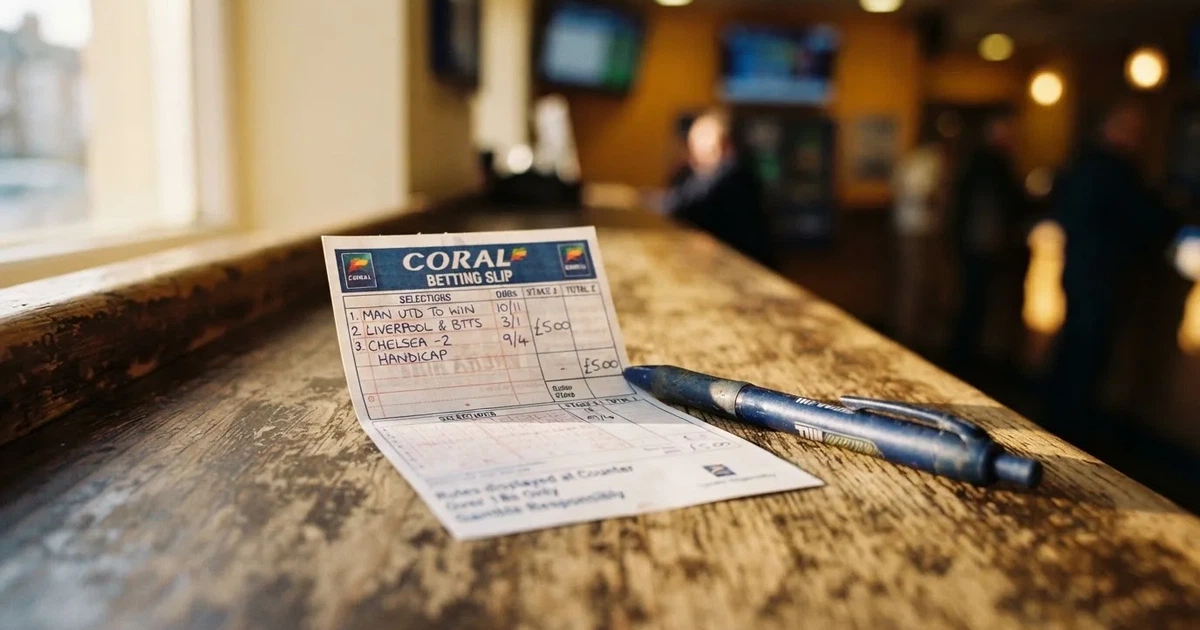
Current as of 27 October 2026 against the Gambling Commission’s public register and each operator’s own published terms.
Safeguards, self-exclusion and the protection that sits behind every licensed site
A bookmaker that holds a Gambling Commission licence is bound by a wider net of player-protection duties than the welcome page lets on. The protection does not cancel the loss a punter may take, and it does not turn a bad bet into a good one — it sets the floor under how a licensed operator must behave when a customer’s circumstances change. Anyone weighing value betting should read this section before the bonus ones, because the rules that follow shape what an “offer” actually costs.

GAMSTOP, deposit limits and the verification wall
GAMSTOP is the national self-exclusion register for online gambling in Great Britain. Periods run six months, one year, five years, or five years with auto-renewal; once the minimum period is up, the exclusion stays in force for a further seven years unless the customer asks to lift it. Every operator in this guide is bound by GAMSTOP, because GAMSTOP membership is a licence condition for any online bookmaker in Great Britain. The register blocks new account openings across licensed sites and apps, and there is no shortcut back in during the period chosen.
Deposits are subject to a customer-set gross deposit limit, and operators are required to apply one under the Commission’s Remote Technical Standards. The first changes applied on 31 October 2025, a second phase was postponed to 30 September 2026, and whether it is in force depends on the operator’s rollout. No state-set ceiling on stakes or losses exists: the customer sets the limit. A financial vulnerability check applies once deposits minus withdrawals exceed £150 over a rolling 30-day window — it is a public-record check (bankruptcy, county court judgments), not a credit-reference or income check. The earlier press-language “affordability checks” are staged: announced, no start date. A punter betting small does not feel this; a punter depositing heavily does.

Identity verification is mandatory before the first deposit or stake, including when a free bet or bonus is used. Name, address and date of birth are checked, and the verification wall is the reason there is no anonymous play at a licensed site. The same wall is why an offer cannot be claimed twice by the same person — operators tie bonuses to verified identities, and the system that enforces that is the same one that stops a self-excluded customer from quietly opening a new account.
Help when betting stops being fun
GamCare runs the National Gambling Helpline and a live chat service, and its counsellors handle gambling harm directly. GambleAware funds treatment, research and education, and its site lists local services by region. NHS gambling clinics operate in several cities; a GP can refer. Gamblers Anonymous runs peer-support meetings across the country. None of these replaces a bookmaker’s duty of care, and a licensed operator must signpost them, raise the conversation in safer-gambling messages, and act when a customer’s pattern suggests harm. A punter who feels the slip is the only thing left at the end of the day is paying for the licence with something other than money.
What a “bonus” and a “free bet” actually cost in turnover
A welcome offer is the first number a punter meets, and the worst number to start with. The headline figure is the gross credit, not the net value to the punter; the cost lives in the turnover, the minimum odds, the deadlines and the cap on what a free bet can return. The marketing on a UK-licensed site is now constrained — wagering requirements on bonuses are capped at 10x, and mixed-product offers are banned — but the constraint is on the worst excesses, not on the small print that decides what the bonus is really worth to the punter who claims it.
Cash bonus, free bet, price boost — and the difference between them
A cash bonus is credit the operator adds to the balance, withdrawable only after a defined volume of qualifying bets. A free bet is a token whose stake is usually not returned with a win — stake £10 as a free bet at 5.00 and the return is the £50 of profit, not £60. A “risk-free” bet refunded as a free bet is not a refund in money; the punter who loses the qualifying bet gets the same kind of token back, with the same not-returned-stake condition. A price boost is a one-off enhancement on a named selection; the boosted price replaces the standing price for the duration of the offer and pays out at the standard settlement rules. An accumulator insurance refunds a stake (often as a free bet) when one leg of a multiple lets the punter down; the refund is on the stake, the other legs still have to win for the bet to pay out. A cashback returns a slice of net losses over a period, again usually as a free bet or bonus credit with its own conditions.
Each type carries its own arithmetic, and the worst cost-to-value ratio on the page is rarely the smallest headline. A £10 free bet at decimal odds of 4.00 on a market with a 5% margin is worth roughly £10 × (4.00 − 1) ÷ 4.00 × 0.95, or about £7.13 of expected cash, before any minimum-odds or eligible-market condition is applied. The same £10 as a cash credit, needing 10x turnover on selections at minimum odds 1.50 with a 5% market margin, costs the punter about £100 × 0.05, or £5.00 of expected value to clear; the punter walks away with £5 of net bonus value at best, and only if the selections cooperate.
Reading the small print without flinching
Three numbers decide the value of an offer: the wagering multiple, the minimum odds, and the deadline. A 10x turnover cap on bonuses means a £10 bonus requires £100 of qualifying bets; lower at the time of writing, capped, but the same shape — turnover before withdrawal. Minimum odds filter out the safe bets that would clear turnover too quickly; the typical minimum sits between 1.50 and 2.00 in decimal, and the higher the minimum, the further the punter is pushed into lower-margin markets where the bookmaker’s edge bites harder. Deadlines range from seven to ninety days; a tight one forces the punter into bets that fit the clock rather than the form book.
A cap on free-bet winnings is the most punitive number of all, because it caps the upside while leaving the wagering requirement intact. Some operators limit free-bet returns to a stated figure; some exclude certain markets from free-bet eligibility; a few limit payment methods on which a free bet is honoured. The punter who reads the small print for the cap, the deadline and the minimum price is reading the only three lines that matter.
Apps, mobile browsers and the screen the slip ends up on
Value betting does not need an app, but the screen the bet is placed on shapes the experience. A mobile browser handles odds updates and bet placement on every UK-licensed site; an app adds push notifications, biometric login, a tighter live-bet experience and, in some cases, app-only price boosts that are not available on desktop. The app is a delivery channel, not a different market, and the prices on it should match the prices on the website for the same selection.
What a well-built app does that a browser does not
A betting app lives on the home screen, which means biometric login matters — Touch ID and Face ID shave a step out of a live bet and cut the chance of an abandoned slip. Push notifications let the punter follow a price move without keeping the site open, and the better apps let the punter customise what triggers an alert. Live in-play data, where the app renders faster than a browser, matters when the bet is on the next goal or the next wicket. Some operators run app-only boosts; the punter who bets only on desktop misses those, which is a small but real cut in expected value over a season.
What an app cannot do that the small print can
An app will not warn the punter that the welcome bonus excludes virtual sports, esports and non-UK/Irish horse racing — that exclusion lives in the operator’s terms and applies whether the bet is placed through the app, the browser, or a shop terminal. An app will not relax a minimum odds condition. An app will not refund a stake that fell foul of a payment-method exclusion. The mechanic is the same; the screen is different.
Live betting, cash out and the price the punter pays for early settlement
Live betting has matured into a centrepiece of UK bookmaker apps, and the value question on it is sharper than on pre-match markets, because the bookmaker’s margin is higher and the punter is making decisions on compressed information. A punter who treats in-play as a faster version of pre-match betting pays for the misreading.
Why the in-play margin is wider
Pre-match 1X2 markets on top-flight football typically run with a margin of around 5% to 7%; the same match in-play, particularly early in a game when the market is most volatile, can carry margins above 10%. The bookmaker’s trading desk prices more conservatively when the information is moving faster, and the punter pays for that conservatism with a wider spread between back and lay, and a slimmer expectation of finding value. Exchanges tend to carry tighter margins in-play because the back-lay mechanism forces price discovery, and a punter who can lay as well as back is the closest thing to a fair-value trader the UK market offers.
What cash out really costs
Cash out is a settlement button the operator offers before the event has concluded, and the price it quotes is the operator’s own valuation of the position at that moment. The cash-out value is less than the mathematical fair value, because the operator is buying the bet back at a discount to cover its own risk and to leave a margin. A free bet that has been wagered and won, then traded back through cash out, returns less than the cash-out quote suggests because the original free bet stake is excluded from the cash-out calculation. That exclusion is the reason a punter who took a free bet, traded it through a couple of legs, and clicked cash out at the end finds the settlement smaller than the slip implied.
The punter’s rule: cash out is a tool for situations where the value of certainty exceeds the value of waiting, not a tool for locking in profit that was never there.
Tips, predictions and the limit on what any tipster can promise
Value betting tips, predictions and “value bets today” pages promise the punter a shortcut around the arithmetic. The shortcut is rarely there. A tip is a single person’s read on a price; a system is a single person’s read on the discipline of staking. Both are useful when the punter still does the calculation, and both are dangerous when the punter does not, because a tip carries no protection against the bookmaker’s margin and no warranty on the stake that goes with it.
Why a tip is not a value bet
A tip is someone else’s view of which selection is most likely to win. A value bet is a calculation that compares that view — or the punter’s own — with the price offered, after the bookmaker’s margin has been stripped out. The two questions are different, and the punter who treats the first as the second pays for the confusion with a stake that has no edge to support it. A tip that names a winner is not a value bet if the price was too short to begin with; a value bet can lose and still have been the right price to take.
The bankroll discipline that turns a view into a stake
A bankroll is the slice of total funds the punter commits to betting, kept apart from rent, bills and the rest of life. The Kelly criterion, in its simplest form, sizes a stake as a fraction of bankroll: f = p/l − q/g, where p is the win probability, q is 1 − p, g is the fraction gained on a win and l is the fraction lost on a loss. With a 60% chance of winning at even money, p = 0.6, q = 0.4, g = l = 1, and f = 0.2 — twenty per cent of bankroll on the bet. The criterion is the cleanest answer to “how much”, and the discipline of staking a fixed fraction is what keeps a losing run from wiping out the bankroll. Full Kelly is aggressive; half-Kelly and quarter-Kelly are the choices most serious punters make, because the variance at full stake is punishing.
Bet types, odds and the arithmetic the slip is built on
A bet is a contract: the punter stakes an amount, the operator offers a price, and the settlement follows the result. The price is the lever, and the punter who reads it as a probability rather than a payout is the one who can ask whether it is fair.
Fractional, decimal and what the price is really saying
Fractional odds of “4 to 1 against” — written 4/1 — mean the punter wins £4 for every £1 staked, plus the £1 stake back, for a £5 return on a £1 stake. Decimal odds express the same price as 5.00: the return is the stake multiplied by the decimal odds. The decimal form makes the probability easier to see: fair decimal odds are the reciprocal of the probability. Decimal odds of 5.00 imply a probability of 1/5.00, or 20%; decimal odds of 2.00 imply 50%; decimal odds of 1.50 imply about 66.7%. Fractional odds convert to decimal by dividing and adding one: 4/1 is 5.00, 9/1 is 10.00, evens (1/1) is 2.00. A price shorter than evens — odds-on — implies a probability above 50%.
The implication is the direction the calculation runs. A bookmaker’s price is higher than the fair odds the smaller the implied probability is of the outcome; a price of 5.00 on a true probability of 25% is fair; a price of 4.00 on the same probability is a 25% underpay. Value is the gap between fair and offered.
Singles, multiples and how the margin compounds
A single bet settles on one selection. A double is two selections, both must win, and the odds multiply — a double of two selections at 3.00 and 4.00 carries combined odds of 12.00. A treble is three, an accumulator or “acca” is four or more, and the price compounds too: an acca of four legs at 2.00 each carries combined odds of 16.00. The catch is that the margin compounds as well, and a four-leg acca at 6% margin per leg carries an effective margin above 20%. A punter who builds accas for the headline price is paying a much higher cut than the same stakes on singles — and the higher the legs, the steeper the cut.
Each-way bets double it again, with one bet on the win and one on the place; the place terms vary by race and operator. Full-cover bets (Trixie, Patent, Yankee, Lucky 15, Heinz, Goliath) multiply the stake across combinations; a Lucky 15 at £1 unit is £15 of stake across fifteen bets, and the punter is paying margin fifteen times. The right comparison is not “Lucky 15 at £1 unit” against “single at £1”; it is “fifteen bets, fifteen margins” against the same fifteen bets placed one by one.
Bet builder, accumulator insurance, enhanced odds
A bet builder combines markets from a single event into one price; the markets on a single event carry the bookmaker’s margin, and the builder compounds it the same way an acca does. A Super Boost or enhanced odds is a one-off price on a named selection that pays out at the boosted number rather than the standing price. An accumulator insurance refunds a stake (often as a free bet) when one leg of an acca loses; the other legs still need to win, and the refund is on the stake of that leg, not on the whole bet.
Sports, tournaments and where the price is tightest
Value is not evenly distributed across a sportsbook. Top-flight football 1X2 markets typically carry tighter margins than second-tier football or lower-league fixtures; outright tournament markets on major events carry wider margins because the field is large and the bookmaker’s risk is harder to hedge. Horse racing margins differ by meeting and race type; tennis margins are tighter on the slams and wider on the challenger tour.
Premier League, Champions League and the question of liquidity
Liquidity is the volume of money on both sides of a market, and the higher the liquidity, the tighter the margin the bookmaker can offer. The Premier League and the Champions League carry more liquidity than almost any other football market in the UK, and the margins on 1X2, both teams to score and match result with handicap are correspondingly tighter. The punter looking for value in football starts there, and works outward into less-liquid competitions only when the form book is on the punter’s side. Outright tournament markets are a separate question: the bookmaker carries more risk, the margin is wider, and the punter is paying for the privilege of a long-priced runner.
Horse racing, each-way and best odds guaranteed
Horse racing is a different market from football because the field is large and the form book is dense. Each-way bets split the stake between a win bet and a place bet, and the place terms depend on the number of runners and the type of race — typically one quarter of the win odds for the first three places in handicaps with eight or more runners, one fifth for the first three in non-handicaps with five to seven runners, one quarter for the first two in smaller fields. Best odds guaranteed (BOG) is the guarantee that, if the starting price is higher than the price taken, the bet settles at the higher starting price. The guarantee applies to UK and Irish horse racing on the day of the race — typically from 8 AM onwards on singles and multiples — and it does not apply to ante-post, tote or pari-mutuel bets. The punter who backs a horse early in the morning, watches the market drift, and gets paid at the bigger price has just received the most valuable concession the UK racing market gives away.
Esports, MMA, niche sports and the price of thinner markets
Esports, MMA, handball, table tennis, badminton and the rest of the niche calendar carry wider margins because liquidity is lower and the bookmaker’s risk model is less confident. The punter looking for value in those markets pays for the privilege in two ways: a higher margin on every selection, and a less reliable form book because the data behind the prices is thinner. The trade-off is real: a specialist can still find an edge in a niche market if the specialist knows more than the trader pricing the market. A casual punter pays the wider margin for the privilege of betting on something they enjoy watching.
How a bet actually works, from quote to settlement
A bet moves through five steps: selection, stake, price lock, settlement and payout. Each step is a place where the punter pays for the system, and each step is reversible until the price locks.
The quote and the price lock
The selection is the outcome the punter is backing. The stake is the amount risked. The price is the decimal or fractional number the operator offers for that outcome at the moment the bet is placed. The price lock is the moment the slip is confirmed: from that instant, the punter is contracted at those prices and that stake, and the only thing that changes is the settlement rule the bet will follow. If the punter backs a team at 2.00 and the price drops to 1.80 before the slip is confirmed, the punter still gets 2.00; if the price rises to 2.20, the punter still gets 2.00. The lock is the moment the contract is signed.
Settlement and payout
Settlement follows the event. A single bet on a football match settles on the result after 90 minutes plus stoppage time, unless the market states otherwise (extra time, penalties, and so on). Each-way bets settle on the win and place positions. Accumulators settle when all legs have been settled, win or lose. Cash out settles before the event has concluded, at the price the operator offers at the moment the button is clicked. Payout is the return: stake × decimal odds for a single, the accumulated price for an acca, and the cash-out value for a closed position. The punter’s net profit is the return minus the stake.
Closing line value and why it is the punter’s compass
Closing line value (CLV) is the difference between the price the punter took and the price at which the market closed, just before the event began. A punter who consistently beats the closing price is, on average, beating the market — because the closing price is the most informed estimate available, set by a trading operation that has seen all the liquidity and all the news the market has produced. CLV is the cleanest measure of whether the punter is finding value or simply getting lucky: a punter who beats the close by 2% on average over a hundred bets is finding value; a punter who takes short prices on winners and longer prices on losers is losing value even when the slip is green.
The ten reviewed bookmakers, ranked by what the value picture looks like
The list below is the set of ten operators held against a Gambling Commission remote licence and named on the Commission’s public register. Each is presented in the order set by the operator list; the order is not a recommendation. The reviewed bookmakers are the brands whose offers, markets and pricing are taken apart in the table and the write-ups below.
| Brand | Gambling Commission remote licence and holder | What the operator’s own terms state on value |
|---|---|---|
| Fitzdares | 000400-R-103839-030 (account 400), Fitzdares Limited | App offers cash out, accumulators, Lucky 15s, antepost markets on racing, football, tennis, rugby, cricket, golf and American football, with in-play live odds |
| NetBet | 039170-R-319343-032 (account 39170), Netbet Enterprises Limited | Daily Boosts, Profit Boosts and free bet offers, a Bet Builder with instant dynamic odds, and sports stats for major leagues |
| BetUK | 039198-R-319450-029 (account 39198), LeoVegas Gaming PLC | Free bets exclude virtual sports, esports and non-UK/IE horse racing; minimum odds apply |
| bet365 | 055148-R-331498-002 (account 55148), Hillside (UK Sports) ENC | Bet Builder+ combining markets from one event pre-match and in-play, Super Boosts, Winnings Boosts on Bet Builders and selected singles, and daily Bet Boosts |
| Paddy Power | 039439-R-319330-013 (account 39439), PPB Counterparty Services Limited | Bet Builder+, Popular Bet Builders, Super Sub (a bet rolls over to the replacement if a selected player is substituted), expanded Win More markets and player and ACCA stats |
| London Bet | 066162-R-340278-004 (account 66162), Thistle Bet Limited | App published by Thistle Bet Limited, states it is licensed and regulated in the UK, App Store age rating 17+ |
| 888sport | 039028-R-319297-014 (account 39028), 888 UK Limited | Pre-match and in-play betting, Cash Out, Bet Builder, racing streams, BetFinder form tools, a live bet feed and daily boosted odds |
| Smarkets | 039173-R-319366-011 (account 39173), Smarkets (Malta) Limited | Standard commission of 2% on eligible exchange bets; 0% commission for 60 days for new customers with a minimum first deposit of £10 |
| Octobet | 062545-R-337248-006 (account 62545), Octopus Game Limited | Best Odds Guaranteed on UK and Irish horse racing, up to £150 per customer per race |
| Tote | 054779-R-331321-008 (account 54779), TDCO Limited | Best Odds Guaranteed on UK and Irish horse racing from 8 AM on the day of the race, on single and multiple bets; not ante-post, tote or pari-mutuel |
The numbers above are the Commission’s public record. The market coverage and product features come from each operator’s own published terms and from the operator’s app listing on the UK App Store at the snapshot date.
Fitzdares — antepost depth and the racing-first pricing
Fitzdares has staked its name on British and Irish racing, with antepost markets that run deep into the season and a horse-racing app that surfaces form and prices on the same screen. The licence holder is Fitzdares Limited under Commission account 400, with a remote general betting standard licence covering real events. Cash out is available on the app, accumulators and Lucky 15s are supported, and the in-play product extends across football, tennis, rugby, cricket, golf and American football alongside the racing core.
The value picture for the punter who bets mostly on racing is the BOG concession: the same best-odds-guaranteed mechanic that most UK bookmakers offer applies, and on a racing-focused book the concession lands more often because the punter is taking prices more often. The trade-off is the depth of the football and tennis offering — narrower than the big multi-sportsbooks, and the in-play markets carry wider margins because the liquidity is thinner. The punter who wants a racing specialist and is willing to give up some of the football and tennis depth has a sharper price on the markets that matter.
NetBet — Daily Boosts and the cost of chasing the headline
NetBet runs Daily Boosts and Profit Boosts as standing product rather than one-off campaigns, and pairs the boost offering with free bet offers and a Bet Builder with instant dynamic odds. The licence holder is Netbet Enterprises Limited under Commission account 39170. Sports stats for the major leagues sit alongside the price screen, which is the right move for a punter who wants form beside the slip.
The value picture for the punter who likes boosted odds is the standing nature of the offer: a Daily Boost is the same kind of price enhancement every day, and the punter who knows the rhythm of the boost schedule can plan stakes around it. The trade-off is that boosts are one-off prices on named selections, and the underlying market margin still applies to the rest of the slip. A boost on a single leg does not lower the margin on the other legs of an acca. The punter who reads boosts as “free value” pays for the misreading with margin elsewhere.
BetUK — the exclusions the small print names
BetUK runs a sportsbook under LeoVegas Gaming PLC, the same group that runs a UK-facing casino under the BetMGM brand. The licence is held by LeoVegas Gaming PLC under Commission account 39198. The free bet offer is the standard shape, and the small print names what is excluded: virtual sports, esports and non-UK/Irish horse racing, with minimum odds applying on the qualifying bet and the wagering turnover.
The value picture for the punter who bets mostly on UK and Irish racing and mainstream football is that the exclusions do not cut into the routine. The trade-off is the punter who bets on virtuals, esports or overseas racing: those markets are not eligible for the free bet, and the offer is worth nothing on those slips. The punter should read the exclusion list before claiming, because the offer is paid in the markets it includes, not the ones it does not.
bet365 — Bet Builder+ and the multi-leg mechanic
bet365 is the largest UK-facing sportsbook by liquidity, and the product depth reflects the volume. Bet Builder+ combines markets from a single event into a single bet, available both pre-match and in-play; Super Boosts sit on top of the standing prices; Winnings Boosts apply to Bet Builders and selected singles; daily Bet Boosts rotate through named selections. The licence is held by Hillside (UK Sports) ENC under Commission account 55148.
The value picture for the punter who bets singles and builders is the liquidity: tighter margins on Premier League, Champions League and top-flight football because the volume is on both sides of the book. The trade-off is the same compound-margin point that applies to every builder — the more markets the punter combines, the wider the effective margin becomes, and the builder compounds the bookmaker’s cut the same way an acca does. The punter who treats a Bet Builder+ as a single bet is paying a multi-leg price for the convenience of one slip.
Paddy Power — Super Sub, popular builders and the price of misusubstitution
Paddy Power’s app carries Bet Builder+, a Popular Bet Builders feed, and Super Sub — a bet rolls over to the replacement if a selected player is substituted before a market is settled. Expanded Win More markets extend the price menu on named events, and the player and ACCA stats sit alongside the slip. The licence is held by PPB Counterparty Services Limited under Commission account 39439.
The value picture for the punter who bets player markets is Super Sub: a goal scorer market that survives a substitution is a real concession, and the punter whose read on the team sheet was right but whose named player did not start still has a live bet. The trade-off is that Super Sub applies to the markets the operator names, not to every player market, and the punter should check the eligible markets before staking. The rest of the Paddy Power offering is the standard multi-sportsbook shape: tight liquidity on Premier League and Champions League, wider margins in-play, and a Super Boost calendar that rotates through the football calendar.
London Bet — a smaller book with a tighter menu
London Bet is published by Thistle Bet Limited under Commission account 66162, with a UK-facing app carrying a 17+ age rating. The product menu is narrower than the major sportsbooks, and the markets lean towards football and racing with a smaller offering elsewhere.
The value picture for the punter who bets on the markets the book is strong on is the focused menu: a book that does not spread its risk across every sport can price tighter on the sports it does cover. The trade-off is depth: a punter who wants every European league, esports, MMA, handball, table tennis and the rest of the niche calendar will find the book stretched thin, and the in-play margins in those markets will be wider than at the majors. The punter whose betting is concentrated on Premier League, Championship and UK/Irish racing gets a focused book; the punter whose betting is varied gets a thinner one.
888sport — racing streams, BetFinder and the form-screen product
888sport carries pre-match and in-play betting, Cash Out, Bet Builder, racing streams, BetFinder form tools, a live bet feed and daily boosted odds. The licence is held by 888 UK Limited under Commission account 39028. The racing streams are the headline product for the racing punter, and BetFinder pulls form data onto the same screen as the price.
The value picture for the punter who bets racing is the combination of streams and form on the same screen as the slip; the punter watching a race and reading form simultaneously has a faster decision loop than a punter switching between screens. The trade-off is the same multi-sportsbook shape as the rest of the major books: tight on Premier League and Champions League, wider on the smaller leagues, and the in-play margins are wider than the pre-match equivalents. The punter who treats the stream as a value-add reads the price correctly; the punter who treats the stream as an edge is paying for the privilege of watching more races.
Smarkets — the exchange mechanic and the 2% commission
Smarkets is a betting intermediary rather than a traditional sportsbook, and the mechanics are different: the punter can back selections like a bookmaker, or lay them — bet against an outcome — and the price is set by other punters rather than by a trading desk. The standard commission on eligible exchange bets is 2%, and new customers have been offered 0% commission for 60 days with a minimum first deposit of £10. The licence is held by Smarkets (Malta) Limited under Commission account 39173.
The value picture for the punter who can lay as well as back is the closest thing to a fair-value market in UK betting, because the back-lay mechanism forces the price towards the true probability and the margin is the commission rather than the spread. The trade-off is the skill curve: a punter who has never laid a bet has to learn the mechanic, and the exchange interface is denser than a sportsbook. The punter willing to learn it gets a tighter price; the punter who does not want to learn it pays the wider spread at a traditional book.
Octobet — Best Odds Guaranteed with a per-race cap
Octobet offers Best Odds Guaranteed on UK and Irish horse racing, up to £150 per customer per race. The licence is held by Octopus Game Limited under Commission account 62545.
The value picture for the punter who bets UK and Irish racing is the BOG concession with a clear cap: the punter knows the maximum extra value the concession can deliver, and the punter whose stake is below the cap gets the full benefit. The trade-off is the cap itself: a punter staking more than £150 on a single race does not get BOG on the excess, and the excess settles at starting price. The punter staking below the cap has a sharper concession than the punter staking above it.
Tote — pool betting, BOG from 8 AM and the racing heritage
Tote is the pool-betting heritage brand, held under a remote general betting standard licence by TDCO Limited under Commission account 54779. The pool-betting offering is the legacy product — bets are pooled rather than fixed-odds, and dividends are declared after the race. Alongside the pools, the brand offers fixed-odds markets with BOG on UK and Irish racing from 8 AM on the day of the race, on singles and multiples, excluding ante-post, tote and pari-mutuel.
The value picture for the punter who understands pool betting is the dividend structure: the punter is not betting against the bookmaker but against the pool, and the dividend depends on the pool’s composition. The trade-off is the volatility of pool dividends — a heavily-backed favourite shortens the place dividend and lengthens the win dividend, and the punter staking early in the pool takes a different position than the punter staking late. The BOG concession sits on top of the fixed-odds offering and is the same shape as elsewhere in the UK market.
What “value” actually means in a UK betting market
Value is the spread between the price the punter takes and the fair price of the outcome, after the bookmaker’s margin has been stripped out. The UK market carries the margin in every number on the slip, and the punter’s edge is the gap between the bookmaker’s implied probability and the punter’s own estimate of the true probability.
The bookmaker’s margin and the two-way example
A two-way market at decimal odds of 1.90 and 1.90 implies a payout share of 1 ÷ (1/1.90 + 1/1.90), or 95%; the margin is 1 − 0.95, or 5%. The same market at decimal odds of 1.85 and 1.85 implies a payout share of about 92.5% and a margin of about 7.5%; at decimal odds of 1.80 and 1.80 the margin climbs to roughly 11.1%. The punter’s take-home from a winning £10 stake at 1.90 is £19; at 1.85 it is £18.50; at 1.80 it is £18. The arithmetic is the only place a sharp price beats a soft one — the same selection, the same stake, the same outcome, and the punter pays the difference on the slip.
The result is a band, not a number: a market priced near 1.90 carries a margin in the region of 5%; a market priced near 1.80 carries a margin closer to 10%; the UK football 1X2 sits somewhere in that range depending on the match, the liquidity and the time before kick-off. The bookmaker’s margin (overround) is built into the price — in a three-horse example with true probabilities of 50%, 40% and 10%, the bookmaker’s implied probabilities of 60%, 50% and 20% total 130%, and the 30-point excess is the built-in profit.
Finding value in a market that has priced it in
Value is the difference between the punter’s probability and the implied probability, after margin. A punter who estimates a 60% chance of a selection at decimal odds of 1.90 has found value, because the implied probability at 1.90/1.90 is about 52.6% on either side of the book and the margin takes the rest; a 60% estimate leaves an edge of roughly 7.4% before the margin, and roughly 2.4% after. The same estimate at 1.80/1.80 leaves a smaller edge after the wider margin. The arithmetic is the same shape on every market — the punter estimates, the punter compares with the price, the punter stakes or walks away.
The discipline is to walk away more often than to stake. A punter who finds ten value bets in a hundred is finding more than the market sustains; a punter who finds three is closer to the realistic rate, and the long-run edge lives in those three.
Legality, licensing and the protection that comes with a GB licence
A bookmaker that takes bets from customers in Great Britain needs a Gambling Commission licence. Since the Gambling (Licensing and Advertising) Act 2014 the requirement has applied at the point of consumption: an operator based in Malta, Gibraltar, Curaçao or anywhere else still needs a Commission licence to take bets from customers in Great Britain. A foreign licence is not a substitute.
What a GB licence requires
A Commission licence binds the operator to the Licence Conditions and Codes of Practice (LCCP), the social responsibility code, the technical standards for remote gambling, and the player-protection duties that run from GAMSTOP through the financial vulnerability check to the marketing rules. Wagering requirements on bonuses are capped at 10x, mixed-product promotions are banned, credit cards are banned for gambling (since 14 April 2020), and identity verification is mandatory before the first deposit. The 10x cap is the regulatory ceiling, not the typical industry offer — many operators run bonuses with no wagering requirement at all, and the cap sits above the typical rather than below it.
The Commission’s public register is searchable by business name, trading name, domain or account number, and is the whole test of whether a brand holds a licence. The register can be reached through the Commission’s website; a punter who wants to check a brand before depositing can do so in a few minutes, and the answer is on the register or it is not. The register lists the categories the licence covers — remote general betting standard (real events), remote general betting standard (virtual events), remote general betting limited, remote pool betting, and remote betting intermediary (the licence type for exchanges).
What an unlicensed site costs the punter
A site without a GB licence is not regulated by the Commission, and the punter who bets there trades the protections for the price. The list is long: no GAMSTOP coverage, no Commission complaints route, no approved dispute-resolution body, no British consumer redress if funds are withheld, no binding under the 10x bonus cap, no financial vulnerability check, no identity-verification wall, and no recourse when a withdrawal stalls. The operator may still pay out, and many do, but the punter has no leverage when the operator does not. Enforcement against unlicensed operators is the Commission’s job — cease-and-desist notices, search-engine referrals, work with registrars, hosts and payment providers, and court-order DNS blocking powers that have been granted or are about to be — and the punter’s protection is to check the register before staking, not to rely on enforcement after a loss.
Frequently asked questions about value betting in Great Britain
How do I find value bets?
A value bet is a selection whose decimal odds imply a lower probability than the punter’s own estimate of the true chance of the outcome. The starting point is the implied probability — the reciprocal of the decimal odds — compared with the punter’s read on the form, the team news and the market. The arithmetic is the comparison; the discipline is to walk away when the implied probability is higher than the punter’s estimate, no matter how much the punter wants to back the selection.
What is value betting?
Value betting is staking on selections whose price offers a positive expected return, after the bookmaker’s margin. The price is the lever; the punter’s read is the input; the gap between them is the value. A value bet can lose — the expected return is an average over many bets, not a guarantee for any single one — and the long-run edge lives in staking only when the price offers it.
What is closing line value in betting?
Closing line value (CLV) is the difference between the price the punter took and the price at which the market closed, just before the event began. The closing price is the most informed estimate the market produces, set by a trading desk that has seen all the liquidity and the news; a punter who consistently beats the closing price is, on average, finding value. CLV is a measure of process, not a measure of any single bet, and it is the cleanest way to know whether the punter is getting better or worse.
How can I check that a bookmaker holds a Gambling Commission licence?
The Commission’s public register lists every licensed operator, with the licence number, the categories covered and the trading name. Search by business name, trading name, domain or account number, and the answer is on the register or it is not. The ten operators reviewed in this guide are all listed on the register at the snapshot date, with the licence numbers in the table above.
How is the return on a bet worked out from the stake and the odds?
Return = stake × decimal odds. Net profit = stake × (decimal odds − 1). A £10 stake at decimal odds of 5.00 returns £50 — £40 of profit and the £10 stake. For a combination bet the odds of the legs multiply: a double at 3.00 and 4.00 carries combined odds of 12.00, and a £10 stake returns £120. The arithmetic is the same on every bet; the price is the only variable.
What is the bookmaker’s margin and how can I see it in the odds?
The margin (overround) is the cut the bookmaker takes from every market, built into the prices so that the implied probabilities across all outcomes add up to more than 100%. In a two-way market at 1.90 and 1.90, the implied probabilities are 52.6% on either side, totalling 105.3%; the 5.3-point excess is the margin. The tighter the prices, the smaller the margin; the wider the prices, the larger the margin. A punter who wants a sharp price looks for tight prices on the markets the punter bets on.
Betting sites & exchanges – Best betting exchange
Content created by the «Best betting exchange» team
