
Super Heinz bet explained — the 120-bet structure, payout maths and the price a full-cover wager carries
 Available in US
A Super Heinz is one of the larger full-cover multiples the betting shops take, and it is the kind of wager that looks modest on the betting slip until the stake is multiplied by the number of lines. One hundred and twenty bets across seven selections, every possible multiple from the doubles upward, no singles. Punters reach for it when they have a shortlist of selections they fancy but cannot separate, and the wager hedges the leg that loses by spreading the stake across combinations that may yet land. The headline figure, however, is the operating cost. A £1 unit stake turns into £120 staked across the bet, and any of those lines pays only when the whole combination comes in. The maths behind it is plain enough; the bit the marketing rarely spells out is what that £120 actually returns under realistic odds. The page below sets out the structure, the payout arithmetic, the licensed bookmakers that take the wager, and the responsible-gambling and bonus rules a UK punter sits inside when one is laid.
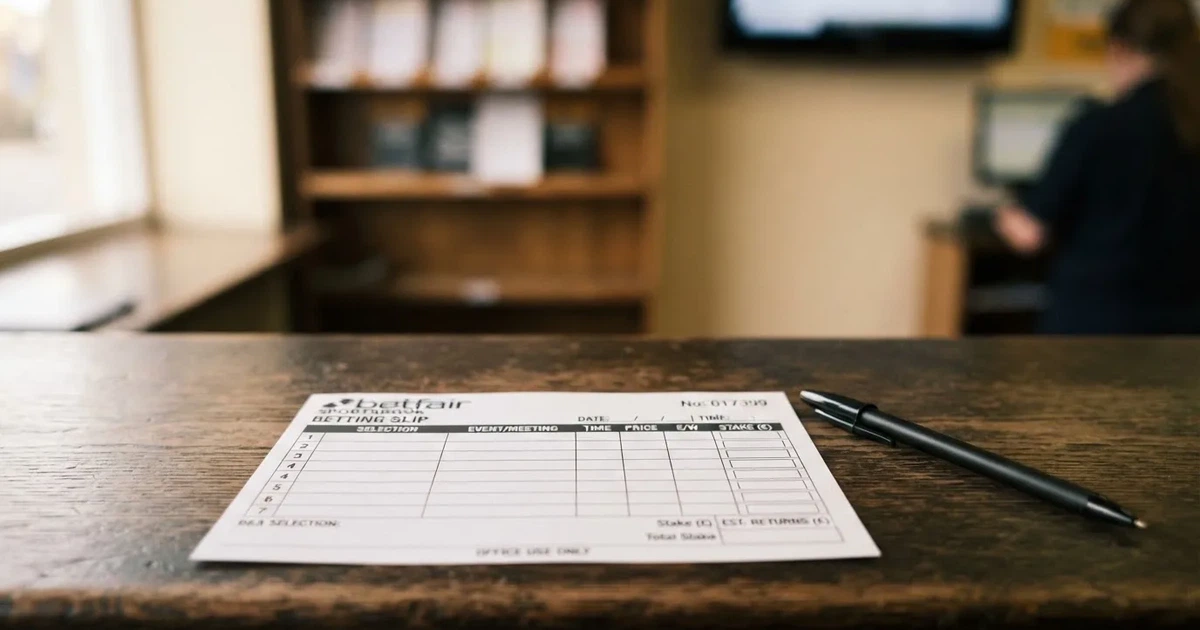
A Super Heinz is a full-cover bet on seven selections, comprising 120 separate wagers. Every multiple from two selections upward is included, with no singles. The total outlay is the unit stake multiplied by 120, and because each line is independent, a single losing leg drops affected combinations to the next lowest multiple.
> Current as of 27 October 2026 — checked against the Gambling Commission’s public register.
Safer gambling around full-cover bets
A Super Heinz looks like a way to give yourself more chances on a card of selections, and that framing is the marketing’s, not the maths’. One hundred and twenty lines means a hundred and twenty separate wagers, and a losing two-leg combination wastes most of them in one stroke. The right way to think about the wager is as concentrated risk dressed in the language of insurance, and the rules a UK punter sits inside exist precisely because the language is convincing.
Every online bookmaker licensed in Great Britain is a GAMSTOP member, and a customer who has registered with GAMSTOP for six months, one year, five years, or five years with auto-renewal cannot deposit or place a bet at any of them until the minimum period ends and the further seven-year cooling-off has run. The scheme is the national multi-operator self-exclusion, online only — betting shops run their own offline equivalent, and the corner bookie who takes a cash slip is a separate route that sits outside GAMSTOP. Registering takes a few minutes and is irreversible for the chosen term.

Three further checks are now baked into the customer journey at any licensed operator. Identity is verified before the first deposit or first bet, including with a free bet — name, address and date of birth are confirmed, which is why no anonymous play exists at a UK-licensed site. A light financial vulnerability check fires automatically when a customer’s deposits minus withdrawals cross £150 over a rolling 30 days, and it is a public-record sweep (bankruptcy and county-court judgments), not an income check. The bigger financial risk assessment that the press calls “affordability checks” is a separate, staged reform: the Commission announced it in a July 2026 paper, with no start date, and the page below treats it as announced rather than as live. Where a customer chooses to set a deposit ceiling of their own, the operator is obliged to honour it under the Remote Technical Standards.
Help is one tap off every licensed site. GamCare runs the National Gambling Helpline. GambleAware funds treatment and education. The NHS runs gambling clinics across the regions, and Gamblers Anonymous runs meetings. None of these is a substitute for the GAMSTOP register when a punter wants the wagering stops itself; they sit beside it. The licensed bookmaker also offers deposit limits, time-outs and reality checks from inside the account, and an honest bookmaker makes those settings one click from the cashier rather than several menus deep.
The unsafe route is the unlicensed offshore site. A Curaçao, Anjouan or Malta-registered brand without a Gambling Commission licence accepts the same Super Heinz but sits outside every protection above: no GAMSTOP coverage, no Commission complaints route, no approved dispute-resolution body, no British consumer redress if funds are withheld, and the wagering-requirement cap and the £150 vulnerability check do not apply. Section 33 of the Gambling Act 2005 is aimed at the operator of an unlicensed offering, not at the customer who places a bet there; the honest framing is that the bettor loses every backstop rather than that the bet is illegal. None of the brands covered in the comparison below is an offshore outfit.
Bonuses and free bets against full-cover multiples
The bonus pitch around a Super Heinz is usually a free bet or a price boost on multiples, and the right way to read either is the same way a single-bonus reader reads any welcome offer — through the wagering requirement, the minimum odds and the expiry, not the headline. A free bet on a Super Heinz is a small concession with a large catch: most bookmakers do not return the free-bet stake with a winning line, so a £10 free bet at 3/1 returns £30 in cash profit, not £40. The full-cover bet compounds the rule because each of the 120 lines settles independently, and most of them lose.

QuinnBet, one of the licensed brands the comparison sets out below, names the rule plainly on its help pages: free bets are valid for seven days from credit, may be used on any market at odds of 1/2 (1.50) or greater, cap out at maximum odds of 50/1, and may be placed as straight accumulators but not as Trixies, Patents or Yankees. A Super Heinz is not on the excluded list there, but the seven-day clock and the minimum-odds rule both apply to every line of it, and most lines of a 120-bet combination will not clear 1/2 on each leg. The free bet is best spent on singles or short accumulators where the qualifying odds are easier to hit.
BetMGM’s UK sports welcome offer for new customers depositing £10 or more and placing a sports bet within seven days hands out four £10 free bets — two football accumulators of four or more selections, two sports multiples of two or more. Each is a free bet of the same kind, and each carries the seven-day window. NetBet’s parallel offer runs to Daily Boosts, Profit Boosts and free bet offers, with a Bet Builder that updates the odds dynamically as the selections are added. The pattern is consistent across the licensed set: small stake, tight clock, minimum-odds rule, and the value sits in using the free bet on a wager whose structure does not bury most of it in losing lines.
Two rules from the bonus code that bind every licensed offer. Wagering requirements on bonuses are capped at 10x — a £10 bonus with a 50x rollover would have needed £500 of bets under the old regime and at most £100 under the new. Mixed-product promotions are banned: a “bet on football to get free spins” offer cannot be marketed by a licensed bookmaker any more. Neither cap is a marketing line a punter will see on the betting slip, but both shape every welcome offer that lands in the inbox from a UK brand. Free bets with no wagering condition are a separate case the code does not settle, and the marketing on those offers has to be read against the underlying rules of each bet type rather than against the bonus terms.
The price of clearing a bonus on a Super Heinz is what the calculation section sets out below in plain numbers, and the result lands in the same place for any reader: the bonus is modest, the wagering path is heavy, and the time pressure is real. A punter who treats the free bet as a chance to clear a bonus with a long-odds wager spends most of it on lines that lose.
Predictions, systems and the analytics the wager pretends to offer
A Super Heinz is sold to the recreational punter as a system bet, and system betting in this market has a precise meaning: a fixed set of multiples across a defined number of selections, with the stake split evenly across every line. The “system” word is the marketing’s; the arithmetic is the bookmaker’s. What the wager actually offers is a wide spread of combinations across a shortlist, with a stake sized so that a single winning combination can return the outlay even when several lines drop out. The bettor pays for the spread by staking 120 lines, and the question a serious punter asks of any system is whether the spread is worth the stake.
Heinz betting tips and super Heinz bet tips are a content category of their own, and they cluster around horse racing and football accumulators in the British market. The honest summary of the category: there is no system that beats a margin-loaded book over a series of bets, and there is no tipster service that publishes audited returns after fees. The closest thing to an analytical edge in full-cover betting is selection discipline — fewer, better-chosen legs on the slip — and that discipline runs against the Super Heinz structure rather than with it. The wager wants a wide shortlist; the edge sits in a narrow one.
Two analytic moves that do help. First, price-shopping: bookmakers’ prices on the same selection differ by enough that a £120 Super Heinz laid at one firm can pay materially less than the same slip laid elsewhere. The trading desks move independently and the margin each applies to a given market is its own. Oddschecker publishes an average price across the major firms on most UK and Irish horse races, and Fitzwilliam Sports in the comparison sets its prices against that average. Second, each-way thinking: a Super Heinz on horse racing pays each-way on every line that includes a horse that places, which doubles the stake and is worth modelling before the slip is placed. The place terms on each race are published by the operator and by the Racing Post, and they vary by field size and by race type. Neither move removes the margin; both reduce how much of it the punter gives away.
The bankroll side is the part the marketing never explains. A Super Heinz at £1 a line costs £120 outright, and a £2 unit stake costs £240. A punter who lays the bet at £1 a line is staking the better part of a working day’s disposable income on the chance that one of 120 combinations lands, and most of those combinations will not. The honest framing of “system betting” is as a budget discipline first and a wagering structure second: stake the unit at a level that fits the bankroll, and let the structure follow from the size of the shortlist rather than the other way around.
Bet types, odds and how a Super Heinz is settled
The structure of the 120 bets is fixed: 21 doubles, 35 trebles, 35 four-folds, 21 five-folds, 7 six-folds and 1 seven-fold. There are no singles. The stake is the unit stake multiplied by 120, so a £1 unit stake costs £120 outright and a £2 unit stake costs £240.
The structure sits between two neighbours in the full-cover family. A Heinz on six selections holds 57 bets — 15 doubles, 20 trebles, 15 four-folds, 6 five-folds and 1 six-fold — and a Goliath on eight selections holds 247 bets. The Super Heinz is the middle rung of the three, and the marketing for each of them is identical in shape: every possible multiple above singles, with no singles. The progression runs in the same direction as the betting shop’s vocabulary — Trixie (3 selections, 4 bets), Patent (3, 7), Yankee (4, 11), Lucky 15 (4, 15), Canadian or Super Yankee (5, 26), Heinz (6, 57), Super Heinz (7, 120), Goliath (8, 247) — and each step adds selections and bets.
Settlement follows a fixed rule that the support pages of the major firms set out plainly. Every line settles independently on its own combination. If one leg loses, every line that includes that leg loses too, and the wager’s return is the sum of the winning lines minus the stake. A voided leg drops to the next lowest multiple — a treble becomes a double, a seven-fold becomes a six-fold — and the wager’s return is recalculated accordingly. A non-runner in horse racing is a void selection, and the same rule applies. The bookmaker’s support pages spell out the calculation method, and the licence holder is bound by it under the LCCP social responsibility code.
Odds work the way odds on any combination work. Decimal odds are the simple form for the calculation: a line at decimal odds of 6.00 returns six times the unit stake, and a line at 2.50 returns two-and-a-half times. Fractional odds of 5/1 convert to 6.00, evens (1/1) convert to 2.00, 6/4 converts to 2.50, and the conversion is the rule the article holds throughout: every fractional price in the prose and tables is shown with its decimal form beside it. The bookmaker’s margin sits inside every price, and the calculation section shows how the margin shows up in the arithmetic.
The payout on a sample Super Heinz
A worked payout gives the structure a concrete shape. Take three illustrative selections at 1/2 (1.50), evens (2.00) and 6/4 (2.50), and imagine a seven-leg shortlist where each selection is one of those three prices — say three at 1.50, two at 2.00 and two at 2.50. The seven-fold alone, with all seven legs landing, returns the unit stake multiplied by the product of all seven decimal odds. With the price mix above the seven-fold decimal price is 1.50³ × 2.00² × 2.50² = 3.375 × 4 × 6.25 = 84.375, so a £1 unit stake on the seven-fold returns £84.38 if it lands, and a £10 stake returns £843.75. The treble of three 2.50s returns £15.62 on a £1 stake. The double of 1.50 and 2.50 returns £3.75 on a £1 stake. Every other line on the slip pays its own decimal multiple of the unit stake.
That single winning combination is the headline case the marketing uses. The honest case is the spread. On a £1 unit stake the total outlay is £120, and a Super Heinz that lands only its doubles — say ten of them paying between £2.25 and £6.25 each — returns £25 to £60 across those lines and not much more from the higher multiples that include losing legs. A £120 outlay wants a return comfortably above £120 to clear a profit, and most realistic combinations fall short of that. The right framing: the wager is one or two clean combinations away from a return several times the stake, and one bad leg away from a small return that mostly covers the stake.
The arithmetic on a single line is the same as on any bet. Return equals stake multiplied by odds; net profit equals stake multiplied by odds minus one. For a combination bet the odds of the legs multiply into one price. The unit stake on a Super Heinz is per line, and the total outlay is 120 times the unit stake.
How the bookmaker’s margin sits inside the odds
The bookmaker’s margin is the cut of every unit staked on a market that the firm keeps, on average, over the long run. The way to see it in the odds is to take every outcome of a market, take the reciprocal of each price, sum the reciprocals, and subtract the sum from one. The result is the margin, and one minus the margin is the payout share.
For a two-outcome market priced at 5/6 (1.83) and 6/5 (2.20), the calculation runs 1 ÷ 1.83 plus 1 ÷ 2.20, which gives 0.5464 + 0.4545 = 1.0009 — a margin of 0.09 %, and a payout share of 99.91 %. The closer the sum of the reciprocals is to one, the thinner the margin. For a three-outcome 1X2 football market priced at 6/5 (2.20), 12/5 (3.40) and 5/2 (3.50), the calculation runs 1 ÷ 2.20 + 1 ÷ 3.40 + 1 ÷ 3.50 = 0.4545 + 0.2941 + 0.2857 = 1.0344, a margin of 3.44 %. A typical Premier League match markets in the 4 to 7 % margin band; an outside market with thinner liquidity can run 8 to 10 %. The margin is the same number as the overround in older British vocabulary.
The Super Heinz sits on top of seven selections across any combination of markets, and each line carries the margin of its own market at the price at the moment the bet was struck. The margin compounds across legs in the same way the odds compound, so a Super Heinz on seven legs each at a 5 % margin has an effective margin closer to 30 % across the wager as a whole — the exact figure is one minus the product of the payout shares of each leg. The bettor pays the margin on every line of the wager whether the line wins or loses, because the margin is built into the price.
The honest picture is that the marketing for any full-cover bet is built on the upside cases — a seven-fold landing, a five-fold plus a six-fold — and the cost is the margin compounded across every leg, paid on the stake regardless of outcome. A punter who reads the marketing for what it is and the arithmetic for what it is makes a clearer decision about whether the spread is worth the stake.
The ten licensed bookmakers that take a Super Heinz
The brands below are the ten the comparison runs through. Each holds a remote general betting standard (real events) licence from the Gambling Commission, which is the licence a Super Heinz falls under. The register entry is the test of who holds one; the comparison here is the test of who offers the wager among the featured set, not of who is licensed. Several brands sit under a single licensee, and the table sets each out separately because they trade under different names.
| Brand | Gambling Commission licence | Super Heinz support |
|---|---|---|
| Ladbrokes | 54743 — LC International Limited | Yes — full-cover multiples, in-play, acca boosts |
| BetMGM | 39198 — LeoVegas Gaming PLC | Yes — four £10 free bets welcome, sports multiples allowed |
| NetBet | 39170 — Netbet Enterprises Limited | Yes — Daily Boosts, Profit Boosts, Bet Builder |
| Fitzwilliam Sports | 48760 — SBKI Limited | Yes — average-price basis from Oddschecker |
| Fitzdares | 400 — Fitzdares Limited | Yes — Lucky 15s, accumulators, in-play, antepost |
| Kwiff | 44448 — Eaton Gate Gaming Limited | Yes — Supercharge odds boosts on singles and multis |
| Octobet | 62545 — Octopus Game Limited | Yes — Best Odds Guaranteed on UK and Irish racing |
| Matchbook | 39504 — Triplebet Limited | Exchange model — back and lay, not a traditional book |
| Betfred | 39544 — Petfre (Gibraltar) Limited | Yes — Bet Builder, Extra Places, Racing Post data |
| QuinnBet | 61011 — QuinnBet (Gibraltar) Limited | Yes — free bets valid 7 days, accumulators permitted |
Ladbrokes
Ladbrokes trades under account 54743 on the Commission’s register, with LC International Limited as the licence holder and Ladbrokes Coral under the same roof. The Super Heinz sits inside a sportsbook that offers odds boosts on horse and greyhound bets, Best Odds Guaranteed on UK and Irish racing, in-play betting and acca boosts on multiples, and a Bet Builder on football. The wager is laid in the multiples tab of the betting slip and settles on the standard full-cover rule. The brand is one of the legacy high-street names that migrated online rather than a digital native, which shows up in market depth on racing and football rather than in the esports or novelty offering.
The verdict for the Super Heinz punter: the wager is well-supported, the in-play and BOG features are useful for racing legs, and the legacy depth on Premier League and Championship football gives the firm a price advantage on the most-populated legs of a card. Where it loses is on the modern features — the Supercharge-style odds boost on a single leg does not exist here, and the Bet Builder is football-led rather than multi-sport.
BetMGM
BetMGM runs under account 39198, with LeoVegas Gaming PLC as the holder. The brand’s UK sports welcome offer for new customers depositing £10 or more and placing a sports bet within seven days is four £10 free bets — two football accumulators of four or more selections and two sports multiples of two or more. Each free bet is valid for seven days from credit, with minimum odds and opt-in required, and the offer is the brand’s main hook. The Super Heinz sits inside the multiples tab alongside the accumulator pricing.
The verdict: the welcome offer is a four-piece free bet rather than a single credit, which spreads the value across smaller wagers — useful for the punter who wants to lay a single seven-fold or a long Heinz rather than the full Super Heinz. The free-bet stake is not returned on a winning line at most UK firms, and the small print on that rule belongs in the offer terms. BetMGM’s Super Heinz pricing is unremarkable on margin, and the welcome offer is the brand’s main differentiator.
NetBet
NetBet trades under account 39170, with Netbet Enterprises Limited as the holder. The sportsbook offers Daily Boosts, Profit Boosts and free bet offers, a Bet Builder that updates odds dynamically as selections are added, and sports statistics for the major leagues. The Super Heinz is supported, and the brand’s selling point is the price-boost calendar rather than the welcome offer.
The verdict: the Daily Boost calendar is a useful tool for the punter who lays a long-odds accumulator on a weekly basis, and the dynamic Bet Builder trims the friction of pricing a multi. Where the firm loses is on legacy racing markets — the BOG offering and the Racing Post data integration that Betfred and Ladbrokes carry are thinner here.
Fitzwilliam Sports
Fitzwilliam Sports runs under account 48760, with SBKI Limited as the holder, and bases its prices on the Oddschecker average for each selection. The brand operates Apple and Google mobile apps and trades on the proposition that an average-price basis is fairer than the typical bookmaker margin. The Super Heinz is supported, and the firm’s marketing leans on the average-price claim rather than on a bonus.
The verdict: for the Super Heinz punter who cares about the per-leg margin, an average-price basis is a real difference — every leg of the wager pays more than the typical firm would offer on the same selection. The cost is depth: Fitzwilliam Sports runs a smaller catalogue than the legacy firms, and the in-play offering is thinner. For the punter who has already done the selection work and wants the cheapest execution, the brand earns its place on the card.
Fitzdares
Fitzdares trades under account 400, with Fitzdares Limited as the holder, and runs a premium betting app that offers cash out, accumulators, Lucky 15s, specials and antepost markets on horse racing, football, tennis, rugby, cricket, golf and American football, with in-play live odds. The Super Heinz is supported through the accumulator tab.
The verdict: the brand markets itself as a premium bookmaker with a sharper customer base, and the Super Heinz is well-priced on the racing side. The catalogue is broad but the liquidity is thinner than the bigger firms, and the welcome offering is modest compared with BetMGM or Betfred. It is a suitable destination for the punter prioritizing sharper racing prices over extensive market depth.
Kwiff
Kwiff trades under account 44448, with Eaton Gate Gaming Limited as the holder, and offers a Supercharge feature that boosts the odds on a bet — for example, from 2/1 (3.00) to 20/1 (21.00) — and applies to singles or multi bets on any sport. The Super Heinz is supported, and the Supercharge is the brand’s hook rather than a welcome bonus. The app carries a 17+ App Store age rating and identifies Spryme Ltd as the trademark operator.
The verdict: the Supercharge is a genuine differentiator for the long-odds Super Heinz punter, because a randomly boosted leg can transform the return on every line that includes it. The randomness is the caveat — the boost is not a price guarantee on a chosen leg, and the marketing around it leans on the upside cases. For the punter who enjoys a small stake on a long card, the feature adds value; for the punter who wants predictable execution, the brand is a poorer fit.
Octobet
Octobet runs under account 62545, with Octopus Game Limited as the holder, and offers Best Odds Guaranteed on UK and Irish horse racing up to £150 per customer per race. The Super Heinz is supported, and the brand’s marketing centres on the BOG offering rather than a welcome bonus.
The verdict: the £150-per-race BOG cap is a useful tool for the punter who lays a Super Heinz on a racing card with several UK or Irish legs, and the cap is generous compared with the standard £/€50 or £/€100 cap at most firms. The brand is a smaller operator with a tighter catalogue, and the depth on football is the main gap. For the racing-led Super Heinz punter, Octobet earns its slot.
Matchbook
Matchbook trades under account 39504, with Triplebet Limited as the holder, and runs a betting exchange model rather than a traditional sportsbook. Customers bet against other users, and the platform supports a Bet Builder, multiples, in-play betting and live streaming of horse racing and greyhounds. The Super Heinz structure is supported through the multiples tab, but the pricing is exchange-style — the margin is the size of the commission rather than a built-in cut on the price.
The verdict: for the price-sensitive Super Heinz punter, the exchange model can offer materially better odds than a traditional book because there is no built-in margin — the backer’s price is set by another customer willing to lay the same selection. The cost is that the Bet Builder and acca features are thinner than at a sportsbook, and liquidity on smaller events is limited. The wager pays out the same way on the standard full-cover rule; the pricing is the differentiator.
Betfred
Betfred runs under account 39544, with Petfre (Gibraltar) Limited as the holder, and operates a sportsbook that offers a Bet Builder, Sub Switch, Racing Post data, Extra Places, live casino and bingo. The Super Heinz is supported through the multiples tab, and the brand is the legacy high-street name that holds its own online.
The verdict: the Racing Post integration and the Extra Places feature on racing are the differentiators for the racing-led Super Heinz punter, and the firm’s pricing on Premier League football is competitive. Where it loses is on the modern price-boost calendar — NetBet’s Daily Boosts and Kwiff’s Supercharge are more aggressive. For the punter who wants a full-service sportsbook with strong racing and football depth, Betfred earns its slot.
QuinnBet
QuinnBet trades under account 61011, with QuinnBet (Gibraltar) Limited as the holder, and publishes a help page that sets out the free-bet rules plainly: free bets are valid for seven days from credit, may be used on any market at odds of 1/2 (1.50) or greater, with maximum odds of 50/1 (51.00), and may be placed as straight accumulators but not as Trixies, Patents or Yankees. The Super Heinz is supported, and the marketing leans on the clarity of the rules.
The verdict: the transparency of the free-bet terms is a real differentiator, because most firms publish the same rules in four pages of small print rather than one help-centre answer. The catalogue and pricing are mid-market, and the brand’s liquidity on smaller events is thinner than the legacy firms. For the punter who values clarity over brand recognition, QuinnBet earns its slot.
How a Super Heinz fits inside UK regulation
The Gambling Commission licenses the whole commercial betting market in Great Britain under the Gambling Act 2005. The framework covers England, Scotland and Wales; Northern Ireland sits under its own older legislation and is outside the Commission’s remit, so a “GB licence” is the right framing rather than a UK-wide one. Since the Gambling (Licensing and Advertising) Act 2014 an operator whose remote facilities are used in Great Britain needs a Commission licence wherever it sits geographically, which is why a Curaçao or Malta registration is not a substitute. There is no state monopoly, no statutory list of permitted bets or markets, and no cap on the number of licences; the Commission grants licences by category and operators run their own markets under their licence conditions.
The five licence types for remote betting are general betting standard (real events), general betting standard (virtual events), general betting limited, pool betting, and betting intermediary. The Super Heinz sits inside general betting standard (real events) — the standard online sportsbook licence — and the betting exchange variant sits inside the betting intermediary licence. Matchbook in the table above is the only exchange in the featured set; the rest run as sportsbooks. The Commission’s public register can be searched by business name, trading name, domain or account number, and is the whole test of whether a brand holds a licence.
A Super Heinz can be laid on any combination of markets a licensed operator offers, subject to the operator’s own market rules. There is no statutory list of permitted markets; the closest the law comes is the LCCP’s social responsibility code, which sets operator duties on customer interaction, source-of-funds checks, and marketing. In-play betting is offered by GB bookmakers under the same regime, with the controls set by the operator’s licence conditions rather than by statute. Esports are treated as any other event; virtual events sit under a separate licence category and the Super Heinz on virtuals is offered where the operator holds that category. Bets on politics, TV shows and novelty markets are offered by GB bookmakers and no statutory prohibition was found. None of these rules is a marketing line; each is the legal frame the wager sits inside, and the bettor does not need to know the section number to read the licence register.
Spread betting is a separate regime. Financial spread betting is regulated by the Financial Conduct Authority rather than the Commission, and losses on a financial spread bet can exceed the deposit — the FCA’s regime, not the Commission’s, governs that risk. Spreadex in the broader market is regulated by the FCA for spread betting and by the Gambling Commission for fixed-odds betting, and the dual-regulator frame is the right one for that brand. A Super Heinz on Spreadex is a fixed-odds wager under Commission supervision, not a spread bet under FCA supervision, and the two should not be confused in the small print.
The player pays no tax on betting winnings in Great Britain. General Betting Duty is the operator’s tax on gross profits, currently 15% under the existing regime; from 1 April 2027 a new remote betting rate of 25% applies within it, while remote bets on UK horse racing, bets on self-service betting terminals in licensed premises, pool betting and in-person betting stay at 15%. Whether operators pass duty through into prices is not established, and the framing is operator-level rather than player-level. A professional gambler should ask HMRC or an adviser; for the recreational punter, the rule is that winnings are paid in full without a player-side deduction.
The enforcement frame for unlicensed operators runs through disruption rather than blocking. Cease-and-desist notices, search-engine referrals, work with registrars and payment providers, and court-order DNS blocking powers the Commission is acquiring. Section 33 of the Gambling Act 2005 makes providing gambling facilities in Great Britain without the required licence an offence aimed at the operator; the customer who places a bet on an unlicensed site does not commit an offence under that section. The loss is the absence of every backstop a licensed brand carries: no GAMSTOP, no Commission complaints route, no approved dispute-resolution body, no British consumer redress if funds are withheld, no 10x bonus cap, no £150 vulnerability check. The bettor is exposed on the wagering and on the payout, and that is the framing rather than a “legal to use” line.
The arithmetic behind the marketing
The calculation below shows the payout on a Super Heinz at illustrative odds, with the stake as the variable. The odds are 1/2 (1.50), evens (2.00) and 6/4 (2.50), and the stake is £10 for a single accumulator or £2 per line for a full-cover bet. The arithmetic illustrates how the odds and stake combine to create a return, with the result shown as a band based on the outcome of the legs rather than a single figure.
The seven-fold with all seven legs landing returns the unit stake multiplied by the product of all seven decimal odds. With three legs at 1.50, two at 2.00 and two at 2.50, the seven-fold decimal price is 84.375, so a £1 unit stake returns £84.38 and a £10 stake returns £843.75. The seven-fold is the headline case the marketing uses, and it is the case the wager needs to land for the punter to clear a meaningful profit on a £120 outlay. The condition is that every leg wins.
The realistic case is the spread. A Super Heinz that lands its doubles and one or two trebles pays a fraction of the seven-fold headline. On the same price mix, ten winning doubles return between £22.50 and £62.50 across the lines, a treble of 2.50 × 2.50 × 2.00 returns £12.50 on a £1 stake, and a four-fold with three 2.50s and a 2.00 returns £31.25 on a £1 stake. The total outlay is £120, and the realistic return on a partial hit sits between £25 and £80 — close to the stake but rarely above it. The condition is that the wager pays out a small return on most hits and a meaningful return only on the upper multiples.
The cost case is the empty one. A Super Heinz that loses two legs returns nothing on every line that includes either of them, and that is most of the 120 lines. A £120 outlay is gone. The condition is the one the marketing never spells out: a Super Heinz is concentrated risk dressed in the language of insurance, and the marketing frame is the upside cases rather than the empty case.
A worked calculation for a single line at 2.50 on a £2 unit stake: return is £2 multiplied by 2.50, which is £5.00; net profit is £2 multiplied by 1.50, which is £3.00. The same line at 6.00 on a £2 unit stake returns £12.00 with a net profit of £10.00. The arithmetic is plain; the marketing is built on the long-odds cases.
Glossary of the wagering vocabulary
A Super Heinz is a full-cover multiple on seven selections, comprising 120 bets across every combination from the doubles upward with no singles. The unit stake is per line, and the total outlay is the unit stake multiplied by 120. The Heinz on six selections holds 57 bets and the Goliath on eight selections holds 247 bets, and the three sit as the middle rungs of the full-cover family.
Decimal odds are the standard form for the arithmetic, with fractional odds shown beside the decimal throughout. 5/1 converts to 6.00, evens (1/1) converts to 2.00, 6/4 converts to 2.50, and the conversion is the rule the article holds. The bookmaker’s margin is the cut of every unit staked on a market that the firm keeps, on average, over the long run, and the margin is built into the price.
A non-runner is a selection that is withdrawn before the event starts, and a non-runner in a Super Heinz drops every line that includes it to the next lowest multiple. A Rule 4 deduction is a bookmaker rule that adjusts the price of winning bets when a competitor is withdrawn late, and the deduction depends on the withdrawn selection’s odds. Each-way betting is two bets of equal stake — a win bet and a place bet — and doubles the stake on a Super Heinz because each line settles as two.
A free bet is a bonus credit whose stake is usually not returned on a winning line, so a £10 free bet at 3/1 returns £30 in cash profit rather than £40. Best Odds Guaranteed (BOG) is a bookmaker concession that pays the higher of the price at the time of betting and the starting price (SP), and the rule applies to UK and Irish horse racing at most firms. An accumulator (acca) is a bet whose odds are the product of each leg’s odds, and a multiple is the broader term covering accumulators and full-cover bets.
A betting exchange runs a back-and-lay model where customers bet against each other, and the bookmaker’s role is the platform rather than the counterparty. The margin on an exchange is the commission rather than a built-in cut, and the prices can be materially better than a sportsbook on the same selection. Spread betting is a separate regime where the stake is on the margin of victory rather than on the outcome, and financial spread betting is FCA-regulated rather than Commission-regulated.
Frequently asked questions about Super Heinz bets
What is a Super Heinz bet?
A Super Heinz is a full-cover multiple on seven selections, comprising every combination from two selections upward: 21 doubles, 35 trebles, 35 four-folds, 21 five-folds, 7 six-folds and 1 seven-fold. The stake is per line, and the total outlay is 120 times the unit stake. There are no singles, and a voided leg drops every affected line to the next lowest multiple.
What is a Heinz bet?
A Heinz is the same full-cover structure on six selections rather than seven, comprising 57 bets across the multiples. The progression runs Heinz (57 bets), Super Heinz (120 bets) and Goliath (247 bets) as the upper rungs of the full-cover family, with each step adding a selection and the resulting combinations.
How many bets are in a Super Heinz?
A Super Heinz contains 120 bets: 21 doubles, 35 trebles, 35 four-folds, 21 five-folds, 7 six-folds and 1 seven-fold. The stake is the unit stake multiplied by 120, and there are no singles. A Super Heinz on seven selections is one rung above a Heinz on six and one rung below a Goliath on eight.
How can it be checked that a bookmaker holds a Gambling Commission licence?
The Commission’s public register at gamblingcommission.gov.uk can be searched by business name, trading name, domain or account number, and the register entry shows the licence categories, the licence holder and the trading names authorised under that holder. A GB-licensed bookmaker serving customers in Great Britain needs a remote general betting standard (real events) licence, and the register entry is the test of whether the brand holds one. Several brands can run under one licence holder, and the register is the way to see that grouping.
How is the return on a bet worked out from the stake and the odds?
Return equals stake multiplied by odds, and net profit equals stake multiplied by odds minus one. On a Super Heinz each of the 120 lines settles independently, and the wager’s total return is the sum of the winning lines minus the stake. Decimal odds are the standard form, with 5/1 converting to 6.00, evens (1/1) to 2.00 and 6/4 to 2.50.
What is the bookmaker’s margin and how can it be seen in the odds?
The margin is the cut of every unit staked on a market the firm keeps on average over time. Take the reciprocal of each price, sum them and subtract from one. A two-outcome market at 5/6 (1.83) and 6/5 (2.20) sums to 1.0009, a margin of 0.09 % and a payout share of 99.91 %. The margin is built into every price the punter sees, and the Super Heinz compounds it across every leg of every line.
Bet types & in-play – Best betting exchange
Content created by the «Best betting exchange» team
