
£5 Deposit Betting Sites — A Cost-First Read of the UK's Low-Threshold Bookmakers
 Available in US
A £5 minimum sounds small. At Sky Bet, it is the floor across every payment method listed in the operator’s deposit terms — debit cards, Apple Pay, Pay by Bank and Revolut Pay in GBP — except where a method has its own rule (Pay by Bank has no minimum at all, so the floor only matters where it exists). The point of this page is not the floor. A £5 deposit is the price of admission to a Gambling Commission-licensed account, and the rest of what is spent — the bonus terms, the wagering, the verification, the deposit limit added on top — sits behind that same doorway.
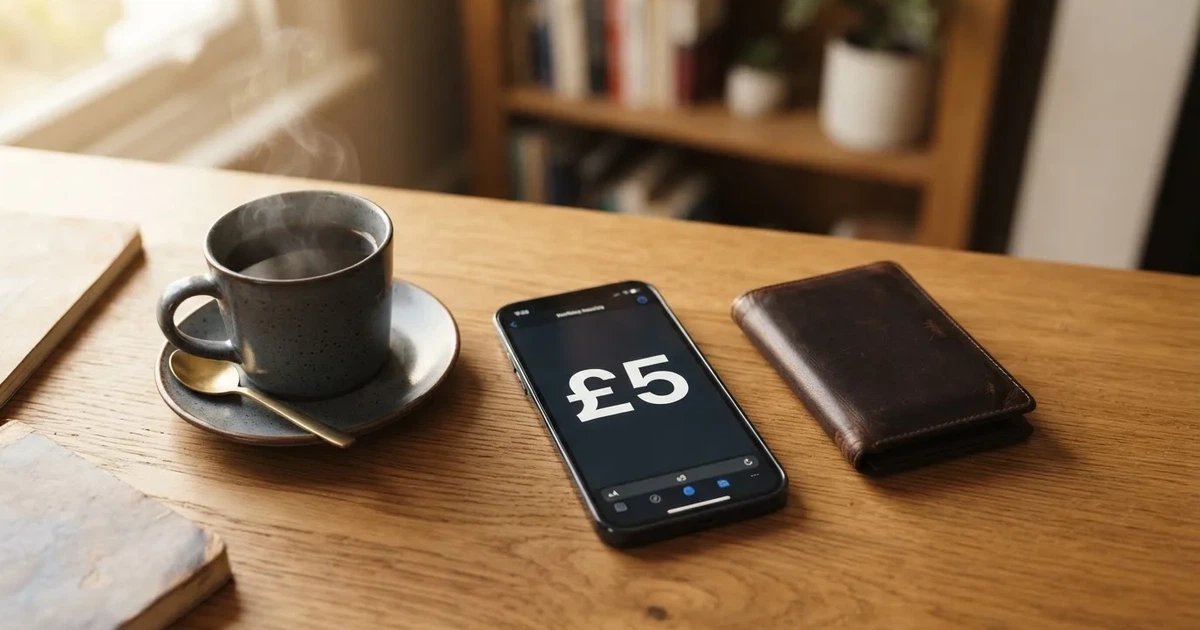
This article ranks ten UK-licensed operators that take a £5 minimum and reads each one for what the £5 actually costs the punter. The Gambling Commission’s public register is what confirms a licence, not a “UK-licensed” badge on a homepage. Sky Bet’s terms say the operator “may change this minimum without prior notice, acting reasonably”, so the £5 figure a reader sees today can move tomorrow. Everything below is current as of 27 October 2026 and was checked against the UK Gambling Commission’s public register.
Stakes That Bite: Safer Gambling at a £5 Minimum
A £5 deposit is the cheapest seat in the house. It is also the seat where every protection in the rulebook is one tap away. The cheapest door is not the fastest exit, and the protections attached to a Gambling Commission account do not switch off because the stake was small.

The age line is fixed. Eighteen is the floor across the licensed market, name, address and date of birth are verified before the first deposit, and the rule applies to free bets and bonuses as much as to real money. That costs time: a first deposit that fails a verification check will not be playable until the check is cleared, and the £5 sits in limbo until then. There is no anonymous route into a GB-licensed bookmaker.
GAMSTOP is the multi-operator self-exclusion register, and every brand named below is a member. The minimum period is six months, after which a further seven years runs before the operator will accept the customer back without a fresh sign-up. The exclusion covers sites and apps — betting shops use their own service. A punter who has self-excluded and tries to open a new account on a sister site during the period will be refused: exclusion is shared, not per-brand.
Deposit limits are the customer’s tool, not the regulator’s ceiling. A punter can set a daily, weekly or monthly gross deposit limit; the operator offers them through the responsible-gambling section of the account. The first changes under the Commission’s Remote Technical Standards have applied since 31 October 2025, a second phase was postponed to 30 September 2026, and whether it is live in this form is not established. There is no statutory ceiling on what an adult can deposit — operators set their own maximum stakes and may restrict individual customers when patterns warrant it.
Financial vulnerability checks are a licence condition. Once a customer’s deposits minus withdrawals exceed £150 in a rolling 30 days (in force since 28 February 2025), the operator runs a public-record check — bankruptcy registers, county court judgments — on the customer. It is not an income check and not a credit reference search. The “affordability checks” of the press are financial risk assessments, announced in a staged plan of 7 July 2026, with no start date. The two are different things.
Counselling is signposted from every licensed site. GamCare runs the National Gambling Helpline. GambleAware funds treatment. The NHS runs gambling clinics. Gamblers Anonymous runs meetings. These are the four doors a punter in trouble should be pointed to, and a bookmaker that hides the links is doing the bare minimum.
A £5 minimum does not make a £5 minimum safe. A floor exists because operators want low-barrier sign-ups; the protections exist because low-barrier customers are the ones who need them.
The £5 Free Bet: Honest Maths Behind the Marketing
The headline offer is the easy part. Every review below names the welcome package as the operator’s own terms describe it. The interesting arithmetic sits behind it, and for a free bet whose stake is not paid back with a win, the arithmetic is unforgiving.

A free £5 bet works like this. Place the bet at any price the operator allows. If it wins, the return is five times the price minus five — the stake is not refunded. The value to the bettor depends on the price the bet was placed at and the payout share of the market it was placed on. A £5 free bet at odds of 4.00 on a market with a 90% payout share (a 10% margin, common on English Premier League 1X2) returns roughly £13.50 — £18 gross, less the £5 stake the bookmaker keeps. The same free bet at 1.50 returns about £1.50. The £5 is not £5 of value; it is £5 of stake, and the value scales with how the punter uses it.
Welcome offers at this level of minimum deposit tend to come in three shapes. The first is a “free bet if your first bet loses” — a refund as free bet credit, not cash, where any winnings paid out from the free bet keep the original stake locked at zero. The second is a deposit match — a percentage of the first deposit credited as bonus funds, with a wagering requirement attached. The third is enhanced odds on a single named event — a one-off price boost on a marquee market, with the winnings paid as cash or as free bets depending on the terms.
Wagering requirements are capped. From 19 January 2026, bonus wagering requirements are capped at 10x the bonus — so a £10 bonus at 50x needed £500 of qualifying bets under the old rules; under the cap, no more than £100 in qualifying bets clears any bonus. A bonus carry-over from before the cap may still be working through an old rollover when this article is read. Mixed-product promotions — “bet on football to get free spins” — are banned under the same set of rules.
Each operator below states its own terms on these points. The page does not run the marketing back at the reader. The numbers behind each offer — the qualifying deposit, the minimum first bet, the minimum price, the wagering factor, the expiry — sit in the operator’s own small print, and a punter who skips that small print pays for the skip with a bonus they cannot withdraw.
Two meanings of “free” deserve to be split apart. A refund credited as cash is free money if it is not locked behind another wagering round. A refund credited as a free bet is free only in the sense that the bet itself does not come out of the punter’s pocket; any winnings paid from the free bet keep the stake sitting with the bookmaker. Both are common; both are described as “free” on landing pages, and a reader who sees the word once has not yet read the page.
Pounds In, Pounds Out: Payments at the £5 Floor
The £5 minimum deposit is not the same as a £5 minimum withdrawal. Where the two diverge, the floor a punter hits is the deposit one — the bookmaker accepts the money — but the same money cannot leave the same way it came in, and the punter waits for a method, or a processing window, or a clearance cycle.
Debit cards are the spine of the payment mix at every operator reviewed below. The Commission’s rules bar credit cards at all licensed operators (since 14 April 2020), including credit-card-funded payments through an e-wallet, so a punter holding only a credit card has to find another way in — the £5 on its way to a bookmaker, not on its way back to a credit-card statement. Bank-based payments are not covered by the credit-card ban.
Minimum deposits sit on the operator’s terms page. Sky Bet’s general terms state a £5 minimum across all payment methods. Midnite accepts Visa, Mastercard, Apple Pay, Google Pay and Trustly for deposits; the minimums on each method sit on the operator’s deposit page rather than its homepage. Betmaster accepts Visa, Mastercard, Maestro and V PAY. Matchbook and Betway carry their own mix. Where the operator’s terms do not give a specific minimum per method, the page-level minimum governs.
Withdrawals work in the opposite direction. The same debit card used to deposit is usually the first method offered for withdrawal, by force of anti-money-laundering rules — money has to leave the way it came in. E-wallets and bank transfers take seconds or minutes where cards take a working day or two; both can take longer the first time, when a withdrawal triggers a fresh identity review. A £5 deposit followed by a winning bet and a withdrawal is the cheapest end-to-end test of an operator’s cashier, and any punter who plans to bet for real should run that test before staking real money.
Three debit cards is the Sky Bet limit on cards linked to a single account. Apple Pay does not count against the limit. The cap is per account, not per deposit, and it is not stated for every operator reviewed here. Operators carry their own card-link rules on this point.
Fees sit, mostly, with the operator. William Hill charges no fee on debit card transactions. Most operators reviewed below state no deposit fee on standard methods. The cost the punter sees is rarely a fee at the deposit and the withdrawal — it is the offer terms, the wagering, the price, the margin on the market. Those sit in the offer section above and the operator section below.
Verification is the first delay a new punter meets. Name, address and date of birth are checked before the first deposit. The check is automated in most cases; in some it falls through to a manual review. A first deposit that lands before the check is complete will not be playable. A punter who plans to bet on a single event tomorrow cannot usefully fund the account tonight if the check has not cleared by morning.
The £5 Floor: Ten UK-Licensed Bookmakers, Ranked by Cost
The ranking below is built from what each operator’s £5 minimum deposit actually costs the punter: the welcome offer, the wagering on that offer, the minimum price on a qualifying bet, the expiry on bonus credits, the withdrawal method that matches the deposit method, the cards-per-account limit, and the safer-gambling tools the punter sees on the account page. Every brand named holds a remote operating licence from the Gambling Commission; the licence number and holder sit in the comparison table at the foot of this section. Order is the order of the ranking, not the order of merit alone — a bookie with a generous welcome and a 7-day bonus expiry ranks differently from one with a thin offer and a 30-day window, because the cost of clearing matters more than the headline.
Betway
Betway’s UK and Ireland welcome offer for new customers is four free-bet tokens of £10 each, credited on settlement of a first bet of at least £10 at minimum odds of 2.0 (1/1). The tokens carry a 7-day expiry from issue, and the qualifying deposit must be made by debit card. The arithmetic in the bonus section above sets the floor on what each token is worth — a £10 free bet at 4.00 on a market with a 90% payout share returns about £27 gross, less the £10 the bookmaker keeps; at 1.50, the same token returns £5. The tokens are four chances to find the right price within a week, not four extra deposits.
888sport
888sport offers pre-match and in-play betting, Cash Out, a Bet Builder, racing streams, the BetFinder form tool, a live bet feed and daily boosted odds. The Bet Builder is a same-game multi on football in practice; a punter combining four legs of an English Premier League match at average decimal odds of 2.00 each faces a combined price of about 16.00, and the margin on the same-game multi is wider than on the underlying singles. Boosted odds are promotional prices on named events, settled as cash or as free bets depending on the event’s terms.
Betfred
The Betfred Sports, Casino & Games app is published by Done Brothers (Cash Betting) Ltd and covers 21 sports plus over 2,000 casino-style games. The casino coverage is the wider surface here, and a punter chasing sports-only welcome terms should keep the two product types on separate tracks — a promotion labelled “bet on football to get free spins” falls under the mixed-product ban of 19 January 2026 and is not what Betfred markets on this listing. The licence holder on the register is Petfre (Gibraltar) Limited; the app publisher name and the licence holder name are not always the same, and only the latter carries Commission authority.
Midnite
Midnite’s homepage cites Gambling Commission licence 101839 and surfaces in-play events, an acca builder, popular accas and price boosts with maximum-stake limits. The acca builder is the same mechanic as any same-game multi, and the price-boost caps tell a punter how much the operator will risk on a single promotion — a £100 cap on a price boost means the boost pays out on stakes up to £100 and nothing beyond. Midnite accepts Visa, Mastercard, Apple Pay, Google Pay and Trustly for deposits, and links to GambleAware, GamCare, GAMSTOP and BetBlocker from the responsible-gambling section.
BetVictor
BetVictor offers Best Odds Guaranteed on UK and Irish horse racing, enhanced live race streaming, a BetFinder feature for finding racing bets and Smart Stats for form. Best Odds Guaranteed pays the bigger of the price taken and the starting price on UK and Irish racing win and each-way bets from 9am on race days; a punter taking 5/1 (6.00) at 10am and seeing the SP go off at 8/1 (9.00) is paid at 9.00. Each-way doubles the stake: a £5 each-way bet costs £10, and a place at 1/5 of the win odds is the standard each-way frame on most UK races.
Matchbook
Matchbook is a betting exchange, not a bookmaker, and the new-customer offer is 110 days of commission-free betting from registration for customers who register with the code shown in the listing and make a deposit. Commission on the exchange is charged on net winnings after the free period; standard rates apply afterwards. The mechanics of an exchange are different from a fixed-odds book: back a selection at a chosen price or lay it to other customers, with the exchange taking a small percentage of net winnings rather than building a margin into every price. A £5 minimum deposit on an exchange is a smaller commitment than the same minimum on a fixed-odds book, because there is no bookmaker margin in the price the punter sees.
Betboro
Betboro’s sports welcome offer is a 100% matched free bet of up to £25 on the first qualifying wager, requiring a debit card deposit of at least £10 and a first bet of £5 to £25 with at least three selections each at 3/5 (1.60) or higher. The minimum price on each leg is the floor that controls the offer: three 1.60 legs combine to about 4.10, and a winning treble at 4.10 returns roughly 4.10 times the £25 stake — about £102.50 gross, with the £25 stake not refunded. The £10 minimum deposit places a £5 deposit above the offer’s own threshold.
VBet
VBet’s sports welcome offer is a £10 free bet if a new, verified customer stakes £10 or more on a first-ever bet that loses. The verification requirement is the Commission’s identity check before the first deposit, applied in advance here. The free-bet stake is not paid back with a win — a punter who backs a 4.00 winner from the £10 free bet collects about £30, with the £10 held back. The “first bet loses” structure means the offer does nothing for a punt that wins.
BoyleSports
BoyleSports offers early payouts on selected sports: football pays out if a team goes 2 goals ahead, basketball at 20 points ahead, rugby and NFL at 16 points ahead, and boxing after a knockdown. An early payout is a settlement on the original selection before the event has finished, paid at the original price; a punter backing an English Premier League favourite who goes 2-0 up inside 30 minutes is paid as a winner regardless of the final score. The mechanic is the operator’s hedge against acca insurance costs, and a £5 acca leg pays out early if the lead condition triggers.
Fafabet
Fafabet pays Best Odds Guaranteed on UK and Irish horse racing win and each-way bets from 9am on race days: if the starting price is bigger than the original price, the bigger odds are paid. The mechanic is the same as BetVictor’s on this point, and the same each-way frame applies — a £5 each-way bet costs £10 and pays at 1/5 of the win odds on the place. Fafabet’s licence holder on the register is Taichi Tech Limited; a quick search on the Commission’s public register confirms the licence rather than the homepage’s own claim.
| Brand | Licence (operator) | What the operator’s own terms state on a £5 deposit |
|---|---|---|
| Betway | Betway Limited, account 039372 | £40 in free bet tokens (4 × £10) on settlement of a first bet of £10+ at minimum odds of 2.0; 7-day token expiry; debit card deposit required |
| 888sport | 888 UK Limited, account 39028 | Pre-match and in-play betting with Cash Out, Bet Builder, racing streams, BetFinder form, live bet feed and daily boosted odds |
| Betfred | Petfre (Gibraltar) Limited, account 39544 | Sports, casino and games app covering 21 sports and over 2,000 casino-style games |
| Midnite | Midnite Limited, account 101839 | In-play events, an acca builder, popular accas and price boosts with maximum-stake limits; debit cards, Apple Pay, Google Pay and Trustly accepted |
| BetVictor | BV Gaming Limited, account 39576 | Best Odds Guaranteed on UK and Irish racing, enhanced live streaming, BetFinder and Smart Stats form tools |
| Matchbook | Triplebet Limited, account 39504 | 110 days of commission-free exchange betting for new customers who register with the code shown and deposit; standard commission after |
| Betboro | Webmedia Development N.V., account 44181 | 100% matched free bet up to £25 with a debit card deposit of £10+ and a first bet of £5–£25 on three or more selections at minimum 3/5 (1.60) |
| VBet | SCGO Limited, account 44662 | £10 free bet on a first £10+ bet that loses; verification required before settlement |
| BoyleSports | Boylesports Enterprise, account 39469 | Early payouts on selected sports: football at 2 goals up, basketball at 20, rugby/NFL at 16, boxing on knockdown |
| Fafabet | Taichi Tech Limited, account 57385 | Best Odds Guaranteed on UK and Irish racing win and each-way bets from 9am on race days |
The operator that earns a place at the top of the list for one punter will sit lower for another. A small-stake punter chasing a wide product range wants a different mix from one chasing a tight commission-free exchange window. The common thread across the table is that the licence stands behind every line of every operator’s terms, and the cost a £5 minimum deposit carries sits in the terms themselves.
What a £5 Deposit Actually Buys
The £5 deposit is a stake, not a product. What it unlocks is access to an account on which the operator’s full product mix is available at any stake the operator and the customer agree on. A punter reading this page as a searcher, not a shopper, is asking one question: from what minimum can a real wager be placed at a real British bookmaker?
The honest answer has three parts. First, the floor is set by each operator’s terms, and £5 is the floor for one common band of operators; some high-end and niche books sit at £10 or higher, and the floor moves with the payment method. Second, the floor does not buy a particular bonus — it buys access to whatever bonus the operator runs on the day, and the bonus is the source of the cost a £5 minimum punter is likely to pay. Third, the floor does not buy past the protections applied to every GB-licensed account — verification, GAMSTOP, deposit limits, the vulnerability check at £150 net in 30 days.
The price a punter pays on a £5 deposit is the offer terms. The price a punter pays on a free £5 bet is the missing stake. The price a punter pays on a withdrawn winnings is the time and the verification cycle. None of these prices are hidden; each sits in the operator’s own terms and on the Commission’s public register, and a punter who reads them before staking pays less than a punter who reads them after.
The Legal Floor: Why a UK Licence Matters at Any Stake
The licence is the floor, and the rest of the page is built on it. A bookmaker accepting customers in Great Britain needs a Commission licence wherever the operator is based, under sections 33 and 36 of the Gambling Act 2005 as amended by the Gambling (Licensing and Advertising) Act 2014. A Curaçao, Maltese or Gibraltar registration is not a substitute; a Commission licence is not optional and is not waivable for the British market. Spreadex’s homepage notes that spread betting is regulated by the FCA rather than the Commission, and that spread-betting losses can exceed the deposit — a separate licence category with its own consumer protection regime, and the reminder that financial product and betting product are not interchangeable.
The Commission’s public register is the test. Search by business name, trading name, domain or Commission account number; the register carries the licence type, the holder and the categories the licence covers. The page’s comparison table cites the licence number and holder for each brand reviewed; a punter who wants the live entry should search the register rather than the homepage. Licensed operators use .com as well as .co.uk; the domain proves nothing. No single brand is “the only” licensed one.
Betting licence types matter at the market level. A bookmaker takes bets on real events under a remote general betting standard (real events) licence. A betting exchange — Matchbook above — operates under a remote betting intermediary licence, which authorises back-and-lay between customers. Pool betting on horse and dog racing is a separate licence category with its own duty. Betting on virtual events is a separate category from real events. The licences are not interchangeable, and a brand offering markets outside its licence category is offering them on the wrong side of the register.
What may be bet on is the operator’s choice, subject to its licence. There is no statutory list of permitted bets or markets in Great Britain: the operator picks the markets, the Commission enforces the Licence Conditions and Codes of Practice, and the operator’s licence conditions define what a customer can and cannot bet on at that brand. In-play betting is offered by GB bookmakers under their licence conditions; no GB rule permits a blanket statement that in-play is “unrestricted”. Esports sit inside real events for licensing purposes; virtual events are a separate licence category; novelty markets on politics and TV are offered by GB operators and no statutory prohibition was found.
Offshore brands run on house rules, not the Commission’s. A punter using a brand without a Commission licence gives up GAMSTOP coverage, the Commission complaints route, an approved dispute-resolution body, British consumer redress if funds are withheld, the 10x bonus cap, the £150 vulnerability check and most of what the rest of this page describes. Providing gambling facilities in Great Britain without the Commission’s licence is an offence under section 33 of the Act, aimed at the operator with up to 51 weeks’ imprisonment, a fine up to level 5, or both (six months in Scotland). No offence aimed at a customer who merely bets on an unlicensed site was found in the rules, so the framing for an unlicensed punter is loss of protection, not illegality.
DNS blocking powers are not the same as ISP blocking. The Commission has been given, or is about to receive, court-order DNS blocking powers, but a statement that ISP-level blocking is in operation is not supported by what the rulebook says today. Enforcement on offshore operations is disruption: cease-and-desist notices, search-engine referrals, work with registrars, hosts and payment providers. The honest framing is licensed equals checks, limits, GAMSTOP, bonus cap, identity verification; unlicensed equals none of those protections and a real chance of loss of funds.
Advertising does not come from the Commission. The ASA enforces the CAP Code (non-broadcast) and BCAP Code (broadcast); the LCCP carries the Commission’s marketing conditions; and from 19 January 2026 the bonus cap and the mixed-product ban run through the LCCP. CAP Code section 16 sets the under-25s appearance rule for advertisements — that rule concerns who may appear in marketing, not who may bet. The whistle-to-whistle ban on betting ads around live sport is industry code, since 1 August 2019, covering five minutes before and after an event before the 9pm watershed, with horse and greyhound racing excluded.
Tax sits with the operator, not the punter. The player pays no tax on betting winnings in Great Britain (general information, not tax advice; a professional gambler should ask HMRC or an adviser). General Betting Duty is the operator’s tax on gross profits, currently 15%; from 1 April 2027 a new remote betting rate of 25% applies within it, with UK horse racing, self-service betting terminals, pool betting and in-person betting staying at 15% (HM Government policy paper of 26 November 2025). Whether operators pass duty through to odds is not established, and the page does not write that the punter is charged duty.
Frequently Asked Questions
Can I deposit £5 to bet in the UK?
A £5 minimum deposit is offered by several GB-licensed bookmakers, including Sky Bet (£5 across all listed payment methods), William Hill (debit cards from £5), and a long tail of operators whose own terms carry the same floor. Where a method has its own minimum — Sky Bet’s Pay by Bank has none, for example — the operator’s terms govern the deposit. Identity is verified before the first deposit, so a clean credit check and address proof matter as much as the £5 itself.
What betting apps let me deposit less than £5?
The standard floor is £5. Pay by Bank on Sky Bet has no minimum, which is not the same as a sub-£5 floor on cards. Betway, 888sport, Betfred, Midnite, BetVictor, Matchbook, Betboro, VBet, BoyleSports and Fafabet are the operators named in the comparison table; their stated card minimums sit at £5 or above on the public listings, and where a method drops below the £5 floor the operator’s terms name the method explicitly.
Which payment methods do GB bookmakers accept, and are credit cards allowed?
Debit cards are the spine of the mix, with Apple Pay, Google Pay, Revolut Pay and Pay by Bank as common additions. Trustly is offered by Midnite. E-wallets vary by operator. Credit cards are banned for gambling in Great Britain (since 14 April 2020), including credit-card-funded payments through an e-wallet, and a punter using an unlicensed brand running on its own house rules does not get that protection at all. Withdrawals usually go back the way the deposit came, so the deposit method chosen today is the withdrawal method available tomorrow.
From what age can bets be placed in Great Britain, and when is identity verified?
Eighteen is the floor across the licensed market. Name, address and date of birth are checked before the first deposit or wager, including with free bets and bonuses. A first deposit that lands before verification is not playable until the check clears, and the £5 sits in limbo.
How can I check that a bookmaker holds a UK Gambling Commission licence?
The Commission’s public register is the test. Search by business name, trading name, domain or Commission account number, and the register shows the licence type, holder and categories. The comparison table carries every licence number and holder named above. The register’s own entry is the one to trust, not a homepage badge or a footer line.
What do I lose by betting on a site without a UK Gambling Commission licence?
GAMSTOP coverage, the Commission’s complaints route, an approved dispute-resolution body, British consumer redress if funds are withheld, the 10x bonus cap, the £150 financial vulnerability check, and the rest of the rulebook covered above — none of it applies. The section on offshore operations spells out what an unlicensed punt gives up. None of this writes that the punt is “illegal”, only that the protections sit elsewhere.
Last Word on a Five-Pound Stake
A £5 minimum deposit is the cheapest way into a bookmaker account the British regulator will license. It is also the floor at which every protection is one tap away, the floor at which the cheapest welcome offer may hide the heaviest wagering, and the floor at which the cheapest offer loses the most in margin. The licensed operators named above earn the comparison by sitting on the Commission’s register; the rest of what they offer is theirs to defend. A punter who reads the licence number, the offer terms and the responsible-gambling section before staking is the punter who spends the £5 once.
Payments & apps – Best betting exchange
Content created by the «Best betting exchange» team
