
Darts betting odds 2026: how the price is built and what it costs the punter
 Available in US
Data current as of 27 October 2026, checked against the Gambling Commission’s public register of remote betting licence holders.
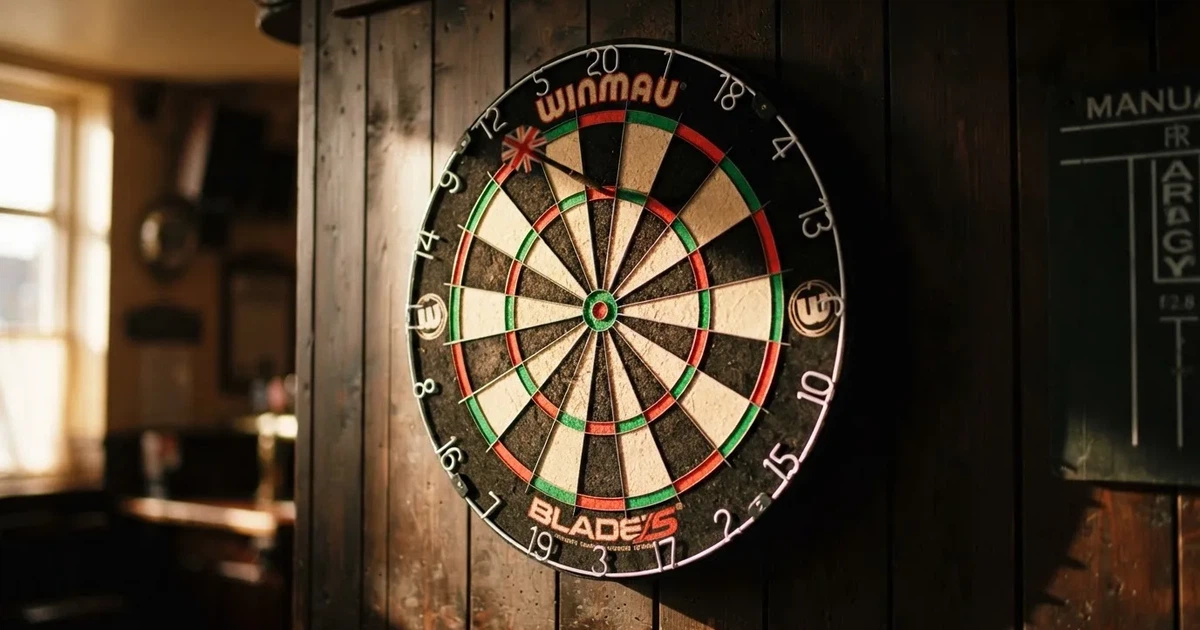
Darts is one of the cheapest sports on a betting book to price and one of the easiest to misunderstand. A Premier League night finishes inside three hours, every leg produces a numeric score a model can chew on, and a bookmaker only needs a handful of outright runners to populate a tournament outright market. The temptation for the operator is to lay prices it does not need to defend, because nobody has time to out-trade a £20 wager on the bullseye market between legs. The temptation for the punter is to read those prices as if they were a tip.
This guide is about what an odds line is, what sits behind it, and what it costs to act on it. It is not a tip sheet and it is not a recommendation to bet. It is the frame a reader needs to compare what ten licensed bookmakers in the United Kingdom actually offer on darts in 2026, with the cost of each offer written down in the same units so they can be set beside one another.
Staking safely on darts in Great Britain
Darts is a high-frequency sport. A televised session runs from a set every few minutes to a final that can drag on for an hour, and the bettor has time to place, watch and react to a dozen markets per night. That rhythm is part of the appeal, and it is also where the harm lives. A losing sequence in darts looks like background noise: another 180, another single 20 checkout, another leg going against the betting slip. The session does not flag itself the way a horse-racing betting shop can, with a steady drip of racecards and a clock ticking to the off. With a remote betting app on a sofa, the loss is silent and cumulative, and the GAMSTOP register exists for exactly that case.
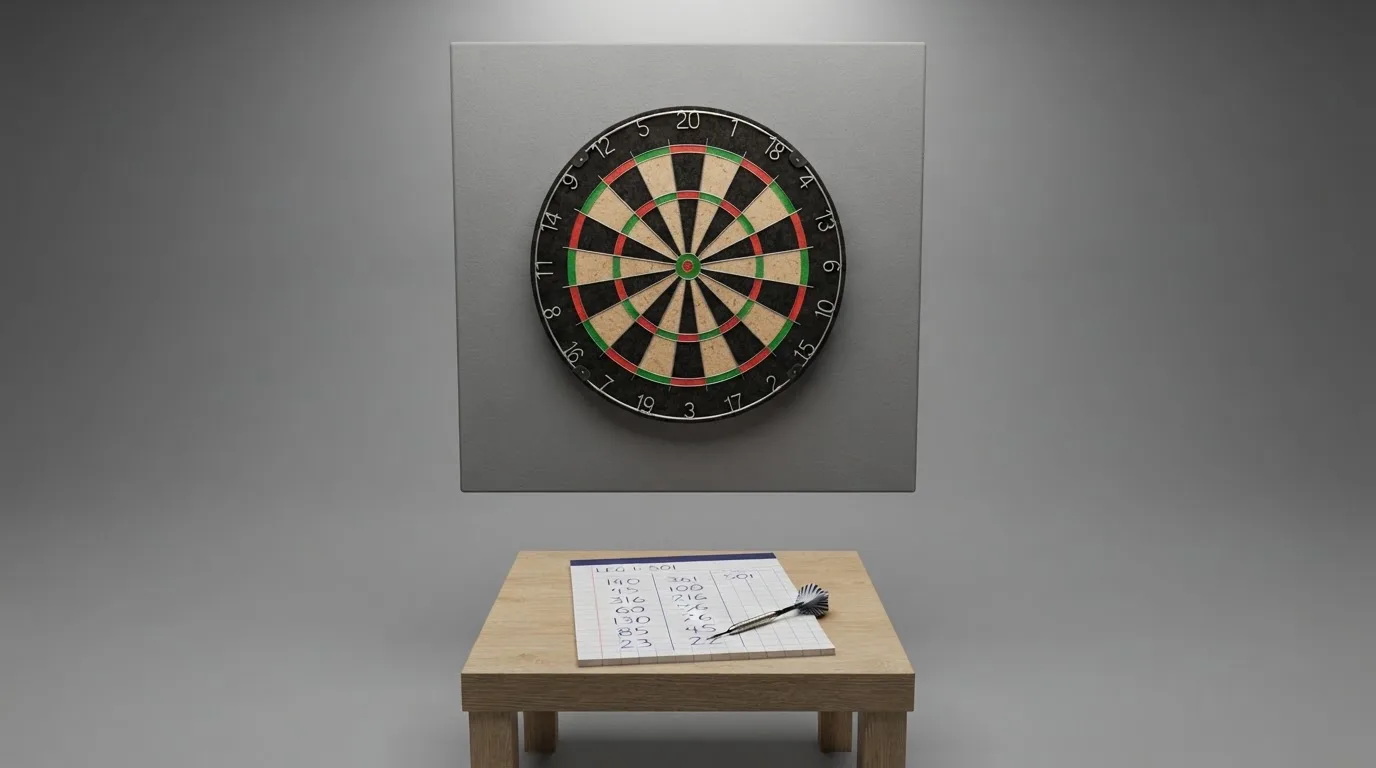
Every operator on the Gambling Commission’s public register of remote betting licences is a member of GAMSTOP. Self-exclusion can be set for six months, one year, five years, or five years with auto-renewal, and once the chosen minimum period has elapsed the exclusion stays in place for a further seven years unless the customer asks GAMSTOP to remove it. The tool covers online sites and apps. Betting shops run a separate, in-person scheme.
Two controls a licensed remote bookmaker now applies by default. First, name, address and date of birth are verified before the first deposit or wager, including when a free bet or bonus is used, and that step has been in force since May 2019. Second, when a customer’s deposits minus withdrawals exceed £150 across a rolling 30-day window, a light-touch financial vulnerability check kicks in under Licence Condition 3.4.4, in force since 30 August 2024. The check is a public-record scan, not an income check and not a credit-reference check; it is meant to flag court judgments and similar entries rather than to ask what a punter earns. A heavier financial risk assessment is in the regulator’s staged plan and has no start date, and a deposit ceiling set by the regulator is not in place: customers set their own limits, and the operator must offer one under the Remote Technical Standards.
Help is one phone call away. GamCare runs the National Gambling Helpline. GambleAware funds treatment and research. NHS gambling clinics operate in several regions. Gamblers Anonymous runs mutual-support meetings. The reader who feels the session has drifted from a pastime into something else should reach out before the next televised night.
What a darts bonus or free bet really pays
The marketing word for this section is “free”. The arithmetic rarely is.
A free bet in Great Britain comes in two shapes. The first is bet credit, where any winnings are paid back to the customer but the stake is not; a £10 free bet at decimal odds of 4.00 returns £30 in winnings, with the original £10 gone. The second is a cash bonus, where the bonus itself sits in the balance and must be wagered before it can be withdrawn, and the requirement sits under a regulator-set cap of ten times the bonus that came into force on 19 January 2026. A £10 bonus at fifty times wagering would have meant £500 of bets; under the cap, no more than £100. The cap covers wagering requirements, not the maximum value of any offer, and whether it reaches a stake-not-returned free bet with no rollover attached is not settled in writing. Mixed-product promotions — offers that require the customer to bet on two or more product types such as betting, casino, bingo and lottery — are banned outright under the same rules.
Three offers from the shortlist illustrate the spread. Unibet’s welcome package for new GB customers is a £40 free-bet bundle returned for a £20 sports bet at minimum decimal odds of 2.00 (1/1 fractional), paid as bet credits on a debit card or instant bank transfer, with the credits expiring within seven days. Betboro’s welcome offer matches the first qualifying wager up to £25 in free bets, with a debit-card deposit of at least £10 and a first bet between £5 and £25 carrying at least three selections, each at fractional odds of 3/5 (decimal 1.60) or higher. Betway runs an opt-in Free Bet Club that returns up to £10 in free bets every week after the customer has staked £25 or more on sports, paid as two £5 credits.
The arithmetic behind a stake-not-returned free bet is worth knowing. Suppose the £10 free bet is placed on a market whose payout share — the share of every pound staked that the bookmaker returns to winning customers across all outcomes of that market — runs at, say, 92%. The free bet’s expected value on that price is the stake, multiplied by (decimal odds minus one), divided by the decimal odds, multiplied by the payout share: £10 × (4.00 − 1) ÷ 4.00 × 0.92, which comes to £6.90 of expected return on a stake the customer never paid. On a market at decimal 2.00 with the same 92% payout share, the same £10 free bet is worth £10 × 1.00 ÷ 2.00 × 0.92, or £4.60. The headline “free bet” is worth what its price lets it be worth, and a heavy outsider multiplies the value, which is why bookmakers prefer to put free bets on short-priced favourites.
Three further terms move the picture and live in the small print. First, the qualifying bet: the wager that unlocks the offer is often required at a minimum price, and on multiple bets the minimum applies to each leg, not to the combined price. Second, the wagering factor: a cash bonus might require a turnover of five times the bonus, or bonus plus deposit, before withdrawal. Third, the cap on free-bet winnings: some offers pay only the winnings up to a stated ceiling, with the rest voided. None of these are hidden, and none of them are negotiable.
Two broader rules sit across every offer in this market. The 10x wagering cap, which came into force on 19 January 2026, does not legalise a 50x offer; it caps what would be allowed at 10x, and operators who ran higher requirements in the past had to rewrite them. And mixed-product promotions are out, so an offer that bundles a sports free bet with casino free spins cannot be advertised to GB customers.
Live darts betting and the cash-out button
Darts is a fast sport and an in-play sport. Between legs, the bookmaker’s app refreshes a list of markets that the pre-match card could not have staged. The match winner drifts leg by leg. The next-leg winner is a fresh price after every checkout. The 170 checkout — the highest possible three-dart finish, treble 20, treble 20, bullseye — appears as its own market on most televised nights. Handicap lines open and close around the live scoreline.
In-play betting in Great Britain is offered by every GB-licensed bookmaker under the social responsibility code, and the controls around it are the operator’s licence conditions and customer-protection duties. There is no statutory permission list and no statutory prohibition; the bookmaker decides what to suspend, what to keep open, and how aggressively to manage its exposure during a televised final.
The cash-out button turns a live position into a closed one. It pays a real-time price that reflects the current scoreline, the market and the original stake, and the customer takes that price rather than waiting for the final leg or the final set. The mechanic is convenient and costly at the same time: the price is built to include the operator’s margin on the live market, plus a haircut for closing the position early, and on a match-turning checkout the cash-out value can move several points in a second. A punter who cashes out at decimal odds of 1.50 is not locking in a profit of 50% on the stake. The cash-out value is the bookmaker’s price for closing the bet right now, and that price carries its own margin over the true live probability.
A small number of bookmakers in the shortlist run an in-play offering that is genuinely deep. Betfred’s sports app is published by Done Brothers (Cash Betting) Ltd and lists darts under its 21-sport menu. 888sport’s app supports pre-match, in-play, Cash Out, Bet Builder, racing streams, daily boosted odds and a live bet feed. Most of the brands in this list offer in-play darts at some level; what differs is how many markets are kept open through the televised session, and whether the cash-out button sits behind the live odds or behind a separate, sometimes slower, page.
Darts predictions and what a tipster can and cannot know
Tipsters are part of the darts market, and the honest description of their work is short: a tip is one person’s view of the most likely outcome, published with a price underneath. The view is built from form, head-to-head, checkout percentages, the venue’s scoring pattern and, increasingly, model output. The price is whatever the bookmaker is offering at the time of the tip.
The risk in reading a tip as a forecast is that the price is not the probability. The bookmaker’s margin sits inside every price, and a tipster who does not read prices as probabilities is reading a forecast and a marketing line at the same time. A tip on the favourite at decimal odds of 1.40 is a tip on an outcome the market is paying about 71p in the pound for, and the favourite wins that leg, on average, somewhere south of seven times out of ten. A tip on the outsider at decimal odds of 5.00 is a tip on an outcome the market is paying 20p for, and that outcome lands one time in five.
Three habits separate a tipster who is worth reading from a tipster who is worth ignoring. First, does the tip include the price, the stake and the reasoning, or does it stop at “back Smith tonight”? Second, does the record show the closing line, the price the bet was actually struck at, or only the price that was live when the tip was first published? Third, does the long-run record survive a margin check — that is, if the tipster’s average winning price is decimal 3.00, the average losing price is decimal 2.00, and the strike rate is 40%, the rough expected return is 40% × 3.00 + 60% × 0, or 1.20 units per unit staked, before the bookmaker’s margin is taken out.
The reader who is reading this section to find a tip is reading it for the wrong reason. The honest value of a tip is not the prediction, which is the part nobody can verify until the leg is over, but the reasoning, which is the part that lets the reader build their own view over a season. A model is a better piece of process than a tip, and a model built from the player’s own checkout percentage, first-nine average and tournament form on the same stage is closer to a forecast than a tipster’s read of the day’s news.
How darts betting odds are built and read
A betting price is two things at once. To the punter, it is what a winning bet pays back. To the bookmaker, it is the offer it is willing to make on one outcome, balanced against the offers it is willing to make on the others.
For a two-way market with decimal odds of 1.90 on each side, the implied probabilities are 1 ÷ 1.90 = 0.5263 (52.63%) on outcome A and 0.5263 (52.63%) on outcome B. The two implied probabilities sum to 1.0526, or 105.26%. The bookmaker’s overround is 5.26%, and the bookmaker’s margin is 5.0%. The payout share is 95.0%. The arithmetic generalises: a three-way market at decimal odds 2.10 / 3.40 / 3.60 has implied probabilities 0.4762 + 0.2941 + 0.2778 = 1.0481, an overround of 4.81% and a margin of 4.6%.
The same numbers, read the other way, are the punter’s tax on every market. A market at decimal odds of 1.91 / 1.91, the roundest price a UK bookmaker tends to offer on a coin-toss darts market, carries an overround of 4.71% and a margin of 4.5%. A Premier League darts outright market at 6.00 / 9.00 / 11.00 / 17.00 / 21.00 / 26.00 / 34.00 / 41.00 across the eight most fancied runners carries implied probabilities of 0.1667 + 0.1111 + 0.0909 + 0.0588 + 0.0476 + 0.0385 + 0.0294 + 0.0244 = 0.5674 on the eight named runners alone, before the long tail is even priced. The bookmaker is keeping a significant share of the unit stake on this selection of names, which is one reason the long tail pays better than it should.
Three mechanics turn prices into returns. First, a single bet at decimal odds of *d* returns stake × *d*; at fractional 5/1, the return is 6 × stake (5 × stake in winnings, plus the stake back). Second, an accumulator multiplies the prices into one combined price; three legs at 1.80 / 2.20 / 3.00 combine to 1.80 × 2.20 × 3.00 = 11.88, and a £10 stake returns £118.80 if all three win and nothing does if any one loses. Third, an each-way bet is two bets at equal stakes — one on the win, one on the place — so a £10 each-way bet at fractional 5/1 is a £20 total stake, and the place leg pays a fraction of the win odds set by the operator for the field.
Three mechanics for handicaps deserve their own paragraph. A darts handicap is a line the bookmaker sets to balance the field, expressed in legs or sets. A market at Luke Littler −1.5 sets versus Michael Smith +1.5 sets asks whether Littler wins by at least two sets. A −2.5 / +2.5 line asks whether Littler wins by three or more. The punter who reads the handicap as a forecast of the margin is reading it wrong; the handicap is a way to keep both sides of the match at a price the bookmaker is willing to lay.
The mark of a sharp price is the closing line: the price at which the market settles just before the event starts, after the bulk of professional and syndicated money has had its say. A punter who consistently beats the closing line by enough to clear the bookmaker’s margin is a punter with a long-term edge. A punter who, on average, takes a worse price than the close is paying the margin and calling it skill.
Sports and tournaments that make up a darts betting year
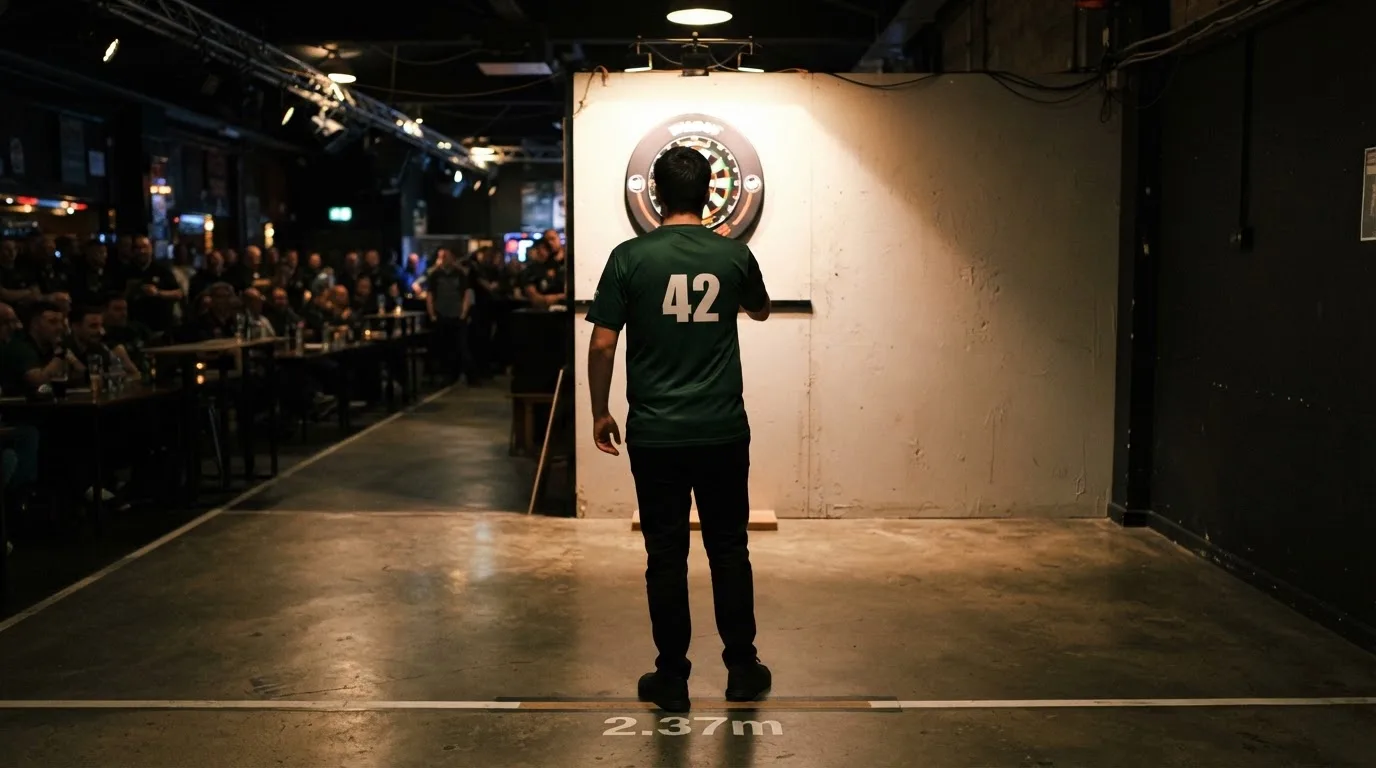
The sport itself is short and rigid. A standard dartboard has 20 numbered segments, each split into a single area, a double ring and a treble ring; the bullseye is worth 50 and the outer bull 25. In 501 darts, the game played at the televised level, players start at 501 and must finish on a double or the bullseye. The highest possible three-dart finish is 170, treble 20, treble 20, bullseye, and the minimum possible leg is nine darts. The standard throw distance is 2.37 metres (7 ft 9 in) and the bullseye sits 1.73 m above the floor.
The governing bodies sit alongside one another. The Professional Darts Corporation runs the televised circuit and the World Championship, and the World Darts Federation runs the amateur and international game. The PDC World Championship is held annually over the Christmas and New Year period, and the most recent edition ran from 11 December 2025 to 3 January 2026 at Alexandra Palace in London, with the field expanded from 96 to 128 players. The final was Luke Littler versus Gian van Veen, a 7–1 win for Littler, on a prize fund of £5,000,000 with £1,000,000 to the champion.
The structure of the tournament shapes the betting menu. Rounds one and two at the 2026 World Championship were played first to three sets, rounds three and four first to four, the quarter-finals first to five, the semi-finals first to six and the final first to seven. A set is first to three legs with a finish on a double. The structure repeats across the Premier League, the World Matchplay, the World Grand Prix and the Players Championship Finals, with the deeper end of the draw moving up the first-to figure.
The tournament calendar matters because the outright market is the most popular pre-tournament bet, and the outright market is only as deep as the field. A 128-player World Championship produces an outright field where the top eight are priced to fractions and the rest is a long tail of single-digit outsiders, with the bottom of the draw priced by reputation rather than form. A Premier League night, with eight players playing each other across a league season, produces a match-winner market that is priced on form and head-to-head rather than reputation. The same bookmaker, on the same sport, can run a margin of 4% on a Premier League night and a margin of 12% on a World Championship outright, and the punter who treats the two as comparable is paying for the assumption.
A small number of secondary markets deserve their own note. The 170 checkout market, settled on whether the player hits the highest possible finish during the match, is a yes/no market priced at decimal odds that move with the form of the players involved. The nine-dart finish market, settled on whether any player in the match throws a perfect leg, is a long-odds market that pays well when it lands and pays nothing when it doesn’t, and a bookmaker’s offer of “enhanced odds” on a nine-dart finish is a marketing word for a longer price than the underlying market would naturally carry. The most 180s market, settled on which player scores the most 180s in a match, is a totals market with a margin that drifts with the form book.
The shortlist: ten licensed bookmakers for darts in Great Britain
The ten brands below sit on the Gambling Commission’s public register against a remote general betting standard (real events) licence. Each is a real, checkable licence holder. Each is described on the dimensions a darts punter tends to weigh: licence, welcome offer and how the offer is built, in-play and cash-out, bet builder or same-game multi, and a verdict for the punter the brand suits. The verdict is the writer’s read of the offer, the price and the small print, not a recommendation to bet.
LiveScore Bet
Licence: Gambling Commission remote licence 056859-R-332720-005, Commission account 56859, held by LiveScore Betting and Gaming (Gibraltar) Limited, trading as LiveScore Bet.
LiveScore Bet’s Bet Builder accepts up to ten selections from a menu built around football: match result, both teams to score, corners, total goals, player scoring and card markets. The same builder is the live multi-tool during a match, and the in-play menu sits behind it. The brand carries the LiveScore name and the live scores feed that comes with it, which is the point of using the app at all. Darts is on the menu rather than the front of it: the daily schedule is football first, with darts priced when there is a televised session.
For the reader who already has a LiveScore account and a habit of building same-game multis on football, the darts offering is what the wider app carries. The punter who is choosing a bookmaker for darts alone will find a tighter menu at a brand that runs darts as a headline sport, so LiveScore Bet acts better as a secondary platform.
Star Sports
Licence: Gambling Commission remote licence 009177-R-104555-019, Commission account 9177, held by Star Racing Limited (trading as Star Sports).
Star Sports runs the trading-desk model the larger brands moved away from. A punter can phone 08000 521 321 to open an account, place a bet or ask a question, with a backup at [email protected]. The model is older than the app-only bookmakers and it suits a punter who wants to negotiate a price on a Premier League darts match or settle a query with a human rather than a chatbot. The app is the route for the routine bet and the phone is the route for everything else.
For the reader who values the trading desk, the limit is the brand’s smaller pre-match menu on the lower-profile darts events. Star Sports prices the televised sessions in depth, and the secondary events can be thinner than at the headline bookmakers. Casual televised viewers will rarely see the gap, while floor-event specialists will likely need an alternative account.
Kwiff
Licence: Gambling Commission remote licence 044448-R-323408-017, Commission account 44448, held by Eaton Gate Gaming Limited (trading as Kwiff).
Kwiff’s pitch is a randomised odds boost — the brand’s “supercharged” price — that lands after a bet is placed and can land several times the original odds. The mechanism is built for an in-play session where the punter is happy to take the boost or the original. The app carries a 17+ age rating in the GB App Store, and the licence is held by a UK-registered operator. Darts is priced across the televised sessions and the in-play menu is live.
For the reader who enjoys the volatility of a randomised boost, Kwiff is built for the app and the in-play session. The punter who needs to know the price before the bet is placed will find the model frustrating, because the headline price is not the price the bet is struck at. The offer sits closer to gaming than to traditional sports betting, and the GB-licensed framework keeps it inside the responsible gambling rules.
Unibet
Licence: Gambling Commission remote licence 045322-R-324275-019, Commission account 45322, held by Platinum Gaming Limited (trading as Unibet UK, operating since 1999).
The headline offer for new GB customers is “Get £40 in Free Bets when you bet £20”: deposit and a sports bet of £20 or more at minimum decimal odds of 2.00 (1/1 fractional), with the credits expiring within seven days, paid on a debit card or instant bank transfer. The pre-match menu on darts is broad, the in-play menu is live through the televised sessions, and the platform carries the same features it does on football and horse racing. The brand is one of the largest in the European market and the UK site is a separate operation under its own licence.
For the reader who wants a brand with depth on every sport and a welcome package that gives the punter £40 of bet credits to deploy, Unibet is a sensible centre-of-the-market choice. The seven-day expiry on the credits is the catch: a punter who lets the credits sit across a week without using them loses them, and the £20 qualifying bet has to land before the credits are issued. The offer is a real one and the terms are tight.
Betboro
Licence: Gambling Commission remote licence 044181-R-324363-007, Commission account 44181, held by Webmedia Development N.V., the trading name on the public register for Betboro.
Betboro’s welcome offer is a 100% matched free bet of up to £25 on the first qualifying wager, requiring a debit-card deposit of at least £10 and a first bet of £5 to £25 with at least three selections, each at fractional 3/5 (decimal 1.60) or higher. The three-leg requirement is the catch: a £25 first bet on a single selection at fractional 3/5 does not qualify, and the punter who wants the matched free bet has to find a treble that meets the minimum price on each leg. The in-play menu covers the televised sessions and the pre-match card is built around football with darts as a secondary sport.
For the reader who is happy to build a small treble to unlock a free bet, Betboro is a tidy mid-market choice. The punter who wants to bet a single at the minimum price and walk away with a matched free bet will not qualify, and the treble requirement rules out the conservative end of the customer base. The brand is licensed in the UK and the offer is a real one; the structure of the qualifying bet is the trade-off.
Tote
Licence: Gambling Commission remote licence 054779-R-331321-008, Commission account 54779, held by TDCO Limited (trading as Tote).
Tote is the pool-betting heritage brand. The remote licence covers fixed-odds betting alongside the pool product, and the darts offering sits within the fixed-odds menu. The price on a Tote darts market reflects the brand’s positioning rather than the headline bookmakers, and the welcome offer is structured around the pool product rather than the fixed-odds sportsbook.
For the reader who wants pool betting alongside the fixed-odds card, Tote is the only mainstream licensed route. The punter who wants the deepest pre-match menu on darts will find a thinner offering than at the headline bookmakers, and the platform’s edge on a televised darts session is the pool product rather than the fixed-odds card.
Copybet
Licence: Gambling Commission remote licence 053774-R-330743-010, Commission account 53774, held by Copybet UK Limited (trading as Copybet).
Copybet’s standout racing feature is Best Odds Guaranteed all day, every day on UK and Irish racing, with first past the post paid even if the winner is later disqualified. The same platform carries a fixed-odds sportsbook for football, tennis and darts, and the in-play menu is built around the televised sessions. The brand’s reputation sits on the racing product, with the sportsbook as a complement.
For the reader whose betting is horse racing first and darts second, Copybet’s racing feature is a strong reason to keep an account. Those who want to focus on darts alone should look to a dedicated sportsbook, as this platform prioritises the racing days above the match-winner menu.
Betway
Licence: Gambling Commission remote licence 039372-R-319367-029, Commission account 39372, held by Betway Limited, trading as Betway.
Betway’s Free Bet Club is the headline ongoing promotion: opt in, spend £25 or more on sports in a week, and earn two £5 free bets, up to £10 a week. The welcome offer is a separate one-time package for new customers. The in-play menu covers the televised darts sessions and the pre-match card is built around football as the headline sport. The platform is a mid-to-large licensed bookmaker with a broad menu across the major sports.
For the reader who bets weekly and wants a recurring free-bet incentive rather than a one-off welcome offer, Betway’s Free Bet Club is a steady earner. The £25 weekly turnover is the cost of earning the £10 in free bets, and the break-even calculation is the same one the welcome offer requires. The punter whose betting is occasional will not earn the weekly credits, and the platform is best treated as a primary account for a regular punter.
Betfred
Licence: Gambling Commission remote licence 039544-R-319290-010, Commission account 39544, held by Petfre (Gibraltar) Limited (trading as Betfred, with the app published by Done Brothers (Cash Betting) Ltd).
Betfred’s app covers 21 sports and more than 2,000 casino-style games, and darts sits inside the sports menu alongside football, horse racing and the rest. The platform is a large licensed bookmaker with depth across the televised darts sessions and a mid-sized in-play menu. The welcome offer is a one-time package for new customers and the rest of the promotional calendar sits around the sportsbook.
For the reader who wants a large licensed bookmaker with a broad menu across the major sports, Betfred is a steady centre-of-the-market choice. The punter whose betting is darts only will find a deeper menu at a brand that runs darts as a headline sport, and Betfred is best treated as a primary account for a multi-sport punter who wants the app to cover football and racing as well.
888sport
Licence: Gambling Commission remote licence 039028-R-319297-014, Commission account 39028, held by 888 UK Limited, trading as 888sport.
888sport’s app carries pre-match, in-play, Cash Out, Bet Builder, racing streams, BetFinder form tools, a live bet feed and daily boosted odds. The menu is broad and darts sits inside it. The brand sits in the mid-to-large bracket of GB-licensed bookmakers, and the welcome offer is a one-time package for new customers. The platform’s edge on darts is the depth of the in-play menu rather than the headline outright market, which is priced by the same mechanics as the rest of the licensed bookmakers.
For the reader who wants a mid-to-large licensed bookmaker with a broad menu and a strong in-play product, 888sport is a sensible choice. The punter whose betting is darts only will find a stronger in-play offering at a brand that runs darts as a headline sport, and 888sport is best treated as a primary account for a multi-sport punter who wants the app to cover football and racing as well.
Where darts betting sits in the British licensing frame
The Gambling Commission, a non-departmental public body sponsored by the Department for Culture, Media and Sport, licenses the commercial market in Great Britain under the Gambling Act 2005. Northern Ireland is outside the Act and has its own older law, so a “GB licence” regulates England, Scotland and Wales rather than Northern Ireland. Since the Gambling (Licensing and Advertising) Act 2014, an operator whose remote facilities are used in Great Britain needs a Commission licence wherever it is based, and sections 33 and 36 of the 2005 Act as amended are the relevant provisions. A Curaçao, Maltese or Gibraltar operating licence is not a substitute for a GB licence at the point of consumption.
There is no statutory list of permitted sports or markets. A bookmaker holds a licence for a category — remote general betting standard (real events), remote general betting standard (virtual events), remote general betting limited, remote pool betting, or remote betting intermediary for exchanges — and offers markets under its own rules and the Licence Conditions and Codes of Practice. Darts, as a real sport, sits inside the first of these. In-play betting is offered by GB bookmakers and the controls are the operator’s licence conditions and customer-protection duties; there is no statutory permission list and no statutory prohibition. Esports are treated like any other event; virtual events are a separate licence category; bets on politics, TV shows and novelty markets are offered by GB bookmakers and no statutory prohibition was found.
Financial spread betting is regulated by the Financial Conduct Authority, not the Commission, and the warning on the spread is the regulator’s: Spreadex, which is regulated by the FCA for spread betting and by the Commission for fixed-odds betting, states on its homepage that spread betting losses can exceed the deposit.
The Commission’s public register can be searched by business name, trading name, domain or account number, and it is the whole test of whether a brand holds a GB remote licence. The punter who wants to check a brand against the register has four routes, and the reader who wants to do it themselves can do so in a few minutes at the Commission’s site.
Advertising is not licensed by the Commission; it runs through the CAP Code for non-broadcast and the BCAP Code for broadcast, enforced by the ASA, alongside the LCCP marketing conditions. CAP Code section 16: marketing must be socially responsible, must not be of strong appeal to under-18s, and no one who is or seems to be under 25 may be featured gambling or play a significant role, with an exception for marketing placed where a bet can be made directly. The rule concerns who may appear in the advertisement rather than who may bet. Since 19 January 2026, wagering requirements on bonuses are capped at 10x and mixed-product promotions are banned. The “whistle-to-whistle” rule, since 1 August 2019, keeps betting ads off UK television from five minutes before a live sporting event to five minutes after it, before the 9pm watershed, with horse and greyhound racing excluded. The Premier League clubs’ withdrawal of gambling sponsorship from the front of matchday shirts from the 2026/27 season is voluntary rather than legal.
The player’s tax position is simple: betting winnings in Great Britain are not taxed for the customer. General Betting Duty is the operator’s tax on gross profits, currently 15%, and from 1 April 2027 a new remote betting rate of 25% applies within it, while remote bets on UK horse racing, bets on self-service betting terminals in licensed premises, pool betting and in-person betting stay at 15%. Until 1 April 2027 the remote rate stays at 15%; whether operators pass duty on through odds is not established, and the customer is not charged duty. A professional gambler should ask HMRC or an adviser.
What an offshore darts site does not give the punter
An unlicensed brand can advertise in the UK through affiliate sites and search-engine results, and the law it is breaking, where it offers remote facilities to GB customers without a Commission licence, is section 33 of the Gambling Act 2005, with penalties of up to 51 weeks’ imprisonment, a fine up to level 5, or both (six months in Scotland). The offence is aimed at the operator rather than the customer: no offence aimed at a customer who merely bets on an unlicensed site was found in the relevant statute.
The cost of using an unlicensed site is in the protections that are not there. There is no GAMSTOP coverage, so a self-excluded customer can still open an account. There is no Commission complaints route, no approved dispute-resolution body and no British consumer redress if funds are withheld. The site is not bound by the 10x bonus cap, the £150 vulnerability check or the source-of-funds controls under the money-laundering rules. The credit-card ban does not apply, so the operator can take credit-card deposits and the customer can run a balance they would not be allowed to run at a licensed bookmaker.
Enforcement is disruption rather than blanket blocking. The Commission issues cease-and-desist notices, refers sites to search engines, and works with registrars, hosts and payment providers. Court-order DNS blocking powers have been given to the Commission or are about to be given, and ISP-level blocking is not in operation in the way it is in some other markets.
The honest framing is symmetric. Licensed = checks, limits, GAMSTOP, the 10x bonus cap, and verification before the first bet. Unlicensed = none of those protections, and possible loss of funds. Neither is the safe choice by default, and the choice is the punter’s.
Reading the licence
The table below sets each of the ten brands side by side on the dimensions a darts punter tends to weigh. The licence line is from the Gambling Commission’s public register and is the whole test of whether the brand holds a GB remote licence. The terms line is what the operator’s own materials state on the key the brand sits on, taken from each operator’s own site or app. A blank cell means the operator’s materials do not state a value on that key and the reader is best served by checking the operator’s own terms before staking.
| Brand | Licence | Terms on the key’s subject |
|---|---|---|
| LiveScore Bet | UKGC remote 056859-R-332720-005, account 56859; LiveScore Betting and Gaming (Gibraltar) Limited | Bet Builder allows up to 10 selections from match result, BTTS, corners, total goals, player scoring and card markets |
| Star Sports | UKGC remote 009177-R-104555-019, account 9177; Star Racing Limited | Customers can phone 08000 521 321 or email [email protected] to open an account, place bets or ask customer queries |
| Kwiff | UKGC remote 044448-R-323408-017, account 44448; Eaton Gate Gaming Limited | Trademark operated by Spryme Ltd; 17+ age rating in the GB App Store |
| Unibet | UKGC remote 045322-R-324275-019, account 45322; Platinum Gaming Limited | “Get £40 in Free Bets when you bet £20” at minimum decimal odds of 2.00 (1/1); free bets expire within 7 days; debit card or instant bank transfer |
| Betboro | UKGC remote 044181-R-324363-007, account 44181; Webmedia Development N.V. | 100% matched free bet up to £25 on first qualifying wager; minimum £10 debit-card deposit; first bet £5 to £25 with at least 3 selections at fractional 3/5 (decimal 1.60) or higher |
| Tote | UKGC remote 054779-R-331321-008, account 54779; TDCO Limited | Pool-betting heritage brand; fixed-odds sportsbook alongside the pool product |
| Copybet | UKGC remote 053774-R-330743-010, account 53774; Copybet UK Limited | Best Odds Guaranteed all day, every day on UK and Irish racing; first past the post paid even if the winner is later disqualified |
| Betway | UKGC remote 039372-R-319367-029, account 39372; Betway Limited | Free Bet Club: opt-in, stake £25+ on sports in a week, earn 2 × £5 free bets up to £10 weekly |
| Betfred | UKGC remote 039544-R-319290-010, account 39544; Petfre (Gibraltar) Limited | App published by Done Brothers (Cash Betting) Ltd; 21 sports plus 2,000+ casino-style games |
| 888sport | UKGC remote 039028-R-319297-014, account 39028; 888 UK Limited | Pre-match, in-play, Cash Out, Bet Builder, racing streams, BetFinder form tools, live bet feed, daily boosted odds |
The right reading of the column on terms is that each row is the operator’s own statement on one specific key, not a full description of the offer. The welcome package for Unibet is a £40 free-bet bundle with a seven-day expiry; the headline Betway offer is the weekly Free Bet Club; the headline 888sport menu is the in-play and Cash Out stack. None of the rows above is the whole brand, and a punter choosing between them on the welcome offer alone is choosing on the wrong dimension.
How to check a GB-licensed bookmaker in two minutes
The Commission’s public register is searchable by business name, trading name, domain or account number. A punter who wants to check a brand before opening an account can do it themselves in a few minutes, and the steps are the same for every brand on this page.
Step one, open the register and search the trading name. The Commission’s register shows the licence number, the licence holder’s registered name and the licence categories the holder is licensed for. Step two, confirm the trading name on the register matches the brand on the app or site. A trading name that does not appear on the register is not licensed under that name, and the punter is best served by walking away. Step three, check the licence categories. For darts betting, the relevant category is remote general betting standard (real events); a brand licensed only for virtual events, only for pool betting or only as a betting intermediary cannot offer fixed-odds sports on darts under that licence. Step four, check the licence status. A licence that is surrendered, lapsed or under review is not a licence in force, and the punter is best served by waiting until the line is settled.
The register is the test. A licensed brand is checked, limited, GAMSTOP-covered and bonus-capped, with a Commission complaints route and a British dispute-resolution service. An unlicensed brand is none of those things.
Frequently asked questions on darts betting odds in Great Britain
What is darts betting?
Darts betting is wagering on a darts match or session through a licensed bookmaker, with the punter selecting an outcome — match winner, outright tournament winner, leg winner, checkout, most 180s, handicap, totals — and the bookmaker pricing it. The 2026 PDC World Darts Championship at Alexandra Palace ran from 11 December 2025 to 3 January 2026 with a £5,000,000 prize fund, and the licensed bookmakers priced every televised round.
How do you bet on darts?
Open an account with a GB-licensed bookmaker, complete the verification step the Commission requires before the first deposit or gamble, deposit via a payment method the operator accepts (credit cards are banned for gambling in Great Britain), and place a bet on a televised session or a tournament outright. The verification step has been in force since May 2019 and applies even when a free bet or bonus is being used.
How does darts handicap betting work?
A darts handicap is a line the bookmaker sets in legs or sets to balance the field, expressed as a positive or negative margin. A favourite at −1.5 sets has to win by at least two sets for the bet to land, and the outsider at +1.5 sets wins the bet if they win the match or lose by a single set. The handicap is a way to keep both sides of the match at a price the bookmaker is willing to lay rather than a forecast of the margin.
How can it be checked that a bookmaker holds a Gambling Commission licence?
The Commission’s public register can be searched by business name, trading name, domain or account number. The licence line on the register shows the licence number, the licence categories the holder is licensed for, and the licence status. A trading name that does not appear on the register, a licence that has been surrendered or lapsed, or a licence category that does not cover real-event sports betting means the punter is best served by walking away.
How is the return on a bet worked out from the stake and the odds?
For decimal odds, a single bet returns stake × odds, with the profit being stake × (odds − 1). For a £10 bet at decimal odds of 4.00, the return is £40 and the profit is £30. For an accumulator, the prices multiply into one combined price; three legs at 1.80 / 2.20 / 3.00 combine to 11.88, and a £10 stake returns £118.80 if all three win. For fractional odds, the conversion is decimal = fractional ÷ fractional + 1, so 5/1 is 6.00 and 11/4 is 3.75.
What is the bookmaker’s margin and how can it be seen in the odds?
For a market with decimal odds of *o₁*, *o₂*, …, *oₙ* across the *n* outcomes, the payout share is 1 ÷ (1/*o₁* + … + 1/*oₙ*) and the bookmaker’s overround is the sum of implied probabilities minus 100%. A two-way market at 1.90 / 1.90 has implied probabilities of 52.63% on each side, summing to 105.26% for an overround of 5.26% and a margin of 5.0%. The margin is what the bookmaker keeps of every unit staked on the market across all outcomes, on average over time, and it is the cost every punter on the market pays for the price they take.
Tennis, darts & cue sports – Best betting exchange
Content created by the «Best betting exchange» team
