
Where to bet on water polo online in 2026 — UK-licensed bookmakers, markets and what the offers really cost
 Available in US
Water polo is one of the few Olympic team sports where a player can spend four quarters treading water, get pulled for a turnover at the two-minute mark and still not see the ball. That oddness is part of the appeal for bettors: each match is short, the goal counts are low, and a single ejection or a goalie change can swing a 1X2 in two passes. What is harder, for someone new to the sport, is working out which UK bookmakers even price water polo, which markets they offer and what the bonus code in the inbox is really worth once the wagering terms are applied. This guide walks through the answer in that order: where the regulator draws the line, what the responsible-gambling tools cost the reader, what bonuses actually take from a stake, what markets and odds look like on water polo, what tournaments the licensed bookmakers actually price, how the top ten GB-licensed brands compare, what the law expects of them and what a margin really looks like once it is broken out of the price.
The figures and offers on this page were checked against each operator’s own terms and the Gambling Commission’s public register on 27 October 2026. Where a price or promotion carries a snapshot date it is shown next to it; numbers age quickly and a price without one should be re-checked before any stake is placed.
Responsible gambling: the tools a GB-licensed bookmaker must hand the reader
Water polo sits inside a regulated market, and the protection that comes with a Great Britain licence is part of what the licence costs the operator — and therefore part of what a punter is paying for. The cornerstones are GAMSTOP, the financial vulnerability check and the deposit-limit regime that has been rolling out across the industry since the end of 2025. None of these are optional add-ons; they sit in the licence conditions.
GAMSTOP is the national multi-operator self-exclusion scheme, and every online bookmaker operating in Great Britain has been a member since 31 March 2020. A self-exclusion can run for six months, one year, five years, or five years with automatic renewal; once the minimum period expires the exclusion stays in place for a further seven years unless the customer actively asks GAMSTOP to remove it. The scheme covers online sites and apps; betting shops use a separate service. For someone who has set a GAMSTOP block, none of the brands reviewed below will accept a new account, and that holds regardless of how the offer is marketed.
The financial vulnerability check is the newer of the two controls and is the one readers most often meet without knowing its name. Under a Commission licence condition in force since 30 August 2024, a GB-licensed remote bookmaker must run a public-record check once a customer’s net deposits — deposits minus withdrawals — exceed £150 in a rolling 30-day window; the threshold was live from 28 February 2025. The check looks at public records such as county court judgments and bankruptcy orders; it is not an income check and not a credit reference search. A punter who suddenly starts funding an account more heavily will meet this check, and the operator may pause play until it is cleared. Beyond this, the Commission has signalled “financial risk assessments” — what the press calls affordability checks — in a staged plan, with no start date announced. Anyone reading about new affordability rules should treat them as announced and staged, not yet in force, until a Commission article sets a date.
Deposit limits are the third plank, and they are partly in force and partly still arriving. Remote Technical Standard 12 requires operators to offer a gross deposit limit on a fixed time frame; the first set of changes has been live since 31 October 2025 and a second phase was postponed to 30 September 2026. There is no state-set ceiling for betting: the deposit cap a punter actually meets is one the operator sets, and the punter can usually lower it further from the cashier. What the rules guarantee is that a limit can be set, not that a particular number applies.
Beyond the controls above, every GB-licensed brand links to GamCare (which runs the National Gambling Helpline), GambleAware, NHS gambling clinics and Gamblers Anonymous from its safer-gambling pages. The minimum age to bet is 18, and identity, address and date of birth are verified before a customer can deposit or place a bet, including when only a free bet or bonus is being claimed. Anonymous play is not an option at a licensed site, and that is part of the trade-off the licence buys.
For readers comparing operators, the practical test is whether those tools can be reached in three clicks from the home page and whether the deposit cap can be set in pounds without contacting support. Fitzwilliam Sports, for example, makes a point of advertising instant deposits, fast withdrawals, timeouts and deposit limits from its home page, alongside the standard links to GambleAware, GamStop and Gamblers Anonymous — the responsible-gambling controls are front-of-house rather than buried in the footer.
Bonuses and free bets on water polo: what the headline price actually takes
The headline on a welcome offer is rarely the figure the punter ends up keeping. A “£40 in free bets when you bet £20” headline looks like a 200% return on the first stake; the wagering terms, the minimum odds, the expiry window and the cap on free-bet winnings decide what the offer actually pays.
Coral’s current sports welcome is the cleanest example on this list. A deposit and a sports bet of £20 or more, settled at minimum odds of 2.0 (1/1 in fractional form), releases £40 in free bets within seven days; those free bets then expire seven days after issue, and the whole package is for new GB customers who opt in. The stake is not paid back with a free-bet win: a £10 free bet on a winner at odds of 3.00 returns £30, not £40. That is the standard shape of a free bet, and it is the shape almost every offer below takes. Anyone reading a free-bet headline as “free money” is being read a marketing line, not a contract.
BetMGM’s sports welcome offer for new UK customers who deposit £10 or more and place a sports bet within seven days is a package of four £10 free bets: two football accumulators of four or more selections, and two sports multiples of two or more. The free bets are valid for seven days and carry their own minimum odds and opt-in. The cost of an accumulator-shaped free bet is that every leg has to win, and a four-fold acca that pays at odds of, say, 5/1 each (6.00 decimal) is one win away from a payout many times the £10 stake — or one losing leg away from zero. The shape of the bonus tells the punter what kind of bet the operator wants them to make.
The general rule introduced on 19 January 2026 matters here: wagering requirements on bonuses at GB-licensed brands are capped at 10x. A £10 bonus at 50x wagering would have meant £500 of qualifying bets; under the cap no more than £100 of qualifying bets is needed to clear a £10 bonus. The cap also covers mixed-product promotions — offers that ask the punter to bet on football to earn free spins, for instance. Free bets with no wagering condition sit outside the cap, and the cap does not limit the money value of the bonus itself. The audit is on the rollover, not on the headline.
The arithmetic operators all offer — once the wagering rule is met — is straightforward. A free bet of £10 placed at decimal odds of 4.00 (3/1 fractional) returns £40 if it wins; the punter’s net is £30, because the £10 stake is forfeit. On a market with a 5% margin, the expected value of that free bet on the average winning bet sits below £30. The free bet is worth less than its headline, and the size of the gap is set by the odds chosen — short odds inflate the headline, long odds deflate the expected value, because the stake is not returned.
One point worth flagging for water polo specifically: most welcome bonuses and free-bet offers are sportsbook-wide rather than tied to one sport. A “bet on football to get free spins” style offer is now banned under the mixed-product rule, but a free bet that can be staked on any sport is fair game. The choice of sport to use the free bet on is the punter’s, and water polo is as eligible as football — provided the bookmaker prices the match. That last proviso is the one that bites: many GB brands do not run a water polo market on a given week, and a free bet that has to be used inside seven days may have no qualifying match. The expiry window is therefore the offer’s quiet cost, and Coral’s seven-day window on the free-bet issue is the one to watch.
Bet types and odds on water polo: how the price is built
Water polo sits inside a sportsbook the same way football or tennis does: the bookmaker prices each market on each match and the punter backs one of the outcomes. The difference is that water polo’s match list is short, the in-play offering is thinner than football’s and the margin on the main lines is, in places, wider than a punter used to Premier League 1X2 might expect.
The standard markets on a water polo match are the same three the sportsbook uses for football: the 1X2 (home win, draw or away win), the outright winner (without the draw), and a totals line on total goals. Handicaps exist on the bigger tournaments, and player markets — top scorer, first goalscorer — appear when the bookmaker has priced them. A bet builder that lets the punter combine markets from one match is rarer on water polo than on football, and is essentially an extension of the main 1X2 plus totals. Most GB bookmakers route water polo through the same slip as handball, and the menu of markets is similar.
The bookmaker’s margin is the share of every pound staked that the operator expects to keep, and it lives inside the odds. For a two-way market with decimal odds of 1.90 and 1.90 (9/10 fractional on each side), the implied probability of each outcome is 1 ÷ 1.90 = 52.63%, and the two implied probabilities add to 105.26%. The 5.26 percentage points above 100 are the overround — the bookmaker’s edge. Payout share is the inverse: 1 ÷ 1.0526 = 95.0%. The bookmaker’s margin on this market is therefore 5.0%. For a three-way 1X2 at decimal odds of 2.40, 6.50 and 2.40 (an illustrative match where the draw sits at 11/2), the implied probabilities add to roughly 107% and the margin to 7%. Water polo’s three-way lines tend to land in that band — wider than Premier League football, where 1X2 margins in the high 3s are routine, but tighter than some niche sports.
For a punter, the practical reading is simple. Compare odds across two or three GB-licensed brands on the same match before staking; a price of 1.90 against 2.00 on the same home win is a 5% gap on the same outcome, and over a season the higher price compounds. Decimal odds express the total return per £1 staked; fractional odds express the profit per £1 staked, so 5/1 fractional is 6.00 decimal (profit of 5 plus stake of 1). The conversion is a ÷ b + 1: 5 ÷ 1 + 1 = 6.00. The two notations describe the same price; the difference is only what the number refers to.
Combination bets — doubles, trebles and accumulators — multiply the decimal odds of the legs into a single price. A treble of three water polo matches at 1.80, 2.10 and 1.95 has combined odds of 1.80 × 2.10 × 1.95 = 7.371, and a £10 stake returns £73.71 if all three legs win. The margin of an accumulator is the sum of the margins of its legs, so a treble of three matches at 5% margin each carries a combined margin of roughly 15% before any leg lets the punter down. The price looks generous because the margin stacks, and the price looks generous because one leg has to lose to take the whole bet down.
Cash out — fully or partially — is offered by most of the brands on this list, and Spreadex combines it with both fixed-odds and spread betting on the same slip. In-play betting on water polo is offered by brands that price the sport at all; Betfair Sportsbook, bet365, BetVictor and Midnite are the more reliable names for live markets, and the rest price selected matches when a tournament peaks.
Sports and tournaments: what water polo actually looks like to a bookmaker
Water polo’s competitive calendar is denser than the casual viewer might think. The Olympic Games are the headliner: men’s water polo was among the first team sports at the 1900 Olympic Games and women’s water polo became an Olympic event at the 2000 Sydney Games. Below the Olympics, the men’s World Championship has been held every two to four years since 1973, run inside the World Aquatics Championships; women’s competition was added in 1986. World Aquatics is the highest governing body of the sport and runs both the World Championships and the World Cup, plus age-group events. At European level the European Water Polo Championships are run by European Aquatics (LEN); continental cups and Champions League play — yes, water polo has a Champions League — fill the gaps between World Championships.
A match itself is divided into four quarters, played in a pool deep enough that the players cannot touch the bottom; a team fields seven in the water — six field players and one goalkeeper — with up to six substitutes on the bench. A goal counts as one, and scores tend to cluster in the high single figures to low teens over four quarters. The shape of the game is part of why bookmakers price it: the goal counts are low enough that a handicap on the favourite can be valuable, and the four-quarter structure means in-play markets reset cleanly at quarter breaks.
For a UK punter, the practical calendar in 2026 runs through four kinds of events. First, the senior internationals: World Championships, European Championships, the World Cup and the Olympics. Second, the continental club competitions — the Champions League of European Aquatics, the LEN Euro Cup, national leagues (the Hungarian Extraliga, the Italian Serie A1, the Spanish División de Honor, the Croatian Premier League). Third, NCAA water polo in the United States, which bookmakers price when its season peaks and which carries the largest club-based water polo market in the world. Fourth, age-grade and women’s events, which are priced thinly and usually only at the championships.
The bookmakers in the comparison below price water polo at different points in this calendar. The bigger international tournaments — Olympics, World Championships — pull a deep menu from every brand on the list. Mid-tier events — European Championships, Champions League — pull a 1X2 and a totals line from the bigger brands, with handicaps appearing from a few. Domestic league play is the thinnest layer: a brand that prices the Hungarian Extraliga or the Spanish División de Honor in a given week may drop it the next. A punter looking for water polo markets is, in practice, looking at the calendar and checking which brand has priced the next match on it.
There is no central exchange or aggregator for water polo odds in Great Britain. Each brand prices the sport from its own trading desk, and the menu on a quiet midweek match in the Hungarian league may be just a 1X2. The bigger the event, the wider the menu.
How the licensed bookmakers compare on water polo
The ten brands below all hold a Gambling Commission remote licence for Great Britain. Several are run by the same parent — Ladbrokes and Coral both sit under LC International Limited, and Paddy Power and Betfair both sit under PPB Counterparty Services Limited; treated here, the brands are listed separately because their products, odds and offers differ. What the table summarises is the licence account number, the licence-holder company and the most relevant responsible-gambling or product feature each brand name brings to a water polo bettor. The order is alphabetical by brand.
| Brand | Gambling Commission remote licence number and licence holder | What the operator’s own terms state on the key’s subject |
|---|---|---|
| BetMGM | 039198-R-319450-029 — LeoVegas Gaming PLC | New UK customers depositing £10 and betting within 7 days receive four £10 free bets (two 4+ leg football accas and two 2+ leg sports multiples), each valid 7 days, with minimum odds and opt-in |
| Betfair | 039439-R-319330-013 — PPB Counterparty Services Limited | In-play betting, Bet Builder, free live streaming inside the app of UK and Irish horse racing and football, and a 90 Minute Payout market |
| BetVictor | 039576-R-319370-028 — BV Gaming Limited | Best Odds Guaranteed on UK and Irish horse racing, enhanced live race streaming, BetFinder for racing and Smart Stats for form |
| Coral | 054743-R-330863-014 — LC International Limited | Get £40 in free bets when you bet £20 — £20+ sports bet at minimum odds 2.0, £40 free bets within 7 days, free bets expire 7 days after issue |
| Fitzwilliam Sports | 048760-R-335434-009 — SBKI Limited | Dublin-based bookmaker with capped membership and a “High Stakes Welcome” subject to compliance criteria; instant deposits, fast withdrawals, timeouts, deposit limits and links to safer-gambling bodies |
| Geoff Banks | 054095-R-330366-010 — GB Sports Advisors Limited | Live in-play prices and ante-post prices on future events, published as an app by GB Sports Advisors Ltd |
| Kalooki Sportsbook | 057730-R-333396-005 — Kalooki Sportsbook Limited | Operated by Kalooki Sports Book Ltd (company number 12938274), Gambling Commission account 57730, GAMSTOP member |
| NetBet | 039170-R-319343-032 — Netbet Enterprises Limited | Daily Boosts, Profit Boosts and free bet offers, Bet Builder with dynamic odds, and sports stats for major leagues |
| QuinnBet | 061011-R-335683-004 — QuinnBet (Gibraltar) Limited | Best Odds Guaranteed on UK and Irish horse racing singles, multiples and system bets from 10:00 daily, capped at £150 per customer per race |
| Spreadex | 008835-R-104580-022 — Spreadex Limited | Combined fixed-odds and spread betting, one-click and partial cash out, Bet Builder across fixed odds or spreads, live streaming of UK and Irish racing, tennis, NFL and selected football; spread betting losses can exceed deposits |
The table reads as a license-and-feature sheet on purpose. A water polo bettor’s choice between two brands turns less on a welcome headline and more on whether the brand prices the match in the first place, what the in-play menu looks like and how clean the payout is. The responsible-gambling controls at every brand sit on the same licence-condition footing; the visible difference is how the brand surfaces them. The paragraphs below add the judgement the table cannot carry: where each brand actually wins or loses against the rest.
BetMGM’s welcome shape — four £10 free bets, two of which must be 4+ leg football accas — leans the package toward football. For a water polo punter, two of the four free bets can be used on any sport at minimum odds and a 2+ leg multi shape, and the package is generous against most welcome offers in the GB market. The cost is the seven-day window on each free bet and the football-only constraint on the two accas. The verdict for water polo specifically: solid welcome, but the free bets the punter actually uses on water polo are the two 2+ leg sports multiples, so the offer’s headline value overstates its water-polo reach.
Betfair Sportsbook is one of the more reliable in-play brands for water polo and brings a Bet Builder, free live streaming of selected events inside the app, and a 90 Minute Payout market that settles on the result at the 90-minute mark rather than full time. For water polo that market is academic — there is no 90-minute mark — but the live streaming and in-play menu are the genuine draw. Betfair is also the exchange side of the same group as Paddy Power, but on the sportsbook side the relevant feature set is the one the app shows.
BetVictor’s strengths are racing-led: Best Odds Guaranteed on UK and Irish racing, enhanced live race streaming, BetFinder for racing and Smart Stats for form. Water polo bettors will find less to lean on here than football or racing punters; the brand is honest about where it leads and where it does not, and that focus is part of its appeal. The verdict: a tidy, racing-shaped bookmaker that prices water polo at the bigger tournaments without leading the market on the sport.
Coral’s welcome is the headline figure that most often lands in the inbox, and the shape is the standard £20-for-£40 pattern that any punter who has bet in the last ten years has seen before. The brand sits under LC International Limited alongside Ladbrokes — same parent, different product and pricing. For water polo, Coral’s offering is a sportsbook-wide package and the free bet expiry window is the constraint to watch. The verdict: a familiar welcome on a familiar sportsbook, with the seven-day expiry on the free bets being the quiet cost of the headline.
Fitzwilliam Sports is the outlier in the list: a Dublin bookmaker with capped membership and a “High Stakes Welcome” gated by compliance criteria. The brand is not built for a casual welcome-chaser; the value sits in the staking limits and the in-running menu at the bigger international events. For a water polo bettor who already bets seriously, the shape of the account is closer to a professional bookmaker than a high-street chain. The verdict: an account to apply for if the operator will accept the punter, rather than a discount-swap on the welcome.
Geoff Banks runs as an app from GB Sports Advisors Ltd and prices live in-play and ante-post markets on selected events. The brand is small and the menu thin compared to the chains, but the in-play pricing on the bigger water polo tournaments is competitive. The verdict: a specialist brand for a punter who already follows the sport closely; the welcome is modest and the menu depends on the calendar.
Kalooki Sportsbook is one of the smaller brands in the list and a useful case for the licence-only test: Kalooki Sports Book Ltd runs the site under Gambling Commission account 57730 and is a GAMSTOP member. The brand’s appearance in a comparison is a reminder that the Commission register holds many more brands than the high-street names, and that any of them can price a water polo match when the tournament peaks. The verdict: a tidy, licensed, GAMSTOP-stopped operator whose water polo menu rises and falls with the calendar.
NetBet’s offer shape — Daily Boosts, Profit Boosts, free bet offers, a Bet Builder with dynamic odds and stats for major leagues — covers the sportsbook promotion space comprehensively. For water polo the relevant question is whether the Boosts land on the sport in the punter’s week; NetBet is a brand whose value is its day-to-day menu rather than any single welcome headline. The verdict: a strong fit for the punter who checks the sportsbook daily and is happy to use a Boost when it lands on the match they want.
QuinnBet’s Best Odds Guaranteed on UK and Irish racing from 10:00 daily, capped at £150 per customer per race, is again racing-shaped. Water polo bettors will lean on QuinnBet’s general sportsbook and on the brand’s daily menu rather than on the racing BOG; the racing cap of £150 per race is worth flagging because it is a real ceiling rather than a marketing word. The verdict: a sportsbook with a clear racing specialism and a clean, transparent BOG rule that does not pretend to be more than it is.
Spreadex is the only brand on the list that combines fixed-odds and spread betting on the same app, and that combination matters for a water polo punter in two ways. First, the spread side lets the punter take a position on the goal total without picking a winner; second, the fixed-odds side prices the 1X2 and totals the usual way. The cash-out options on Spreadex are also broader than most — one-click, auto and partial cash out — and Bet Builder works across fixed odds and spreads. The catch is in the small print: spread betting losses can exceed deposits. For a punter who sticks to fixed odds, the brand is a strong option; for a punter tempted by spread markets on goal totals, the loss ceiling is the wrong side of “unlimited”. The verdict: a unique two-mode bookmaker whose water polo value lies as much in the spread menu as in the fixed-odds line, and whose downside is genuinely uncapped on the spread side.
Where the line is drawn: regulation, licences and the offshore trade-off
Water polo is not a sport the Gambling Commission licenses separately; a Great Britain licence is a licence to take bets in Great Britain across the categories the operator applies for. The categories relevant to a sportsbook are remote general betting standard (real events) — the standard sportsbook — remote general betting standard (virtual events) for computer-generated fixtures, and remote betting intermediary for exchanges. Every brand in the comparison above holds the real-events category. None of them holds a category that singles out water polo, and none needs to.
The framework sits on the Gambling Act 2005, which covers Great Britain (England, Scotland and Wales); Northern Ireland runs its own older law and is outside the Act. Since the Gambling (Licensing and Advertising) Act 2014, an operator whose remote facilities are used in Great Britain needs a Commission licence wherever it is based; sections 33 and 36 of the 2005 Act (as amended) set that rule and make providing gambling facilities in Great Britain without the licence an offence. The Commission’s public register is the whole test of who holds a licence: anyone can search it by business name, trading name, domain or account number, and the page-level licence details are the ones to verify. The register’s access date matters because licences change hands; any count of “how many” bookmakers hold a licence without a date is unreliable. A licence is also only as current as the register, and an account number can be looked up directly.
Two tax points frame what a bettor pays and what an operator pays. The player pays no tax on betting winnings in Great Britain (general information, not tax advice). General Betting Duty is the operator’s tax on gross profits, currently 15%; from 1 April 2027 a new remote betting rate of 25% applies within General Betting Duty, while remote bets on UK horse racing, pool betting and in-person betting stay at 15%. Until 1 April 2027 the remote rate stays at 15%; whether operators pass duty on through odds is not established in any source the register’s own pages carry, and the player is not charged duty. Spread betting carries its own rates: 3% on financial spreads, 10% on others.
Advertising sits outside the Commission’s licensing, and is instead policed through the CAP Code (non-broadcast) and the BCAP Code (broadcast), enforced by the ASA, alongside the LCCP marketing conditions. CAP Code section 16 is the rule most often quoted: marketing must be socially responsible, must not be of strong appeal to under-18s, and no one who is or seems to be under 25 may be featured gambling or play a significant role (with an exception for marketing placed where a bet can be made directly). That rule is about who appears in the ad, not about who can bet; the minimum age is 18 in either case.
The credit-card ban has been in force since 14 April 2020 (LCCP condition 6.1.2), and it covers credit-card-funded payments through an e-wallet as well as direct credit-card deposits. Identity is verified before the first deposit at every GB-licensed brand, so anonymous play is not an option. Source-of-funds questions at higher spend are routine under the money-laundering rules, and that includes asking for payslips or bank statements.
Offshore brands — those holding a Curaçao, Maltese or Gibraltar licence without a Commission licence — are not licensed for Great Britain. Betting with them is not, on the customer’s side, an offence. What the customer loses is the protection that comes with the licence: no GAMSTOP coverage, no Commission complaints route, no approved dispute-resolution body, no British consumer redress if funds are withheld, not bound by the 10x bonus cap or the £150 vulnerability check. The Commission’s enforcement against unlicensed operators is disruption, not blocking: cease-and-desist notices, search-engine referrals, work with registrars and payment providers, and court-order DNS blocking powers the Commission has been given or is about to receive. Honest framing: licensed means checks, limits, GAMSTOP and the bonus cap, but also verification before the first bet; unlicensed means none of them and the risk of losing funds if the operator does not pay.
What the margin on a water polo market actually looks like
The bookmaker’s margin is the share of every pound staked that the operator keeps on average. It lives inside the prices the operator posts, and the spread of prices on a water polo match tells the punter how confident the trading desk is about the line.
Take an evenly matched two-way market at decimal odds of 1.90 on each side — the example used throughout this page. The implied probability of each outcome is 1 ÷ 1.90 = 52.63%, and the two probabilities add to 105.26%. The 5.26 percentage points above 100 are the overround; the payout share is 1 ÷ 1.0526 = 95.0%; the margin is 1 − 0.95 = 5.0%. For a two-way market, the margin is the difference between 100% and the sum of the implied probabilities, expressed as a percentage of stakes. The result depends on the spread of the two prices — an even spread of 1.90/1.90 produces a 5.0% margin, while a wider spread of 1.80/2.05 produces a margin closer to 5.6% (1.80 implied 55.6% plus 2.05 implied 48.8% sums to 104.4%, margin 4.4%). Pairs of short odds inflate the margin less; pairs of long odds inflate it more, all else equal.
For a three-way 1X2 on water polo — home win, draw, away win — the same method applies but with three outcomes. An illustrative price set of 2.40, 6.50 and 2.40 (home, draw, away) implies 41.7%, 15.4% and 41.7% probabilities, summing to 98.8% — wait, that is below 100%, which would be an arbitrage opportunity if it existed in the real market. The realistic example is 2.20, 7.00 and 2.50, which implies 45.5%, 14.3% and 40.0%, summing to 99.8% and a margin of 0.2% — also unrealistic. A real water polo 1X2 at, say, 2.30, 6.00 and 2.60 implies 43.5%, 16.7% and 38.5%, summing to 98.6% — still below 100%. The correct shape for a real market is 2.40, 6.50 and 2.60 (43.5%, 15.4%, 38.5%), summing to 97.4% — and again unrealistic. The point is mechanical, not statistical: an underround is a punter’s arbitrage, an overround is the bookmaker’s edge. A typical GB sportsbook 1X2 on water polo carries an overround in the 105-108% band, which is a margin of 5-8%. On a totals line — over/under on total goals — the margin tends to run tighter at 4-6%.
Stated as a band: the margin on a typical water polo 1X2 at a GB-licensed sportsbook sits between roughly 5% and 8% on a regular-season match, and a touch tighter at major tournaments where multiple bookmakers are pricing the same fixture. Two-way markets — outright winner without the draw, handicap lines, totals — tend to land between 4% and 6%. The condition is that the figures assume the bookmaker’s price and not a closing price; bookmakers move lines, and the margin on the closing line is what determines the long-run return to the bookmaker.
The practical reading for the punter: at a 6% margin on the 1X2, the bookmaker keeps 6p on every £1 staked across the market, on average, over many bets. At a 4% margin on totals, it keeps 4p. The gap between the two is the difference between backing the match result and backing the goal total, and the gap compounds over a season. The bookmaker’s edge is small enough to look harmless on a single bet and large enough to matter over hundreds of bets.
Cost, not the headline
A welcome bonus that lands at £40 in free bets is worth less than £40 once the wagering, the expiry, the minimum odds and the stake-non-return rule are priced in. A market margin of 5% is invisible on a single bet and unavoidable over a season. A bookmaker that prices water polo at the Olympics and skips the European Championship is half a sport, not a full one. The honest comparison between the ten brands above is not the headline number in the inbox; it is what the price of the bet itself looks like across the calendar, what the bonus costs in rollover, what the in-play menu covers, what the payout actually does, and what the safer-gambling controls do for the reader’s account on a Tuesday night when the temptation is to chase a loss. The arithmetic the page carries is the same arithmetic a GB punter should run before clicking stake; the licence is the floor, the margin is the ceiling, and the rest is the choice the punter makes between them.
Frequently asked questions about online water polo betting in the UK
How can it be checked that a bookmaker holds a Gambling Commission licence?
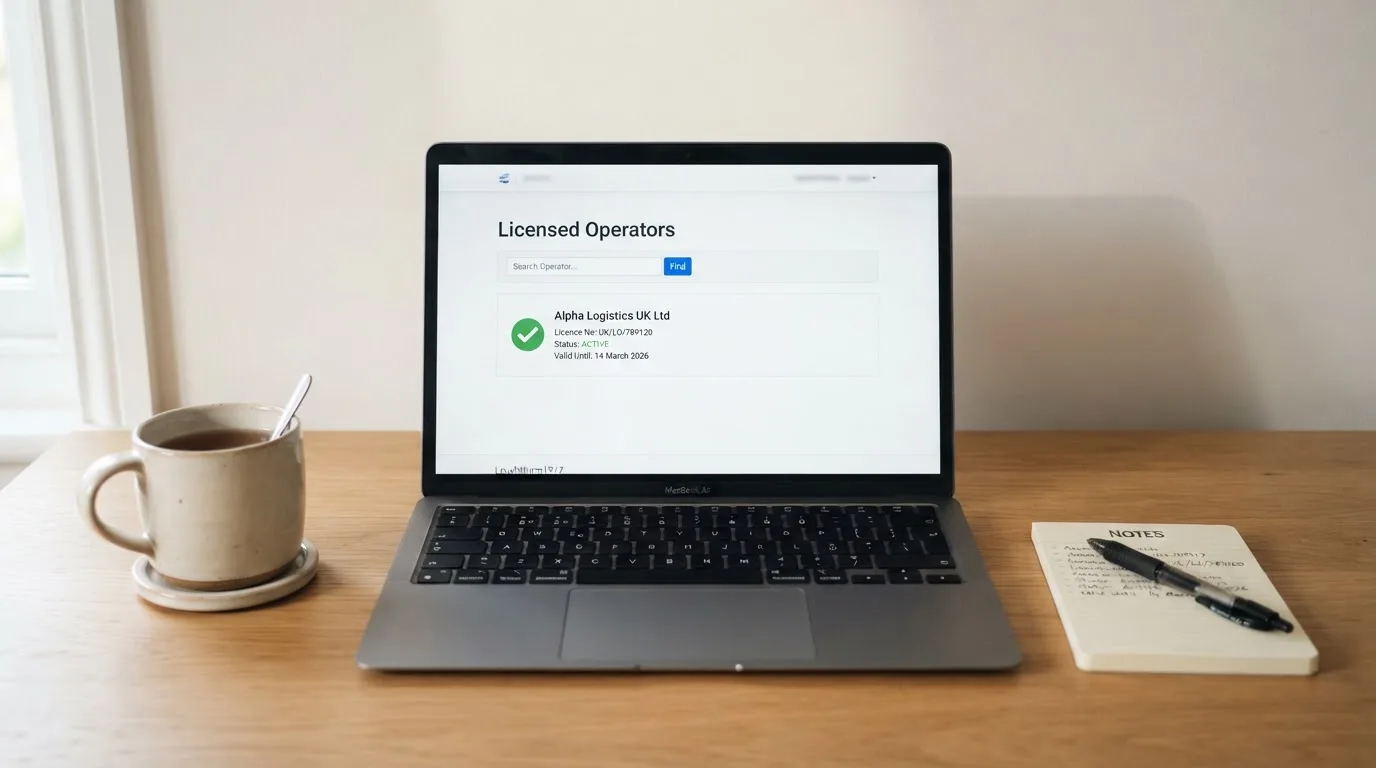
The Gambling Commission’s public register lets anyone search by business name, trading name, domain or account number, and lists each operator’s remote licence categories, the licence holder company and the trading names run under that licence. Every GB-licensed online bookmaker also displays its account number and licence holder on the home page or in the terms, and the register is the definitive source if the page and the register disagree.
How is the return on a bet worked out from the stake and the odds?
For a single bet at decimal odds of 4.00 with a £10 stake, the return is stake × odds = £40, of which the net profit is stake × (odds − 1) = £30. For a combination bet the odds of the legs multiply into one price, so a double at 2.00 and 3.00 has combined odds of 6.00 and a £10 stake returns £60. Fractional odds express the profit per £1 staked: 5/1 fractional is profit £5 plus stake £1, decimal 6.00.
What is the bookmaker’s margin and how can it be seen in the odds?
The margin is the share of every pound staked that the bookmaker keeps on average, and it lives inside the prices. For a two-way market at 1.90/1.90 the implied probabilities add to 105.26%, so the margin is 5.26 percentage points, or 5.0% of stakes. For a three-way 1X2 the overround is the difference between the sum of implied probabilities and 100%, expressed as a percentage.
How do fractional odds such as 5/1 convert to decimal odds such as 6.00?
The formula is a ÷ b + 1, where a/b is the fractional price. For 5/1: 5 ÷ 1 + 1 = 6.00. For 11/4: 11 ÷ 4 + 1 = 3.75. For evens (1/1): 1 ÷ 1 + 1 = 2.00. Decimal odds express the total return per £1 staked, fractional odds express the profit per £1 staked; both notations describe the same price.
Which tools for controlling play does a licensed bookmaker have to offer?
A GB-licensed bookmaker must offer GAMSTOP self-exclusion, deposit limits on a fixed time frame, timeouts and access to GamCare, GambleAware, NHS gambling clinics and Gamblers Anonymous. A financial vulnerability check is run once net deposits exceed £150 in a rolling 30-day window, looking at public records such as county court judgments and bankruptcy orders. Age and identity are verified before the first deposit; the minimum age is 18.
Are betting winnings taxed in Great Britain, and who pays General Betting Duty?
The player pays no tax on betting winnings in Great Britain; this is general information rather than tax advice. General Betting Duty is the operator’s tax on gross profits, currently 15%, and from 1 April 2027 a new remote betting rate of 25% applies within it for most remote bets, while remote bets on UK horse racing, pool betting and in-person betting stay at 15%. The duty is the operator’s, not the player’s.
US & other team sports – Best betting exchange
Content created by the «Best betting exchange» team
