
High stakes betting sites UK: what high-stakes punting asks of the punter, and what it costs
 Available in US
27 October 2026 · checked against the Gambling Commission’s public register and each operator’s own terms page
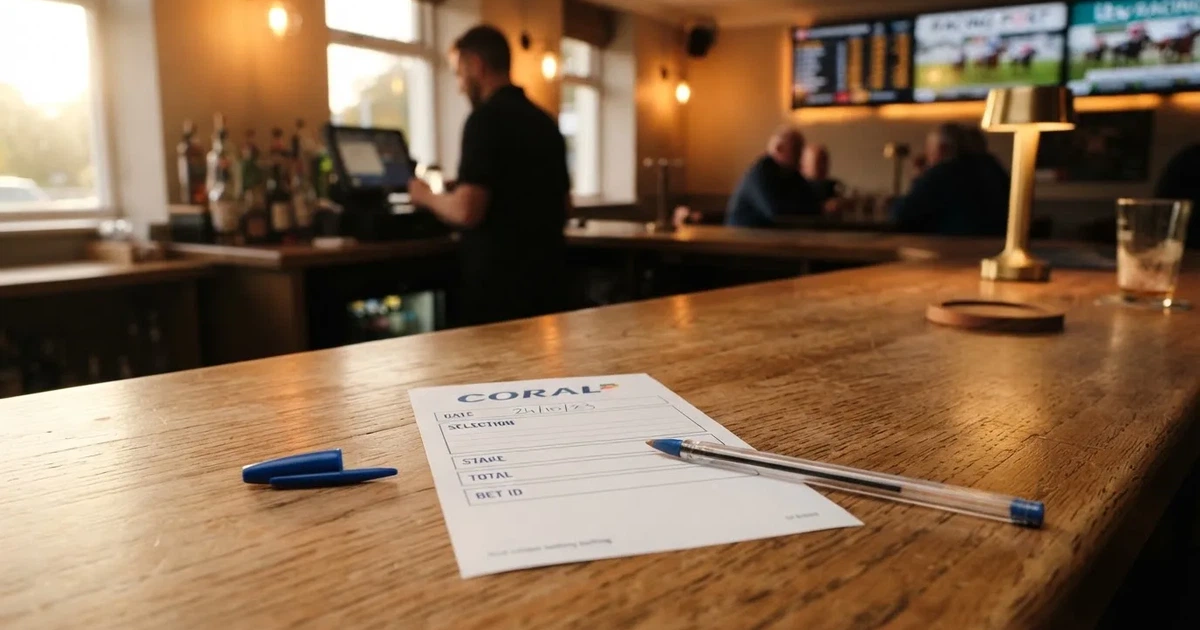
A “high stakes” punter, in the British sense the word carries on a Saturday card, is not a separate class of customer. There is no Gambling Commission category for it, no licence condition that fires at a stake threshold, no rule that turns a £10 bet into something else at £5,000. The bookmaker sets a maximum stake on its own terms, the punter either accepts or gets a reduced offer on the phone, and the rest of the relationship runs on the same rules as anyone else’s. So “high stakes betting sites” is a buying question dressed as a category: who lets a serious punter through the door, what do their rules cost, and where does the margin eat the edge before the bet is even placed.
That is the angle of this page. The ten operators below all hold a Gambling Commission remote licence for general betting on real events. That is the floor. Above it, they differ in what they charge — margin in the price, the small print around acca boosts and free bets, the maximum payout, the speed at which a winning sports bet is paid back, the deposit ceiling the operator has set, and the willingness of customer services to take a £5,000 phone bet when the website caps stakes lower. Each of those costs has a number behind it. The job of this page is to put those numbers where a punter can see them and to say what they leave on the table once the bet is settled.
There is one British oddity worth flagging before anything else. Spread betting, in the Spreadex sense, is a contract whose losses can exceed the deposit. It is regulated by the Financial Conduct Authority for financial spreads and by the Gambling Commission for sports spreads. The Commission recognises it; the FCA supervises it on the financial side. A punter looking at “high stakes” sites has to know which of those they are looking at. Spread betting is not the same instrument as fixed-odds betting, and the rest of this page assumes fixed-odds sports books unless otherwise stated.
Safer gambling: the controls that exist, and the controls the rules have not yet started
British licensed betting has more imposed on it than almost any other regulated market in Europe. The controls fall into three groups: things every operator must offer, things the operator must offer once a customer passes a threshold, and things the regulator has announced but not yet brought in. A high-stakes punter meets all three. What follows is what each one actually does, in the language of the operator’s terms page rather than the press release.
GAMSTOP is the national multi-operator self-exclusion scheme, and every Gambling Commission-licensed online operator has been a member since 31 March 2020. A punter who signs up for six months, one year, five years, or five years with auto-renewal cannot open an account at any GB-licensed site during that period. After the minimum term, the exclusion stays in place for a further seven years unless the customer asks GAMSTOP to remove it. GAMSTOP covers online sites and apps only. Betting shops use a separate, in-shop self-exclusion process. For a punter whose stake sizes are not the problem, GAMSTOP is the right tool. For a punter whose stake sizes are the problem, the operator’s own deposit limit is the more relevant one.
A deposit limit is something every licensed operator must offer, and it is the customer’s, not the operator’s, to set. The Commission’s Remote Technical Standards (RTS 12) require operators to offer a gross deposit limit on a fixed time frame, and a first phase of changes has applied since 31 October 2025. A second phase was postponed to 30 September 2026, and whether that second phase is live is not established from the available record. What is settled is that the operator must let a punter set the ceiling — the operator cannot raise it, can lower it only after 24 hours, and must apply the limit across every product the account touches.
The financial vulnerability check is the most material new control for high-stakes play. It sits in LCCP condition 3.4.4 and is in force for licensed remote betting from 28 February 2025. It triggers when a customer’s deposits minus withdrawals exceed £150 in a rolling 30 days. The check is a public-record search — bankruptcy registers, county court judgments, individual voluntary arrangements — not an income check and not a credit reference check. A punter who passes £500 of net deposits in a month can expect the operator to run the check, and a record on the public register can lead the operator to ask for evidence of source of funds before accepting further deposits. The check is not a ban: the operator weighs the result under its own procedures. For a high-stakes punter it is the practical hard line that turns the question from “how much can I stake” into “what does the operator ask me to prove I can afford”.
Above the vulnerability check sits the financial risk assessment, sometimes called “affordability checks” in the press. The Commission’s position as of 7 July 2026 is announced and staged, with no date when the rules come into force. The page says so plainly: announced, staged, no start date. A punter planning a season of high-stakes betting should treat the threshold at which an operator will ask for payslips, bank statements or evidence of wealth as the operator’s own policy today, and as a Commission rule once the new regime lands.
Two further controls frame everything that follows. Identity verification has been mandatory before the first deposit or first bet, including a free bet or a bonus, since 7 May 2019. The operator checks name, address and date of birth, runs them against the operator’s own records, and refuses the account if anything fails. There is no anonymous play at a licensed site. Credit cards have been banned for gambling in Great Britain since 14 April 2020, including credit-card-funded payments through an e-wallet. Debit cards and bank transfers are not covered by the ban. A punter with a credit card as their usual funding method needs a different one before they can deposit.
Help services sit alongside the controls. GamCare runs the National Gambling Helpline. GambleAware funds treatment and research. The NHS runs gambling clinics in several regions. Gamblers Anonymous runs meetings in most cities. These are the channels the Commission’s licence conditions point operators to when a customer asks for help, and the channels a punter can use whether or not the operator has noticed the problem. For a high-stakes punter the practical point is that asking for help does not change the account’s status overnight: GAMSTOP is a deliberate cooling-off, and the operator’s safer-gambling team can keep the account open with reduced limits rather than close it.
The three references that close the safer-gambling section sit elsewhere on the page. The credit card ban and the identity check belong to the same rules as the deposit limit and the vulnerability check, and a reader who needs the certainty of action on the page can find them in the section on what may be bet on and on what terms, in the statute work below. GAMSTOP itself returns in the section on operator write-ups, where each reviewed bookmaker’s GAMSTOP membership is part of the licence line. Re-stating them here would be repetition a reader has already met.
How a bet is built, settled and paid out: the mechanics a high-stakes punter needs
The mechanic of a bet looks simple, and for most punters it is. A stake is set, an outcome is chosen, the bookmaker offers a price, the punter accepts, and either the bet wins at the agreed price or loses at the stake. Three pieces sit beneath that simplicity: the price the bookmaker offers, the type of bet being placed, and the rule that settles it. Each one carries a cost or a limit that bites hardest at higher stakes.

A price is the number that decides the return. British bookmakers write prices in two forms. Fractional odds of 5/1 mean a £1 stake returns £5 in profit plus the £1 stake back. Decimal odds of 6.00 mean a £1 stake returns £6 in total, including the £1 stake. The conversion is a/b → a ÷ b + 1. Odds-on prices, where the profit is smaller than the stake, sit below evens: 1/2 (1.50) and 4/6 (1.67) are typical football prices on a heavy favourite. Odds against, where the profit is larger than the stake, sit above evens: 5/1 (6.00), 10/1 (11.00), 100/1 (101.00). The Commission’s public register is silent on the form a price takes; the operator chooses. The form is a presentational choice. The number underneath is the same.
A price carries the bookmaker’s edge, called the overround or margin. The bookmaker builds margin into the prices it offers, and the margin is the amount of every pound staked the bookmaker keeps on average across a market. It is calculated from the prices of every outcome of a market, not from a single price, and the calculation is the prescribed work later on this page.
A bet type decides how many outcomes the punter has to get right. A single is one outcome. A double is two. A treble is three. An accumulator — an “acca” — is four or more. The odds of a combination bet multiply into one price, so an acca of four selections at 2/1 (3.00), 3/1 (4.00), 5/2 (3.50) and evens (2.00) has combined odds of 84.00. The acca pays only if every leg wins; one losing leg takes the stake. The bookmaker’s margin is built into each leg, so a four-leg acca carries the margin of four singles multiplied together, which is harder to clear than the margin of a single alone. That is why acca boosts exist: the bookmaker’s edge is large enough that a small enhancement to the price is still profitable for the operator.
An each-way bet is two bets of equal stake: one on the selection to win, one on the selection to be placed under the operator’s place terms. The stake doubles. Place terms vary by race and operator; for a horse race with eight or more runners the standard place terms are 1/4 of the win odds for places one to four. The each-way bet keeps the place leg alive when the selection finishes outside the winner’s enclosure, and the place leg pays at a fraction of the win odds. The cost is that the total at risk on the slip is the stake multiplied by two. At higher stakes the each-way bet can be the most expensive way to back a horse.
A bet builder is the same-game multi: a single bet combining markets from one event, such as a football match result, total goals, both teams to score, and a goalscorer. The prices of the chosen legs are combined into one price on the bet builder slip, and the bet wins only if every chosen leg does. The bookmaker’s margin on a bet builder is usually larger than on the equivalent single markets, because the legs are correlated and the operator has priced that correlation in. A punter who can construct the same position as two singles is paying a premium for the convenience of one slip.
A cash out is the operator’s offer to settle the bet before the event has finished. The offered cash-out value is the operator’s own valuation of the bet at that moment, not the fair value of the position. Cash out is not always available: William Hill’s own help page states that cash out is not available on each-way bets and is not always available on accumulators, and the operator does not guarantee availability. The value the operator offers is the operator’s price, and the punter either takes it or waits for the event to finish. At higher stakes the cash-out figure can be substantial, which makes the operator’s offer worth checking carefully rather than accepting on a phone screen.
Settlement rules vary by sport, and the rule that matters for high-stakes punters is the one that decides a winning or losing bet in the unusual case. Rule 4 is a bookmaker rule: when a horse withdraws from a race after the bet is placed, the bookmaker reduces the price of the remaining runners by a fixed amount that depends on the withdrawn horse’s odds. Non-runner rules reduce the stake to the next leg of an accumulator when a horse in the acca is declared a non-runner. Ante-post betting, where the bet is placed before the final declarations, runs on different rules: the stake is lost if the horse does not run, with no Rule 4 deduction, and the punter takes the bigger odds in exchange. Each rule is published on the operator’s terms page. None of them is in the Gambling Act 2005; they are the operator’s own house rules, accepted at sign-up.
Maximum payouts are the cap on what a single bet, or a single day’s betting, can return. They sit in the operator’s terms and are usually larger for high-profile football and horse racing than for lower-profile events. The cap is the number that decides whether the price matters at the stake the punter wants to place. A £5,000 bet on a Premier League match at 10/1 returns £55,000, including stake; a £5,000 bet on a Conference North match at the same odds runs into a much smaller maximum payout and the bet is either reduced or refused. A high-stakes punter’s first job on a new event is to look up the operator’s maximum payout for the event before placing the bet.
Starting price (SP) and best odds guaranteed (BOG) sit together. SP is the industry price of a horse at the start of the race, set from the on-course bookmakers’ prices. BOG is the operator’s promise to pay the higher of the price the punter took and the SP if the bet wins. William Hill’s help page states that BOG applies to UK and Irish horse racing from 8 AM on the day of the race, on single and multiple bets, and does not apply to ante-post, tote or pari-mutuel bets. The practical effect for a punter is that taking an early price on a horse in the morning is the same bet as taking the SP at the off, at no cost.
The mechanics settle on one rule that is true at every stake size. The price carries the margin, the bet type carries the structure of the margin, and the operator’s house rules carry the rest. A punter who reads the operator’s terms once, before placing a high-stakes bet, knows the cost before the bet is on.
The Top 10: ten Gambling Commission-licensed operators for high-stakes play
The ten operators below are the reviewed bookmakers on this page. They are not a ranking. They are a shortlist of brands that hold a Gambling Commission remote licence for general betting on real events, that take a range of stakes, and that publish terms a punter can read before betting. Each card carries the licence number, the licence holder, the Gambling Commission’s public register entry, and a verdict on what the operator does well and what it costs.
The table that follows gathers the four points across the ten operators: the brand, the Gambling Commission remote licence number, the licence holder on the Commission’s register, and what the operator’s own terms say on the stake that governs the punt described. The sentence after the table says what the spread tells the reader.
| Brand | Gambling Commission remote licence | Licence holder | What the operator’s own terms say on the stake’s subject |
|---|---|---|---|
| Betfred | 039544-R-319290-010 (Commission account 39544) | Petfre (Gibraltar) Limited | Petfre’s terms list Bet Builder, Sub Switch, Racing Post data, Extra Places, live casino and bingo in the GB app. |
| Midnite | 101839-R-342850-001 (Commission account 101839) | Midnite Limited | Midnite’s app shows in-play events, an acca builder, popular accas and price boosts with maximum-stake limits. |
| Sky Bet | 067370-R-341330-005 (Commission account 67370) | SBG Sports Limited | Sky Bet’s terms credit £30 in free bets after a £5 deposit and a first single or each-way bet of at least 5p at 1/1 or greater. |
| Kwiff | 044448-R-323408-017 (Commission account 44448) | Eaton Gate Gaming Limited | Kwiff’s terms describe Supercharge, an instant price boost on a bet, applying to singles and multis on any sport. |
| Ladbrokes | 054743-R-330863-014 (Commission account 54743) | LC International Limited | The Ladbrokes app lists odds boosts on horse and greyhound bets, BOG on UK and Irish racing, in-play betting and Acca Boosts. |
| William Hill | 039225-R-319373-015 (Commission account 39225) | WHG (International) Limited | William Hill’s terms state BOG from 8 AM on UK and Irish racing on single and multiple bets, with ante-post, tote and pari-mutuel excluded. |
| BetGoodwin | 002927-R-327985-008 (Commission account 2927) | Goodwin Racing Limited | BetGoodwin’s app shows a £15 free-bet package for a £10 qualifying bet, in three £5 segments. |
| BetVictor | 039576-R-319370-028 (Commission account 39576) | BV Gaming Limited | BetVictor lists BOG on UK and Irish horse racing, enhanced live race streaming, a BetFinder feature and Smart Stats. |
| QuinnBet | 061011-R-335683-004 (Commission account 61011) | QuinnBet (Gibraltar) Limited | QuinnBet’s terms state free bets valid for 7 days, usable on any market at 1/2 (1.50) or greater, with maximum odds of 50/1. |
| Swifty Sports | 058957-R-334734-006 (Commission account 58957) | Swifty Global (UK) Ltd | Swifty Sports lists BOG, Cash Out on horse racing and football, daily price boosts, live streaming and in-play, with Bet Builder coming soon. |
The spread of licence holders across the table tells the reader what the Gambling Commission’s register actually shows. The holder names include Gibraltar-registered companies (Petfre, WHG International, QuinnBet), a UK-registered company (Swifty Global UK Ltd, Goodwin Racing), and UK operating subsidiaries of larger European groups (LC International, BV Gaming, SBG Sports). Since the Gambling (Licensing and Advertising) Act 2014, an operator whose remote facilities are used in Great Britain needs a Commission licence wherever it is based; a Gibraltar or Maltese registration does not substitute. The fact that a company’s address is overseas tells the reader nothing about its GB licence. The Commission’s public register, searched by business name or account number, is the whole test of who holds one, and the column on the left of the table is the line a punter should check against the register before placing a bet.
The right-hand column is the spread of stake-related terms the operator publishes. It is not a list of offers — the page does not print offers — and the terms vary. Some operators list BOG on UK and Irish horse racing and call it out as a feature; some list maximum-stake limits on price-boosted bets and call those out instead; some list free-bet terms and call those out instead. The variation reflects what each operator’s marketing department has decided to push. The variation that matters to a punter is the size of the price and the size of the stake the operator accepts on the market the punter wants to play. The terms page is the place both live.
Betfred
Betfred’s GB app is published by Petfre (Gibraltar) Limited, which holds Gambling Commission remote licence 039544-R-319290-010 under Commission account 39544. This licence includes remote general betting standard (real events). The app’s published features include Bet Builder, Sub Switch, Racing Post data, Extra Places, live casino and bingo. Petfre also holds the licence for several other UK-facing brands; please note that any platform under this Petfre licence shares the same operator and house rules.
What Betfred does for a high-stakes punter is straightforward: a full sports book with horse racing, football, greyhound racing and a wide spread of in-play markets, plus the tote product for pool betting. Extra Places and BOG on UK and Irish racing are the everyday features that bear on stake size. Maximum payouts sit in the published terms. Sub Switch, which lets a punter replace one selection in an acca before a leg starts, is the practical alternative to placing a second acca when one leg looks shaky.
What it costs is the Betfred margin on the market being played. The published acca insurance, the Sub Switch fee if any, and the maximum payout on lower-profile events are the practical limits. The Betfred welcome package is documented in the operator’s own terms and was not investigated beyond that.
Midnite
Midnite’s site is operated by Midnite Limited under Gambling Commission licence 101839-R-342850-001 (Commission account 101839), and the Commission’s register lists the category as remote general betting standard (real events). The site shows in-play events, an acca builder, popular accas and price boosts with maximum-stake limits. The licence is recent: the brand is one of the newer entrants to the GB-licensed market, and the Commission’s register is the place to check the licence’s status before placing.
What Midnite offers for a high-stakes punter is a focused sports book with a strong esports section, a Bet Builder on football, and the acca-builder product that constructs the multi for the punter rather than the punter constructing it. The price boosts come with maximum-stake limits published on the boosted market — the operator states those limits and the punter takes them. The site is GAMSTOP-registered, identity-verified before the first deposit, and operates under the LCCP and the credit card ban.
What it costs is the Midnite margin on the market, the maximum stake the boost allows, and the gap on lower-profile events where the maximum payout is smaller. The published welcome offer (£25 in free bets plus 50 free spins for a £5 qualifying bet at EVS or above, valid for 14 days from sign-up and 7 days from issue) is described only as the operator’s own terms describe it; the page does not print offers as recommendations.
Sky Bet
Sky Bet is operated by SBG Sports Limited, which holds Gambling Commission remote licence 067370-R-341330-005 under Commission account 67370. The Commission’s register lists the category as remote general betting standard (real events). The published welcome offer is £30 in free bets, credited as three £10 tokens, after a deposit of at least £5 and a first single or each-way bet of at least 5p at odds of 1/1 (2.00) or greater.
What Sky Bet does for a high-stakes punter is a full sports book with strong football and racing coverage, an in-play product on the major sports, and the Sky Sports branding that ties the app to the broadcaster’s coverage of UK and Irish racing. The acca boost and the request-a-bet feature (where a punter can name a bet that is not on the standard slip) are the everyday differentiators. Maximum payouts sit in the operator’s terms.
Sky Bet’s pricing on the market being played, the request-a-bet limit, and the maximum payout on lower-tier events are key details for the punter. The free-bet offer—three £10 tokens, their specific wagering requirements, and the 7-day expiry from credit—is explained on the brand’s own terms page, which should be consulted for the precise conditions. The token values and the qualifying bet are described only as the operator describes them.
Kwiff
Kwiff is operated by Eaton Gate Gaming Limited, which holds Gambling Commission remote licence 044448-R-323408-017 under Commission account 44448. The app has a 17+ age rating on the GB App Store, which is the operator’s own classification and the Commission’s rule is 18; the difference reflects the App Store’s wider policy on simulated gambling rather than the Commission’s minimum age. The app describes itself as a trademark operated by Spryme Ltd and is licensed by the UK Gambling Commission.
The Kwiff feature for high-stakes punters is Supercharge, an instant price boost that can move a bet from 2/1 to 20/1 or further, applied to singles and multi bets on any sport. The boost is random — Kwiff’s marketing describes it as instant — and the maximum stake it accepts on the boosted price sits in the operator’s own terms. The brand’s edge on a Supercharged bet is the small print: the boosted price carries Kwiff’s margin on the boosted market, and the boost itself is the marketing wrapper. A punter who reads the terms sees the cost; a punter who reads the marketing sees the upside.
What it costs is the Kwiff margin on the underlying market, the maximum stake the boost allows, and the maximum payout on the boosted event. The acca product and the in-play product are the everyday alternatives for a punter who wants the standard Kwiff price rather than the Supercharged one.
Ladbrokes
Ladbrokes is operated in the UK by LC International Limited, which holds Gambling Commission remote licence 054743-R-330863-014 under Commission account 54743. The Commission’s register lists two categories: remote general betting standard (real events) and remote betting intermediary (the licence category for exchanges). The same licence number appears against Coral on the Commission’s register, and the two brands share a licence holder; they are not independent operators, and the Coral write-up below says so again.
The Ladbrokes app lists odds boosts on horse and greyhound bets, BOG on UK and Irish horse racing, in-play betting and Acca Boosts. The brand’s history as a UK high-street bookmaker with a long-established customer base is part of what a high-stakes punter meets: the maximum payouts are larger than at newer entrants, the in-play markets on football and tennis are wider, and the price-boost catalogue is one of the longest in the GB market. The retail footprint means a punter who wants to walk into a shop can, and the retail and online products share a wallet.
When weighing up the costs at Ladbrokes, consider the margin on your chosen market, the maximum stake on a boosted bet, and the potential payout limits on lower-profile events. Remember that each-way bets effectively double the stake; check the published terms for specific details on acca-boost percentages and eligibility.
William Hill
William Hill is operated in the UK by WHG (International) Limited, which holds Gambling Commission remote licence 039225-R-319373-015 under Commission account 39225. The brand has held a UK licence under various licence holders since the 1960s; the current licence holder is the post-2014 structure required by the Gambling (Licensing and Advertising) Act.
The William Hill features a high-stakes punter meets are BOG on UK and Irish horse racing from 8 AM on the day of the race, on single and multiple bets (with ante-post, tote and pari-mutuel excluded), the Football Acca Boost covering accas of two or more legs at minimum odds of 1/5 (1.20), with the boost running from 3% on a double up to 200% on 20 or more legs and a maximum boost of £10,000 per online bet until 30 May 2027, and Cash Out on selected markets (with each-way bets excluded and accumulators not always available, with the operator not guaranteeing availability). The Football Acca Boost is a published enhancement; the maximum boost of £10,000 per bet is the cap a high-stakes punter meets first.
Assess the costs at William Hill by looking at the margin on your chosen market and any maximum stake limits on acca-boosted bets. Note the £10,000 cap on the largest accas and verify whether cash out is available for your specific selection, as knowing these rules beforehand avoids potential disappointment.
BetGoodwin
BetGoodwin is operated by Goodwin Racing Limited, which holds Gambling Commission remote licence 002927-R-327985-008 under Commission account 2927. Goodwin Racing is a smaller UK operator with a focus on horse racing; the licence number is one of the lower account numbers on the Commission’s register, reflecting the licence holder’s longer history.
The published BetGoodwin welcome offer is “Bet £10 & Get £15 in Free Bets”, in three £5 segments: a £5 sports bet, a £5 acca, and a £5 Sub-Cover bet. The offer sits on the operator’s own terms. The feature for a high-stakes punter is the racing-focused sports book, the BOG product on UK and Irish racing, and the smaller, racing-specialist customer base, which means the maximum payouts on racing are reasonable and the customer-services line knows the high-stakes racing punter.
Factor in the BetGoodwin margin on the market being played and any specific maximum stake limits for racing events. The brand’s edge on acca insurance and racing-specific products is part of the marketing; details on these and the maximum payouts are found in the operator’s terms.
BetVictor
BetVictor is operated by BV Gaming Limited, which holds Gambling Commission remote licence 039576-R-319370-028 under Commission account 39576. The brand is a long-established UK-facing sports book with a strong football and racing catalogue and a smaller casino product.
The BetVictor features a high-stakes punter meets are BOG on UK and Irish horse racing, enhanced live race streaming, a BetFinder feature for finding racing bets, and Smart Stats for in-play football. The brand’s edge is the racing product and the in-play football product, both of which carry larger maximum payouts than the standard lower-profile events. The published terms are the place a punter reads the cap.
At BetVictor, the margin on your market, the maximum stake for in-play football bets, and the maximum payout for lower-tier events represent the main cost considerations. Utilize the Smart Stats feature to your advantage, keeping in mind that the tool itself is free to use.
QuinnBet
QuinnBet is operated by QuinnBet (Gibraltar) Limited, which holds Gambling Commission remote licence 061011-R-335683-004 under Commission account 61011. The Commission’s register lists the category as remote general betting standard (real events). The brand is one of the smaller GB-licensed sports books with a focus on horse racing and football, and a published set of free-bet terms that bear on the cost of the offer.
The QuinnBet free-bet terms state the free bet is valid for 7 days from credit, usable on any market at odds of 1/2 (1.50) or greater, with maximum odds of 50/1; straight accumulators are allowed, but Trixies, Patents and Yankees are not. The 7-day window and the 50/1 ceiling are the practical limits a high-stakes punter meets when claiming and using the offer. A punt on a system bet other than a straight acca, or on a selection above 50/1, does not use the free bet; the stake sits with the punter’s own cash.
Consider the QuinnBet margin on your market and the maximum stake limits applicable to racing events. Regarding the free bet offer, check the specific conditions, as these are the primary factors determining the offer’s value; always refer to the brand’s official terms.
Swifty Sports
Swifty Sports is operated by Swifty Global (UK) Ltd, which holds Gambling Commission remote licence 058957-R-334734-006 under Commission account 58957. Swifty Global is a UK-registered company; the licence number is the line a punter checks on the Commission’s register.
The Swifty Sports features are BOG, Cash Out on horse racing and football markets, daily price boosts, live streaming, and in-play betting; Bet Builder is listed as coming soon. The brand is one of the newer entrants to the GB-licensed market, and the price-boost catalogue and the in-play product are the everyday differentiators. The maximum stake the boost accepts sits in the operator’s own terms.
When evaluating costs at Swifty Sports, note the margin on your market, the maximum stake for boosted bets, and the limitations on in-play markets pending the arrival of Bet Builder. Those prioritizing multi-leg accas might prefer to wait for the Bet Builder feature.
What “high stakes” really runs on: the regulator, the licence, and the rules in force
The legal frame of “high stakes” in Great Britain is the Gambling Act 2005, the Gambling (Licensing and Advertising) Act 2014, and the Licence Conditions and Codes of Practice (LCCP) the Gambling Commission issues under the Act. The Act covers Great Britain — England, Scotland and Wales. Northern Ireland is outside the Act and runs on its own older law, so a GB licence is not a Northern Ireland licence and a Northern Ireland licence is not a GB licence. The Commission is a non-departmental public body sponsored by the Department for Culture, Media and Sport.
Since the 2014 Act, an operator whose remote facilities are used in Great Britain needs a Commission licence wherever the operator is based. Sections 33 and 36 of the Gambling Act 2005, as amended, set the offence: providing gambling facilities in Great Britain without the licence the Act requires is an offence, on summary conviction up to 51 weeks’ imprisonment, a fine up to level 5, or both; six months in Scotland. The offence is aimed at the operator. No offence aimed at a customer who merely bets on an unlicensed site was found in the available record; the framing for a customer is the loss of protection — no GAMSTOP coverage, no Commission complaints route, no approved dispute-resolution body, no British consumer redress if funds are withheld, no binding by the 10x bonus cap or the £150 vulnerability check. “Legal to use” is not the right word for that position. “Unprotected if it goes wrong” is.
The Commission’s licence categories a high-stakes punter meets are five. Remote general betting standard (real events) is the licence that covers fixed-odds betting on actual sporting events. Remote general betting standard (virtual events) covers betting on computer-generated events. Remote general betting limited is a smaller category, often used by operators with a focused product. Remote pool betting covers tote and pool products on horse and dog racing. Remote betting intermediary is the licence that covers betting exchanges — the Betfair model, where customers bet against each other rather than against the operator. The licence a brand holds sits on the Commission’s public register, alongside the licence holder and the business address. The register can be searched by business name, trading name, domain or account number.
What may be bet on is not statutorily listed. An operator holds a licence for a category and offers markets under its own rules and the LCCP. In-play betting is offered by GB bookmakers and is governed by the operator’s licence conditions and customer-protection duties; “unrestricted” is not the right word for the legal position. Esports are treated like any other event; virtual events are a separate licence category. Bets on politics, TV shows and novelty markets are offered by GB bookmakers, and no statutory prohibition was found. Spread betting that is not a financial product falls inside General Betting Duty; financial spread betting is regulated by the FCA, not the Commission.
The maximum stake on any given bet is set by the operator, not the regulator. There is no statutory cap on stakes in sports betting. An operator may restrict a customer, may reduce a stake at its discretion, may refuse a bet, and may set a maximum payout lower than the customer wants. The Commission’s role is to require the operator to publish its terms, to enforce them consistently, and to refuse a stake reduction that breaches its own published rules. A punter whose stake is reduced below the operator’s published maximum has a complaint to the approved dispute-resolution body; a punter whose stake is reduced in line with the operator’s published maximum does not.
Advertising and bonuses are the other half of the regulator’s reach. Advertising is not licensed by the Commission. The Committee of Advertising Practice (CAP) Code covers non-broadcast marketing and the Broadcast Committee of Advertising Practice (BCAP) Code covers broadcast; both are enforced by the Advertising Standards Authority (ASA). CAP Code section 16 says marketing must be socially responsible, must not be of strong appeal to under-18s, and no one who is or seems to be under 25 may be featured gambling or play a significant role in the advertisement, with an exception for marketing placed where a bet can be made directly; the rule concerns who appears in the advertisement, not who may bet. The Commission’s LCCP adds marketing conditions on the operator, including the terms under which bonuses and free bets can be offered. Promotion rules in force since 19 January 2026 cap wagering requirements on bonuses at 10x (a £10 bonus at 50x requires £500 of bets; under the cap, no more than £100), and ban mixed-product promotions — an offer that requires gambling on two or more product types, for example “bet on football to get free spins”. Whether the cap applies to free bets with no wagering condition, and any cap on the money value of a bonus, are not established from the available record; the page says so. Whistle-to-whistle is an industry code, not law: since 1 August 2019 betting advertisements are not shown on TV from five minutes before a live sporting event to five minutes after it, before the 9pm watershed, with horse and greyhound racing excluded. The Premier League clubs’ voluntary withdrawal of gambling sponsorship from the front of matchday shirts from 2026/27 is voluntary, not law; sleeves and hoardings remain.
Tax falls on the operator, not the punter. The player pays no tax on betting winnings in Great Britain, and a professional gambler should ask HMRC or an adviser. General Betting Duty is the operator’s tax on gross profits at 15%; from 1 April 2027 a new remote betting rate of 25% applies within it, while remote bets on UK horse racing, bets on self-service betting terminals in licensed premises, pool betting and in-person betting stay at 15%, under the HM Government policy paper of 26 November 2025. Spread betting has its own rates: 3% on financial, 10% on other. Until 1 April 2027 the remote rate stays at 15%; whether operators pass duty on through odds is not established. The Commission’s statutory levy is a separate charge, not a tax.
The three references that close this section return elsewhere on the page. The financial vulnerability check sits in the safer-gambling section above, where the £150 rolling-30-day trigger and the public-record nature of the check are stated in full. The 10x bonus cap sits in the FAQ, where the question of what controls a licensed operator must offer brings it back. The financial risk assessment’s “announced, staged, no start date” line sits in the safer-gambling section above, where it belongs with the live controls. Re-stating them here would be repetition.
The arithmetic of margin: what the price hides, and how to read it
The prescribed work of this page is the calculation of the bookmaker’s margin in a price, which is the operator’s edge on every pound staked on a market. The example uses an illustrative two-way market at decimal odds 1.90 / 1.90 (fractional 9/10), which is the kind of even-money line a bookmaker offers on a closely matched football or tennis event. The example is not a quoted price; it is an illustration of how the margin hides inside two prices that look fair.
The payout share of a market is the proportion of every pound staked the market returns to punters as winnings, on average, when the prices are taken as fair. For a two-way market with two outcomes priced at decimal odds 1.90 and 1.90, the payout share is 1 ÷ (1 ÷ 1.90 + 1 ÷ 1.90) = 1 ÷ (0.5263 + 0.5263) = 1 ÷ 1.0526 ≈ 0.950. That is, the market returns 95p in winnings for every £1 staked across both outcomes, on average. The bookmaker’s margin is 1 − 0.950 = 0.050, or about 5% of total stakes. The two prices sum to 1.0526 in implied probability terms (each 0.5263), and the excess over 1.0000 is the operator’s edge.
The same market in fractional odds of 9/10 sits at decimal 1.90, and the implied probability of each outcome is 1 ÷ 1.90 = 52.63%. The two probabilities sum to 105.26%, and the excess over 100% is the margin. Reading the prices off the slip, the punter does not see 5%; the punter sees two numbers that look fair and a small difference that is the operator’s edge.
The margin hides most deeply in markets with more outcomes. A three-way football market (home win, draw, away win) priced at 2.20 / 3.40 / 3.40 (decimal) has an implied probability sum of 1 ÷ 2.20 + 1 ÷ 3.40 + 1 ÷ 3.40 = 0.4545 + 0.2941 + 0.2941 = 1.0427, a payout share of 1 ÷ 1.0427 ≈ 0.959, and a margin of about 4.1%. A five-way horse racing market on a competitive handicap at 4.00 / 5.50 / 7.00 / 11.00 / 17.00 sums to 0.2500 + 0.1818 + 0.1429 + 0.0909 + 0.0588 = 0.7244 implied probability, a payout share of about 72%, and a margin of about 28% — the bookmaker keeps 28p of every pound staked on that race, because the field is wide and the prices on the long-shots are unsustainably generous if taken at face value. The punter’s first reading of a market should be the implied-probability sum: above 100% for two-way, above 105% for three-way, above 110% for five-way, the bookmaker’s edge is the excess.
The margin is an average across many bets on the same market. It is not a fee on a single bet, and it is not what the punter pays on a single outcome. A punter who places £1,000 on a single selection at 2/1 (3.00) and wins pays nothing in margin to the operator on that bet — the operator pays £3,000, including the £1,000 stake. The margin is what the operator keeps on average across all the bets on the market: the losers’ stakes, minus the winners’ payouts, averaged over the bets placed. A punter’s stake contributes to the margin only when it loses.
For a combination bet, the margin of the legs multiplies into the margin of the combination. A four-leg acca at 2.00 / 2.00 / 2.00 / 2.00 (each with a margin of about 5%, payout share about 95%) has a combined price of 16.00 and a combined payout share of 0.95⁴ ≈ 0.815, a margin of about 18.5%. An eight-leg acca at the same leg price has a combined payout share of 0.95⁸ ≈ 0.663, a margin of about 33.7%. The acca boost the operator offers is the marketing wrapper on a market that already carries the operator’s edge on every leg; the boost does not cancel the edge, it shares a fraction of it with the punter.
In this example, the illustrative two-way market at decimal 1.90 / 1.90 implies an overround of around 5%. This calculation assumes the prices represent the fair market value, and the resulting percentage is an average across both potential outcomes rather than a fee on one specific side. A bookmaker offering 1.85 / 1.95 on the same market reflects a margin of approximately 2.5%, illustrating how the spread between the prices influences the operator’s edge.
The practical read for a high-stakes punter is that the margin is the only number that does not depend on which side of the bet wins. The price the punter takes is the price the punter gets; the margin is what the bookmaker keeps on average across the market. A punter who reads the implied-probability sum before placing the bet knows the cost before the bet is on, and the operator whose margin sits at 3% on a Premier League match is cheaper than the operator whose margin sits at 7% on the same match — for the same bet, on the same outcome, at the same price after BOG and price boosts are applied.
Frequently asked questions
How can a punter check that a bookmaker holds a Gambling Commission licence?
The Gambling Commission’s public register is searchable by business name, trading name, domain or account number, and the licence entry lists the licence holder, the licence categories and the licence’s status. A GB-licensed online operator will appear on the register against the company that operates the site, not against every brand it owns. The domain alone proves nothing: a licensed operator can use .com or .co.uk, and the domain does not establish the licence. The register entry is the test of who holds a licence.
How is the return on a bet worked out from the stake and the odds?
Return on a winning bet is stake multiplied by the decimal odds, and net profit is stake multiplied by (decimal odds − 1). At fractional odds of 5/1 (decimal 6.00), a £10 stake returns £60, of which £50 is profit and £10 is the stake returned. For a combination bet, the odds of the legs multiply into one combined price before the multiplication by the stake. The formula assumes only that the bet wins; if the bet loses, the return is zero and the stake is the cost.
What is the bookmaker’s margin, and how can it be seen in the odds?
The margin is the proportion of every pound staked on a market the bookmaker keeps on average, calculated from the prices of every outcome of the market rather than from a single price. It is visible in the implied-probability sum: each outcome’s probability is 1 divided by its decimal odds, and the sum across all outcomes exceeds 100% by the margin. An illustrative two-way market at 1.90 / 1.90 sums to 105.26% and carries a margin of about 5%; a more efficient bookmaker on the same market might offer 1.95 / 1.95 and carry a margin of about 2.5%.
How do fractional odds such as 5/1 convert to decimal odds such as 6.00?
The conversion is a/b → a ÷ b + 1. Fractional odds of 5/1 convert to 5 ÷ 1 + 1 = 6.00. Fractional odds of 11/4 convert to 11 ÷ 4 + 1 = 2.75 + 1 = 3.75. Fractional odds of evens (1/1) convert to 2.00. Odds-on prices below evens (1/2, 4/6) convert to decimal odds below 2.00 (1.50, 1.67). The decimal form is the same price, expressed differently; the bookmaker’s margin is the same in both forms, and the operator chooses the form it publishes.
Which safer-gambling tools does a licensed bookmaker have to offer?
A licensed operator must offer GAMSTOP self-exclusion across the online product, a customer-set deposit limit on a fixed time frame, identity verification before the first deposit or bet, and a financial vulnerability check once deposits minus withdrawals exceed £150 in a rolling 30 days. The operator must point customers to GamCare, the National Gambling Helpline, GambleAware and the NHS gambling clinics. Marketing must meet the CAP Code’s social-responsibility conditions and the LCCP’s marketing conditions, including the 10x cap on bonus wagering requirements in force since 19 January 2026.
Betting sites & exchanges – Best betting exchange
Content created by the «Best betting exchange» team
