
Cycling Betting Odds 2026: What the Price Hides and What the Bookie Keeps
 Available in US
Snapshot as of 27 October 2026, with each licence claim verified against the Gambling Commission’s public register.

The price on a cycling stage is the smallest piece of the bet. Around it, the bookmaker builds a margin, the operator fixes its own stake ceiling, the rules dictate which selections qualify for a free bet, and the regulator sets the verification step you go through before the first deposit. The page that follows reads cycling betting odds as a cost: what gets taken off every stake, what each offer really asks of the bettor, and where the market on the road race actually pays out.
Safer Gambling Around Cycling Markets
Cycling draws a particular kind of punter. A Grand Tour runs for three weeks and the odds move on every stage, so the temptation is to keep betting through a long event rather than walk away. Stage markets refresh twice a day, GC odds shift on the first summit finish, and the in-play screen on the final climb is the place where bankrolls are most often blown. A three-week race is the textbook setting for the harm the LCCP was written to prevent.
The first line of defence is GAMSTOP. Every GB-licensed online operator is a member, and self-exclusion runs in fixed windows: six months, one year, five years, or five years with auto-renewal. After the minimum period the exclusion stays in place for a further seven years unless the bettor asks GAMSTOP to lift it. A self-exclusion across every GB site and app is not the same as a betting-shop exclusion, which is run on a separate register, so a punter who bets in shops needs both.
Since28 February 2025 a financial vulnerability check has applied when remote betting deposits minus withdrawals cross £150 in a rolling 30-day window. The check is a public-record search — bankruptcy, county court judgments, the kind of data that sits on the public file — not an income check and not a credit-reference check. It is the regulator’s answer to the harm that builds quietly across a long summer of stages.
Deposit limits are the operator’s job, set under RTS 12. The first changes have applied since 31 October 2025; a second phase has been postponed to 30 September 2026, and whether it is live now is not established. There is no state-set ceiling on stake or loss: a punter picks the ceiling they want, and the operator must offer a gross deposit limit on a fixed time frame. The customer who never sets one leaves the cap at the operator’s default.
Outside the licence conditions, GamCare runs the National Gambling Helpline, GambleAware funds treatment and education, the NHS operates gambling clinics, and Gamblers Anonymous runs meetings in most British cities. The White List on GamCare’s site lists the organisations each operator routes help through. Help exists; the hard part is taking it before the bankroll is gone.
A credit card has not been a payment option in British gambling since 14 April 2020. Debit cards and bank-based payments are untouched by the ban. Crypto deposits at licensed operators sit in a grey area that research does not settle: describe each operator’s actual list, not a generic rule.
The Road Calendar and What Gets Priced
How the UCI structures the season
The UCI, the Union Cycliste Internationale, has governed road cycling since 1900. It runs the annual men’s and women’s road world championships and sits at the top of a tiered calendar. The UCI WorldTour was created in 2005 as the ProTour and renamed the WorldTour in 2011; it gathers the Grand Tours and the other major stage races under one banner. Below it sit the UCI ProSeries and the continental tours, where the betting depth on a stage is much thinner.
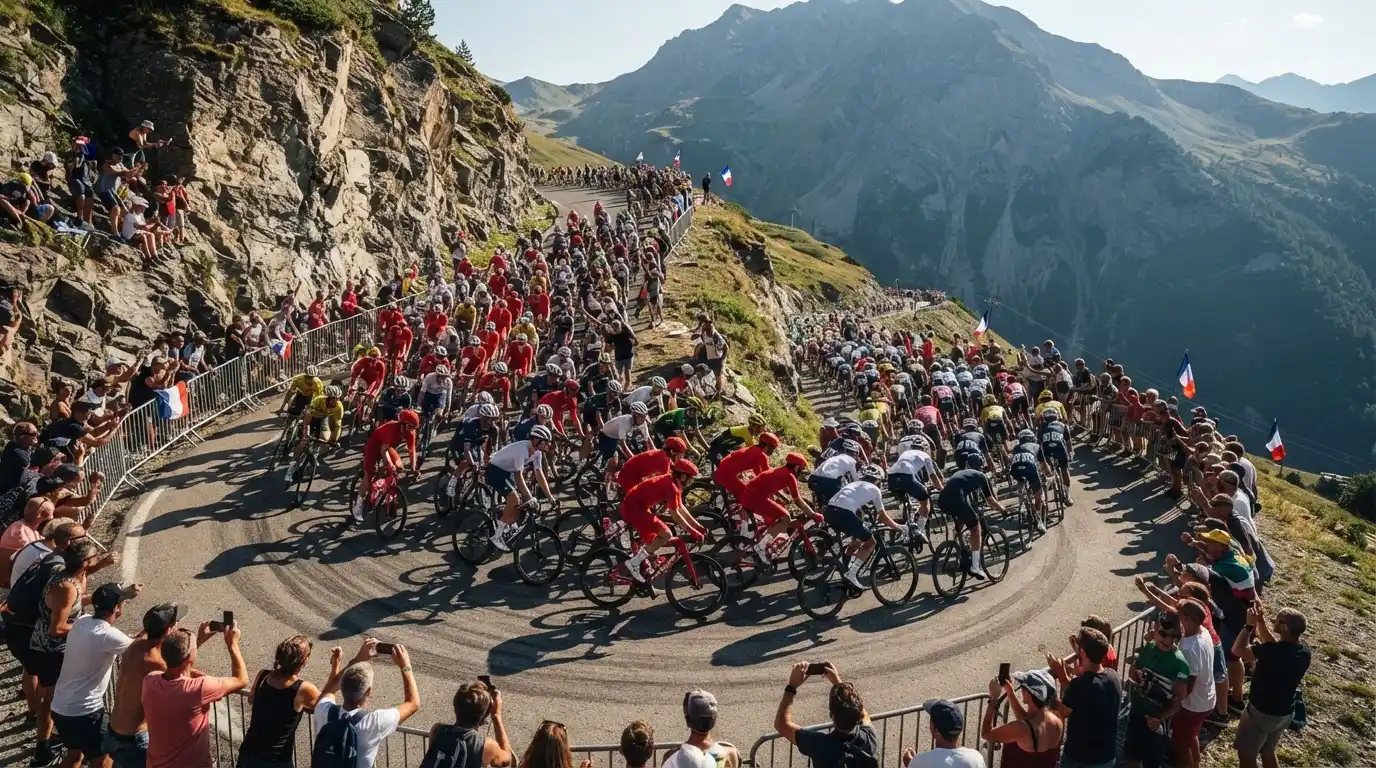
A Grand Tour is a stage race that lasts between 15 and 23 days under UCI rules. There are exactly three: the Giro d’Italia (first held 1909), the Tour de France (1903) and the Vuelta a España (1935). The leader’s jersey changes with the race: pink in the Giro, yellow in the Tour, red in the Vuelta. A Grand Tour normally has two rest days, and the betting schedule follows them — the day after a rest day is when the books shorten the GC favourite because the peloton is fresh and the attacks come early.
Stage races outside the WorldTour are priced too, but with fewer legs and shorter price lists. One-day Classics — Milan–San Remo, the Tour of Flanders, Paris–Roubaix, Liège–Bastogne–Liège, Il Lombardia — sit on a Sunday in spring or autumn and bookmakers treat them as outright markets: winner, podium, head-to-head, sometimes a small group of named riders each-way. Classics are the cleanest outright race on the calendar: one route, one result, no GC to manage.
The 2026 Tour de France and what the price said
The 2026 Tour de France ran from 4 to 26 July 2026, starting in Barcelona with a team time trial and finishing on the Champs-Élysées in Paris. Twenty-three teams rode 21 stages and 3,245 km. Tadej Pogačar of UAE Team Emirates took the yellow jersey, his fifth Tour victory. The pre-race outright on Pogačar closed somewhere between2/1 and 5/2 on the major books after the team time trial; the in-running price on the final week was shorter than the start price because the lead was already decisive.
Stage markets ran twice a day. Each bookmaker priced favourites at decimal odds of roughly 1.80 to 2.20, with the peloton priced between 50/1 and 500/1 depending on the book. Each-way terms varied by stage: flat stages paid three or four places, mountain stages paid fewer places, and time-trials sometimes paid two. The margin on stage-winner markets is wide compared with football 1X2 — sprint stages with twenty viable winners price closer to 110% overround, mountain stages with three or four contenders price closer to 107%, and the books trim the margin on the races they know their customers will bet.
The 2025 Giro d’Italia and 2025 Vuelta a España followed the same shape. The 2026 Giro d’Italia and the 2026 Vuelta a España are still ahead in the calendar at the time of writing, and the outright market on each will open in the months before the start.
Markets on a road race
The classic cycling book lists five market families. The outright winner of a stage, race or Classic is the simplest. The GC market on a Grand Tour is settled over three weeks and the price moves every day. Head-to-head markets pit two named riders against each other over a stage or a race, and the price reflects the gap in form, the route and the team’s tactics.
Each-way bets double the stake — one bet on the win, one on the place — and the place terms vary by race type and by operator. A flat stage in a Grand Tour usually pays three or four places each-way at a third or a fifth of the win odds; a one-day Classic sometimes pays four places at a quarter. The place terms are the place a bookmaker makes its margin back on an each-way bet, because the place fraction applied to the place odds is rarely as generous as the headline win price.
In-play betting is where the cycling market spends most of its year. Stage winner, next stage winner, race winner, head-to-head between two riders on a climb — the screen refreshes every kilometre of a summit finish, and the bookmaker’s risk team shifts the price in real time. A breakaway of three riders at20 km to go on a flat stage is a textbook lay on the peloton favourites; an attack3 km from the line on a mountain stage is a textbook back on the attacker at any price over 2/1. The mechanism works; the cost is the in-play margin, which is wider than the pre-match margin because the book cannot lay off the risk as easily as it can in football.
What Operators Charge on Cycling Markets
A bookmaker’s margin is the slice of every pound bet that the house keeps, on average, before a punter is paid out. It is built into the price: the sum of the implied probabilities of every outcome in a market is more than 100%, and the gap between that sum and 100% is the margin. On a two-way market priced at 1.90 / 1.90 (fractional 9/10 each side), the implied probability of each side is 1 ÷ 1.90 = 52.63%, the two probabilities add to 105.26%, the overround is 5.26%, and the margin is 5.0%. A punter placing £10 on either side at those prices gives the book £0.50 of expected profit per round of £10 staked across the two outcomes.
The picture on cycling is less tidy than that. A Grand Tour stage with twenty viable winners tends to carry an overround closer to 110% to 115%, depending on how many riders the book has priced. A two-way head-to-head between the two GC favourites carries a margin closer to the football5% band, because the bookmaker can hedge one side against the other. An outright winner market on a one-day Classic with eight named selections prices closer to 115% because the long tail of unlisted riders makes the book conservative.
The cost to the punter is the margin. On a stage market at 110% overround, the book keeps roughly £11 of every £100 staked across all outcomes; on a two-way head-to-head at 105%, the book keeps roughly £5. The headline price of 10/1 on a long-shot breakaway rider is real, but the same market has trimmed the favourite to compensate, and the bettor who backs the favourite every stage loses 10% of turnover in the long run regardless of how often the favourite wins.
The other cost is structural: the each-way fraction. A Grand Tour stage that pays four places each-way at a fifth of the win odds is not paying a fifth of the place odds — the place odds are 1 ÷ (4/5) of the win price, which on a 10/1 winner means a place return of 9/2. The arithmetic is mechanical and the books state it; the cost is that each-way on cycling is one of the cleanest ways a bookmaker earns margin without the punter noticing.
The point that holds across the market: cycling’s outright prices are higher-margin than football’s 1X2, the in-play margin is wider again, and the each-way terms carry a hidden deduction. A punter who prices stages the way they price football matches is paying the bookmaker for the privilege.
Ten Licensed Bookmakers Reviewed for Cycling
The ten operators below all hold a Gambling Commission remote licence and serve customers in Great Britain. The comparison table at the foot of this section lays out the licence number and holder for every brand and the cycling-relevant line from each operator’s own terms. Each write-up closes on a verdict specific to the brand and to the kind of bettor it suits.
DragonBet — the Welsh-rooted book with a Welsh cycling tilt
DragonBet’s app is published by DragonBet Ltd and carries Welsh football and rugby at its core, alongside racing, American football, in-play betting and bet builder markets. Cycling is on the book as part of the general sports menu rather than as a featured section. The brand is licensed under Gambling Commission account 64908, with the licence covering remote general betting standard on real events.
The book runs in-play on the major road races and posts outright winner markets on Grand Tours and the spring Classics. Stage markets appear on the day, head-to-head markets are thin, and the each-way book follows the operator’s standard racing terms rather than cycling-specific ones. Welsh-language markets exist for football and rugby; cycling does not get the same treatment.
The verdict: DragonBet is a regional book whose strengths sit with Welsh sport and British racing. A cycling bettor who already has the app open for the Tour of Britain or for a Grand Tour stage will find enough to bet on; a punter whose entire summer is built around the Giro is better served elsewhere.
Fafabet — Best Odds Guaranteed on the turf, thinner on the road
Fafabet runs Best Odds Guaranteed on UK and Irish horse racing win and each-way bets from 9am on race days: if the starting price is bigger than the original price, the bigger odds are paid. The brand is licensed under Gambling Commission account 57385, with the licence held by Taichi Tech Limited.
Cycling sits in the sports menu at the same level as tennis and darts. Outright markets on the three Grand Tours run throughout the season, stage winner markets appear on the day of each stage, and in-play is available on the headline races. The cycling depth is not the book’s selling point: Fafabet’s pitch is the BOG concession on racing and a sports menu that is broader than deep.
The verdict: a punter who bets cycling as part of a wider racing-and-sports book will find Fafabet pays the bigger of two prices on a horse and posts enough cycling to keep the summer interesting. A cycling-only customer should pick a brand whose cycling book is deeper.
Betboro — the matched free bet and the cycle-friendly terms
Betboro’s sports welcome offer is a 100% matched free bet of up to £25 on the first qualifying wager, requiring a debit card deposit of at least £10 and a first bet of £5 to £25 with at least three selections each at 3/5 (1.60) or higher. The brand is licensed under Gambling Commission account 44181, with the licence held by Webmedia Development N.V.
The sportsbook covers the three Grand Tours outright and stages on each. An acca built from cycling stages at minimum odds of 1.60 qualifies for the free bet, and the place terms on each-way cycling bets follow the operator’s standard menu. The brand is not a cycling specialist; the offer is.
The verdict: Betboro is worth a look for the bettor whose summer is an accumulator of stage winners. The minimum odds of 1.60 on each leg is the kind of selection the book wants anyway — favourites and short-priced breakaway riders — and the free bet returns the stake as bet credits rather than cash. Beyond the welcome, the cycling book is competent without being deep.
Matchbook — the exchange and the back-and-lay mechanic on cycling
Matchbook is a betting exchange where customers bet against other users, with Bet Builder, multiples, in-play betting and live streaming of horse racing and greyhounds. The brand is licensed under Gambling Commission account 39504, with the licence covering remote general betting standard on real events and remote betting intermediary — the licence for betting exchanges.
On a cycling stage, Matchbook lets a punter back a rider at one price and lay the same rider at another. The backer’s stake wins if the rider wins; the layer’s stake wins if the rider does not. The exchange’s commission on net winnings is the cost, and it is usually 2% to 5% depending on the market and the customer’s volume. Liquidity on a headline Tour de France stage is meaningful; liquidity on a quieter ProSeries race is thin, and the price can be wide.
The verdict: Matchbook is the right tool for the punter who wants to lay a rider they think is over-priced, or to trade a position in-play. A back-only customer pays a hidden cost on every bet because the exchange’s liquidity sits with the backer rather than the layer. For trading and laying, Matchbook is the strongest of the ten; for a simple punt on the favourite, the fixed-odds books are usually cheaper.
Spreadex — fixed-odds and spread betting under one roof
Spreadex combines fixed-odds and spread betting in one app, with one-click, auto and partial cash out, Bet Builder across fixed odds or spreads, and live streaming of UK and Irish horse racing, greyhounds, tennis, NFL and selected football. The brand is regulated by the FCA for spread betting and by the Gambling Commission for fixed-odds betting under account 8835.
The fixed-odds book covers the same cycling calendar as the rest of the field. The spread book runs a separate set of markets — the spread is the band inside which the bookmaker expects the outcome to fall, and the punter buys or sells within it. A spread on the winning margin of a Tour de France stage, on the number of riders in the breakaway, or on the time gap to the winner is available on selected races. The spread book is regulated by the FCA on the financial side and by the Gambling Commission on the sports side; losses on the financial spread book can exceed the deposit, which is the line the operator prints on the homepage.
The verdict: Spreadex is for the punter who wants the spread side as well as the fixed-odds side. A cycling customer who only wants the fixed-odds book will find a competent menu without the spread quirk; a customer who wants to bet the winning margin of a stage in points or seconds will find a market nobody else on this list offers.
DAZN Bet — the streaming-rooted newcomer with a tight sports menu
DAZN Bet deposits start at £5 by debit card, Apple Pay, Paysafecard, Trustly and Skrill, and at £20 by PayPal, with no processing fees. The brand is licensed under Gambling Commission account 48756, with the licence held by DZBT Limited.
The sports menu covers the headline sports and the headline cycling races. Outright winner markets on the Grand Tours and on the spring Classics run through the season, stage winner markets are priced on the day, and the in-play screen covers the major stages. The pitch is the cross-sell with DAZN’s streaming subscription, which is the kind of bundle a cycling fan already pays for.
The verdict: DAZN Bet is a clean fixed-odds book with a payment menu that covers most British punters and a cycling depth that is wider than a regional book but narrower than an old-line British firm. The deposit floor is low, which suits a small-stakes customer; the welcome pitch is the streaming bundle rather than a bonus.
Bet Ahoy — the £10 welcome and the accumulator menu
Bet Ahoy’s welcome offer is “Bet £10 & Get £10 in Free Bets”, made up of a £5 sports bet and a £5 acca. The brand is licensed under Gambling Commission account 100094, with the licence held by Bet Ahoy Ltd.
The sports menu covers the headline sports and the headline cycling races. An acca built from cycling stages at the operator’s minimum qualifying odds counts toward the welcome, and the operator runs a standard each-way menu on stage winners. The book is small, the offer is the pitch, and the cycling depth is the same as the field’s.
The verdict: Bet Ahoy is for the customer who wants a £10 free bet from a £10 stake and who is happy to bet it on an acca rather than a single. The brand is competent on the cycling calendar without being a cycling specialist; the offer does the work the book does not.
London Bet — the casino-and-sports hybrid with a wide menu
London Bet’s app combines sports betting — football, tennis, horse racing, greyhounds, darts, golf, cricket, NFL, NBA, MLB, snooker — with Pragmatic Play casino slots and live in-play betting. The brand is licensed under Gambling Commission account 66162, with the licence held by Thistle Bet Limited.
Cycling is on the menu alongside the headline sports, with outright markets on the Grand Tours and stage markets on each race. The casino side carries the brand’s slots pitch, which is the cross-sell a casino customer sees when they open the sports tab. The cycling depth is the field’s standard.
The verdict: London Bet is for the customer who plays casino slots and bets sport in the same app. A cycling-only punter gets the same menu as everyone else on this list; the slot machine on the next tab is not a reason to pick the brand.
10bet — the established sportsbook with the standard cycling menu
10bet’s sportsbook covers football, tennis and horse racing, with Cash out, Bet Builder and Live Streaming. The brand is licensed under Gambling Commission account 43173, with the licence held by Blue Star Planet Limited.
The cycling calendar is priced at the field’s standard depth: outright winner markets on the Grand Tours and Classics, stage winner markets on the day, in-play on the headline races. The cash-out button is the brand’s pitch on the in-play screen, and the Bet Builder combines markets from one event into a single bet. Live streaming is available on selected events; the cycling live stream is not the book’s centrepiece.
The verdict: 10bet is a competent fixed-odds book whose cycling depth is the field’s standard. A customer who wants cash-out on every cycling bet they place will find it; a customer who wants a cycling specialist will not.
Hollywoodbets — the acca insurance and the South African-rooted book
Hollywoodbets’ sports welcome offer refunds the stake as a free bet of up to £30 on the first qualifying losing accumulator, requiring a deposit of £10 or more by card, an accumulator stake of £10 or more, three or more legs, odds of 4/1 or greater, and settlement within seven days. One free bet per customer. The brand is licensed under Gambling Commission account 53028, with the licence held by Hollywoodbets International UK Limited.
The sports menu is wider than deep, and the cycling calendar sits at the same level as the rest of the menu. An acca of cycling stages at 4/1 or bigger qualifies for the welcome refund if one leg lets the punter down, which is the kind of offer that suits a multi-stage punter. The refund is a free bet, not a cash refund, which is the line that turns “money back if your acca loses” into a credit rather than a payout.
The verdict: Hollywoodbets is for the punter whose cycling summer is an accumulator and who wants the safety net of a refund on the first loser. The refund comes as a free bet, so the punter is back in the market rather than in profit. The book is competent on cycling; the offer is the brand’s pitch.
Comparison: licences, holders, and what each book says on cycling
The table below sets out the Gambling Commission remote licence number and licence holder for every brand in this review, alongside the cycling-relevant line from the operator’s own terms. Where the operator’s own terms do not name cycling specifically, the row carries the no-data marker rather than an inferred line.
| Brand | Gambling Commission remote licence and holder | What the operator’s own terms state on cycling |
|---|---|---|
| DragonBet | 064908-R-339041-003; DragonBet Ltd | Cycling priced as part of the general sports menu; outright and stage markets on the headline races. |
| Fafabet | 057385-R-333191-006; Taichi Tech Limited | Cycling priced as part of the general sports menu; Best Odds Guaranteed applies to horse racing, not to cycling. |
| Betboro | 044181-R-324363-007; Webmedia Development N.V. | Cycling priced as part of the general sports menu; acca of three or more legs at minimum odds of 1.60 qualifies for the welcome free bet. |
| Matchbook | 039504-R-319407-024; Triplebet Limited | Exchange model: back and lay on cycling markets; commission on net winnings; liquidity strong on headline Tour de France stages. |
| Spreadex | 008835-R-104580-022; Spreadex Limited | Fixed-odds and spread betting on cycling; spread book on stage winning margin and breakaway size; FCA regulates the financial side, GC the sports side. |
| DAZN Bet | 048756-R-327274-019; DZBT Limited | Cycling priced as part of the general sports menu; deposits from £5 by debit card, Apple Pay, Paysafecard, Trustly, Skrill; £20 by PayPal. |
| Bet Ahoy | 100094-R-341742-003; Bet Ahoy Ltd | Cycling priced as part of the general sports menu; £10 welcome split between a £5 sports bet and a £5 acca. |
| London Bet | 066162-R-340278-004; Thistle Bet Limited | Cycling priced as part of the general sports menu; sports book alongside Pragmatic Play casino slots. |
| 10bet | 043173-R-322899-023; Blue Star Planet Limited | Cycling priced as part of the general sports menu; cash out, Bet Builder and Live Streaming on selected events. |
| Hollywoodbets | 053028-R-330019-013; Hollywoodbets International UK Limited | Cycling priced as part of the general sports menu; first losing acca refunded as a free bet of up to £30 on stakes of £10+, three or more legs, odds of 4/1 or greater, settled within seven days. |
The licence column is the regulatory fact; the operator’s own terms column is what each book has chosen to publish on cycling. The two columns meet at the point where the regulator’s licence category — remote general betting standard on real events — turns into a market on a Tour de France stage.
The Legal Frame for Cycling Betting in Great Britain
What a Gambling Commission licence covers and how to check it
A bookmaker serving customers in Great Britain needs a Gambling Commission licence, whichever country the operator is based in. Since the Gambling (Licensing and Advertising) Act 2014 the test is point-of-consumption, not point-of-establishment: a Curaçao, Maltese or Gibraltar licence does not substitute. Section 33 and section 36 of the Gambling Act 2005, as amended, set the rule; the Commission’s public register is the whole test of who holds one.
The register can be searched by business name, trading name, domain or account number. A licence number alone is not enough — the register lists the trading names the licence covers, and a brand that has changed hands or rebadged may sit under a different name than the one on the punter’s screen. The categories on the register matter: remote general betting standard on real events is the standard sportsbook licence; remote betting intermediary is the exchange licence; remote pool betting is the tote licence. A brand licensed for casino is not licensed for sports betting under that licence, and a brand licensed for pool betting is not licensed for fixed-odds under that licence.
Financial spread betting is regulated by the Financial Conduct Authority, not the Commission. Spreadex is the operator in this review that sits across both regimes: FCA for the financial spread book, Gambling Commission for the fixed-odds book. The two regulators set different rules and the customer who reads only one register sees only half the picture.
The minimum age is 18, and the Commission’s identity-verification rules — in force since 7 May 2019 — mean that name, address and date of birth are checked before a customer can deposit or gamble, including with a free bet or a bonus. The verification is not optional; a licensed operator that lets a customer deposit without it is breaking its licence conditions. No anonymous play exists at a GB-licensed site.
What may be bet on and what may not
There is no statutory list of permitted bets or markets. An operator holds a licence for a category and offers markets under its own rules and the LCCP. In-play betting is offered by GB bookmakers and the controls are the operator’s licence conditions and its customer-protection duties. Virtual events are a separate licence category from real events. Esports are treated like any other event. Politics, TV shows and novelty markets are offered by GB bookmakers and no statutory prohibition was found.
Betting exchanges run under a betting intermediary licence; rates and rules specific to exchanges are stated only from each exchange’s terms. Spread betting that is not a financial product is inside General Betting Duty. Off-course pool betting on horse or dog racing is a separate licence and duty. No statutory cap on stakes in sports betting was found: operators set their own maximum stakes and may restrict customers.
Bonuses, advertising, and the 10x cap
Since 19 January 2026, wagering requirements on bonuses have been capped at 10x the bonus amount: a £10 bonus at 50x wagering used to require £500 of qualifying bets, and the cap brings that down to £100. Mixed-product promotions — an offer that requires gambling on two or more product types, like “bet on football to get free spins” — are banned. Whether the cap applies to free bets with no wagering condition, and any cap on the money value of a bonus, are not established in the public rule book. The bonus offer on a cycling acca counts as a sports promotion and is covered by the cap; the offer is described qualitatively because the token that unlocks it is not for this page.
Advertising is not licensed by the Commission. The CAP Code (non-broadcast) and the BCAP Code (broadcast), enforced by the ASA, run alongside the LCCP marketing conditions. CAP Code section 16 makes marketing socially responsible, prevents strong appeal to under-18s, and bars anyone who is or seems to be under 25 from featuring in gambling advertising. The rule concerns who may appear in the advertisement, not who may bet. The whistle-to-whistle TV restriction — no betting ads from five minutes before to five minutes after a live sporting event, before the 9pm watershed, with horse and greyhound racing excluded — has been industry code since 1 August 2019. The Premier League clubs’ withdrawal of gambling sponsorship from the front of matchday shirts (from 2026/27, sleeves and hoardings remain) is voluntary, not law.
The Premier League rule matters for cycling less than for football, but the advertising regime sits across both: a Tour de France advertorial follows the same CAP Code rules as a Premier League one.
Tax, payments, and the offshore alternative
The player pays no tax on betting winnings in Great Britain. General Betting Duty is the operator’s tax on gross profits, currently 15%; from 1 April 2027 a new remote betting rate of 25% applies within it, while remote bets on UK horse racing, bets on self-service betting terminals in licensed premises, pool betting and in-person betting stay at 15%. The remote rate is 15% until that date; whether operators pass duty on through odds is not established, and the rule is the operator’s, not the customer’s.
Credit cards have been banned for gambling in Great Britain since 14 April 2020, including credit-card-funded payments through an e-wallet. Debit cards and bank-based payments are not covered. Identity verification before the first deposit means no anonymous play at a licensed site. Source-of-funds questions at higher spend are normal under the money-laundering rules. Cryptocurrency deposits at licensed operators are not established as either allowed or banned in the public rule book: describe each operator’s actual list.
A GB licence is compulsory at the point of consumption. Providing gambling facilities in Great Britain without the licence the Act requires is an offence under section 33 of the Gambling Act 2005, aimed at the operator. No offence aimed at the customer who bets on an unlicensed site was found: state the loss of protection — no GAMSTOP coverage, no Commission complaints route, no approved dispute-resolution body, no British consumer redress if funds are withheld, not bound by the 10x bonus cap or the £150 vulnerability check — and never describe it as legal to use. Enforcement is disruption, not blocking: cease-and-desist notices, search-engine referrals, work with registrars, hosts and payment providers; the Commission has been given, or is about to receive, court-order DNS blocking powers. The framing is honest: licensed means checks, limits, GAMSTOP, the bonus cap, and verification before the first bet; unlicensed means none of those protections and possible loss of funds. Neither is the safe choice by default.
Frequently Asked Questions
Which bookmakers offer the best cycling odds in Great Britain?
No single bookmaker is “the best” across every market on every race. The Grand Tour outright markets are priced by every GB-licensed book to within a fraction of a point, but the in-play margin on stage winner markets is wider than the football 1X2 margin, and the each-way terms carry a hidden deduction on every stage race. The way to find value is to compare the same selection across three or four books at the moment of betting, and to remember that the headline price is the highest-margin market the book offers.
What is the difference between fractional and decimal odds?
Fractional odds show the profit on a £1 stake; decimal odds show the total return on a £1 stake. Fractional 5/1 means a £1 stake returns £6 (£5 profit plus the £1 stake); decimal 6.00 means the same. The conversion is a/b → (a ÷ b) + 1: 5/1 becomes 6.00, 9/10 becomes 1.90, 11/4 becomes 3.75, evens (1/1) becomes 2.00. British books publish fractional odds as the headline format; most online books let the customer switch the screen to decimal.
How is a winning bet’s return worked out?
Return is stake × odds. A £10 stake at decimal odds of 3.75 returns £37.50; net profit is £27.50, which is stake × (odds − 1). For a combination bet the odds of the legs multiply into one price: three legs at 2.00, 3.00 and 4.00 produce a combined price of 24.00, so a £10 stake returns £240. The combination price looks generous because the bookmaker’s margin compounds at every leg, and a four-fold acca at 25% overround per leg has an effective margin closer to 70% by the time the bet is settled.
What is a bookmaker’s margin and how does it show in the odds?
A margin is the slice of every pound bet that the house keeps on average. On a two-way market priced at 1.90 / 1.90 the implied probability of each side is 52.63%, the two probabilities add to 105.26%, the overround is 5.26%, and the margin is 5.0%. A punter placing £10 on either side gives the book £0.50 of expected profit per round of £10 staked across the two outcomes. The margin shows up wherever the prices are tighter than the true probability: a stage winner market at 110% overround gives the book £11 of expected profit per £100 staked; a two-way head-to-head at 105% gives £5. Cycling’s outright prices are higher-margin than football’s 1X2, and the in-play margin is wider than the pre-match margin.
Can a Gambling Commission licence be checked before betting?
Yes. The Commission’s public register can be searched by business name, trading name, domain or account number. The licence number on the operator’s own site should match the register entry for the trading name and the domain. A registered domain does not prove a licence — licensed operators use both .com and .co.uk — and a single brand can sit under a different trading name than the one on the punter’s screen. The categories on the register matter too: a brand licensed for casino is not licensed for sports betting under that licence, and a brand licensed for pool betting is not licensed for fixed-odds under that licence.
Combat & motorsport – Best betting exchange
Content created by the «Best betting exchange» team
