
Online UFC Betting: What Every Market, Offer and Margin Costs the Punter Who Uses It
 Available in US
UFC betting in Great Britain looks like sport, but the thing the punter pays for is a number. Every price on the screen already has the bookmaker’s cut baked in. Every “free bet” already has a wagering requirement, a minimum price or a deadline. Every “in-play” line already has the cost of running the feed and the risk of the bookmaker being slower than the next one. The angle of this page is cost — what each of these things actually costs a bettor who uses them — so the shelves below move from the rules of the sport itself to the rules of the market, and end on the price.
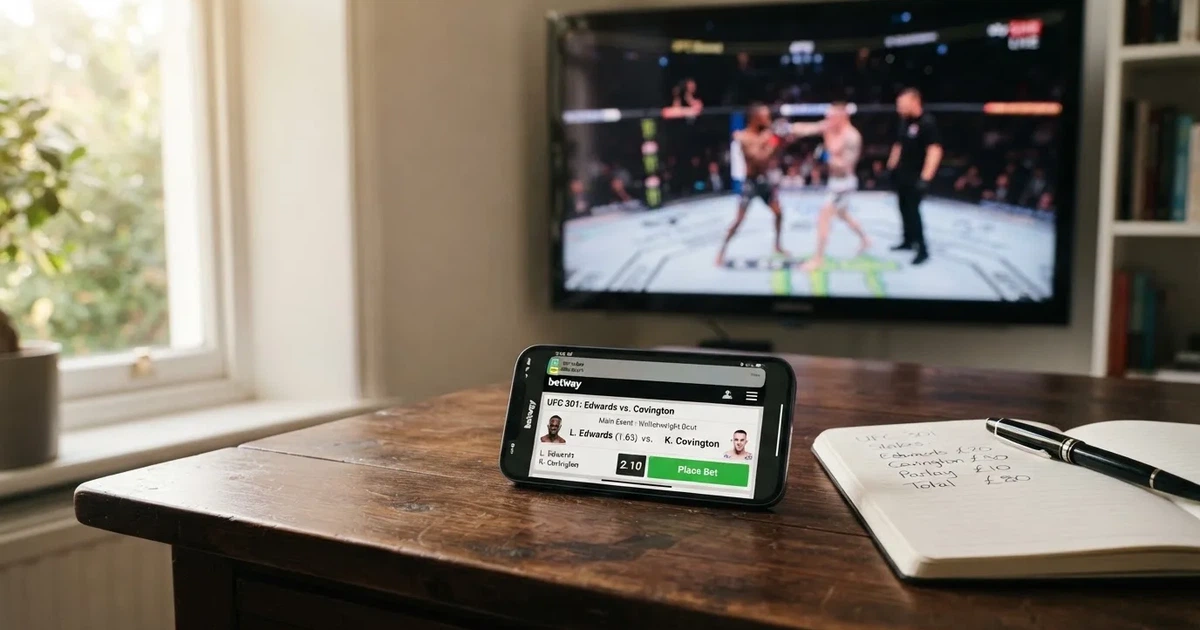
*Current as of 27 October 2026 · verified against the Gambling Commission’s public register and each operator’s own terms.*
Staying in Control of the Money: Safer Gambling on a UFC Card
UFC events run late. Fight-night slates stretch across Saturday and Sunday mornings UK time, and the markets stay open between rounds while a fighter is still on the stool. That cadence is part of the appeal. It is also part of the cost: a long card gives a punter plenty of chances to act on impulse, and impulse is what every safeguard below is built to interrupt.
Every UK-licensed remote operator named below sits inside GAMSTOP, the national multi-operator self-exclusion scheme. A self-exclusion runs for a minimum of six months and can be set for one year, five years or five years with auto-renewal; once the chosen period ends, the exclusion stays in force for a further seven years unless the customer asks GAMSTOP to lift it. That is the right tool for the reader who has decided they should stop.
For the reader who has not decided that, the day-to-day tools are different. Since 31 October 2025 every licensed remote operator must let customers set a gross deposit limit on a fixed time frame. A second phase of that regime was scheduled for 30 September 2026, and whether it is now live is not settled — write to the operator what is and is not in the customer’s account page right now, and read the page rather than the marketing email. There is no state-set ceiling on stakes or losses; the limit is what the customer chooses, and the operator’s job is to make changing it harder than setting it.
Two checks now sit on top of the deposit side. When a customer’s deposits minus withdrawals cross £150 in any rolling 30 days, a financial vulnerability check runs — a public-record check for bankruptcy or county court judgments, not an income check and not a credit-reference check. Separately, the Commission has announced a staged plan for fuller affordability checks (the “financial risk assessments” the press calls affordability checks); the plan has no start date and is not yet in force. Where a brand runs its own affordability prompts beyond the Commission’s floor, the punter meets them in the cashier, not in the terms.
Help, when the punter wants it, is outside the bookmaker. GamCare runs the National Gambling Helpline. GambleAware funds treatment and the public-facing information. The NHS runs specialist gambling clinics in several regions. Gamblers Anonymous runs meetings. The bookmaker’s own safer-gambling page links to all four.
The credit-card ban matters here too. Since 14 April 2020 no licensed operator in Great Britain may accept a credit card for gambling, including a credit-card-funded payment through an e-wallet. That rule is independent of affordability: it removes one funding line outright, which is a different intervention from asking whether the punter can afford the next stake.
Crypto, Pseudonymity and What Licensed UK Operators Actually Do With Them
Crypto UFC betting and UFC betting with Bitcoin are search terms that point at two different worlds. One is the licensed British market, where no operator has been found to accept cryptocurrency as a deposit method. The other is the offshore market, where a Curaçao or Costa Rica licence, or no licence at all, lets a sportsbook offer BTC, ETH, USDT and a dozen altcoins alongside a wallet address.
The two worlds do not mix. Since the Gambling (Licensing and Advertising) Act 2014 any operator whose remote facilities are used in Great Britain needs a Gambling Commission licence wherever it is based. A Curaçao, Maltese or Gibraltar licence is not a substitute. The Commission’s enforcement — cease-and-desist notices, work with registrars, hosts and payment providers, search-engine referrals, and a court-order DNS blocking power that has been given or is about to be given — is aimed at the operator, not at the punter. There is no offence aimed at a customer who merely bets on an unlicensed site. The honest framing is what the customer gives up: no GAMSTOP coverage, no Commission complaints route, no approved dispute-resolution body, no British consumer redress if funds are withheld, no 10x bonus cap, no £150 vulnerability check, and no guarantee that the operator’s stated margin is what is actually offered in the betslip.
Crypto’s appeal is also its warning. A deposit in crypto is not reversible the way a card chargeback is, and the operator’s customer-protection duties are those of the licence it holds, not those the punter assumed. Where research turns up no UK-licensed operator taking crypto, the page records that. Where the punter’s preference is crypto anyway, the page records the trade in plain words: faster settlement, no chargeback, no British recourse.
Bonuses, Free Bets and the Wagering That Actually Clears Them
UFC free bets and UFC betting offers are the loudest shelves on the sportsbook’s promo page. The arithmetic underneath them is quieter. Read three numbers — the bonus, the wagering factor, the minimum qualifying price — and the offer goes from a gift to a job.
A sports welcome offer such as Hollywoodbets’ “stake back as a free bet of up to £30” on a first qualifying losing accumulator looks straightforward. The headline is the free bet, not the qualifying bet, and the qualifying bet carries conditions: a stake of £10 or more, three or more legs, combined odds of 4/1 or greater, settled within seven days of the first deposit. If the qualifying acca loses, the stake is returned as one free bet of up to £30 — not in cash, not split across several bets, not on a market of the customer’s choosing if it falls outside the operator’s free-bet roster. One free bet per customer.
BetGoodwin’s sports welcome offer stacks differently: “Bet £10 & Get £15 in Free Bets”, made up of a £5 sports bet, a £5 acca and a £5 Sub-Cover bet. Each free bet carries its own market and minimum-price rule, and each settles on its own clock. The headline number — £15 — is the sum of three smaller bets, not the value of one. NetBet’s “Daily Boosts”, “Profit Boosts” and free-bet offers are a similar shape, with a Bet Builder offering instant dynamic odds that price the selection as the punter adds it.
The regulatory ceiling sits on top of all of this. Wagering requirements on bonuses have been capped at 10x since 19 January 2026: a £10 bonus with a 50x wagering requirement needed £500 of qualifying bets, and that pattern is now outside the law. A free bet with no wagering condition is a different product and the cap’s reach to it is not settled. Mixed-product promotions — an offer that asks a punter to bet on football in order to unlock free spins, for example — are banned outright.
The honest reading of any of them is the same. Take the bonus figure, multiply by the wagering factor, divide by the stake the punter plans to use on each clearing bet, and the result is the number of bets the bonus costs in time. Apply the market’s margin to the same turnover and the result is what the offer costs in expectation, before the bonus is paid. The free-bet stake is usually not paid back with a win, so a free £30 bet at decimal odds of 4.00 returns £90 in profit, not £120. That distinction is the single biggest source of disappointment in punter forums, and the marketing language rarely mentions it.
The App on the Handset: What a UFC Betting App Actually Has to Do Well
UFC betting apps live or die on three things: how fast the price refreshes between rounds, how the betslip handles an accumulator the punter is building mid-card, and whether the in-play market survives a wifi cutover in the third round of the main event. A long Saturday-night card exposes every weak link, because the action never stops for the app to catch up.
The reviewed set on this page includes apps that handle those three jobs competently and apps that are still built around a sportsbook first and a UFC market second. Where the app is the most-downloaded sportsbook app in the UK — bet365’s claim, with the official global betting partner status of the UEFA Champions League attached to it — the punter is paying for maturity, not novelty. Where the app is built around a single product (a casino-led bookmaker, a lottery-led brand, a spread-betting specialist) the UFC market is the smaller shelf and the experience shows it.
The other live consideration is account-level. The licensed UK requires name, address and date of birth to be verified before the punter can deposit or gamble — including with a free bet or bonus. That rule, in force since 7 May 2019, is the reason a sportsbook app opens with a verification step before the deposit screen. An app that skips that step is either offshore or breaking the law; either way it is not the same product as a GB-licensed app, even if it shares a name.
Live Betting, In-Play and Cash Out on a UFC Card
Live UFC betting is where the sportsbook’s plumbing shows. In-play markets depend on a feed, a price engine and a trader willing to take the other side of every bet. On a five-round title fight with one minute’s rest between rounds, the bookmaker is repricing the fight every break, and the punter is comparing the live odds against the price they took pre-fight.
A few bookmakers do this well in the UK: Betfair’s app pairs in-play betting with Bet Builder and free live streaming of UK and Irish horse racing and football; Hollywoodbets and Sporting Index both carry auto cash-out and in-play markets across the major combat-sports cards. Fitzdares offers in-play live odds across horse racing, football, tennis, rugby, cricket, golf and American football, with cash out, accumulators and Lucky 15s in the same app.
The cost of live betting is not the vig on the price — the margin is the same shape as a pre-fight market. The cost is delay. A punter who clicks “accept” on a price that has already moved pays for the bookmaker’s latency. A bookmaker who suspends a market to reprice it has already paid for the same latency on the other side, and that suspension is itself a signal that the live price is in motion. Cash out sits on top of this: the cash-out figure is a quote from the bookmaker, with its own margin inside it, and it is almost always worse than the live price on either outcome at that moment. The punter who uses cash out is paying for the convenience of locking in a position, not for a free lunch.
In-play on the UFC has one more quirk. A fight can end by submission, knockout, technical knockout, judges’ decision (unanimous, majority, split or technical), disqualification, or be ruled a no contest. A live bet that has not settled by the time of the stoppage is settled by the rule the operator’s market specifies — method of victory, fight to go the distance, round groupings, and so on. The punter who builds an in-play position without reading those rules is paying for the assumption that the bookmaker will settle the way the punter expected.
Predictions, Tips and the Cost of Trusting a Forecast
UFC betting tips, UFC betting predictions, UFC best bets and the per-event variants — UFC 298 betting tips, UFC 299 betting tips, fight-night cards — all point at the same market: a tipster’s forecast of who wins and how. The cost of trusting a forecast is what this shelf is about.
Forecasts are not picks. A forecast is a probability estimate dressed up as a tip, and a tipster’s strike rate is a number the tipster publishes, not a number a regulator audits. There is no Commission register of tipsters and no consumer protection regime that covers a wrong call. The punter who follows a forecast pays for the forecast in two ways: the stake on the bet, and the stake on every bet the punter makes on the tipster’s other calls.
What the punter can do, instead, is build their own forecast. Two pieces of public information pay for themselves: the record of each fighter (finish rate, method-of-victory split, time-of-finish distribution), and the odds the market is offering on each fighter. A market that prices one fighter at 1.50 and the other at 2.75 is telling the punter that the market thinks the favourite wins about 65 % of the time. The market’s estimate is not the truth, but it is the one the punter is betting against, and a forecast that does not address the market’s price is incomplete.
The other cost is the punter’s own bankroll. A stake sized as a percentage of the bankroll — 1 % to 3 % on a single selection, lower on a longshot — is the difference between a bad night and a bankrupted account. The punter who sizes a stake at 10 % of the bankroll on a “sure thing” is paying for overconfidence with the whole bankroll.
The page does not name a winner, a “sure bet” or a system that wins, because nobody can know an outcome and a reader who acts on a predicted one loses real money on the page’s word. The shelf above is what the punter can do, cheaply, instead.
Bet Types, Odds and What the UFC Market Actually Lets the Punter Price
UFC betting odds come in two forms in the UK: fractional (5/1, 11/4, evens) and decimal (6.00, 3.75, 2.00). The conversion is a/b → a ÷ b + 1, so 5/1 is 6.00 in decimal and 11/4 is 3.75. Odds-on prices are shorter than evens — 4/5 is odds-on, 5/4 is odds-against. Decimal odds are what this page uses; where the market quotes fractionally, the decimal form is what the punter settles on.
UFC markets split into three families. The first is the moneyline: fighter A to win, fighter B to win, sometimes a draw. The second is method of victory: knockout / technical knockout, submission, or decision. The third is round groupings and over/under on the round the fight ends in: fight to start round 2, fight to end inside the distance, total rounds over/under 1.5, 2.5, and so on. Championship fights and non-title main events run a maximum of five rounds; other bouts run a maximum of three. Each UFC round is a maximum of five minutes, with one minute’s rest between rounds. Those numbers shape the over/under markets directly: a three-round bout has rounds 1, 2 and 3 priced; a five-round bout has rounds 1 through 5 priced.
The accumulator and the bet builder sit on top. An accumulator multiplies the odds of each leg into one price, so a four-leg acca at 2.00, 2.50, 1.80 and 3.00 returns a combined price of 27.00 — a £10 stake returns £270. The punter pays for the combination in margin: each leg has its own margin, and the multiplied margin is worse than any single leg’s, by the structure of the multiplication. A bet builder is the same shape on one event: LiveScore Bet’s Bet Builder, for example, allows up to 10 selections covering match result, both teams to score, corners, total goals, player scoring and card markets; in UFC, the bet builder covers method of victory, total rounds and fight-to-go-the-distance legs. Each selection carries its own margin, and the dynamic odds adjust as the punter adds legs.
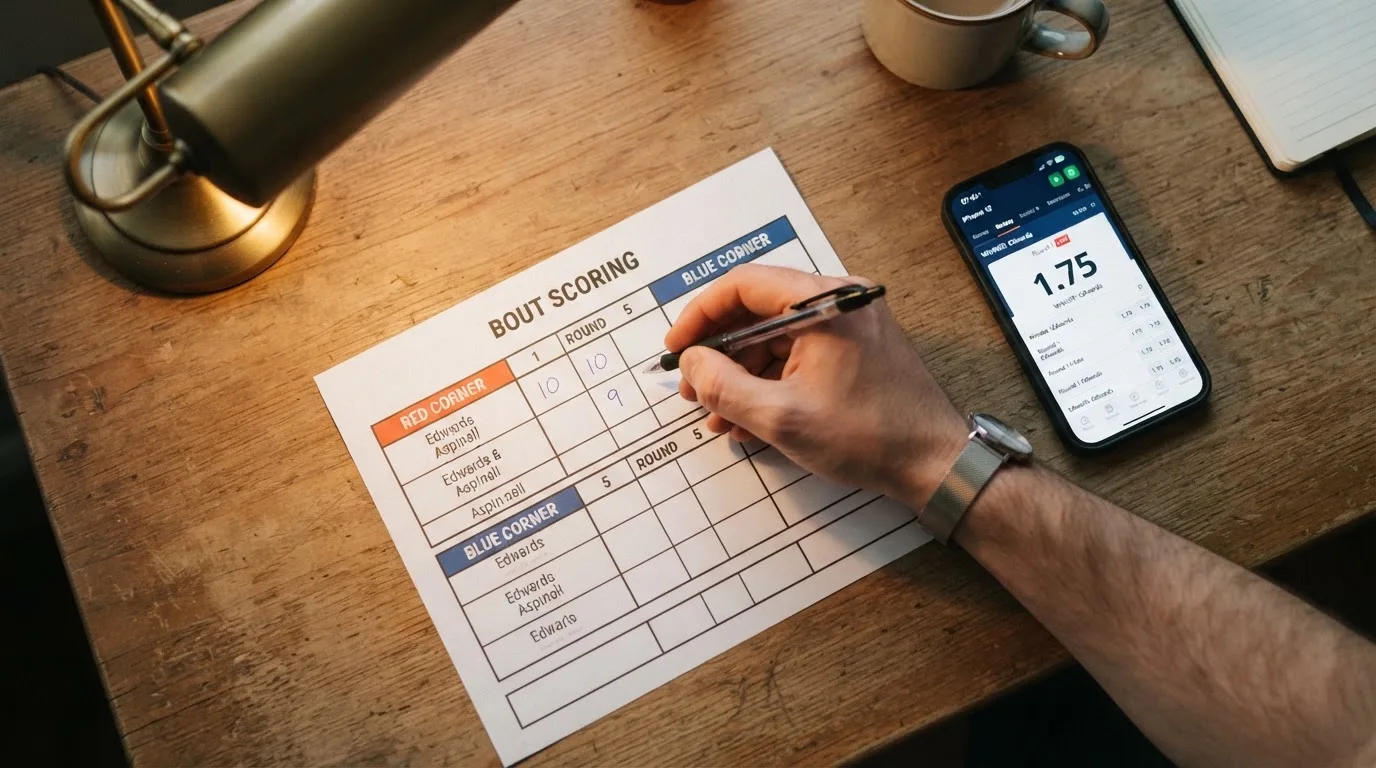
Settlement runs on the rule the market specifies. A bet on a fighter to win by submission is settled as a loss if the fight ends by knockout. A bet on the fight to go the distance is settled as a loss if the fight ends in round 1. A bet on a fighter to win in round 3 is settled as a loss if the fight is stopped in round 2. The ten-point must system — three judges scoring each round, the winner receiving 10 points and the loser 9 or fewer, 10-8 typical for a dominant round — is the basis for decision-method markets and does not affect knockout or submission markets. If a UFC title fight ends in a draw, the defending champion retains the title; a draw-method market settles on the judges’ scorecards, not on the title changing hands.
The UFC Itself: Sport, Schedule and What the Punter Is Betting On
The UFC held its first event on 12 November 1993 in Denver, Colorado; it is owned and operated by TKO Group Holdings, and Dana White has been president since 2001. The organisation runs eight men’s and three women’s divisions, and by 2026 it had held over 750 events. Bouts can be won by submission, knockout, technical knockout, judges’ decision (unanimous, majority, split or technical) or disqualification; a bout can also be ruled a no contest.
The card schedule runs year-round, with numbered events and Fight Night cards stacked across the calendar. Among the dated cards research turned up: UFC 334 (Gane vs. Hokit), scheduled for 14 November 2026 at Madison Square Garden, New York City; and UFC 335 (Oliveira vs. Lopes), scheduled for 12 December 2026 at T-Mobile Arena, Las Vegas. UK prime-time viewing runs late on Saturday and Sunday mornings, which is the cadence the punter’s app and bankroll have to absorb.
No statutory list of permitted sports or markets exists in Great Britain. A bookmaker serving customers in Great Britain needs a Gambling Commission licence for the category of bet it offers — remote general betting standard (real events) covers a UFC card, remote general betting standard (virtual events) covers virtual markets, remote general betting limited and remote pool betting cover their own narrower ranges, and a remote betting intermediary licence covers betting exchanges. The licence category the operator holds is the licence category the punter’s bets run under.
The Ten Bookmakers Compared: Licence, Terms and What Each One Costs
The table below sets the ten reviewed bookmakers side by side. The first column names the brand. The second column records the Gambling Commission remote licence number and the licence holder, as the Commission’s public register shows it. The third column records what the operator’s own terms state on the subject of this page — bonuses, free bets, bet builders, in-play, payment minimums — in the punter’s own language, taken from each operator’s site or app-store listing.
| Brand | Gambling Commission remote licence (account number, holder) | What the operator’s own terms state on the key’s subject |
|---|---|---|
| LiveScore Bet | 056859-R-332720-005 (Commission account 56859); LiveScore Betting and Gaming (Gibraltar) Limited | Bet Builder allows up to 10 selections covering match result, both teams to score, corners, total goals, player scoring and card markets. |
| BetGoodwin | 002927-R-327985-008 (Commission account 2927); Goodwin Racing Limited | Sports welcome offer is “Bet £10 & Get £15 in Free Bets”, made up of a £5 sports bet, a £5 acca and a £5 Sub-Cover bet. |
| Bet600 | 044731-R-323941-016 (Commission account 44731); Tyche Tech Limited | Pays Best Odds Guaranteed on horse racing: if the starting price is bigger than the early or show price taken, the bet is paid at the SP. |
| William Hill | 039225-R-319373-015 (Commission account 39225); WHG (International) Limited | Pays Best Odds Guaranteed on UK and Irish horse racing from 8 AM on the day of the race, on single and multiple bets; does not apply to ante-post, tote or pari-mutuel bets. |
| Hollywoodbets | 053028-R-330019-013 (Commission account 53028); Hollywoodbets International UK Limited | Sports welcome offer: new players who deposit £10 or more by card get their stake back as a free bet of up to £30 on their first qualifying losing accumulator (stake £10+, 3+ legs, odds of 4/1 or greater, settled within 7 days); one free bet per customer. |
| Fitzdares | 000400-R-103839-030 (Commission account 400); Fitzdares Limited | App offers cash out, accumulators, Lucky 15s, specials and antepost markets on horse racing, football, tennis, rugby, cricket, golf and American football, with in-play live odds. |
| Betfair | 039439-R-319330-013 (Commission account 39439); PPB Counterparty Services Limited | Sportsbook offers in-play betting, Bet Builder, free live streaming of events such as UK and Irish horse racing and football within the app, and a 90 Minute Payout market. |
| DAZN Bet | 048756-R-327274-019 (Commission account 48756); DZBT Limited | Deposits start at £5 by debit card, Apple Pay, Paysafecard, Trustly and Skrill, and at £20 by PayPal, with no processing fees. |
| NetBet | 039170-R-319343-032 (Commission account 39170); Netbet Enterprises Limited | Offers Daily Boosts, Profit Boosts and free bet offers, a Bet Builder with instant dynamic odds, and sports stats for major leagues. |
| Sporting Index | 027343-R-308898-011 (Commission account 27343); Sporting Index Limited | Lets customers switch between fixed odds and spread betting, with in-play betting, Bet Builder for football, auto cash-out and Multi-Markets. |
A licence number on the Commission’s register is the whole test of who holds one. The register can be looked up by business name, trading name, domain or account number, and a match is what makes a brand licensed for the punter’s purposes. Several brands run under one licensee — for example Ladbrokes and Coral, Paddy Power and Betfair — and they are not independent operators for that reason. Every GB-licensed online operator named here takes part in GAMSTOP. The table lists ten brands; the Commission’s register lists many more.
What the Margin Actually Is — and Why the Same Bet Returns Different Money at Different Bookmakers
A bookmaker’s margin is the cut it keeps out of every pound staked on a market. It is the same market seen from two sides: a payout share of 95 % is a margin of 5 %, a payout share of 90 % is a margin of 10 %. The margin sits inside the price the punter sees; nothing is added at the cashier.
Take an illustrative two-way market at decimal odds of 1.90 and 1.90 (fractional 9/10 on each side). The payout share is the reciprocal of the sum of the reciprocals of the prices: 1 ÷ (1 ÷ 1.90 + 1 ÷ 1.90). Each reciprocal is about 0.5263, and the sum is about 1.0526. The reciprocal of 1.0526 is about 0.9501, or 95.01 %. The margin is 1 minus the payout share, or about 4.99 %.
That is a clean two-way market at a clean pair of prices. The market’s true margin is whatever the bookmaker’s actual prices are on the day. A two-way market priced at 1.85 and 1.95 gives a payout share of about 94.9 % and a margin of about 5.1 %. A two-way market priced at 1.80 and 2.00 gives a payout share of about 94.1 % and a margin of about 5.9 %. The punter who sees a “best odds” claim on a market is seeing a claim that the bookmaker’s margin is thinner than the next one’s; the punter who backs the underdog at 2.00 is paying a thicker margin than the punter who backs the favourite at 1.80.
Three-way markets — the 1X2 of football, the method-of-victory market on a UFC fight (finish in round, decision, draw) — carry a wider margin by construction. Each outcome adds a term to the sum of reciprocals. The punter who shops the price across bookmakers is shopping the margin, not the headline.
LiveScore Bet
LiveScore Bet’s licence is held by LiveScore Betting and Gaming (Gibraltar) Limited under Commission account 56859, and the Bet Builder — up to 10 selections covering match result, both teams to score, corners, total goals, player scoring and card markets — is the standout feature on the football side. The UFC market is a smaller shelf on the same app, and the punter who uses LiveScore Bet for a UFC card is paying for the brand’s score-data presentation rather than for a UFC-specialist product. The Bet Builder’s “instant dynamic odds” mechanic is the same idea NetBet markets separately: each leg added to the slip reprices the whole accumulator, and the punter pays for the convenience of an in-slip build with a price that updates against them.
For the punter who wants a single app for football and a usable UFC market on the side, LiveScore Bet is the fit. For the punter whose card is UFC-heavy, the lighter UFC shelf means more clicks into the operator’s terms on each specific market before the punter lays a stake.
BetGoodwin
BetGoodwin runs under Commission account 2927 (Goodwin Racing Limited), and the welcome offer is a multi-part free bet: £5 sports, £5 acca, £5 Sub-Cover, on a £10 qualifying bet. The punter who reads the headline as “£15 free” is paying for the misunderstanding: each of the three free bets settles on its own market and minimum-price rule, and the qualifying £10 has to settle first.
The brand is racing-led, and the UFC market is a smaller shelf on the same app. Small-stakes welcome offers are available, but for those specifically seeking a dedicated UFC app, this platform falls short.
Bet600
Bet600’s licence is held by Tyche Tech Limited under Commission account 44731, and the Best Odds Guaranteed offer is horse-racing-specific: if the starting price is bigger than the early or show price the punter took, the bet is paid at the SP. BOG is a useful feature on racing cards because the morning market is often sharper than the off; it is not a UFC-market feature and the punter should not expect it on a UFC bet.
For the punter who mixes horse racing and UFC, Bet600 is a usable second-bookie. For the UFC-only punter, the racing-specific BOG is irrelevant.
William Hill
William Hill runs under Commission account 39225 (WHG (International) Limited), and the BOG offering is the broadest in the reviewed set: UK and Irish horse racing from 8 AM on the day of the race, on single and multiple bets, with ante-post, tote and pari-mutuel bets excluded. The breadth of the offer is a marker of the brand’s maturity rather than of its UFC specialism.
William Hill’s UFC shelf is a long-running sportsbook market with a deep in-play product and a steady stream of price boosts on the headline cards. The brand offers a broad, mature sportsbook suitable for racing and football; however, users seeking the thinnest UFC margin should compare these prices against specialist operators.
Hollywoodbets
Hollywoodbets runs under Commission account 53028 (Hollywoodbets International UK Limited), and the sports welcome offer is the most condition-heavy in the reviewed set: deposit £10 or more by card, place a qualifying accumulator (stake £10+, 3+ legs, odds of 4/1 or greater) settled within 7 days; if the qualifying acca loses, the stake is returned as one free bet of up to £30. One free bet per customer, and the free bet is on the operator’s free-bet roster, not on a market the punter picks.
The punter who can stomach the qualifying conditions — a 4/1 acca inside a week is a real bet, not a formality — gets a backstop if the bet loses. The punter who wants a cash bonus instead of a free bet is in the wrong offer: a free bet’s stake is not paid back with a win, so a £30 free bet at 3.00 returns £60 in profit, not £90.
Fitzdares
Fitzdares runs under Commission account 400 (Fitzdares Limited), and the app covers horse racing, football, tennis, rugby, cricket, golf and American football with cash out, accumulators, Lucky 15s, specials, antepost markets and in-play live odds. The breadth of the sportsbook is the brand’s selling point; the UFC market sits inside that breadth with the same in-play engine.
The punter who wants a premium-priced sportsbook across many sports gets one here. The punter who wants a UFC-specialist shelf finds the same shelf as on every other multi-sport bookmaker.
Betfair
Betfair Sportsbook runs under Commission account 39439 (PPB Counterparty Services Limited), and the app offers in-play betting, Bet Builder, free live streaming of UK and Irish horse racing and football, and a 90 Minute Payout market on football. The combination of in-play, streaming and a same-game multi is the feature set on the football side; the UFC shelf is the sportsbook’s standard UFC offering, layered over the same in-play engine.
The punter who values streaming on the card gets it here. The punter who wants Betfair Exchange’s back-and-lay model for a UFC fight finds it under the same brand but as a separate product, with the exchange’s commission and rules. The punter should not assume the exchange’s prices match the sportsbook’s.
DAZN Bet
DAZN Bet runs under Commission account 48756 (DZBT Limited), and the deposit floor is the clearest in the reviewed set: £5 by debit card, Apple Pay, Paysafecard, Trustly and Skrill, and £20 by PayPal, with no processing fees. The low deposit floor on most methods is the punter’s friend if the bankroll is small; the £20 PayPal minimum is the punter’s warning that the method the punter prefers may carry a different floor.
The punter who wants a low minimum across most deposit methods gets one. The punter whose preferred method is PayPal pays the higher floor.
NetBet
NetBet runs under Commission account 39170 (Netbet Enterprises Limited), and the promo stack — Daily Boosts, Profit Boosts and free bet offers — is the brand’s main draw, paired with a Bet Builder offering instant dynamic odds and sports stats for major leagues. The boost format is a marketing word for what is, mechanically, a one-off enhanced price on a named selection, with its own eligibility rules; the punter who reads “boost” should read the underlying terms.
The punter who likes daily promos gets a daily promo stack. Those prioritizing simple, straightforward pricing may find the built-in margin for these promotions less appealing.
Sporting Index
Sporting Index runs under Commission account 27343 (Sporting Index Limited), and the dual product — fixed odds and spread betting, switchable in the same account — is the brand’s main draw, alongside in-play betting, Bet Builder for football, auto cash-out and Multi-Markets. Spread betting on a UFC fight is a different instrument from fixed-odds betting: losses can exceed the deposit, and the punter pays for the leverage in the risk of an open position moving against them.
For the punter who wants to mix fixed odds with spread betting on the same fight card, Sporting Index is the only option in the reviewed set. For the fixed-odds-only punter, the spread-betting offer is irrelevant and the dual product adds a layer of account complexity the punter does not need.
What the Customer Pays in Tax — and What the Customer Does Not
The punter in Great Britain pays no tax on betting winnings. General Betting Duty is the operator’s tax on gross profits, currently 15 %; from 1 April 2027 a new remote betting rate of 25 % applies within it, while remote bets on UK horse racing, bets on self-self-service betting terminals in licensed premises, pool betting and in-person betting stay at 15 %. Until 1 April 2027 the remote rate stays at 15 %, and whether operators pass duty on through odds is not established. The punter does not see a duty line on the betslip because there is none. Spread betting has its own rates (3 % financial, 10 % other), and a financial-spread-betting punter pays under that regime, not under General Betting Duty. This is general information, not tax advice; a professional gambler should ask HMRC or an adviser.
What “Licensed” Actually Means, and What “Unlicensed” Costs
A GB-licensed operator checks identity before the first deposit, runs a vulnerability check at £150 of net deposits in a rolling 30 days, sits inside GAMSTOP, caps bonus wagering at 10x, bans mixed-product promotions, bans credit-card deposits, links to GamCare and GambleAware, and answers to the Commission in the event of a complaint. An unlicensed operator does none of those things. The punter who moves from one to the other is paying for the difference: not the licence fee, but the safeguards the licence imposes.
The Commission’s enforcement is disruption, not blocking. Cease-and-desist notices, work with registrars, hosts and payment providers, search-engine referrals, and the court-order DNS blocking powers the Commission has been given or is about to be given — none of it stops a determined punter from opening an account at an unlicensed site. The honest framing is the loss of protection, not the legal risk. No offence aimed at a customer who merely bets on an unlicensed site was found.
Offshore, Crypto and the Bet That Settles Outside British Recourse
A Curaçao or Costa Rica-licensed sportsbook takes crypto, settles in crypto, and answers to the regulator that issued its licence. The punter’s British protections do not travel. No GAMSTOP coverage, no Commission complaints route, no approved dispute-resolution body, no British consumer redress if funds are withheld, no 10x bonus cap, no £150 vulnerability check. A crypto deposit is not reversible the way a card chargeback is, and the operator’s customer-protection duties are those of the licence it holds, not those the punter assumed.
This page records that the reviewed set takes no crypto, because the reviewed set is the GB-licensed set. The punter whose preference is crypto is choosing a different market, and that market is what the punter should price — the operator’s licence, the operator’s reputation, the cost of moving money in and out, and the cost of a dispute that ends without British recourse.
The Advertising Around the Card — What the Rules Already Take Off the Table
Marketing around UK sports betting runs through the CAP Code (non-broadcast) and the BCAP Code (broadcast), enforced by the ASA, alongside the LCCP marketing conditions. Marketing must be socially responsible, must not be of strong appeal to under-18s, and no one who is or seems to be under 25 may be featured gambling or play a significant role in a betting advertisement. That rule concerns who may appear in the advertisement, not who may bet.
Since 1 August 2019 betting advertisements are not shown on TV from five minutes before a live sporting event to five minutes after it, before the 9 pm watershed (horse and greyhound racing excluded). That “whistle-to-whistle” rule is an industry code, not law. The Premier League clubs’ withdrawal of gambling sponsorship from the front of matchday shirts from 2026/27 is voluntary, not law; sleeves and hoardings remain. Operators are responsible for marketing by their affiliates — a third-party blogger or tipster site is the operator’s marketing for that purpose.
What this means at the punter’s end is that the offer on the screen is the offer on the screen, and the loudest offer is rarely the cheapest. A “100 % bonus” is the stake the punter has to turn over before the bonus is paid; a “best odds guaranteed” is the bookmaker paying the difference between the punter’s price and the SP on horse racing, not on UFC; a “risk-free” bet refunded as a free bet is a free bet, not a refund in money. The punter who reads the small print before claiming the offer pays for the reading in five minutes and saves the cost of the misunderstanding.
Frequently Asked Questions
Where can UFC fights be bet on in Great Britain?
Any bookmaker licensed by the Gambling Commission for remote general betting (real events) can offer UFC markets, and the Commission’s public register lists every licensed operator. Several sportsbooks in the reviewed set — Betfair, William Hill, Hollywoodbets, NetBet, Sporting Index and others — run UFC shelves across the year, with Bet Builders and in-play markets on the headline cards. The register is the only test of who holds a licence; no single brand is “the only” licensed one.
Where is the best place to bet on UFC?
“Best” is the punter’s call. The punter who wants the deepest in-play product and free streaming should look at Betfair’s app; the punter who wants a racing-led bookmaker with a usable UFC shelf should look at BetGoodwin; the punter who wants a single brand across racing, football and UFC should look at William Hill. The Commission’s register is the test of licence, not of quality, and the punter who shops the price across two or three brands pays for the shopping in a thinner margin.
Where can UFC fights be bet on from the UK?
A GB punter can bet on UFC fights at any GB-licensed remote bookmaker, in person at a licensed betting shop, or through a betting exchange’s app. The punter cannot bet anonymously at a licensed site: name, address and date of birth are verified before the first deposit or gamble. Offshore and crypto-accepting brands are reachable from a UK connection but operate outside the GB licence regime, with the loss of protection that implies.
How can a bookmaker’s Gambling Commission licence be checked?
The Commission’s public register can be searched by business name, trading name, domain or account number. The brand name in the reviewed table above is matched to a Commission account number; entering that number in the register returns the licence holder, the licence categories and the licence status. A match on the register is the whole test of who holds a licence; a brand whose name does not return a match is not licensed.
How is the return on a bet worked out from the stake and the odds?
For a single bet, the return is stake multiplied by decimal odds, and the net profit is stake multiplied by odds minus one. A £10 stake at 2.50 returns £25, with £15 of profit. For an accumulator, the legs’ odds multiply into one combined price, and the same formula applies. Free bets usually do not return the stake on a win: a £30 free bet at 3.00 returns £60 in profit, not £90. A bet on the favourite at 1.80 returns less in profit per pound staked than a bet on the underdog at 3.00, because the favourite’s price is shorter.
What is a bookmaker’s margin and how does it show in the odds?
The margin is the cut the bookmaker keeps out of every pound staked on a market, and it sits inside the prices the punter sees. Take an illustrative two-way market at decimal odds 1.90 and 1.90: the payout share is 1 ÷ (1 ÷ 1.90 + 1 ÷ 1.90), or about 95 %. The margin is 1 minus the payout share, or about 5 %. A market priced at 1.85 and 1.95 gives a margin of about 5.1 %; a market priced at 1.80 and 2.00 gives a margin of about 5.9 %. Three-way markets carry a wider margin by construction. The punter who shops the price across bookmakers is shopping the margin, not the headline.
Combat & motorsport – Best betting exchange
Content created by the «Best betting exchange» team
