
Spread betting platforms in the UK: who is licensed, what it costs and how the maths works
 Available in US
A spread wager is not a yes-or-no bet. The bookmaker quotes a range — a spread — and the bettor decides whether the outcome will land above the top of it or below the bottom. Settling depends on how far the result sits from the chosen line. Move the right way by fifty runs and a £10 stake pays £500; move the wrong way by the same distance and the stake vanishes with a £500 liability on top. That asymmetry is why UK sports spread betting exists separately from fixed-odds betting and why it carries its own warnings on every platform that offers it.
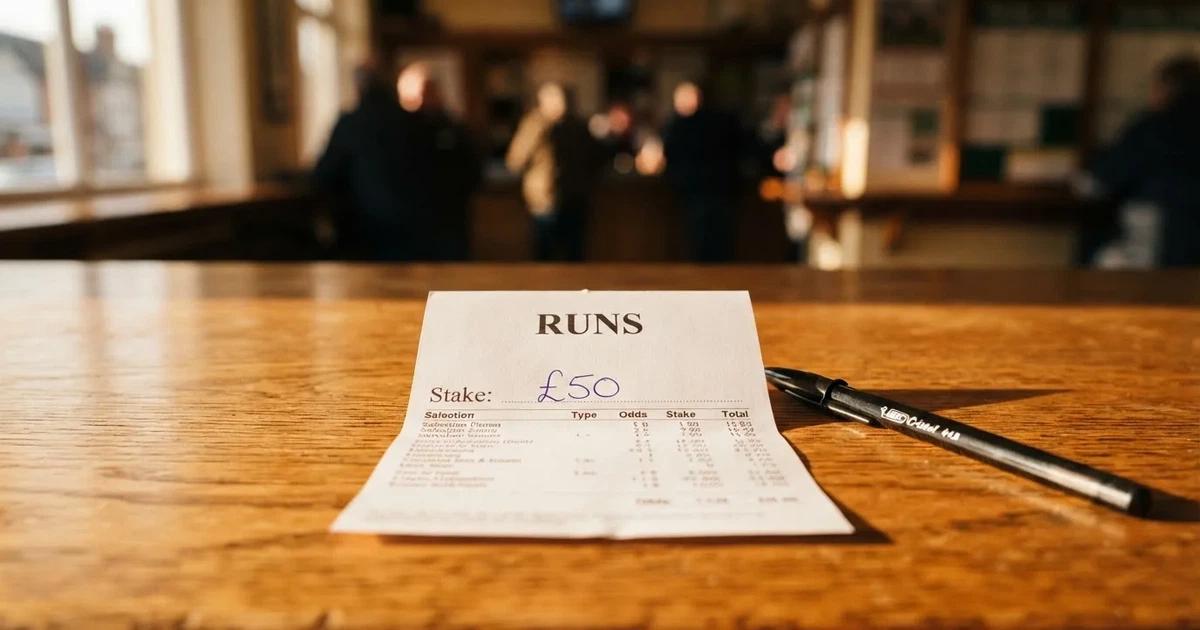
This page reads from the angle of cost. Every figure here — a margin, a turnover requirement, a stake ceiling, a minimum price — comes from publicly verifiable material, and the conclusions drawn from it are the editor’s. The aim is a clear answer to a narrow question: which UK-licensed platform handles spread betting in a way that holds up once a punter reads the small print, and what does the activity itself cost the person doing it.
Current as of 27 October 2026 · licence status verified against the Gambling Commission’s public register.
Safeguards, support and the habit a spread bet actually builds
The £150 mark matters. Under the Gambling Commission’s licence conditions, a remote bookmaker must run a financial vulnerability check once a customer’s net deposits over any rolling 30-day window pass it. The check looks at public records (county court judgments, bankruptcy registers, similar entries) — it is not a credit reference search and it is not an income test. Further checks are layered on top once a customer crosses higher spend thresholds; a punter whose habit is steady will only ever see the first prompt, and a punter whose habit ramps up will see more.

Self-exclusion through GAMSTOP blocks every GB-licensed online bookmaker with one sign-up. Minimum periods run six months, one year, five years, or five years with an automatic renewal. Once the minimum is up the block stays in place for seven more years unless the customer contacts GAMSTOP to end it. Spread betting makes the case for using it more starkly than ordinary fixed-odds betting: a single bad weekend can multiply a stake several times over.
Identity verification is required before the first deposit, even when a free bet is what unlocks the account. Every brand reviewed on this page — Spreadex, Sporting Index, Coral, Sky Bet, Dabble, Swifty Sports, Betfred, Lottoland, 888sport and VBet — sits on a Gambling Commission licence and runs the same mandatory check on age and residence. That step is what locks the GB market out of anonymous play; it is also the safeguard that lets a customer complain to an approved dispute-resolution body if funds are withheld.
Help lines are open whether a punter has signed up with GAMSTOP or not. GamCare runs the National Gambling Helpline. GambleAware funds treatment through the NHS and a network of local services. Gamblers Anonymous runs peer-support meetings across the country. None of these is a substitute for a platform’s own safer-gambling tools, and a punter who wants time-out or a deposit limit should set them in the account settings before the first bet lands.
Forecasts, tipsters and why most “strategies” cost more than they save
Tipsters sell confidence, not edge. The UK sports spread-betting market draws a steady stream of subscription services claiming to know which side of a Total Goals line a match will land on, whether a cricket team will clear 350, or how many points a basketball game will run to. The pricing of those subscriptions generally exceeds the cost of running the bets themselves once the spread-betting margin is included.

The arithmetic sits on one fact: every spread bookmaker’s quote contains its margin. For a Total Goals spread quoted at 2.6–2.8, the bettor’s expected return per pound staked is below 100p even before the price of a tipster is subtracted. A tipster charging £40 a month tips a hundred bets in that month; the punter pays £40 plus the spread company’s margin on every wager. The margin alone is greater than any tipster’s realistic edge over a single season for almost every customer who subscribes.
Bankroll discipline matters more than selection. A punter who clears £1,000 of winnings on one day can lose £600 on the next without breaking the spread betting slip’s structure. Treating the bankroll as a fixed share of one unit (say, 1% per wager) and scaling only after a verified edge has been demonstrated is the discipline that survives a bad week. Anything sold as a system that wins is a marketing line, not a method.
A free tipster thread on social media is a marketing channel for a brand, not a forecasting service. The accounts promising “locks” of the day for UK football spread markets are usually affiliate funnels. The signal is in the margin, the stake and the platform’s own safer-gambling controls — not in a tipster’s tweet.
Selecting a market, reading the spread and settling the bet
Spread betting comes in two flavours in the UK. Financial spread betting — on indices, currencies, commodities and shares — sits under the Financial Conduct Authority, not the Gambling Commission, because the contracts are derivatives. Sports spread betting sits under the Gambling Commission, and its markets look different on the slip. The two products are governed by separate rules, separate licence categories and separate tax treatments (3% on financial, 10% on other spread bets, charged to the operator, not the punter).
Reading the spread on a sports slip needs three steps. The bookmaker quotes a range — say, 340–350 runs for a cricket team’s innings — and the bettor picks a side. Buying at the top of the range pays the stake times the number of points the actual score clears it by. Selling at the bottom pays the stake times the number of points the actual score falls short of it. The payout has no upper cap tied to the stake; the liability on the wrong side has no cap at all.
Fixed-odds betting looks simpler by comparison. A £10 single at 5/1 returns £60 if it wins and loses £10 if it does not. The asymmetry of spread betting is the entire pitch — and the entire risk. A market framed as “total goals” can settle two, three or four goals above the line on either side and the punter pays every step of the way. North American point-spread betting, where a result landing exactly on the spread is a push and the stake returns, is closer to a fixed-odds wager and is settled differently.
Stakes on a spread bet quote by the unit. A £1-per-point wager that settles 25 points the right way returns £25; the same stake 25 points the wrong way costs £25. The slip never says “max win” because there isn’t one. The slip also doesn’t say “max loss” for the same reason. The bankroll and the platform’s own stop-loss controls are the only ceiling.
Odds as language matter when an article compares markets. A two-way spread at 1.90/1.90 decimal (9/10 fractional) is what an even-money outcome becomes once the bookmaker’s margin is included. A two-way fixed-odds book at the same prices is the same shape on both sides of the trade. The difference is in the structure of the settlement, not the numbers on the screen.
Sports and tournaments on the spread menu
Cricket, football and horse racing dominate the UK sports spread-betting calendar. The big totals — runs in a Test innings, goals in a Premier League weekend, length of a feature racecard — give the pricing enough room to settle without buckling on a freak result. Rugby and basketball markets exist on most UK spread platforms but settle at smaller averages (rugby tries, basketball points), so the units have to be tighter to make a stake pay a meaningful sum.
The bigger the spread, the smaller the unit on the slip. The operator quotes a margin it wants to keep and lets the punter scale the stake around it. A 50-run spread on a one-day international settles in fives and tens for most customers; a 2.4–2.6 Total Goals spread settles in tens and twenties for the same stake. Match-by-match scheduling for the Premier League, the Test cricket summer and the Cheltenham and Royal Ascot meetings drives the bulk of UK spread-betting turnover.
World Cup tournaments are priced on the same model in their windows. The 2026 FIFA World Cup will run with spread markets on group totals, knockout goals and player performance, much as prior editions have. The structure does not change because the tournament does; only the line on the screen. A punter who watches a single tournament from start to finish can build a feel for how each bookmaker posts and settles a major-event market.
Bet Builder products on fixed-odds platforms (Sky Bet, Betfred, 888sport, VBet among the reviewed set) are not spread products. They are same-game combination bets whose odds multiply into a single price. Treating a Bet Builder as a spread market is a category error; the two settle on different rules, with different upper and lower limits, on different licences.
Sequence: from sign-up to a settled spread bet
Step one is the account itself. Every reviewed platform runs the Gambling Commission’s mandatory identity check on name, address and date of birth before a first deposit or free bet is accepted. The check is mechanical, does not require a phone call, and turns the same account into a GAMSTOP-aware one automatically.
Step two is the deposit. Credit cards have been banned for gambling in Great Britain since 14 April 2020, and that ban reaches credit-card-funded e-wallet top-ups. Debit cards, bank transfers and the major e-wallets carry no such restriction. A £5 minimum on Sky Bet is the floor among the reviewed brands; the others sit higher. A first deposit generally unlocks the welcome offer (where one exists), and the platform prompts for safer-gambling settings before the first bet is placed.
Step three is the bet selection. Spreadex and Sporting Index are the only two reviewed brands that price sports spread betting as their headline product; the rest price spread bets as a secondary market or not at all. The slip on the spread brands quotes a market and a stake per unit. The slip on a fixed-odds brand carries a price and a stake.
Step four is settlement. A fixed-odds bet settles win or lose and the slip closes. A spread bet settles against the actual outcome and the slip closes only when the figure is in. Total Goals markets settle at full-time. Run-line cricket markets settle at the close of the innings. In-running markets settle when the match clock stops, and the bookmaker reserves the right to suspend the price during a stoppage.
Step five is withdrawal. Withdrawals back to a debit card settle in one to three working days; bank transfers can take longer the first time; e-wallets are usually the quickest route. The platform’s safer-gambling controls (time-out, deposit limit, reality check) sit in the account settings throughout — not as a step at sign-up, but as standing tools the punter can switch on and off.
The reviewed ten and how they compare
A licensed bookmaker is one whose entry exists on the Gambling Commission’s public register. Each of the ten brands below is on that register, every one of them carries a remote general betting licence covering real events, and every one participates in GAMSTOP. The licence number is the test that matters: it is the mark that brings the Consumer Rights Act, ADR options, deposit ceilings and the 10x bonus cap into play.
Spreadex stands out as the one brand among the reviewed set whose sports offering is built around spread betting; every other reviewed operator runs spread markets as a sidebar to a fixed-odds core, and several do not run them at all. The licence table sits below; the brand write-ups follow in the same order.
| Brand | Gambling Commission remote licence | What the operator’s own terms say |
|---|---|---|
| Spreadex | 008835-R-104580-022 — Spreadex Limited | Spread markets headline the slip; offer: £60 in free bets for a £10 fixed-odds bet; spread losses can exceed the deposit |
| Sporting Index | 027343-R-308898-011 — Sporting Index Limited | Spread markets headline the slip; offer: three £10 fixed-odds free bets, three £5 Total Goals spread bets, three £5 Winning Favourites spread bets and a £1 Race Index spread bet on a £10 qualifying bet at minimum odds of 1/2 |
| Coral | 054743-R-330863-014 — LC International Limited | Fixed-odds core; offer: £40 in free bets on a £20 fixed-odds bet at minimum odds of 2.0 (1/1); spread markets carried as a sidebar |
| Sky Bet | 067370-R-341330-005 — SBG Sports Limited | Fixed-odds core; offer: £30 in free bets, credited as three £10 tokens, on a deposit of £5 and a 5p first bet at minimum odds of 1/1; spread markets not a feature |
| Dabble | 065677-R-340363-005 — Dabble Sports UK Ltd | Fixed-odds core; offer: £10 in free bets on a £10 first deposit at minimum odds; 7-day expiry; stake not returned; spread markets not featured |
| Swifty Sports | 058957-R-334734-006 — Swifty Global (UK) Ltd | Fixed-odds core; Best Odds Guaranteed, Cash Out, daily price boosts, live streaming, in-play betting on the slip; spread markets not a feature |
| Betfred | 039544-R-319290-010 — Petfre (Gibraltar) Limited | Fixed-odds core; Bet Builder, Sub Switch, Racing Post data, Extra Places; spread markets carried as a sidebar |
| Lottoland | 038991-R-319408-020 — EU Lotto Limited | Fixed-odds alongside lottery betting, casino and scratchcards; spread markets not a feature |
| 888sport | 039028-R-319297-014 — 888 UK Limited | Fixed-odds core; pre-match and in-play betting, Cash Out, Bet Builder, racing streams, daily boosted odds; spread markets not a feature |
| VBet | 044662-R-324273-022 — SCGO Limited | Fixed-odds core; Bet Builder, pre-match and in-play betting, live streaming; spread markets not a feature |
A punter who wants spread betting as the main course reads the market first on Spreadex or Sporting Index. The other eight carry fixed-odds betting as the headline product and treat spread markets — if they carry them at all — as a sidebar. The column tells the reader what each operator’s own terms say about its spread or fixed-odds offer; it is not a rating.
Spreadex — Sports spread betting is the main slip
Licence: Gambling Commission remote licence 008835-R-104580-022, account 8835, holder Spreadex Limited. The brand is the one among the reviewed set that runs on two regulators at once — the FCA for financial spread betting, the Commission for fixed-odds and sports spread betting. The site’s own landing page flags it plainly: spread betting losses can exceed the deposit. That warning sits next to a slip showing the spread on Premier League goals and one on Test cricket runs, which is exactly the layout a punt spread specialist wants to see.
The welcome offer is a £60 free-bet bundle for a £10 fixed-odds qualifying bet. The free bets cross over into spread markets, so the punter who comes for spread betting can use them there. The qualifying bet must be placed within 28 days of the account opening; missing the window is forfeiting the offer, not the account. The spread slip itself is a marquee feature: Total Goals, Winning Margins, Supremacy, Total Tries and the named cricket markets are quoted with the same ease as a fixed-odds price.
Cost note: a spread bookmaker’s slip has the margin priced into every quote. £10-per-point at a Total Goals line that pays 27 points the right way gives £270 before tax — and the same number of points the wrong way costs the same. The platform does not cap the upside; it does not cap the downside either.
For a punter who already understands the asymmetry of spread betting and wants a bookmaker that prices it as the main event, Spreadex is the platform the comparison settles on. Those seeking spread markets as one option among many will find other reviewed brands offer a different focus.
Sporting Index — Sport-by-sport spread pricing with a fixed-odds anchor
Licence: Gambling Commission remote licence 027343-R-308898-011, account 27343, holder Sporting Index Limited. The brand runs sports spread betting as the main offering alongside fixed-odds football and racing. The markets on the slip are Total Goals, Total Points, Supremacy, Winning Favourites and the named cricket markets, with race-day Index products for the major meetings.
The welcome offer is structured around the dual offering: a £10 fixed-odds bet at minimum odds of 1/2 unlocks three £10 fixed-odds free bets, three £5 Total Goals spread bets, three £5 Winning Favourites spread bets and a £1 Race Index spread bet. The qualifying bet cannot be placed in play or cashed out early; the free bets expire on the same terms the fixed-odds set runs. The punter who tries to settle the spread side without first placing the fixed-odds qualifier finds the offer unused.
Cost note: the welcome offer’s per-unit split (£10 on fixed odds, £5 on Total Goals, £1 on Race Index) tells a story about the book’s own pricing. Race Index is the smallest unit because the spread on a race index moves through double-digit numbers in a single event. The £5-per-point on Total Goals lets the offer sit on the slip without making the free-bet value unreadable.
For a punter who wants spread betting with a fixed-odds anchor already wired into the welcome offer, Sporting Index sits close to Spreadex on the comparison and a clear step ahead of every reviewed bookmaker that runs spread only as a sidebar.
Coral — Fixed-odds headline with spread markets as a sidebar
Licence: Gambling Commission remote licence 054743-R-330863-014, account 54743, holder LC International Limited. Coral is one of two consumer-facing brands on the licence (Ladbrokes is the other); the two share odds, market depth and platform rather than running independently. Coral’s headline product is fixed-odds football, racing and in-play betting; sports spread betting exists on the slip but is not the core layout.
The sports welcome offer is £40 in free bets on a £20 fixed-odds bet at minimum odds of 2.0 (1/1), with the free bets credited within seven days and expiring seven days after credit. New GB customers who opt in qualify; the offer is straightforward to claim and clearly states the minimum odds and the deposit-and-bet minimum. It does not touch spread markets — Coral’s spread sidebar runs on its own pricing outside the welcome offer.
Cost note: Coral’s mobile platform has the highest daily search-engine traffic among the reviewed set, so liquidity on the major markets is strong. Spread markets are thinner, but they exist and they settle on the same Commission rules. A punter who came for fixed-odds football and wandered into spread markets would not find them absent — they would just find them quieter.
For a punter who wants fixed-odds as the main course with spread available, Coral competes with Sky Bet on the welcome offer and loses the comparison on spread markets. For a punter who runs most of their staking on football accumulators and in-play singles, the comparison goes the other way.
Sky Bet — Football and racing headline, no spread offering
Licence: Gambling Commission remote licence 067370-R-341330-005, account 67370, holder SBG Sports Limited. The product is football, racing and a deep in-play offering, with a £5 first-deposit minimum that makes it the lowest entry point among the reviewed set. Sky Bet does not run sports spread betting — the slip is built around fixed-odds prices and combination markets.
The welcome offer is £30 in free bets, credited as three £10 free-bet tokens, on a deposit of at least £5 and a first single or each-way bet of at least 5p at minimum odds of 1/1. The minimum stake of 5p is the lowest across the pack, but the requirement to place a qualifying bet at minimum odds holds. The free bets expire on their own clock; each token’s expiry date is in the account inbox.
Cost note: the welcome offer costs the punter 5p at minimum odds to unlock £30 — the multiplier looks generous until the per-token expiry and the standard “stake not returned” rule are read. The same maths on a £5 minimum deposit and a 5p minimum qualifying bet is what Sky Bet uses to position itself as the low-floor entry point among the major UK bookmakers.
For a punter whose stake is small, Sky Bet is the easiest door in. For a punter who wants spread betting as the product, Sky Bet is not the comparison at all — it is the mainstream fixed-odds bookmaker that sits next to Spreadex and Sporting Index in the wider market.
Dabble — Social-feed layout, no spread offering
Licence: Gambling Commission remote licence 065677-R-340363-005, account 65677, holder Dabble Sports UK Ltd. The product differentiates on a social feed built into the app — customers can follow each other’s bets in real time, copy stakes and chat in groups. The core product is fixed-odds on football, racing and a thin in-play offering. Sports spread betting is not featured.
The welcome offer is £10 in free bets on a £10 first-deposit bet at minimum odds, with a seven-day expiry on the free bets and a stake that is not returned on a win. The offer is modest in nominal terms — the £10 free bet is the smallest in the reviewed set — but the threshold to claim it is the simplest: deposit, bet £10, get £10, done.
Cost note: the stake-not-returned structure is the same as Sky Bet’s, but the offer size is one-third. What Dabble buys with that smaller offer is the social-feed experience and a thinner marketing footprint — the platform spends less on television advertising and more on customer referrals than its bigger competitors.
Dabble focuses on social-feed betting and a straightforward welcome offer. It does not carry the spread-betting markets that define the specialist platforms.
Swifty Sports — Football, racing and an in-play slip with no spread offering
Licence: Gambling Commission remote licence 058957-R-334734-006, account 58957, holder Swifty Global (UK) Ltd. The product is fixed-odds football and horse racing with Best Odds Guaranteed, Cash Out, daily price boosts, in-play betting and live streaming on the named meetings. Bet Builder is listed as a feature in development. Sports spread betting is not part of the offering.
The welcome offer and the specific free-bet rules were not established from the public material; a punter who wants the headline numbers for Swifty Sports should read the brand’s own promotions page on the day of sign-up. The brand’s stronger public-facing features are around the ongoing product — Best Odds Guaranteed and the live streaming roster — rather than a one-time welcome package.
Cost note: Best Odds Guaranteed on UK and Irish racing is the offer that pays back most weeks in a year for racing punters. The terms vary by meeting type; a punter who bets only on the early starts should read the brand’s own page first.
For a punter who wants racing-heavy staking and Best Odds Guaranteed as a standing feature, Swifty Sports sits in the racing-vertical row. Fans of spread-betting markets, however, will look to the specialist platforms identified earlier.
Betfred — Multi-feature fixed-odds core, spread on the sidebar
Licence: Gambling Commission remote licence 039544-R-319290-010, account 39544, holder Petfre (Gibraltar) Limited. The product is fixed-odds football, horse racing, greyhounds and a deep in-play offering with Bet Builder, Sub Switch (the same-game player market feature), Racing Post data, Extra Places on the major meetings, plus an integrated casino and bingo. Sports spread betting is a sidebar at most.
The welcome offer sits behind the brand’s own promotions page on the day; a punter who wants the headline number for the current sign-up package reads the page first. The features beyond the welcome offer are where Betfred differentiates: Sub Switch on football, Extra Places on Cheltenham and the Grand National meeting, racing form pre-loaded into the app. A punter who wants spread markets will find them where the brand carries them, not at the front of the slip.
Cost note: the integration of casino and bingo on the same wallet as the sportsbook makes Betfred the reviewed brand with the broadest product range inside the same Commission licence. The 10x bonus cap on wagering (a £10 bonus at 50x wagering would breach the cap; the cap allows no more than £100 of bonus release from any single promotion) is the rule the punter reads first if any bonus is being claimed.
For a punter who wants the widest product range on a single licence, Betfred sits at the top of that row. This operator does not compete in the dedicated spread-betting space.
Lottoland — Lottery betting, casino and a fixed-odds sportsbook
Licence: Gambling Commission remote licence 038991-R-319408-020, account 38991, holder EU Lotto Limited. The product is lottery betting, casino, scratchcards and a fixed-odds sportsbook. Sports spread betting is not featured. The sportsbook is the entry point that brings lottery-only customers into the same platform, not the headline product.
The welcome offer and the specific sportsbook promotions were not established from the public material; Lottoland’s offers change more frequently than the bigger bookmakers’ and the brand’s own promotions page is the source. The casino and lottery verticals run their own welcome packages; the sportsbook runs separate ones. Sports spread betting is not in either.
Cost note: the platform is licensed for both lottery and sports betting on one licence; the lottery vertical carries an additional duty treatment that does not apply to the sportsbook. A punter who bets on both should separate the wallets on the account page.
For a punter who wants sports betting at all, Lottoland is the licensed fixed-odds bookmaker that comes with the lottery vertical already wired in. It does not carry the spread-betting markets that define the specialist platforms.
888sport — Fixed-odds with a deep in-play slip
Licence: Gambling Commission remote licence 039028-R-319297-014, account 39028, holder 888 UK Limited. The product is fixed-odds football, tennis, basketball and horse racing with Cash Out, Bet Builder, racing streams, BetFinder form tools, a live bet feed and daily boosted odds. Sports spread betting is not featured.
The welcome offer and the daily boosted odds rotate; the brand’s own promotions page is the source. The daily-boost feature is the standout on the live platform — every match card carries one or two boosted prices for the day, and the same boosted odds run across the desktop and mobile apps. A punter who reads the boosts daily and stakes at the boosted prices can quietly keep more of the margin than staking at the default prices.
Cost note: 888sport’s Cash Out feature runs on most major markets and on most in-play periods; the live-bet feed renders the same markets one price at a time so a punter can see the price move in the open markets without leaving the slip.
With daily boosted odds and a deep in-play interface, 888sport is built for the fixed-odds punter. The dedicated spread-betting experience is not part of its current lineup.
VBet — Bet Builder, live streaming and a thin spread offering
Licence: Gambling Commission remote licence 044662-R-324273-022, account 44662, holder SCGO Limited. The product is fixed-odds football, basketball, tennis and a live calendar with results and stats, with Bet Builder, pre-match and in-play betting and live streaming. Sports spread betting is not a headline feature.
The welcome offer and the per-event promotions were not established from the public material; a punter who wants the current sign-up package reads the brand’s own page on the day. The platform’s own live calendar makes it easy to see what is in play and what the day’s outright markets look like without leaving the app.
Cost note: live streaming on the major football leagues is the price-of-entry feature for the brand; a punter who wants the same football calendar on a deep in-play slip but with stream access is the audience VBet is built around.
For a punter who wants fixed-odds football with a live stream and a Bet Builder, VBet sits in the same row as 888sport. For a punter who wants spread betting, VBet is the licensed bookmaker they skip past on the way to Spreadex and Sporting Index.
How spread betting works — the headline shape
A spread bet pays (or charges) the stake times the number of points by which the outcome differs from the chosen side of the spread. A £5-per-point cricket wager on a team to score more than 350 wins £250 (5 × 50) if the team clears it by 50 runs and loses £150 (5 × 30) if it scores 30 short. The asymmetry of settlement is the entire product; the upper side has no cap, and neither does the downside.
The bookmaker’s margin sits inside every spread quoted. A Total Goals market at 2.6–2.8 already has the operator’s edge baked into the range — the wider the spread, the larger the margin. The same rule that governs fixed-odds markets governs spread ones: every quote is built around a margin the bookmaker keeps of the total staked on that market.
Free bet stakes are not usually returned with a win. A free-bet welcome offer of £10 on a Total Goals spread at 2.6–2.8 returns the winning product of the level cleared times the £10, but does not add the £10 back. That mechanic is what the audit applies to every welcome offer on this page, including the Sporting Index welcome bundle: the £5 free bet on Total Goals returns winnings, not stake plus winnings.
A financial spread bet and a sports spread bet are different products. The FCA governs the financial side (indices, currencies, commodities, shares); the Gambling Commission governs the sports side. The tax rates differ (3% on financial spread bets, 10% on other spread bets), and the duty is the operator’s, not the punter’s. The two licences do not cross over.
The Charles K. McNeil origin story is worth knowing. Spread betting, in its point-spread form, was invented by Charles K. McNeil, a Connecticut mathematics teacher who became a Chicago bookmaker in the 1940s. The North American point-spread market that grew from his idea settled by push when the result landed exactly on the spread; UK sports spread betting settled differently, on the per-point unit between the result and the chosen line.
Cost worked through the maths
A two-way market quoted at decimal odds 1.90 / 1.90 (fractional 9/10 on each side) has an implied payout share of 1 ÷ (1/1.90 + 1/1.90) = 0.526 on each side, which gives a margin of 1 − 0.526 = 0.474 — about 47% lost to the bookmaker over a long run. The headline shape of the margin on the comparable spread market is similar in kind (the operator keeps its share of every unit staked), and the figures will move with the spread’s width.
The takeaway from the maths is that the margin on any market is a fixed share of turnover, not a fixed share of stake. A punter staking £100 at 1.90/1.90 and winning £90 will, across thousands of bets at the same margin, give back roughly £47 of every £100 staked. The same shape on a wider-spread market costs more; a narrower-spread market costs less. There is no market on which the margin is zero.
For a punter who wants to know what a specific wager pays, the calculation for a fixed-odds book is straightforward: stake × odds = return; stake × (odds − 1) = profit. A £10 single at 6/1 decimal odds 7.00 returns £70 if it wins and loses £10 if it does not. The shape is the same on every fixed-odds market — the difference is the margin built into the price, not the mechanic of settlement.
For a punter who wants the same calculation on a spread wager: a £5-per-point cricket bet that settles 22 points the right way returns £110 (5 × 22) in profit, while the same wager settled 22 points the wrong way costs £110. There is no upper cap on the winning side; there is no cap on the losing side either. The bankroll and the platform’s stop-loss controls are the only safeguard.
Legality and what a GB licence actually buys
The Gambling Commission licences the whole commercial market for betting in Great Britain under the Gambling Act 2005. The framework covers England, Scotland and Wales; Northern Ireland is outside the Act and has its own older law. A “GB-licensed” brand is licensed for Great Britain; a GB licence does not reach Northern Ireland. Since the Gambling (Licensing and Advertising) Act 2014 any operator whose remote facilities are used in Great Britain needs a Commission licence wherever it is based — a Curaçao, Maltese or Gibraltar licence is not a substitute.
The licence categories are remote general betting standard (real events), remote general betting standard (virtual events), remote general betting limited, remote pool betting and remote betting intermediary. Every brand in the reviewed set holds the real-events licence, and Coral also carries the betting-intermediary licence (which is the betting-exchange category — though the brand does not run an exchange). The Commission’s public register is the test of whether a brand holds a licence; a punter who wants the headline check searches by business name, trading name, domain or account number.
Bonus and promotion rules moved in 2026. Wagering requirements on bonuses are capped at 10x (a £10 bonus at 50x would breach the cap; under the cap no more than £100 of bonus is releasable from any single promotion), and mixed-product offers — an offer that requires gambling on two or more product types such as betting and casino — are banned. The cap applies to the play-through on a bonus; how it lands on a free bet with no wagering condition was not established.
Betting duty is the operator’s, not the punter’s. General Betting Duty is 15% of the operator’s gross profits on most betting products, rising to 25% on remote bets (excluding UK horse racing, pool betting and self-service terminal bets) from 1 April 2027. Spread betting carries separate duty: 3% on financial spread bets, 10% on other spread bets, charged to the operator. The punter pays no tax on betting winnings in Great Britain.
A GB licence buys things a customer notices. GAMSTOP coverage. ADR routes and Commission complaints. The 10x bonus cap. The £150 vulnerability check on deposits. Identity verification before the first deposit. A consumer-rights framework if funds are withheld. An offshore brand trades none of those protections for a stake. The comparison between a licensed and unlicensed platform is the comparison between a market with rules and a market without them.
What a customer checks before signing up
The licence register is one search. Type the brand name into the Commission’s public register and read the licence categories listed there. The brand’s own footer carries the licence number, but the register is the source of truth — the footer is the brand’s reading of its own licence, and the register is the regulator’s.
The minimum age is 18. A bookmaker that accepts a customer below 18 is committing a regulatory offence, and the £150 vulnerability check and the GAMSTOP coverage that every licensed brand now runs are the second and third lines of the same safeguarding regime. A customer who fails any of those checks cannot deposit or bet on the licensed brand.
The terms of any welcome offer sit in the account inbox after sign-up. Every reviewed brand sends a confirmation email with the offer’s qualifying bet, minimum odds, expiry dates and any game restrictions. A punter who reads those before placing the qualifying bet does not get caught out by a missed window or a wagering cap.
A punter who wants help finds it on the safer-gambling page. Time-out, deposit limit, reality check, GAMSTOP, self-exclusion — the panel is in the account settings. Setting a deposit limit before the first bet is the single habit that keeps spread betting from running away.
Where to read further and when the page ages
Spread betting is a moving target. The license register changes as brands add or surrender licences, the bonus and promotion rules updated in 2026 are still bedding in, and the 25% remote duty rate arrives in April 2027. A punter who reads this page in 2027 sees the same structure with different numbers in the duty line, the wagering cap and the bonus ceiling.
For the spread markets themselves, the constant is the structure: a range, a buy or sell, a unit stake, a settlement against the actual outcome. The brands that price the product well are Spreadex and Sporting Index; the brands that run fixed odds with a spread sidebar are Coral and Betfred; the brands that do not carry spread at all are everywhere else on the reviewed ten.
Every fact on this page carries the date it was verified. The brand licence table was checked against the Commission’s public register on the snapshot date; the welcome offers carry the terms stated on each brand’s own pages on the same date. The picture changes. The shape does not.
Frequently asked questions
What is sports spread betting?
Sports spread betting is a form of wagering where the payoff depends on how accurate the prediction is, rather than on a simple win-or-lose result. A bookmaker quotes a range — say, 340–350 runs for a cricket innings — and the bettor decides whether the actual result will fall above the top of the range or below the bottom of it. Profit or loss equals the stake multiplied by the number of points by which the result differs from the chosen level, and there is no cap on either side. It is licensed separately from fixed-odds betting in the UK.
How is a spread bet placed on a football match?
A football spread bet picks a market — Total Goals is the most common — and a side. With a Total Goals spread of 2.6–2.8 goals, buying at 2.8 wins the stake times the number of goals the actual total clears 2.8 by. A 4-goal match settles the bet 1.2 goals the right way; a 1-goal match settles it 1.8 goals the wrong way. The slip quotes the stake per unit (per goal, in this case) and the punter picks their own stake. The market settles at full-time unless the operator’s terms state otherwise.
How does sports spread betting differ from fixed-odds betting?
Fixed-odds betting settles on a single outcome at a single price. A £10 single at 5/1 returns £60 if it wins and loses £10 if it doesn’t. Sports spread betting settles on the difference between the predicted level and the actual outcome, with no cap on either side. A wager that the same football match will finish with more than 2.8 goals pays the stake for every goal above 2.8; the same stake would lose for every goal below. UK bookmakers treat the two as different products, with different licence categories and separate tax rates.
How is it confirmed that a bookmaker holds a Gambling Commission licence?
The Commission’s public register is the source of truth. A punter searches by brand name, trading name or domain; the register lists every licence in force, every category that licence covers and the licence holder. Every reviewed brand on this page appears on that register under the categories remote general betting standard (real events), with Coral also carrying the betting-intermediary category. The licence number at the brand’s site footer matches the number on the register. If the two do not match, the brand is not what it claims to be.
How is a return on a fixed-odds bet calculated from the stake and the odds?
Return = stake × decimal odds; profit = stake × (decimal odds − 1). A £10 stake at decimal odds 7.00 (a 6/1 shot) returns £70 and yields a profit of £60. The same shape holds on every fixed-odds market: singles, doubles, trebles, accumulators (each-way bets double the stake, with place terms varying by race and operator). For a combination bet the price of the bet multiplies across the legs — two selections at 3.00 and 4.00 decimal prices give 12.00. A punter who wants the exact return reads the bet slip before confirming the stake.
What is the bookmaker’s margin and how does it show in the odds?
The margin is the share of every pound staked that the bookmaker keeps over the long run. It is calculated by adding the implied probabilities across all outcomes of a market and subtracting the result from 100%. A two-way market at decimal odds 1.90 / 1.90 has implied probabilities that sum to about 105%, which means the margin is about 5%. The same calculation on a market at 1.50 / 2.50 gives the same kind of result — every market carries a margin, and no market carries a zero margin. A punter who reads the margin reads what the bookmaker keeps of their stake before any bet has been placed.
Betting sites & exchanges – Best betting exchange
Content created by the «Best betting exchange» team
