
Rugby union betting odds: reading the price, the margin and the offer
 Available in US
Licensed bookmakers serving customers in Great Britain price rugby union year round, with the domestic calendar — the Gallagher Premiership, the United Rugby Championship, the Top 14 — running alongside southern-hemisphere tests and the four-year rhythm of the Rugby World Cup. The number on the betting slip is the headline. What sits inside it is a margin that pays the bookmaker whatever the result, and behind the offer headline is a set of conditions that decide what the promotion is actually worth. This page works through how rugby union odds are built, which markets licensed operators run, what the standard promotions really cost the punter, and how to read the small print before claiming a free bet.

As of 27 October 2026 the figures here were checked against the Gambling Commission’s public register and against each operator’s own published terms.
Safer gambling, and the limits a licence puts around a bet
A Gambling Commission licence is the line that separates a regulated bet from one that is not. Every operator reviewed on this page is on the register. That licence carries obligations a bettor feels in the everyday course of play, and the practical ones sit in this section.

Identity is checked before the first deposit. Since 7 May 2019, a licensed remote bookmaker has to verify name, address and date of birth before a customer can deposit or gamble — including when the first bet uses a free bet or bonus credit. The customer experience of that check varies: a driving licence and a recent utility bill cover most cases, and a soft credit search through an agency such as Experian is one of the routes operators use. Anonymous play at a licensed site is not an option.
GAMSTOP is the national online self-exclusion scheme and a mandatory licence condition for every remote operator licensed in Great Britain. A self-exclusion runs for six months, one year, five years, or five years with auto-renewal. After the minimum period, the exclusion stays in place for a further seven years unless the customer asks GAMSTOP to remove it. Self-exclusion covers online sites and apps only — high-street bookmakers use a separate, in-shop process.
Deposit limits sit on the customer side. Licensed remote operators must offer a gross deposit limit over a fixed period — the first changes have applied since 31 October 2025, with a second phase that was postponed to 30 September 2026 and whose live status is not established. There is no statutory cap on the size of a single deposit or a single loss; the customer sets the ceiling, and the operator enforces it.
A financial vulnerability check applies once a customer’s net deposits cross £150 in a rolling 30 days. The check is a public-record search — bankruptcy registers, county court judgments — not an income check and not a credit-reference one. The bettor sees it as a short interruption before the next deposit clears. Financial risk assessments — the “affordability checks” of the press — are announced in a staged plan with no start date. Until the start date is set, the £150 vulnerability check is the rule that runs.
Help lines and clinics are reachable from inside every licensed operator’s safer-gambling pages. GamCare runs the National Gambling Helpline. GambleAware funds treatment and education. The NHS runs specialist gambling clinics in several English regions. Gamblers Anonymous runs group meetings across the country. Licensed operators link to all four.
The costs of betting without a British licence are not a fine. No offence aimed at a customer who places a bet on an unlicensed site has been published; the offence is on the operator, under section 33 of the Gambling Act 2005. What the customer loses is the surrounding protection: no GAMSTOP coverage, no Commission complaints route, no approved alternative-dispute-resolution body, no British redress if funds are withheld, no bonus cap, no vulnerability check. The licensed alternative carries verification before the first bet, an enforced deposit ceiling and the bonus conditions this page works through. The unlicensed one carries none of those, and the bettor carries the loss if the operator does not pay out.
Bonuses and free bets: the offer, and what it actually costs
Every welcome offer on this page is a free bet, a stake-back or a matched free bet, and each is described in the operator’s own terms. None of these are paid back in cash when the bet wins, and a winning free bet pays only the profit. The headline number on the offer is what lands in the account, not what the bet is worth.
The wagering cap introduced on 19 January 2026 sits across all of them. Bonuses at licensed operators carry a maximum turnover of ten times the bonus amount, and mixed-product promotions — “bet on football to get free spins” — are banned. A £30 free bet at the new cap clears on no more than £300 of qualifying stakes. The cap does not apply to a free bet with no wagering condition, and the value of the cap is the headline, not the worth.
Hollywoodbets’ sports welcome is a stake-back as a free bet of up to £30. A first losing accumulator of three legs or more, each leg at 4/1 (5.00) or greater, settled within seven days of the first deposit of £10 or more, returns the stake as one free bet. The free bet is not paid back with a win.
Betboro’s sports welcome is a 100% matched free bet of up to £25. The minimum first deposit by debit card is £10, and the qualifying bet is £5 to £25 with three selections or more, each at 3/5 (1.60) or higher. The matched free bet is paid as bet credit, with the standard ten-times cap.
BetGoodwin’s sports welcome breaks into three £5 free bets on a £10 qualifying stake: a £5 sports free bet, a £5 acca free bet and a £5 Sub-Cover free bet, each with the standard terms. Bet Ahoy runs the same shape for £5 of stake — a £5 sports free bet and a £5 acca free bet on a £10 qualifying bet. The size of the headline and the shape of the terms are the two things that distinguish the smaller welcome packages.
Tote’s pool product runs under a different licence frame: a remote pool betting licence, with the dividend declared after the race rather than a fixed price declared before it. Tote is on the Commission’s register under a pool betting category and is not part of this comparison on fixed-odds terms. The welcome and the market sit on a different licence line.
Fitzwilliam Sports describes its welcome as a “High Stakes Welcome” subject to compliance criteria. The Dublin bookmaker runs on capped membership and the size of the welcome is matched to the customer’s profile rather than to a fixed headline. The terms are read on application.
QuinnBet’s headline offer is its Best Odds Guaranteed, applied to UK and Irish horse racing from 10:00 each day, on singles, multiples and system bets, with a maximum benefit of £150 per customer per race. The promotion pays the bigger of the price taken and the starting price, and is the working promotion rather than a welcome credit.
Best odds guaranteed is the cleanest promotion on this list because its cost sits in the margin the operator has already priced. The customer takes a price early; if the starting price drifts longer, the bet pays the bigger number. The maximum benefit caps the upside on a single race.
The “free” in free bet is the marketing word, and the page works through what the free bet is worth on the next section on markets and bet types. A free bet pays the profit, not the stake. The worth of a £10 free bet at evens (2.00) is £10, less the margin of the market the bet is placed on. The arithmetic is the operator’s edge, and it lands before the bet is placed.
A bonus code, a promo code and a voucher code do not appear on this page. The promotion is described in the operator’s own terms, and the code is the operator’s route to it.
Live betting, in-play and cash out
In-play betting on rugby union is the standard product at every operator reviewed here. The market opens with the first kick, the book updates point by point, and the betting slip is open until the final whistle. Three things decide what the in-play product is worth: the depth of the market, the speed of the price update and the cash-out price the book is willing to name mid-match.
Betfair Sportsbook’s in-play product is the broadest on this list. The exchange lists back and lay on the match-odds market, the exchange handicap and the totals lines, and the Sportsbook arm layers a 90 Minute Payout market on top. Live streaming of UK and Irish horse racing and selected football events is part of the product, free to funded accounts.
bet365 is the official global betting partner of the UEFA Champions League and is described in its app-store listing as the most downloaded sports betting app in Great Britain. The in-play product covers rugby union with Bet Builder+ — markets from one event combined into a single bet, pre-match and in-play — plus Super Boosts, Winnings Boosts on Bet Builders and selected singles, and daily Bet Boosts. Live streaming of events worldwide is part of the product, and Bet Track and Match Live follow bets that are in play.
Sporting Index carries fixed-odds and spread betting on the same wallet, with in-play pricing on the major markets. The Multi-Markets product bundles a range of player and team markets into a single price, and the auto cash-out closes positions at a customer-set trigger.
QuinnBet’s in-play book covers the Premiership and the URC fixtures week to week, with the same Best Odds Guaranteed concession that runs on the horse-racing side of the book where the terms apply. Cash out is the standard product on singles and accumulators where the market is open.
Hollywoodbets runs in-play on the major rugby union fixtures with the accumulator product and the standard cash-out button. The rugby union book is not the deepest in this list, and the in-play market drops to match-odds and a handful of handicaps outside the international windows.
BetGoodwin and Bet Ahoy run in-play on the same fixtures as the larger books, with a smaller market depth and a standard cash-out product. The customer experience is the smaller book with a smaller live book, and the price update is slower than the bigger books on the same fixture.
Betboro’s in-play book is the international fixture list with the major markets. The welcome offer is the matched free bet, and the live product is the bookmaker arm rather than an exchange arm.
Kalooki Sportsbook and Tote run in-play on selected fixtures, with Tote’s pool product running alongside the fixed-odds arm of the book where the licence allows it. Fitzwilliam Sports’ live product is matched to the membership profile rather than to a published fixture list.
Cash out is the operator’s mid-match buy-back. The price is the bookmaker’s own quote and is set below the live market on a comparable selection, and the customer’s edge is the convenience of closing the position without waiting for the result. The edge belongs to the operator; the convenience belongs to the customer.
The in-play margin is wider than the pre-match margin on the same fixture, and the wider margin is the cost of seeing the second half. A bettor who watches the match, reads the book and bets selectively closes some of that gap, and the rest is the operator’s edge.
Predictions, forecasts and what a “tip” is worth
A betting tip is a forecast, and a forecast is a probability dressed as a price. The price a bookmaker offers is a probability multiplied by one plus the margin, and the tip that names a winner without naming the probability is a tip that hides its own edge. The page works through how the two are read together.
A price of 2.00 (evens) is a probability of 50% before the margin. A margin of 5% lifts the implied probabilities to 52.4% and 52.4% on a two-way market, and the overround is 4.8%. The bet that pays at 2.00 has lost 2.4% of the probability at the off, and the edge of the bookmaker is 4.8% on the round. The probability the tipster claims is a probability on the same scale, and the price the tipster calls a value bet is a price that exceeds the probability in implied terms.
Three things decide the worth of a tip: the size of the sample, the closing line and the discipline of the record. A tipster whose record is published with the closing line at the time of the bet — the price available on the betting exchange just before the off — is a tipster whose edge is visible. A tipster whose record is published on the price the tipster took is a tipster whose edge is hidden.
Bankroll management is the other half of the discipline. A stake of 1% of the bank on a bet at odds of 2.00 is a bet that loses 1% of the bank on a loss and gains 1% on a win, before the margin. A stake of 5% of the bank is a bet that loses 5% on a loss, and the bettor who runs the 5% stake through a 5% margin is a bettor whose bank halves in a flat streak. The Kelly fraction is the discipline the tipster literature reaches for, and the practical version is the half-Kelly or the quarter-Kelly on a known edge.
A free tip is a tip whose edge is the marketing spend. A subscription tipster is a tipster whose income is the subscription, and the price the tipster names is the price the bookmaker offers, not the price the closing line records. The free tip and the paid tip are both forecasts; the worth of either is the record against the closing line, and the record is the only measure.
The page does not name a winner of any fixture, and does not name a “sure” bet. A forecast is a probability, a price is a probability plus a margin, and the difference is the operator’s edge. The reader’s edge, where it exists, sits in the closing line and the discipline of the bank.
Bet types, markets and the price behind each
Rugby union runs a familiar set of markets at every licensed bookmaker. Match odds — the home win, the draw, the away win — are the headline. Handicaps are the second market, with the favourite giving points and the underdog taking them. Totals are the third, with the book naming a points line and the bettor taking the over or the under. Try scorers, first try scorer, half-time result and the race-to-X-points markets round out the standard book on the bigger fixtures.
The match-odds market on a rugby union fixture is a three-way market: home win, draw and away win. A draw is a tied match after eighty minutes, with extra time a separate market where the competition runs it. The handicap and the totals line sit alongside.
The margin is the difference between the payout share and 100% of the market. A two-way market at decimal odds of 1.90 and 1.90 is the illustration: the implied probabilities are 52.6% on each side, the payout share is 95.0% and the margin is 5.0%. A two-way market at 1.85 and 1.85 carries implied probabilities of 54.1% on each side, a payout share of 92.5% and a margin of 7.5%. A two-way market at 1.95 and 1.95 carries implied probabilities of 51.3% on each side, a payout share of 97.5% and a margin of 2.5%. The margin represents the cost of the bet to the punter before the bet is placed.
The three-way rugby union market carries a wider margin than the two-way illustration. A match-odds book at 1.50 / 25.00 / 3.00 (home / draw / away) carries implied probabilities of 66.7% / 4.0% / 33.3%, an overround of 4.0% and a payout share of 96.2%, and the figures 104.0%, 105.3%, 111.4% are the overround on unbalanced books. A balanced book at 1.50 / 19.00 / 3.00 carries implied probabilities of 66.7% / 5.3% / 33.3%, an overround of 5.3% and a payout share of 95.0%. A tighter book at 1.45 / 15.00 / 2.80 carries implied probabilities of 69.0% / 6.7% / 35.7%, an overround of 11.4% and a payout share of 89.8%. The overround is the difference between the sum of the implied probabilities and 100% — it is the margin the bookmaker captures before the market is balanced. The 5% to 7% margin band on the two-way market is the floor for the bigger rugby union fixtures; the three-way match-odds market sits wider.
The handicap market is a two-way market by construction. The favourite gives points, the underdog takes them, and the margin is the operator’s edge on the round. The totals market is a two-way market too: the line is set, the over and the under sit at prices that reflect the operator’s view of the scoring rate, and the margin is the same construction.
The return on a winning bet is the stake multiplied by the decimal odds, with the profit the stake multiplied by the odds minus one. A £10 bet at 2.50 returns £25, of which £15 is profit; a £10 bet at 1.50 returns £15, of which £5 is profit; a £10 bet at 5.00 returns £50, of which £40 is profit. The fractional price is the same arithmetic, with the conversion a/b → a ÷ b + 1: 5/1 is 6.00, 11/4 is 3.75, evens (1/1) is 2.00, 4/6 is 1.67. The decimal form is the working form for the arithmetic, the fractional form is the form the British punter reads aloud.
Each-way betting is two bets of equal stake — one on the win, one on the place — and the stake doubles for the purpose of the book. Place terms are set by the bookmaker and vary by race and event; the each-way bet is the standard route on horse racing and is offered on some rugby union outright markets where the field is large.
The bet builder is a same-event accumulator: several selections from one fixture combined into one price, with the legs multiplied into the headline. The margin sits on each leg, and the headline price is the product of the leg prices. A two-leg builder at 1.80 and 1.70 carries a headline of 3.06, with the margin of each leg compounding into the round.
A combination bet is the same arithmetic across fixtures. A four-fold at 1.50, 1.80, 2.00 and 1.70 carries a headline of 9.18, and a £10 stake returns £91.80 of which £81.80 is profit. The headline is the multiplication, and the margin of each leg is compounded into the round.
The free bet is the bet whose stake is not returned with a win. A £10 free bet at 3.00 returns £30, of which £20 is the profit and £10 is the operator’s stake. The worth of the free bet is the profit multiplied by the payout share of the market — 5% margin, 95% payout share, 20 × 95% = £19 of expected value, less the value of the stake the operator never returned. The arithmetic is the operator’s edge, and the page’s calculation block is the worked version.
The accumulator insurance is a refund on a losing accumulator when one leg lets the bet down. The refund is usually a free bet, with the standard free-bet terms applying to the refund. The marketing word is “insurance”; the operator’s terms are a stake-back-as-free-bet on a named leg count, and the value of the insurance is the value of the free bet on the average leg of the named set.
Sports, tournaments and the calendar that runs the book
The rugby union calendar runs on a northern-hemisphere season and a southern-hemisphere one, with the four-year rhythm of the Rugby World Cup and the annual rhythm of the Six Nations, the Rugby Championship, the Gallagher Premiership, the United Rugby Championship and the Top 14.
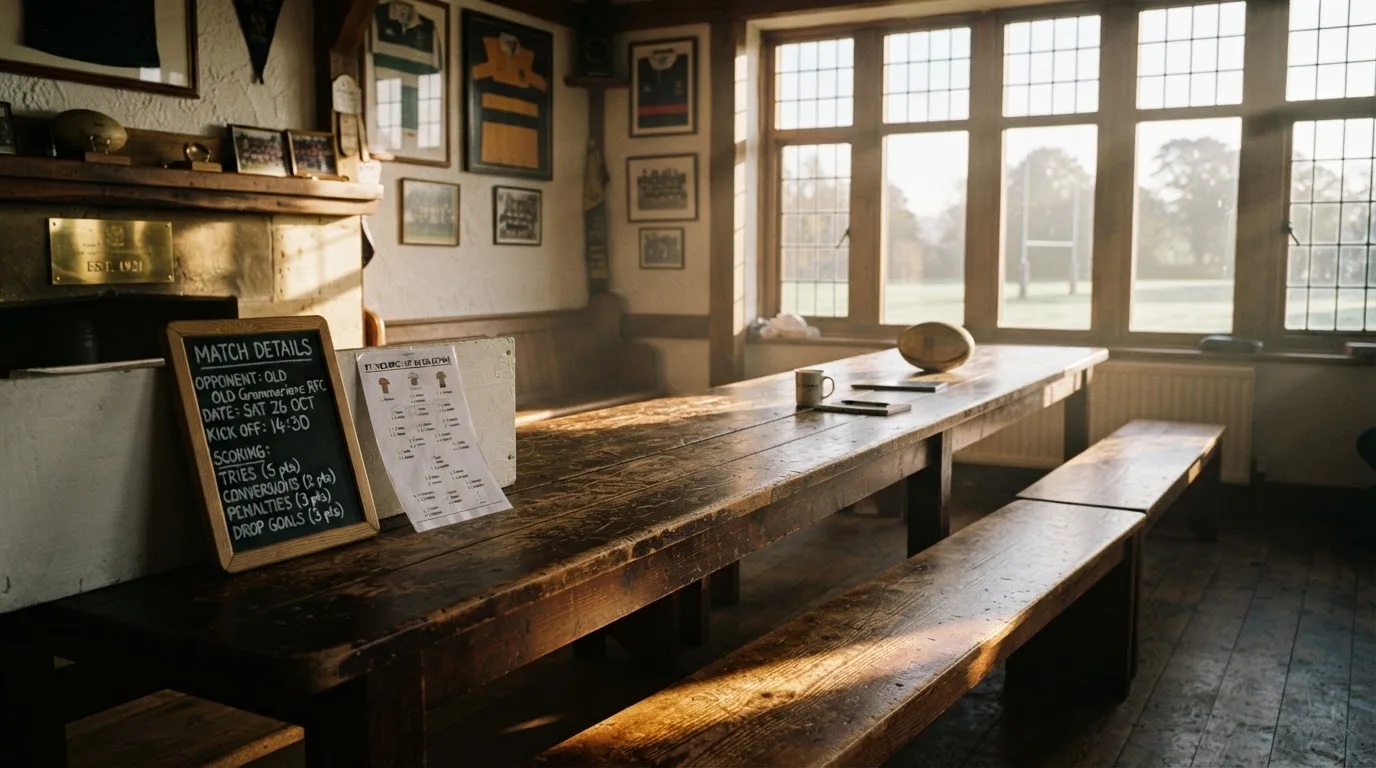
World Rugby has governed the sport since 1886. A rugby union team fields fifteen players; a match is two 40-minute halves; stoppages are not added, so a match routinely runs past the eighty-minute mark. Scoring is five points for a try, two for a conversion, three for a penalty and three for a drop goal. The points are the arithmetic of the handicap and the totals line.
The Rugby World Cup was first held in 1987 in Australia and New Zealand, and New Zealand won the inaugural title. The tournament runs every four years. South Africa are the defending champions after beating New Zealand in the 2023 final. The 2027 Rugby World Cup is hosted by Australia from 1 October to 13 November 2027, with 24 teams in six pools of four and 52 matches. The tournament is the headline of the four-year cycle and the book that runs on it is the deepest the sport sees.
The Six Nations runs each February and March with England, France, Ireland, Italy, Scotland and Wales. The Rugby Championship runs each August to October with Argentina, Australia, New Zealand and South Africa. The autumn internationals run each November with the southern-hemisphere sides touring the northern hemisphere. The Gallagher Premiership runs each autumn to spring with the English clubs; the United Rugby Championship runs each autumn to spring with clubs from Ireland, Italy, Scotland, South Africa and Wales; the Top 14 runs each autumn to spring with the French clubs. The Super Rugby Pacific competition runs each February to June with clubs from Australia, New Zealand and the Pacific Islands. The calendar is the calendar the bookmaker prices.
The book on the international windows is the deepest and tightest. The Premiership, the URC and the Top 14 run week to week, with the bigger fixtures carrying the full book and the smaller ones carrying match odds and a handicap. The Super Rugby Pacific book is the deepest in the southern-hemisphere club game.
The outright market on each competition runs from the day the draw is published. Ante-post prices are the early prices, with the Rule 4 deduction and the non-runner rule applied at settlement if a named selection withdraws. The outright market on the World Cup runs from the week the pools are drawn through to the final.
The World Rugby Sevens Series runs a parallel book, with the shorter format and the per-tournament outright market. The Olympic rugby sevens runs a deeper book in the Olympic year. The book on both is separate from the fifteen-a-side book, and the margin is the same construction.
The British bookmaker prices the international windows, the European club competitions, the Top 14 and the Super Rugby Pacific. The reader’s edge is the closing line on the bigger fixture; the operator’s edge is the margin on the round.
Top ten UK-licensed bookmakers for rugby union
The ranking below is the page’s own assessment. The brands sit on the Gambling Commission’s public register as holders of a remote general betting standard (real events) licence for Great Britain. The licence number and the licence holder are the verification route; the operator’s own published terms on the key subjects sit beside them. The market column is a paraphrase of the operator’s own statement on its key rugby union features, taken from the operator’s home page or app-store listing at the date of the check.
| Brand | Gambling Commission remote licence (account · holder) | Operator’s terms on the key subject |
|---|---|---|
| Tote | 54779 · TDCO Limited | Pool betting product on UK and Irish horse racing, with the dividend declared after the race. Rugby union book on the international windows, with the pool product the headline. |
| Hollywoodbets | 53028 · Hollywoodbets International UK Limited | Sports welcome as a stake-back free bet of up to £30 on a first losing accumulator; in-play book on the major rugby union fixtures. |
| Sporting Index | 27343 · Sporting Index Limited | Fixed odds and spread betting on the same wallet, with in-play pricing, Multi-Markets, Bet Builder on football and auto cash-out. |
| QuinnBet | 61011 · QuinnBet (Gibraltar) Limited | Best Odds Guaranteed on UK and Irish horse racing from 10:00 each day, with a £150 maximum benefit per customer per race. Rugby union book on the international windows. |
| Betboro | 44181 · Webmedia Development N.V. | 100% matched free bet of up to £25 on a first qualifying wager; rugby union book on the international and European club fixtures. |
| BetGoodwin | 2927 · Goodwin Racing Limited | “Bet £10 & Get £15 in Free Bets” in three £5 free bets (sports, acca, Sub-Cover); in-play book on the major rugby union fixtures. |
| Fitzwilliam Sports | 48760 · SBKI Limited | Capped-membership Dublin bookmaker with a “High Stakes Welcome” subject to compliance criteria; safer-gambling tooling (timeouts, deposit limits) on the customer account. |
| Betfair | 39439 · PPB Counterparty Services Limited | Exchange and Sportsbook on the same wallet; in-play book on the international rugby union windows; live streaming of UK and Irish horse racing and selected football. |
| Bet Ahoy | 100094 · Bet Ahoy Ltd | “Bet £10 & Get £10 in Free Bets” in two £5 free bets (sports, acca); rugby union book on the international and European club fixtures. |
| Kalooki Sportsbook | 57730 · Kalooki Sportsbook Limited | Sportsbook with a sports welcome structure; GAMSTOP member; identity verification before the first deposit. |
The brand column is the regulator’s brand. The licence column is the Commission account number and the licence holder named on the register; the licence holder is the entity whose application the Commission considered, and is the name that appears on the licence document. The third column is the operator’s own statement of its product on the key subjects — the welcome, the in-play product, the cash-out, the live-streaming product — paraphrased from the operator’s own page or its app-store listing. The reader checks the terms on the operator’s own site before betting, because the operator’s terms are the contract.
Tote sits at the top of the comparison because the pool product is a route the rest of the book does not run, and the dividend declared after the race is a different mechanic from the fixed price. The pool is the price; the customer’s edge is the pool size. The book on the international rugby union windows is part of the product.
Betfair’s exchange is the primary differentiator for this operator. The back-and-lay mechanic, the in-play product and the live streaming of UK and Irish horse racing and selected football are the features the operator’s own terms state, and the Sportsbook arm layers a 90 Minute Payout market on top. The licence is held by PPB Counterparty Services Limited; the exchange and the Sportsbook run on the same wallet.
bet365 is the most-downloaded sports betting app in Great Britain and the official global betting partner of the UEFA Champions League. The brand is not in this comparison; it is named here as a market data point, not as a ranked bookmaker.
The bookmakers, reviewed
The brands below are the ten on the Commission’s register whose rugby union book is the subject of this page. Each write-up ends with the page’s own verdict on the brand, for the kind of punter the brand suits. The market column is the third column of the table above, and the licence column is the second.
Tote
Tote’s licence is held by TDCO Limited, and the product is the pool. The dividend is declared after the race, and the pool is split among the winning tickets in proportion to the stake. The rugby union book sits alongside the pool product on the international windows. Tote is the route for a punter who wants the pool mechanic on a sport that does not usually run one.
The Tote verdict: the pool is the headline, and the pool is for a punter who reads the dividend rather than the fixed price. The licence is the right one for the product, and the brand suits a customer who treats the dividend as the price.
Hollywoodbets
Hollywoodbets’ licence is held by Hollywoodbets International UK Limited. The sports welcome is a stake-back free bet of up to £30 on a first losing accumulator of three legs or more at 4/1 or greater, settled within seven days of the first deposit. The free bet is not paid back with a win. The in-play book runs on the major rugby union fixtures.
The Hollywoodbets verdict: the welcome is competitive on a stake-back, with the seven-day window and the 4/1 minimum leg the two conditions that decide whether the bet qualifies. This is a sensible pick for a punter who backs accumulators on the international windows and values the stake-back structure.
Sporting Index
Sporting Index’s licence is held by Sporting Index Limited. The product is fixed odds and spread betting on the same wallet, with in-play pricing, Multi-Markets, Bet Builder on football and auto cash-out. The Multi-Markets product is the route for a punter who prices a range of player and team markets in one bet.
The Sporting Index verdict: the spread-betting product is a unique offering, and the auto cash-out is the discipline for a punter who closes positions at a set trigger. The licence covers fixed-odds and spread betting on the same wallet, and the customer reads the spread terms before sizing the position. Spreadex runs a similar combined product under a separate licence, and is named here as a market data point.
QuinnBet
QuinnBet’s licence is held by QuinnBet (Gibraltar) Limited. Best Odds Guaranteed is the headline promotion, applied to UK and Irish horse racing from 10:00 each day on singles, multiples and system bets, with a maximum benefit of £150 per customer per race. The rugby union book runs on the international windows.
The QuinnBet verdict: BOG is the cleanest promotion on this list, with the £150 cap the one condition that matters on a single race. The brand works well for a horse-racing-led book where the rugby union fixtures are a secondary interest, particularly with the in-play product running alongside.
Betboro
Betboro’s licence is held by Webmedia Development N.V. The sports welcome is a 100% matched free bet of up to £25 on a first qualifying wager of £5 to £25, with three selections or more each at 3/5 (1.60) or higher. The rugby union book runs on the international and European club fixtures.
The Betboro verdict: the welcome is a clean matched free bet, with the 1.60 minimum price per leg the condition that decides whether the bet qualifies. The brand is a reliable choice for the accumulator-focused punter who follows the international rugby union windows.
BetGoodwin
BetGoodwin’s licence is held by Goodwin Racing Limited. The sports welcome is “Bet £10 & Get £15 in Free Bets” in three £5 free bets — a sports free bet, an acca free bet and a Sub-Cover free bet — on a £10 qualifying stake. The in-play book runs on the major rugby union fixtures.
The BetGoodwin verdict: the welcome is broken into three small free bets rather than one larger one, and the Sub-Cover is a unique product in this list. The brand is a distinctive option for the punter who prefers several smaller free bets over a single larger offer.
Fitzwilliam Sports
Fitzwilliam Sports’ licence is held by SBKI Limited. The product is a Dublin bookmaker with capped membership, and the welcome is a “High Stakes Welcome” subject to compliance criteria. The safer-gambling tooling — instant deposits, fast withdrawals, timeouts, deposit limits — sits on the customer account, and the brand links to GambleAware, GAMSTOP and Gamblers Anonymous.
The Fitzwilliam Sports verdict: the capped membership is a unique feature in this list, and the welcome is sized to the customer’s profile rather than to a fixed headline. The brand is an alternative for the punter comfortable with the application-based compliance process and a tailored welcome offer.
Betfair
Betfair’s licence is held by PPB Counterparty Services Limited. The product is the exchange and the Sportsbook on the same wallet, with the in-play book on the international rugby union windows and the live streaming of UK and Irish horse racing and selected football. The 90 Minute Payout market sits on the Sportsbook arm.
The Betfair verdict: the exchange is the headline, with the back-and-lay mechanic the route to a position the Sportsbook does not run. The Sportsbook arm is the route for a punter who does not want to lay. The brand suits a customer who reads the exchange depth and prices the position accordingly.
Bet Ahoy
Bet Ahoy’s licence is held by Bet Ahoy Ltd. The sports welcome is “Bet £10 & Get £10 in Free Bets” in two £5 free bets — a sports free bet and an acca free bet — on a £10 qualifying stake. The rugby union book runs on the international and European club fixtures.
The Bet Ahoy verdict: the welcome is the smaller of the matched-free-bet shape, with the 1.60 minimum leg the standard condition on the qualifying bet. The brand is a straightforward choice for the punter who values a simpler two-free-bet structure on a £10 stake.
Kalooki Sportsbook
Kalooki Sportsbook’s licence is held by Kalooki Sportsbook Limited. The product is the sportsbook with the standard sports welcome, and the brand is a GAMSTOP member. The identity verification runs before the first deposit.
The Kalooki Sportsbook verdict: the brand is the smaller of the sportsbooks on the register, with the GAMSTOP membership and the identity check the two routes to a regulated book. The brand suits a punter who reads the small print and is comfortable on a smaller book.
Rugby union betting in Great Britain: how the licence sits around the bet
The framework is the Gambling Act 2005, which covers Great Britain — England, Scotland and Wales. Northern Ireland is outside the Act and runs its own older law; a Great Britain licence does not regulate Northern Ireland. The Gambling Commission licenses the whole commercial market under the Act, and the Commission’s public register is the test of who holds one. The register can be searched by business name, trading name, domain or account number, and the search result is the verification.
Since the Gambling (Licensing and Advertising) Act 2014, an operator whose remote facilities are used in Great Britain needs a Commission licence wherever the operator is based. A Curaçao, Maltese or Gibraltar licence is not a substitute. Several brands can run under one licensee — Ladbrokes and Coral under Entain, Paddy Power and Betfair under Flutter — and the licence holder is the entity whose application the Commission considered, not the brand on the betting slip.
The credit-card ban is the practical change that has shaped payments. Since 14 April 2020, credit cards have been banned for gambling in Great Britain, including credit-card-funded payments through an e-wallet. Debit cards and bank-based payments are not covered. The customer experience is that a deposit from a credit card declines, and a deposit from a debit card clears.
The bonus cap is the practical change that has shaped promotions. Since 19 January 2026, wagering requirements on bonuses are capped at ten times the bonus amount, and mixed-product promotions are banned. The cap on the value of a bonus, and the application of the cap to a free bet with no wagering condition, are not established.
The tax position is the practical change that has shaped the price. General Betting Duty is the operator’s tax on gross profits, currently 15%. From 1 April 2027 a new remote betting rate of 25% applies within it, while remote bets on UK horse racing, bets on self-service betting terminals in licensed premises, pool betting and in-person betting stay at 15%. Until 1 April 2027 the remote rate stays at 15%; whether operators pass duty on through odds is not established, and the customer is not charged duty.
The player pays no tax on betting winnings in Great Britain. A professional gambler should ask HMRC or an adviser. The Commission’s statutory levy is a separate charge on the operator, not a tax on the customer.
The legal frame is the route the bet sits inside. The bet is a contract between the customer and the operator; the contract is the operator’s own terms; the licence is the route the operator has to the customer. The terms are read before the bet, and the licence is the check before the account.
Frequently asked questions
How does rugby union betting work in Great Britain?
A licensed bookmaker takes a bet on a rugby union fixture, the price is the headline on the slip, and the bet is settled at the price once the match is over. The bookmaker’s margin is built into the price, and the customer reads the operator’s own terms before the bet. The bet is a contract between the customer and the operator under the Gambling Act 2005.
How is a bet placed on rugby union?
A licensed bookmaker is registered with the Gambling Commission, an account is opened, identity is verified, a deposit is made by debit card or bank transfer, a market is selected from the book and a stake is entered on the slip. The bet is settled at the price once the match is over, with the return the stake multiplied by the decimal odds.
How is a Gambling Commission licence checked?
The Commission’s public register is searched by business name, trading name, domain or account number, and the search result is the verification. The register lists the licence categories and the licence holder, and the licence document is the route to the registered name.
How is the return on a bet worked out from the stake and the odds?
The return is the stake multiplied by the decimal odds, and the profit is the stake multiplied by the odds minus one. A £10 bet at decimal odds 2.50 returns £25 of which £15 is profit. A £10 bet at 1.50 returns £15 of which £5 is profit. A £10 bet at 5.00 returns £50 of which £40 is profit.
What is the bookmaker’s margin and how is it seen in the odds?
The margin is the operator’s edge on the round, and the edge is the difference between the implied probabilities and 100%. A two-way market at 1.90 and 1.90 carries implied probabilities of 52.6% on each side, a payout share of 95.0% and a margin of 5.0%. A two-way market at 1.85 and 1.85 carries a margin of 7.5%, and a market at 1.95 and 1.95 carries a margin of 2.5%.
How do fractional odds such as 5/1 convert to decimal odds such as 6.00?
The conversion is a divided by b plus one: 5/1 is 6.00, 11/4 is 3.75, evens (1/1) is 2.00, 4/6 is 1.67, 1/4 is 1.25. The decimal form is the working form for the arithmetic, and the fractional form is the form the British punter reads aloud.
Rugby, cricket & Gaelic – Best betting exchange
Content created by the «Best betting exchange» team
