
Table tennis betting odds in GB — what the price really costs
 Available in US
The numbers a bookmaker publishes on a table tennis match do not arrive as a forecast. They arrive as a price with a margin already inside it, and the bettor’s job is to recognise what that margin takes before deciding whether the price is worth the risk. This page reads Great Britain’s licensed table tennis market through that lens: the licence conditions, the bonus rules, the live markets, the bet types and the ten bookmakers research has placed on the public register, each one judged against what its terms cost the person paying them.

Data current as of 27 October 2026, checked against the Gambling Commission’s public register and each operator’s own published terms.
Safer gambling tools every GB bettor has access to
Betting on table tennis carries the same baseline risk as any other product offered by a licensed bookmaker in Great Britain. A point lead can flip in two serves, a deuce game can run ten rallies, and the matched nature of the fixture list — men’s and women’s World Championships, WTT Tours, the Olympic and the Paralympic Games — produces long runs of short-priced favourites that look safer than they are. The market does not reward certainty; it rewards price.

The tools that exist in Great Britain sit at three levels.
On the customer side. A licensed operator offers deposit limits, time-outs and self-exclusion, and the bettor sets the level they want. No state ceiling exists. GAMSTOP, the national multi-operator self-exclusion scheme, is a mandatory condition for every online licence, with periods of six months, one year, five years, or five years with auto-renewal; after the minimum period the exclusion stays in place for a further seven years unless the bettor asks GAMSTOP to remove it. GAMSTOP covers online sites and apps; betting shops use a separate service.
On the operator side. A financial vulnerability check has applied to licensed remote betting since 30 August 2024, and the trigger — deposits minus withdrawals exceeding £150 in a rolling 30 days — has been live since 28 February 2025. It is a public-record check (bankruptcy or county court judgments), not an income check and not a credit reference check. Financial risk assessments — the affordability checks that appear in the press — were announced in a staged plan (the Commission’s own article of 7 July 2026) with no start date, so they are announced and staged, not in force. The first gross deposit-limit changes have applied since 31 October 2025; a second phase was postponed to 30 September 2026, and whether it is live on every operator has not been confirmed.
On the help side. GamCare runs the National Gambling Helpline. GambleAware funds treatment and education. The NHS gambling clinics are the medical route. Gamblers Anonymous runs support meetings. Each licensed operator’s safer-gambling page links to these services — Fitzwilliam Sports’ home page, for instance, names GambleAware, GAMSTOP and Gamblers Anonymous directly.
The point of listing them is not to suggest that table tennis betting is uniquely dangerous. It is to point out the cost of going around them: an unlicensed site offers none of these tools, sits outside GAMSTOP, has no Commission complaints route, and gives the customer no British redress if funds are withheld. The headline price may look better on the screen, but the price is the only thing on the screen.
Crypto and the anonymity that licensed betting in GB does not offer
A second seam running through the market in 2026 is the question of whether table tennis can be bet on with bitcoin, ether or a stablecoin. It cannot, in Great Britain, at a licensed bookmaker. The identity check applies before a customer can deposit or gamble, and a free bet or a bonus sits behind the same check (since 7 May 2019). That requirement makes a pseudonymous crypto deposit inert: even if the operator accepted the coin, the account is named before the first stake.
That fact lands differently depending on which side of the seam the reader stands on. For the bettor who already holds a GamStop-registered account at a UK-licensed brand, crypto is simply not on the menu — the betting app pays out to a bank account or to a debit card, not to a wallet address. For the reader who came to the search looking for a way to bet pseudonymously, the licensed route is the wrong one by design: the absence of anonymity is part of what a licence buys, and an offshore brand that does accept crypto is operating outside the British framework. No British named-account rule, no state list of permitted payment methods and no rule on crypto deposits at licensed operators has been established from the inputs, so the shape of the licensed offer is what the operator’s own terms say, and what they say is verifiable identity and a debit card or a bank transfer in pounds.
For that offshore brand, the price can be lower because the protection is lower. No GAMSTOP coverage, no Commission complaints route, no approved dispute-resolution body, no British consumer redress if funds are withheld, no £150 vulnerability check and no 10x bonus cap. The cost of using one is not a fee; it is the absence of every safety net on the page above.
Bonus terms under the 2026 cap and what they really cost
The promotion rules in force since 19 January 2026 change the arithmetic of every welcome offer on a GB-licensed site. Two clauses matter most.
Wagering requirements on bonuses are capped at 10x the bonus amount: a £10 bonus at 50x required £500 of qualifying bets, and under the cap no more than £100. A second clause bans mixed-product promotions — an offer that requires gambling on two or more product types such as betting, casino, bingo and lottery, for example “bet on football to get free spins”. A bookmaker that ties a sportsbook sign-up to casino play now has to keep them on different terms or run them as separate offers. Whether the 10x cap applies to free bets with no wagering condition, and whether there is a cap on the money value of a bonus, are not established from the inputs; what is established is the cap on the multiplier itself.
Read against that rule, the offers in this market split into three groups.
Group one — fixed free bets with a 10x-or-better cap. BetTom’s sports welcome is “50% back as a free bet of up to £50”, with a matching 50% back up to £50 as free slot funds for casino play. BetUK’s offer is “deposit £10 or more and place a sports bet within 7 days of registering” for four £10 free bets — two football accumulators of 4+ selections and two multiples of 2+ — valid for 7 days with opt-in required. Dabble’s welcome is “Bet £10, Get £10 in Free Bets” on a first deposit, with minimum odds applying, a 7-day free bet expiry and the stake not returned. Each is a credit-not-cash structure: the free-bet stake is usually not paid back with a win, the win is the money.
Group two — boosted odds and acca insurance. NetBet Sport runs Daily Boosts, Profit Boosts and free-bet offers alongside a Bet Builder with instant dynamic odds. The shape is the same: a higher price or a refund if one leg lets the bet down, traded for the qualifier.
Group three — capped-membership heavy stakes. Fitzwilliam Sports is a Dublin bookmaker with capped membership, and its welcome is a “High Stakes Welcome” subject to compliance criteria. The marketing pitch turns on volume rather than on a headline percentage, and the cost of qualifying for it sits inside the compliance gate rather than on a wagering multiple.
A reader comparing two offers should look past the headline. A 50% back-up-to-£50 free bet on a £100 deposit is worth the value of a £50 free bet, multiplied by the bettor’s expected edge at the price the free bet is placed at the bonus — that is the freebet-value calculation, and a higher headline percentage with a worse expiry or a higher minimum price can return less. The 7-day expiry that several offers carry is short: the bettor has to clear the credit in a week or lose it, and the bettor who has time now to clear it has a different offer from the one who does not.
Live betting, cash out and the in-play cost of watching
Table tennis is one of the cleanest live-betting products on the licensed market, and the reason is mechanical. Matches are short, scoring is discrete, and the points at which the price can move are within the bettor’s reading speed. Service alternates every two points, and once both players reach 10 each serves one point in turn. The market can re-price between serves, and a bookmaker with the data feed can offer markets that move with the score.
The price of watching is the margin in each market. A pre-match market has had time to settle into an efficient price; an in-play market is re-priced every few points, and the spread on each re-price is the cost. Two practical points shape the live offering in 2026:
Cash out. Most licensed brands offer cash out on in-play table tennis, and the offered value sits below the live price to lock in the bookmaker’s edge. The value of locking in depends on whether the bettor’s edge is larger than the bookmaker’s spread — for most casual readers it is not, and cash out is a way to take a smaller certain loss rather than hold a position with a chance of winning.
Streaming and trackers. bet365’s app offers in-play betting alongside live streaming of events worldwide, with Bet Track and Match Live for following bets in play. Midnite shows in-play events on its home page. Paddy Power covers table tennis within its wider sports list. Live streaming is not a separate product from the price — it is the bettor’s tool for reading the in-play market, and the bettor who bets without watching pays for the privilege in spread.
The cost of in-play betting is the cost of every market: the margin inside each price, compounded by frequency. A pre-match bettor makes one decision per fixture; an in-play bettor makes several, and pays the margin on each one. That is the cost of being engaged.
Predictions and strategy, and why neither predicts the next point
Search traffic around table tennis betting tips, table tennis betting strategy, and table tennis betting predictions has always been strong, and the reason is the same as it is for any sport where the matches are short and the favourites short-priced. The bettor wants a tip that names a winner. The inputs do not carry one, and a tipster who promises one cannot deliver it — a table tennis match between two ranked players is decided by a few centimetres of net cord, and no public model outperforms the closing line of a sharp bookmaker on a sport this short.
What a bettor can do is price work. Three rules sit inside every profitable approach that does not pretend to know who wins:
Shop the price. The difference between 1.85 and 1.91 on the same outcome is the difference between a 5% margin and a 2.5% margin at two-way — that is the only number the bettor controls on a market that does not reward prediction. Two bookmakers quoting the same fixture at different prices is a £6 swing on a £100 stake for the same outcome.
Track the closing line. The price five minutes before the first serve is the sharpest estimate the market produces. A bettor whose price was better than the closing line made an edge bet; a bettor whose price was worse made a donation. Keeping a record is the only way to know which.
Bankroll discipline. The unit is the share of bank the bettor stakes on any single outcome, and a unit between 1% and 2% is the band that survives a losing run on table tennis, where even the favourite can lose in straight games to a player with a hot first serve. A staking plan sounds dull until the first five-leg losing run of the season, which is when it earns its keep.
None of that is a tip, and none of it is a system. It is the discipline that turns betting from a punt into a price-led activity, and the price is the only thing this page can teach.
Bet types, odds and the worked margin
Table tennis betting odds come in two formats on a British bookmaker’s screen. Fractional odds (5/1, 11/4, evens) are the older form: the first is the profit on a £1 stake, the second the profit on a £1 stake at 11/4, and “evens” is 1/1 — a £1 profit on a £1 stake. Decimal odds (6.00, 3.75, 2.50) show the total return including stake, so 6.00 is six pounds back for every pound staked — a £5 profit on a £1 stake. Conversion is mechanical: a/b in fractional becomes (a ÷ b) + 1 in decimal, so 5/1 is 6.00 and 11/4 is 3.75. The bookmaker’s quote shows in whichever form the customer has set; the underlying price is the same.
The bet types a licensed bookmaker offers on table tennis sit inside four families:
Match result (moneyline). Pick the winner of the match, best of five or best of seven. The simplest market, the cleanest price, the lowest margin.
Handicap. One player starts the match on a games or points handicap — for example -1.5 games means the favourite has to win by two clear games. The handicap widens the favourite’s price and shortens the outsider’s, and the margin is higher than on the moneyline because the bookmaker has re-priced three or four outcomes.
Totals (over/under). A line on the total games in the match — over 3.5 games means four or more. The line moves as money comes in, and the price moves with it. Margins sit between moneyline and handicap.
Bet builder / same-game multi. Combine markets from one event into a single bet. bet365 runs Bet Builder+, available pre-match and in-play, with Winnings Boosts on Bet Builders and selected singles; NetBet’s Bet Builder offers instant dynamic odds. A bet builder is a parlay of legs from the same match, and the price of each leg already carries a margin, so the price of the multi carries the margin of every leg compounded into one number.
The published odds carry the bookmaker’s margin, and the margin is the cost the bettor pays for the privilege of betting. To see how the margin sits inside the price, take an illustrative example: a two-way market at decimal odds 1.90 and 1.90 (fractional 9/10 each way).
- Payout share = 1 ÷ (1/1.90 + 1/1.90) = 1 ÷ 1.0526 = 0.9500, or 95.00%.
- Margin = 1 − 0.9500 = 0.0500, or 5.00%.
That is a band — somewhere in the low single digits for the cleanest moneyline markets, climbing through the handicap markets into the bet builder, where compounding legs runs the effective margin to a higher band than any single leg alone. The reader who knows the band knows what a high price on a heavy favourite is actually costing: at 1.10 each way on a two-way market the payout share is about 95.24%, and at 1.05 each way it is about 97.62% — every shaved decimal on a short price is the bookmaker widening the margin.
What does that cost in pounds? A £100 stake at decimal odds 1.90 returns £190 if it wins — the stake plus £90 profit. The £5 margin is the bookmaker’s expected take on the same stake from the same market across many bets, not a fee on this single bet. The cost of one bet at 1.90 is the opportunity cost of not having bet at 1.95.
The sport, the tournaments and the betting menu around them
Table tennis has been an Olympic sport since 1988, and the ITTF — the International Table Tennis Federation, founded in 1926 — runs the international calendar that bookmakers price. The biggest events on the licensed market are the Olympic and Paralympic Games, the World Table Tennis Championships (the World Championships, men’s and women’s), the World Team Championships, the WTT Tour (WTT Contender, WTT Star Contender, WTT Champions, WTT Finals), the continental championships and the major national leagues. Below that, betting volume sits on national leagues and on the Setka Cup and TT Cup feeder events that run almost continuously through the week.
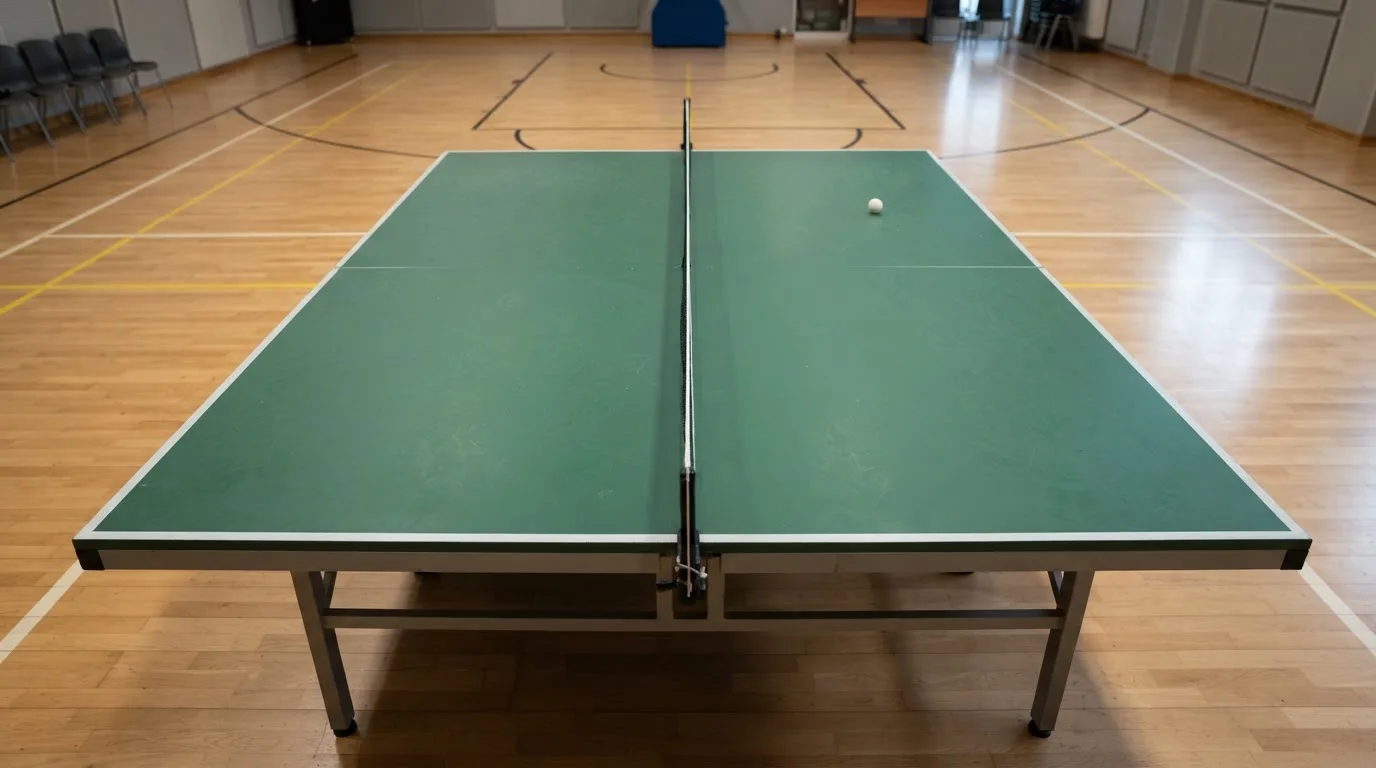
The mechanics of the game matter for the market. A table tennis game is won by the first player to reach 11 points; if both players reach 10, the first to lead by 2 points wins the game. A match is the best of any odd number of games, and competition matches are typically best of five or seven. The table is 2.74 m long, 1.525 m wide and 76 cm high, with a net 15.25 cm high; the ball is 40 mm in diameter and weighs 2.7 g. Scoring changed from 21 points to 11 in 2001. Service alternates every two points, and once both players reach 10 each serves one point in turn. The rule set is short, the points are short, and the markets are correspondingly discrete — every serve is a possible re-price.
The shape of the betting menu mirrors the calendar. Around a World Championships or a WTT Finals the licensed bookmakers run the full menu: pre-match moneyline, handicap, totals, set betting, race to X points, and the bet builder. Around a Setka Cup match at three in the morning the menu is thinner — a moneyline and a handicap, occasionally a totals line, and a wide margin on each. A reader betting on the back catalogue pays a higher margin than a reader betting on the front of the card, and that is the cost of betting on a sport with a continuous fixture list.
The tournaments that bookmakers list by name — and the menu each tends to run on them — sit in a recognisable pattern. The Olympic Games and the World Championships carry the deepest books, the WTT Finals and the WTT Champions events run a full menu, the WTT Star Contender and Contender events run a slimmer menu but with a sharp price on the moneyline, and the national leagues and feeder events run a thin menu at the wider margin. A bettor looking for value on table tennis in 2026 should know which of those shelves the book they are about to place sits on, and price accordingly.
The ten licensed brands and the comparison
The table below shows each featured brand alongside its Gambling Commission remote licence details and what its own published terms say on the subject of table tennis pricing and offers. The full operator write-ups follow.
| Brand | Gambling Commission remote licence (account · holder) | What the operator’s terms say on the key subject |
|---|---|---|
| Fitzwilliam Sports | 048760 · SBKI Limited | Capped-membership Dublin bookmaker with a “High Stakes Welcome” subject to compliance criteria. |
| BetTom | 064959 · Bet Tom Limited | Sports welcome: 50% back as a free bet of up to £50, plus a matching 50% back up to £50 as free slot funds; full terms apply. |
| NetBet | 039170 · Netbet Enterprises Limited | Daily Boosts, Profit Boosts and free bet offers, a Bet Builder with instant dynamic odds, and sports stats for major leagues. |
| Paddy Power | 039439 · PPB Counterparty Services Limited | App covers football, horse racing, boxing, rugby, tennis, golf, darts, snooker and F1. |
| BetUK | 039198 · LeoVegas Gaming PLC | Sports welcome: deposit £10+ and place a sports bet within 7 days for four £10 free bets (two football accas 4+, two multiples 2+); 7-day expiry, opt-in required. |
| BetVictor | 039576 · BV Gaming Limited | Best Odds Guaranteed on UK and Irish horse racing, enhanced live race streaming, BetFinder and Smart Stats. |
| Geoff Banks | 054095 · GB Sports Advisors Limited | Live in-play prices and ante-post prices on future events. |
| Ladbrokes | 054743 · LC International Limited | App published by Entain Operations Limited, rated 4.66 from 101,255 ratings in the GB App Store. |
| Kalooki Sportsbook | 057730 · Kalooki Sportsbook Limited | Operated by Kalooki Sports Book Ltd (company number 12938274), GAMSTOP member. |
| Dabble | 065677 · Dabble Sports UK Ltd | Welcome “Bet £10, Get £10 in Free Bets” on a first deposit; minimum odds apply, 7-day expiry, stake not returned. |
The rest of this section goes through each operator in the order above. The angle in each is the same: what does this brand cost the reader who bets on table tennis, and for whom does that cost come out right.
Fitzwilliam Sports
Fitzwilliam Sports describes itself as a Dublin bookmaker with capped membership. That single phrase is the key to its offer: it is not running a mass-market sign-up, it is running a curated list, and the welcome is a “High Stakes Welcome” subject to compliance criteria. The licence on the Commission’s public register is a remote general betting standard (real events) licence held by SBKI Limited; the operator’s site links to GambleAware, GAMSTOP and Gamblers Anonymous. Deposits are instant, withdrawals fast, and the safer-gambling tools — timeouts and deposit limits — are set by the customer. The price is for the bettor who wants higher stakes than the mass-market brands offer and who accepts that the cost of admission is a compliance check rather than a marketing code. For most readers it is not the right shop; for the reader it is aimed at, it is.
BetTom
BetTom’s sports welcome is the cleanest offer in the pack on the headline: 50% back as a free bet of up to £50, with a matching 50% back up to £50 as free slot funds for casino play. The licence sits with Bet Tom Limited. Two points matter. The first is that the free-bet stake is not returned with a win — the credit-not-cash structure, and the bettor’s edge is the price the free bet is placed at the bonus. The second is that the casino half of the offer sits under the casino terms, not the sports terms, and the 10x wagering cap that took effect on 19 January 2026 binds only the bonus it applies to. BetTom is the bettor who wants one sportsbook and one casino welcome, and the cost of taking it is the time it takes to clear the free bet at the minimum price the operator names.
NetBet
NetBet’s sportsbook carries Daily Boosts, Profit Boosts and free bet offers alongside a Bet Builder with instant dynamic odds, and sports stats for major leagues — the standard mid-market feature set with a Bet Builder that re-prices as the bettor builds. The licence sits with Netbet Enterprises Limited. NetBet is the bettor who prices a bet builder leg-by-leg rather than as a single multi — the dynamic odds feature lets the bettor see the cost of each addition in the price, which is the only honest way to read what a builder costs. For most readers the offer is unremarkable; for the bettor who uses builders heavily it is the cleanest one in the pack.
Paddy Power
Paddy Power’s sports app is published by Paddy Power PLC and covers the full British menu: football, horse racing, boxing, rugby, tennis, golf, darts, snooker and F1. The licence sits with PPB Counterparty Services Limited. The brand sits inside the wider Flutter group, which is its house where price matters on the big events and where the in-play markets on table tennis are typically thinner than bet365’s. The strength is the menu on the British sports — Best Odds Guaranteed on horse racing, the money-back specials on football — and the weakness is the relative depth of the table tennis book outside the WTT calendar. For the bettor who bets across sports and wants one account for them all, Paddy Power earns its place on the menu.
BetUK
BetUK is operated by LeoVegas Gaming PLC, and the welcome is the clearest mass-market offer in the pack: deposit £10 or more and place a sports bet within 7 days of registering, and the customer receives four £10 free bets — two football accumulators of 4+ selections and two multiples of 2+ — valid for 7 days, with opt-in required. Two points matter. The first is the 7-day deadline: a customer who signs up and does not place the qualifying bet within a week loses the offer. The second is the structure of the free bets themselves — the credit is paid out as four bets of £10 rather than one of £40, and the bettor’s edge is the price the four bets are placed at the offer. BetUK is the fit for the reader prioritising a low-barrier welcome; the cost, however, is the seven-day window to activate and wager four £10 tokens.
BetVictor
BetVictor carries Best Odds Guaranteed on UK and Irish horse racing — the brand’s most visible feature — alongside enhanced live race streaming, a BetFinder for racing markets and Smart Stats. The licence sits with BV Gaming Limited. The shape of the offer is a racing book with a sportsbook behind it: a bettor who bets on table tennis through BetVictor is betting through the sportsbook, and the price sits inside that book rather than on a dedicated table tennis platform. For the bettor whose primary interest is racing and whose table tennis interest is occasional, BetVictor earns a place; for the dedicated table tennis bettor the menu is thinner than bet365’s.
Geoff Banks
Geoff Banks’ app is published by GB Sports Advisors Limited and runs live in-play prices alongside ante-post prices on future events. The brand’s edge is the long-tail market — ante-post on events the mass-market brands do not run — and the cost is the menu on the short-tail events. For the reader pricing an ante-post fixture three weeks out, Geoff Banks delivers more than the high-street names; those seeking the deepest in-play menu for tonight’s WTT Contender, however, will find superior liquidity elsewhere.
Ladbrokes
Ladbrokes is published by Entain Operations Limited, and the GB App Store page carries 101,255 ratings at an average of 4.66 — the highest user count in the pack and a real indicator of scale. The licence sits with LC International Limited and covers both remote general betting standard (real events) and remote betting intermediary — the exchange licence, which is why the brand runs alongside the Coral exchange. The strength is the scale: bigger books, sharper prices on the marquee events, deeper in-play. The cost is the menu outside the marquee — the smaller table tennis fixtures sit at wider margins on Ladbrokes than on bet365, and a bettor who bets only on table tennis should know it.
Kalooki Sportsbook
Kalooki Sportsbook is operated by Kalooki Sports Book Ltd (company number 12938274), licensed under Gambling Commission account 57730, and is a GAMSTOP member. The brand is smaller than the pack, and the offer is correspondingly focused. For a reader prioritising a smaller, licensed GB bookmaker with integrated safety tools, Kalooki is a viable option; for one chasing the exhaustive tournament coverage found at the market’s largest brands, it may not be the optimal destination.
Dabble
Dabble’s welcome is “Bet £10, Get £10 in Free Bets” on a first deposit for new customers, with minimum odds applying, a 7-day free bet expiry and the stake not returned. The licence sits with Dabble Sports UK Ltd. The offer is the cleanest free-bet structure in the pack on the headline — one bet in, one bet back — and the cost is the same as every other free bet: the stake is not returned, the minimum odds cut out the short prices, and the 7-day deadline is short. For the bettor who wants a simple free-bet welcome, Dabble earns a place; for the bettor who wants a deeper sportsbook on table tennis, it is the entry rather than the destination.
The legal frame every brand above sits inside
Every bookmaker in the comparison above holds a remote operating licence from the Gambling Commission, and the Commission is the regulator for the whole commercial market in Great Britain. The legal frame is the Gambling Act 2005, which covers England, Scotland and Wales; Northern Ireland sits outside the Act and has its own older law, so a GB licence does not regulate Northern Ireland. Since the Gambling (Licensing and Advertising) Act 2014 an operator whose remote facilities are used in Great Britain needs a Commission licence wherever it is based — sections 33 and 36 of the 2005 Act as amended — and a Curaçao, Maltese or Gibraltar licence is not a substitute. There is no state monopoly and no cap on the number of licences, so the market is open and competitive.
The Commission’s public register can be searched by business name, trading name, domain or account number, and the register is the whole test of whether a brand holds a licence. The licence categories on it matter for what a brand can offer: remote general betting standard (real events), remote general betting standard (virtual events), remote general betting limited, remote pool betting and remote betting intermediary (the exchange licence). Every brand in the pack holds a remote general betting standard (real events) licence, and Ladbrokes’ holder additionally holds the betting intermediary licence for the Coral exchange.
The player-protection frame sits inside that licence. The credit-card ban (since 14 April 2020, LCCP condition 6.1.2) applies to gambling in Great Britain and includes credit-card-funded payments through an e-wallet; debit cards and bank-based payments are not covered. The mandatory identity check (since 7 May 2019) sits before the first deposit, which is the rule that closes the door on anonymous play at a licensed site. GAMSTOP is a mandatory licence condition for online operators since 31 March 2020. The 10x wagering cap on bonuses and the ban on mixed-product promotions took effect on 19 January 2026. The financial vulnerability check (LCCP condition 3.4.4) has applied since 30 August 2024, with the £150 rolling-30-day trigger live since 28 February 2025.
The financial spread betting market sits with the Financial Conduct Authority rather than the Commission, which is the legal difference between Spreadex’s spread betting book and its fixed-odds book — the FCA regulates the financial side, the company regulates the betting side, and the spread bet on a sports index is a different product from a fixed-odds bet. For the bettor that distinction matters because spread betting losses can exceed the deposit.
The tax frame is the operator’s, not the player’s. General Betting Duty is the operator’s tax on gross profits, currently 15%; from 1 April 2027 a new remote betting rate of 25% applies within it, while remote bets on UK horse racing, bets on self-self-service betting terminals in licensed premises, pool betting and in-person betting stay at 15% — the HM Government policy paper of 26 November 2025 set the schedule. Until 1 April 2027 the remote rate stays at 15%; whether operators pass duty on through odds is not established, so the reader should not assume the player is charged duty. The player pays no tax on betting winnings in Great Britain.
The advertising frame is not the Commission’s; it runs through the CAP Code (non-broadcast) and BCAP Code (broadcast) enforced by the ASA, alongside the LCCP marketing conditions. CAP Code section 16 holds marketing to a socially responsible standard and bars strong appeal to under-18s. The “whistle-to-whistle” ban on TV gambling ads from five minutes before a live sporting event to five minutes after it, before the 9pm watershed, has applied since 1 August 2019 — industry code, not statute. The Premier League clubs’ voluntary withdrawal of gambling sponsorship from the front of matchday shirts from 2026/27 is voluntary rather than law, and sleeves and hoardings remain.
The offshore frame closes the page. Providing gambling facilities in Great Britain without the licence the Act requires is an offence under section 33 of the Gambling Act 2005 — on summary conviction up to 51 weeks’ imprisonment, a fine up to level 5, or both; six months in Scotland — and it is aimed at the operator. The customer who merely bets on an unlicensed site is not the target of a criminal offence, but the cost of doing so is the absence of every protection listed above: no GAMSTOP, no Commission complaints route, no approved dispute-resolution body, no British consumer redress if funds are withheld, no 10x bonus cap and no £150 vulnerability check. Enforcement against unlicensed operators runs through cease-and-desist notices, search-engine referrals, work with registrars and payment providers, and DNS blocking powers the Commission has been given or is about to receive — not ISP blocking in operation. The honest framing is the one this page has used throughout: licensed means checks, limits, GAMSTOP and the bonus cap, but also verification before the first bet; unlicensed means none of those protections and the possible loss of funds. Neither is the safe choice by default.
Frequently asked questions
How is the return on a table tennis bet worked out from the stake and the odds?
For a single bet, return equals stake multiplied by decimal odds, and net profit equals stake multiplied by (decimal odds minus one). A £10 stake at decimal odds 1.90 returns £19 — the £10 stake plus £9 profit. For a combination bet the odds of the legs multiply into one price, so two legs at 1.90 each become a 3.61 price. Fractional odds (5/1) convert by dividing the first number by the second and adding one, so 5/1 becomes 6.00.
How can it be checked that a bookmaker holds a Gambling Commission licence?
Search the Commission’s public register by business name, trading name, domain or account number. A licence on the register is the test of whether the brand is licensed; a GB-licensed brand may use either a .com or a .co.uk domain, so the domain proves nothing on its own. The accounts in this pack — 048760, 064959, 039170, 039439, 039198, 039576, 054095, 054743, 057730, 065677 — sit on it as written.
What is the bookmaker’s margin, and how can it be seen in the odds?
The margin is what the bookmaker keeps of every unit bet on a market. On a two-way market at decimal odds 1.90 and 1.90 the payout share is 1 divided by the sum of the inverse odds — 1 divided by 1.0526 — which is 95.00%, and the margin is 5.00%. The margin widens on handicap markets, totals and bet builders, where compounding legs runs the effective margin higher than any single leg alone.
How does in-play betting on table tennis work, and what does it cost?
In-play markets re-price between points, with service alternating every two points and every serve a possible re-price after the score reaches 10-10. The cost is the margin inside each market, compounded by frequency — a pre-match bettor makes one decision per fixture, an in-play bettor makes several. Cash out sits below the live price, and the bettor who locks in takes a smaller certain loss rather than holding a position with a chance of winning.
What safer-gambling tools does a GB-licensed bookmaker offer in 2026?
Every online operator offers deposit limits, time-outs and self-exclusion, and the customer sets the level. GAMSTOP is a mandatory licence condition for online operators, with periods of six months, one year, five years, or five years with auto-renewal, and a further seven years after the minimum period unless the bettor asks to be removed. A financial vulnerability check applies when deposits minus withdrawals exceed £150 in a rolling 30 days; it is a public-record check, not an income check. Help is available through GamCare, GambleAware, the NHS gambling clinics and Gamblers Anonymous.
Tennis, darts & cue sports – Best betting exchange
Content created by the «Best betting exchange» team
