
The Cost of a UK Betting App: What a Licensed Mobile Bookie Really Charges in 2026
 Available in US
The app stores list hundreds of sports betting apps. Most of them are not licensed to take a bet from someone sitting in Leeds, Cardiff or Glasgow. The ten apps written about below all hold a Gambling Commission remote licence that is current on the Commission’s public register as of the access date noted under this paragraph — the register being the only place a licence is proved or disproved, not the app’s own splash screen and not a marketing claim. A licence is the price of admission to the GB market; it is not, on its own, a recommendation, and the rest of this page is organised around what each licensed app costs the bettor who installs it: what the signup terms ask for, what the free bet is really worth, how quickly a withdrawal lands, what the bonus cap and the identity check mean in practice. By “cost” this page means the price the bookmaker’s terms put on the bettor’s money and time, not the size of a stake. The angle is arithmetic, not moralising.
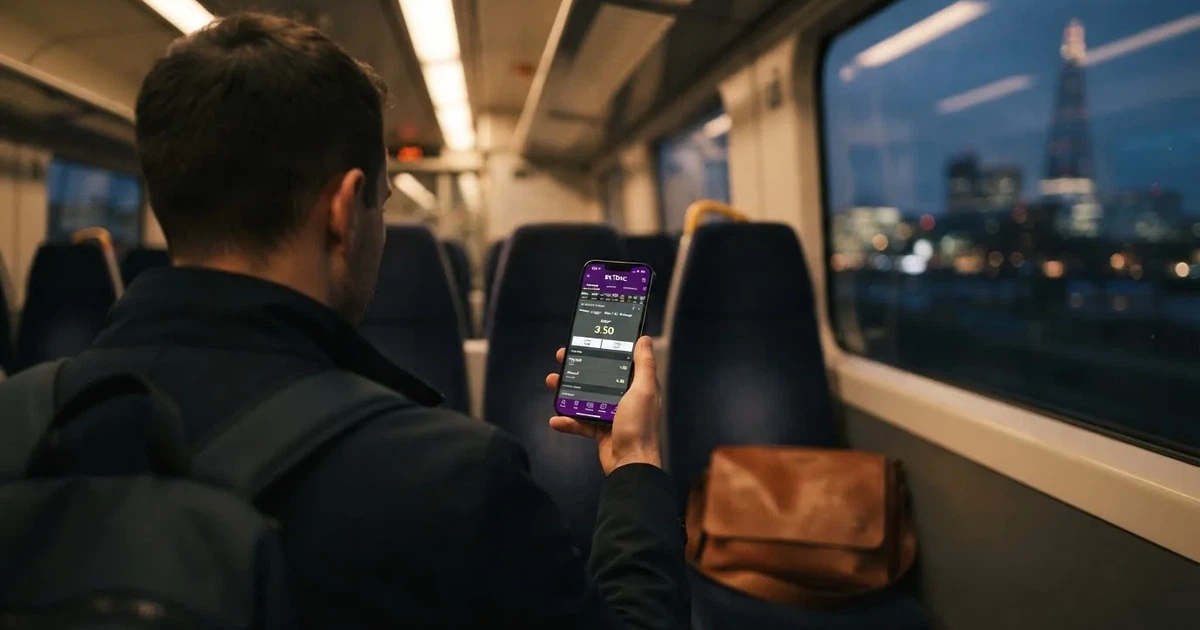
*Current as of 27 October 2026 · cross-checked against the Gambling Commission’s public register of operating licences.*
Staking Safely Before the First Bet Goes On
A licensed app does a few things at install that an unlicensed one does not. The bettor sees them as friction; the regulator sees them as the deal. Three of them shape the cost of using any app on this page.
Age and identity are checked before the first deposit clears. Since 7 May 2019, no funds can be taken before name, address and date of birth are verified, and that verification applies to a free bet or a bonus, not only to cash stakes. A British named-account rule, a state list of permitted payment methods and any rule on crypto deposits at licensed operators were not established during research, so the practical truth is that no anonymous play exists at a GB-licensed site: the gate is the regulator’s, the operator’s process and the customer’s choice, and a punt on identity-free play needs an unlicensed offshore app that has none of the protections the next sections describe. That choice is the bettor’s; it has costs.

Customer-set deposit limits have been a Gambling Commission licence condition for years, and a new Remote Technical Standard (RTS 12) reframes how they apply. Phased changes took effect from 31 October 2025 on the first cycle, with a second phase postponed to 30 September 2026 and not confirmed as live at the access date above. The point on the page is not the schedule but the result: every licensed operator offers a gross deposit ceiling on a fixed time frame, the customer sets it, and the operator’s safer-gambling surface — Unibet’s Player Profile, Star Sports’ My Account, William Hill’s time reminders, time-outs and deposit limits, Dabble’s deposit limits and cooling-off — exposes the dial without burying it. There is no state-set ceiling; the customer’s finger on the slider is the ceiling.
Financial vulnerability checks pick up a different signal. Under LCCP condition 3.4.4, in force since 30 August 2024, a public-record check (bankruptcy, county court judgments) is triggered when a customer’s deposits minus withdrawals pass £150 in any rolling 30 days, the threshold having applied since 28 February 2025. It is not a credit reference check and not an income check. Heavier “affordability checks” sit in a staged Commission plan announced on 7 July 2026 without a start date — write that as announced, staged, no start date, never “in force”. GAMSTOP is the national multi-operator self-exclusion scheme, mandatory for every licence on this page: periods run six months, one year, five years, or five years with auto-renewal, and after the minimum period the exclusion stays in place for a further seven years unless the customer asks GAMSTOP to remove it. Help outside the apps is the National Gambling Helpline via GamCare, GambleAware, the NHS clinics, and Gamblers Anonymous.
The cost of all of that is friction at sign-up and a ceiling of the bettor’s own choosing. The benefit is a route back: a Commission complaints process, an approved alternative dispute resolution body, money-laundering supervision. Those are the things an unlicensed app does not provide.
Anonymity, Crypto and Offshore Apps
Most searches that pair “best betting apps” with “no verification” or “bitcoin” lead to one of two places: an exchange-style sportsbook that settles in crypto, or an offshore operator that drops the identity check entirely. Neither sits on a Gambling Commission remote licence, and the difference is not stylistic. A GB-licensed operator runs under the Gambling Act 2005 and cannot lawfully offer either; a non-GB operator can offer both, and Britain is the jurisdiction whose protection the customer loses.

A GB licence is required at the point of consumption, not at the point of incorporation: since the Gambling (Licensing and Advertising) Act 2014 an operator taking a bet from someone in Great Britain needs a Commission licence wherever it sits. A Curaçao, Maltese or Gibraltar licence is a licence in those places; it is not a substitute in Britain. Providing gambling facilities in Great Britain without the licence the Act requires is an offence under section 33 of the 2005 Act, on summary conviction up to 51 weeks’ imprisonment, a fine up to level 5, or both (six months in Scotland). The offence is aimed at the operator. No offence aimed at the customer who merely bets on an unlicensed site was found in research. What an unlicensed app does cost the customer is a layer of protection: no GAMSTOP coverage, no Commission complaints route, no approved dispute resolution body, no British consumer redress if the operator withholds funds, and no application of the bonus cap or the vulnerability check spelled out below. Enforcement by the Commission is disruption, not blocking — cease-and-desist notices, search-engine referrals, payment-provider work — and the body has court-order DNS blocking powers either granted or in train; ISP blocking is not in operation as framed here. Neither licensed nor unlicensed is “the safe choice” by default. Honest framing: licensed means checks, limits, GAMSTOP, bonus cap, and verification at the door; unlicensed means none of those protections and possible loss of funds. Everything reviewed below is on the licensed side of that line.
What Bonuses and Free Bets Really Cost
A “bet £10, get £15 in free bets” line is the most common offer across the app stores, and the most commonly misread line. The free bet is the bettor’s reward, the qualifier is the bettor’s cost, and the cost lives in numbers the splash screen never shows.
A free bet is not cash. The stake is usually not returned with a win, and the offer’s headline value is the face of the free bet, not its expected value. The working formula, expressed as the cash-equivalent value of a free bet whose stake is not paid back on a market with payout share *p*, is value = free-bet amount × (odds − 1) ÷ odds × p. Plug QuinnBet’s typical £5 free-bet credit at evens (decimal 2.00): £5 × (2.00 − 1) ÷ 2.00 × (payout share of that market). On an even-money market with a 5% margin, payout share is 0.9524 and the value is £5 × 0.5 × 0.9524 ≈ £2.38 — about 47.6% of the face. The £5 fiver carries £2.38 of expected cash, not £5. That is what the offer is worth on average. Read it as an estimate, not a guarantee: the value is an average over many bets, and any single bet lands higher or lower.
A cash bonus is different. The turnover requirement is the bettor’s cost, and the 10x cap introduced on 19 January 2026 is the regulator’s ceiling on it. Under the cap a £10 bonus at 50x needs £500 of qualifying bets; with the cap no bonus needs more than £100 of qualifying bets. BetGoodwin’s welcome bundle — a £5 sports bet, a £5 acca and a £5 Sub-Cover free bet — is not one bonus but three £5 tokens, each with its own line in the terms; the 10x cap is read across the value of the customer-facing offer. The math readers should run on any offer is three numbers: bonus or free-bet face, wagering multiplier, qualifying-odds floor. The third number is the one marketing hides. QuinnBet’s free bets are valid for 7 days from credit and can be used on any market at odds of 1/2 (decimal 1.5) or greater, with maximum odds of 50/1, and Trixies, Patents and Yankees are not qualifying bets — straight accumulators are. A free bet whose qualifying floor is 1/2 is cheap to clear; one whose floor is 5/2 (3.5) concentrates the qualifying action into fewer markets and changes the bet.
Bet600’s welcome offer is the qualifier-heavy shape: at least 5 qualifying single bets of £10 or more at Evens (2.0) or greater within the first 7 days of registration, after which a single £10 free bet is credited. The £50 of qualifying action decides whether the £10 free-bet face lands, and a customer who places four qualifying bets instead of five collects nothing. Mixed-product promotions — “bet on football to get free spins” — are banned from the GB market under the 19 January 2026 rules, so the link between a sportsbook free bet and a casino bonus is closed at the door.
Expected cost, expressed as required turnover × margin of the market the bonus is being cleared on, frames the bettor’s actual expense. A £100 turnover requirement cleared at a 5% margin costs £5 on average; the same turnover at an 8% margin, common in niche markets, costs £8. The bonus face and the bonus cost live in different sentences of the terms page, and reading only the first one is how free bets come to feel like gifts.
Funding, Withdrawals and the Deposit Pipeline
The cost of funding is the cost a bettor pays before a wager is even priced. Five currents run through UK app payments in 2026: debit cards and bank transfer, e-wallets, instant payments, Apple Pay, and the cash-only side rails the regulator keeps closed.
Credit cards have been banned for gambling in Great Britain since 14 April 2020 under LCCP condition 6.1.2, including credit-card-funded payments through an e-wallet — a debit card or a bank-based payment is the route, not a credit card. Most of the apps on this page combine three or four of those routes: bet365 funds by debit card, PayPal and Apple Pay with Face ID login on supported devices; NetBet supports Instant Payments to bank, Apple Pay, PayPal and debit card with Face ID or Touch ID login. The number of routes on the welcome screen tells a customer nothing about the speed of the back end.
Payout speed is the figure that aged fastest in research: it lives behind the cashier, varies by method and is not always quoted in days. Operator-side, the comparison is local to each app and is best checked before a first deposit. The patterns to look for are these. Debit-card withdrawals to Visa or Mastercard typically take one to three working days once approved; PayPal withdrawals are often same-day once approved; bank transfers via Faster Payments or Instant Payments can land in minutes; and any of the above stall inside the operator’s internal pending period, which the operator’s terms state explicitly. Where research quotes no specific window, the page describes the route qualitatively rather than fabricating a turnaround. The point on the page is not who is fastest on a single Tuesday in February; it is which three routes a bettor can actually use, and which one of them an operator marks as a “fast payout” without naming a number.
Deposit minimums are set by each operator. A £5 minimum is the standard low-end on UK sportsbooks; £10 is more common at the entry-tier. Some apps raise minimums on bonus-claiming deposits to fit the qualifier — the £10 floor on Bet600’s five qualifying bets sets the floor on the operator’s qualifying route. “No minimum deposit” claims sit inside the deposit limits stated in the previous section, and a brand whose deposit minimum is £5 will say “low deposit” or “no minimum” in marketing; treat the qualifier on each welcome offer as the real minimum, not the deposit screen.
The bettor pays no tax on betting winnings in Great Britain. General Betting Duty is the operator’s tax, currently 15%; from 1 April 2027 a new remote betting rate of 25% applies, with remote bets on UK horse racing, in-person betting and pool betting staying at 15%, while from that date the spread on remote sports bets to UK customers widens. Whether operators pass duty on through tighter odds is not established; never write that the player is charged duty. Spread betting carries its own rates (3% financial, 10% other) under the FCA for the financial side and the Commission for the rest, and that distinction is the one tax outline above.
Why the App Itself Matters
A punt on a Saturday at 3pm happens on a phone or it does not happen. Five things differ between an app that just shows prices and one that shapes the bet.
An app that supports Face ID or Touch ID login takes a friction point out of every session. Fafabet, NetBet, bet365 and several others expose biometric login; PIN entry is the fallback and the slow lane. Apps that rely on a username and a password at every restart slow down repeated bets, and the time saved by biometric login is the time that does not go to placing a wager after a market move.
An in-play hub that updates prices in less than a second is the difference between a bet that lands in play and a “bet accepted” message about a goal that was already scored. Midnite’s app shows in-play events together with an acca builder, popular accas and price boosts that carry maximum-stake limits per the operator’s own terms. The pattern across most licensed apps is similar — an in-play tab, a featured events strip, and a list-builder that ties single-game bets together. App-store performance ratings were not part of research and are not asserted here.
Cash out is the live-bet escape hatch. Spreadex’s app offers one-click, auto and partial cash out across fixed-odds positions, with a Bet Builder that crosses fixed-odds and spread. Betfair offers in-play, a Bet Builder and a 90-Minute Payout market on football. Where an app exposes a one-tap partial close, a bettor can lock half a position without closing the rest. Where it exposes only full cash out, he cannot.
Live streaming is the second screen inside the first. Betfair streams UK and Irish horse racing and football within the app on selected events; Spreadex streams UK and Irish horse racing, greyhounds, tennis, NFL and selected football. Streaming is a free service tied to a funded account or a recent bet on most apps, not a subscription. Where research names no stream, an app may still stream on certain events through a promotion; the app’s own broadcast page is the right place to check, and the page says so for each operator below.
A bet builder — or same-game multi — lets a single match carry two, three or four combined selections. Midnite surfaces an acca builder in-app; Betfair lists it among its features; Spreadex crosses fixed-odds and spread on one slip. The price of a same-game multi is the combined price of the legs, and bookmakers quote the overround on that combination separately; the published margin of a one-match builder is closer to the top end of the market than the bottom, because the legs constrain the price. That is the cost — modest in absolute terms, higher as a share of the price than the margin on the underlying singles — and the bettor who builds a four-leg same-game multi has paid for the convenience of one tap on one coupon.
The Ten Betting Apps Reviewed
The order here is alphabetical; ranking them by a single score is not what research supports, and the most-downloaded UK sports betting app — bet365 — and a smaller social-betting app — Dabble — sit side-by-side by choice, not by verdict. Each review carries what an operator’s own terms state on the subject of cost, and closes on a verdict.
Betfair Sportsbook: the betting-exchange layered with a sportsbook
Betfair sits on two licences from the same Commission account: the sportsbook under remote general betting (real events) and the exchange under a betting intermediary licence. The exchange is the cheaper side of the brand for an experienced bettor — commission on net winnings on some markets is as low as 2%, paid only on positive returns — and the sportsbook is the easier side for a newcomer. Inside the app, in-play betting, a Bet Builder, free live streaming of UK and Irish horse racing and football, and a 90-Minute Payout market on football sit on the home screen. For the cost-first reader, the relevant question is which side of Betfair the terms fit; the sportsbook bundles free bets and acca insurance at signup and runs price boosts on featured events, while the exchange charges commission and pays it back only on winners. The brand’s app closes with a verdict: useful for the bettor who wants a sportsbook and an exchange under one login and accepts the cost of running both.
BetGoodwin: a small racing-led sportsbook with a three-token welcome
BetGoodwin’s signup offer stacks three £5 free bets — a £5 sports single, a £5 acca and a £5 Sub-Cover bet — behind a £10 stake. The face is £15; the expected value of each free bet, applied to a market with a 5% margin at evens, lands around £2.38 in cash-equivalent, or about £7.14 in total across the three tokens on a single-deal read. The 10x wagering cap in force from 19 January 2026 applies; the cap-to-cap math here clears well inside £100 of qualifying turnover. The racing focus is the operator’s centre of gravity — Goodwin Racing Limited has decades of bookmaking behind the brand. For the cost-first reader: the three tokens are useful, the qualifier is modest, and the racing-heavy menu is the trade the bettor makes.
Betmaster: an eSports-led app running on a Commission account
The Betmaster app is published by BM Solutions GB Ltd under Gambling Commission remote licence account 65699. Its menu covers football, cricket, horse racing, NFL and eSports (League of Legends and Dota 2 at the time of the app-store listing), with eSports called out as a distinct vertical. For the bettor chasing an esports line, the brand sits inside the licensed set; the cost-first question is the same as for every smaller sportsbook — what the welcome offer and the free-bet terms look like, and whether the sports menu outside the verticals named on the app-store page is deep enough to be useful day-to-day. No public figure was quoted in research for the welcome offer; check the app’s terms before signing up. Verdict: a licensed niche app for an esports-first reader who will not mind checking the menu every week.
BetMGM UK: a casino-rooted app riding a Commission account
BetMGM UK’s app is published by LeoVegas Gaming p.l.c. and lists Gambling Commission account number 39198. The casino side of the app is the heavier half, the sportsbook the lighter; for a bettor whose primary use is the sportsbook, an app-rooted brand reads as a marketing footprint more than a primary sportsbook. The cost-first question is the welcome offer’s face and qualifier, which research did not pin to a specific figure, and whether the sportsbook’s price depth on Premier League and Championship football meets a regular reader’s bar. Verdict: a route in for a casino customer who also bets, less so for a sports-first reader.
BetVictor: a sportsbook-casino pairing with regular boosts
BetVictor describes about 80 years of experience as a bookmaker, and its iPhone and iPad app combines a sportsbook with an online casino — roulette, blackjack, live casino and Mega Moolah jackpots. Price boosts, acca offers and free bets run on selected events; the welcome offer sits inside the app and is governed by the customer terms and conditions. For the cost-first reader: a long-standing sportsbook with a casino sidecar, regular boosts across football and racing, and the standard 18+ identity checks at the deposit step. The mixed-product promotion ban from 19 January 2026 closes the route from a sportsbook signup offer to a casino bonus inside the same welcome, so the offer a bettor sees on the sportsbook stands alone. Verdict: a licensed sportsbook-casino pairing where the sportsbook side carries the welcome.
BetWright: a sports-casino-bingo app on a Commission account
BetWright is published by BW Operations Limited with a 17+ App Store age rating, and the app also offers a casino, live dealer tables and online bingo. The multi-product shape is unusual inside the licensed set; the regulatory bar is the same, and the 19 January 2026 rules separate the sportsbook welcome from the casino-side promotions. For the cost-first reader the question is the depth of the sports menu relative to the casino menu, which research did not quantify. The verdict is a niche app for a bettor who wants three products under one login and accepts a sportsbook less central than at a sports-only brand.
Bar One Racing: an Irish independent with a UK app
Bar One Racing has rebranded as BAR 1 Betting, an Irish independent with shops across Ireland and horse racing sponsorships at Dundalk, Fairyhouse, Navan, The Curragh, Curraheen Park and Cork. The brand runs under Commission account 56516 via Bar-One Racing Limited. The racing-led menu is the centre of gravity; football and other sports sit on the app but read as a sportsbook sidecar. For the cost-first reader: independent pricing on racing, a UK Commission licence, and a brand whose app identity has shifted during the year. Verdict: a racing-led route in for a UK customer who wants to back Irish racing from a licensed app.
Dabble: a social-betting app that pays 10p per copy
Dabble is a social betting app with a real-time feed, Copy Bets, group chats and Banter Channels, and the operator pays 10p when another user copies a bet. The model is social-discovery through other users’ bets, with safer-gambling tools — deposit limits, cooling-off periods — and resources in the app and on its helpdesk. For the cost-first reader, the relevant trade is that following the feed delivers bets without the bettor having to build a card; the cost is that the bets the feed shows are the bets other people have placed, not a personal shortlist. The brand runs under Commission account 65677 via Dabble Sports UK Ltd and is a GAMSTOP member. Verdict: a licensed social-betting app for a reader who likes following other punters and accepts the model.
kwiff: a trademark-led app with a 17+ age floor
Kwiff is licensed by the UK Gambling Commission and is operated under trademark by Spryme Ltd, with a 17+ App Store age rating on a licensed betting product (the 18+ rule is enforced at sign-up). The brand describes itself with the term “kwiff” rather than as a sportsbook on its listing; the menu inside the app carries sportsbook content alongside a casino sidecar. For the cost-first reader: a licensed app inside the Commission’s set, with the same deposit limits and the same GAMSTOP entry as any other brand on this page; research did not name a specific welcome figure, so check the app’s terms before signing up. Verdict: a small licensed brand with a sportsbook and a casino under one login.
London Bet: a sports-and-casino app on a Commission account
London Bet is published by Thistle Bet Limited, states it is licensed and regulated in the UK, and the app combines sports betting — football, tennis, horse racing, greyhounds, darts, golf, cricket, NFL, NBA, MLB and snooker — with Pragmatic Play casino slots and live in-play. The 17+ App Store age rating sits over an 18+ enforcement gate; the brand runs under Commission account 66162. For the cost-first reader the question is whether the sports menu is deep enough on Premier League and racing to be a primary sportsbook; the casino-side offer sits separately under the 19 January 2026 rules. Verdict: a licensed multi-vertical app with sports at the front.
Lottoland UK: a lottery-led app with a sportsbook sidecar
Lottoland UK’s app combines casino, lottery betting, sports betting and scratchcards, and states it is licensed by the Gambling Commission for customers in Great Britain. The current app welcome offer runs on the casino side, not sports — a £20 stake on selected slots earns 100 free spins on Fishin’ Frenzy Even Bigger Fish with no wagering and a 30-day expiry, running until 14 February 2027. The sportsbook sidecar is a smaller offering than at the dedicated brands. For the cost-first reader: the licensed and the multi-product shape are attractive, the casino-led welcome is not a sportsbook offer, and the sports menu is lighter than at the racing-led or football-led brands. Verdict: a licensed lottery-casino app with a sportsbook sidecar; the wagering requirement does not bite on the welcome offer above.
NetBet: a betting-led app with four payment rails
NetBet’s app supports Instant Payments to bank, Apple Pay, PayPal and debit card, with Face ID or Touch ID login. The four payment routes and biometric login are the practical pricing of the funding and access story for a frequent bettor; the rest of the menu carries the standard sportsbook content under Commission regulation. For the cost-first reader: a sportsbook whose payments pipeline and biometric access remove the two common frictions a same-day user meets — the login step and the deposit step. Research did not name a specific welcome offer; check the app’s terms before signing up. Verdict: a licensed sportsbook where the funding rails are the brand’s strongest suit.
Paddy Power: a large sportsbook on the Flutter network
The Paddy Power Sports Betting app is published by Paddy Power PLC and covers football, horse racing, boxing, rugby, tennis, golf, darts, snooker and F1. The brand runs under Commission account 39439 via PPB Counterparty Services Limited, sharing the Flutter network with Betfair; price boosts, money-back specials and acca insurance run across football and racing all year. For the cost-first reader: a major sportsbook with a wide menu, a strong racing centre of gravity, and a price-boost programme that affects what the bettor actually receives per wager. Verdict: a strong licensed sportsbook for the bettor who reads the booster page and prices the specials against the headline numbers.
Paddy Power Betfair (shared network): note
Paddy Power and Betfair run under Flutter on the same Commission-side group; both names appear above. Treating the two brands as independent operators understates the connection, and a reader comparing offers between them is comparing labels, not businesses. This is the duplication the licence register and the Flutter ownership structure make unavoidable, not a recommendation to use one over the other.
QuinnBet: a sportsbook with named free-bet terms
QuinnBet free bets are valid for 7 days from credit and can be used on any market at odds of 1/2 (decimal 1.5) or greater, with maximum odds of 50/1; straight accumulators are allowed but Trixies, Patents and Yankees are not. The terms are spelled out, and that clarity is the brand’s strongest cost-side feature. The brand runs under Commission account 61011 via QuinnBet (Gibraltar) Limited. For the cost-first reader: a licensed sportsbook whose free-bet terms are easier to read at a glance than many of its peers, with a low qualifying-odds floor of 1.5. Verdict: useful for a bettor who wants the free-bet terms before signing up rather than after.
Smarkets: an exchange app with a quick trade-out and 2FA
Smarkets’ app offers two-factor authentication, live charts and an order-book view, a quick trade-out option and 24/7 live chat support. The shape is exchange — back and lay, lay a bet to lock a position or trade a price — and the app reads as a trader interface rather than a sportsbook. The brand is a betting intermediary licensee and runs alongside Betfair’s exchange on the GB register. For the cost-first reader: the cheapest interface for an experienced bettor who can stomach the exchange commission model, with the cost of entry being the time it takes to learn the order book. Verdict: a licensed exchange for the price-led bettor who is not in the market for a sportsbook.
Sporting Index: a spread-betting app with cashback
The Sporting Index app is published by Sporting Index Holdings Limited, and a full spread betting account carries up to £300 cashback on selected sports spread markets. Spread betting differs from fixed-odds in that the loss or win scales with the size of the position; the app’s sportsbook side covers mainstream sports under fixed-odds terms where the customer wants a simpler wager. For the cost-first reader: spread betting requires an FCA registration on the financial side and a Commission licence on the rest; the cashback offer on full accounts is the brand’s standout term. Verdict: a licensed spread-betting-and-sportsbook pairing for a reader who specifically wants spread exposure with a sportsbook sidecar.
Spreadex: a fixed-odds and spread bookmaker in one app
Spreadex combines fixed-odds and spread betting in one app, with one-click, auto and partial cash out, a Bet Builder across fixed odds and spreads, and live streaming of UK and Irish horse racing, greyhounds, tennis, NFL and selected football. The app is licensed by the Commission for fixed-odds and by the FCA for financial spread; Spreadex states that spread betting losses can exceed the deposit. That last line is the single most important cost sentence on this page for a Spreadex reader, because losing more than the deposit is the spread bookmaker’s defining risk and is not a marketing caveat. For the cost-first reader: a single-brand way to use both fixed-odds and spread, with the spread bookmaker’s risk sitting exactly where the operator says it does. Verdict: a single-log-in route for a reader who knows what spread betting does to the deposit and wants both sides in one app.
Star Sports: an independent sportsbook with safer-gambling tools
Star Sports provides deposit limits, a Play Break facility and self-exclusion in My Account, and the app is available in the UK and Ireland. The safer-gambling tools are explicit and sit in the account area; the menu runs racing-led with a sportsbook sidecar. For the cost-first reader: independent pricing on racing with the safer-gambling surface the regulator expects from a licensed operator. Verdict: a licensed independent sportsbook for the racing-led UK reader.
Tote: pool betting on UK and Irish racing
The Tote app is published by UK Tote Group Ltd and offers Placepot, Jackpot, Scoop6 and Quadpot bets, plus World Pool and international pools — French PMU, US, Hong Kong. The product is pool betting, in which the dividend depends on the pool at settlement rather than a fixed price the bookmaker sets, and that is the cheapest form of betting on horse racing for a bettor who knows the form. The brand runs under Commission account 54779 via TDCO Limited. For the cost-first reader: a licensed route into pool betting on the major racing meetings, with the dividend uncertainty being the cost of taking a fixed-margin pool. Verdict: a racing-led route in for the punter who prefers pool betting to fixed-odds pricing.
Unibet: a 1999-founded sportsbook with a full safer-gambling surface
Unibet states it has operated since 1999, and its UK site is run by Platinum Gaming Limited, Gibraltar, under Gambling Commission account 45322. The safer-gambling surface is one of the brand’s calling cards — deposit limits, a Player Profile test, product restrictions and self-exclusion, with live chat support and links to BeGambleAware, GamCare, GAMSTOP, Gambling Therapy and the BGC. For the cost-first reader: a long-running licensed sportsbook with an explicit safer-gambling surface and a wide menu across the major sports. Verdict: useful for the bettor who wants safer-gambling tools surfaced before the signup offer is read.
bet365: the most-downloaded UK sports betting app
bet365 is the official global betting partner of the UEFA Champions League and its app is described as the most-downloaded sports betting app in the UK. It is published by Hillside Technology Limited, requires account holders to be aged 18 or over with a 17+ App Store age rating on top, and is funded by debit card, PayPal and Apple Pay with Face ID login on supported devices. For the cost-first reader: the brand’s depth of in-play markets, the streaming offering and the breadth of the menu set the bar other UK apps measure themselves against; the cost-side comparison is local to each customer’s specific markets and is best run after the deposit screen rather than against a screenshot. Verdict: a full-vertical licensed sportsbook for the regular UK punter who wants the app with the deepest menu and the highest download number.
William Hill: a UK high-street bookmaker with a 24/7 helpdesk
William Hill customer service is available 24/7 through in-site messaging, and the app offers time reminders, time-outs and deposit limits as safer gambling tools. The brand runs across retail and online under Commission regulation and is a familiar UK bookmaker; the app’s menu covers racing and football alongside a wider sportsbook. For the cost-first reader: a familiar high-street name with a full safer-gambling surface and a 24/7 helpdesk. Verdict: a licensed UK sportsbook for the bettor who values the name and the helpdesk over a single-feature advantage.
10bet: a sportsbook-and-casino app on a Commission account
The 10bet app is published by 10bet Limited and states that the UK site is licensed by the Great Britain Gambling Commission under licence 43173. The shape is sportsbook-and-casino under one licence, the same as several peer brands on this page. For the cost-first reader: a licensed sportsbook with a casino sidecar, and the standard 18+ deposit gate. Verdict: a multi-vertical licensed app for the bettor who wants betting and casino under one Commission licence.
How These Apps Compare on Licence and What’s On Their Terms
| Brand | Gambling Commission remote licence number | Licence holder | What the operator’s own terms state on the key’s subject |
|---|---|---|---|
| Betfair Sportsbook | 039439-R-319330-013 (account 39439, exchange on the same group) | PPB Counterparty Services Limited | In-play betting, Bet Builder, free live streaming of UK and Irish horse racing and football, and a 90-Minute Payout market |
| BetGoodwin | 002927-R-327985-008 (account 2927) | Goodwin Racing Limited | Welcome offer of £10 stake for three £5 free bets (£5 sports, £5 acca, £5 Sub-Cover), subject to the 10x bonus cap and a 7-day window |
| Betmaster | 065699-R-339929-002 (account 65699) | BM Solutions GB Ltd | Sports menu covering football, cricket, horse racing, NFL and eSports (League of Legends, Dota 2) |
| BetMGM UK | Gambling Commission account 39198 | LeoVegas Gaming p.l.c. | Casino-rooted app with a sportsbook side; research did not quote a sportsbook-specific figure |
| BetVictor | remote general betting licence held by BetVictor Limited (an existing Commission operator) | BetVictor Limited | Combines a sportsbook with online casino (roulette, blackjack, live casino and Mega Moolah jackpots), with regular price boosts, acca offers and free bets on selected events |
| BetWright | 17+ App Store age rating on a Commission account held by BW Operations Limited | BW Operations Limited | Combines a sportsbook with a casino, live dealer tables and online bingo under one Commission licence |
| Bar One Racing | 056516-R-332750-007 (account 56516) | Bar-One Racing Limited | Irish independent racing-led bookmaker with shops and racecourse sponsorships in Ireland |
| Dabble | 065677-R-340363-005 (account 65677) | Dabble Sports UK Ltd | Social betting app with a real-time feed, Copy Bets, group chats, Banter Channels, and 10p paid when another user copies a bet |
| kwiff | UK Gambling Commission licence, operator on trademark Spryme Ltd, app under 17+ App Store age rating | Spryme Ltd | Trademark-led betting app with sportsbook and casino content |
| London Bet | 066162-R-340278-004 (account 66162) | Thistle Bet Limited | Sports betting across football, tennis, horse racing and others, combined with Pragmatic Play casino slots and live in-play |
| Lottoland UK | Gambling Commission licence for customers in Great Britain held by Lottoland UK Limited | Lottoland UK Limited | Casino, lottery betting, sports betting and scratchcards; current welcome offer is casino-based (100 free spins on Fishin’ Frenzy Even Bigger Fish, no wagering, 30-day expiry, running until 14 February 2027) |
| NetBet | Commission licence held by NetBet Enterprises (a Commission-listed operator) | NetBet Enterprises | Instant Payments to bank, Apple Pay, PayPal and debit card funding with Face ID or Touch ID login |
| Paddy Power | 039439-R-319330-013 (account 39439) | PPB Counterparty Services Limited | Covers football, horse racing, boxing, rugby, tennis, golf, darts, snooker and F1 with regular price boosts, money-back specials and acca insurance |
| QuinnBet | 061011-R-335683-004 (account 61011) | QuinnBet (Gibraltar) Limited | Free bets valid for 7 days, qualifying market odds of 1/2 (1.5) or greater, maximum odds 50/1, straight accumulators allowed, Trixies, Patents and Yankees excluded |
| Smarkets | Commission-licensed betting intermediary (exchange licence) | Smarkets Limited | Two-factor authentication, live charts, an order-book view, quick trade-out and 24/7 live chat support |
| Sporting Index | 027343-R-308898-011 (account 27343) | Sporting Index Limited | Up to £300 cashback on selected sports spread markets for full spread betting accounts |
| Spreadex | Commission licence for fixed-odds combined with FCA regulation for financial spread | Spreadex Limited | One-click, auto and partial cash out, Bet Builder across fixed-odds and spreads, and live streaming of UK and Irish horse racing, greyhounds, tennis, NFL and selected football; spread losses can exceed the deposit |
| Star Sports | Commission licence held by Star Sports (a Commission-listed operator) | Star Sports Limited | Deposit limits, a Play Break facility and self-exclusion in My Account, with the app available in the UK and Ireland |
| Tote | 054779-R-331321-008 (account 54779) | TDCO Limited | Placepot, Jackpot, Scoop6 and Quadpot, plus World Pool and international pools (French PMU, US, Hong Kong) |
| Unibet | 045322-R-324275-019 (account 45322) | Platinum Gaming Limited | Deposit limits, Player Profile test, product restrictions and self-exclusion; live chat support with links to BeGambleAware, GamCare, GAMSTOP, Gambling Therapy and the BGC |
| bet365 | Commission licence held by Hillside (the bet365 group) under Hillside Technology Limited | Hillside Technology Limited | Funding by debit card, PayPal and Apple Pay with Face ID login, account holders aged 18+ and 17+ App Store age rating |
| William Hill | Commission licence held by William Hill Organisation (a Commission-listed operator) | WHG (International) Limited / William Hill Organisation | 24/7 customer service via in-site messaging, with time reminders, time-outs and deposit limits as safer gambling tools |
| 10bet | Licence 43173 | 10bet Limited | Sportsbook and casino combined under one UK Gambling Commission licence |
The brand list is alphabetical and is not a ranking; the spread of licences and licence holders shows how Flutter (Paddy Power and Betfair) and the Swedish-origin Kindred group (Unibet) sit alongside independents (QuinnBet, Sporting Index, Spreadex, Star Sports, Tote) and newer GB-licensed entrants (Dabble, London Bet, kwiff, BetGoodwin). A higher Commission account number is not a quality signal; account numbers are administrative, not awards.
What the Gambling Commission and the App Stores Do
The regulator and the platform split the work of keeping a GB-licensed app on a phone: the Commission licenses the operator, the app stores police the listing.
The Gambling Commission is a non-departmental public body sponsored by the Department for Culture, Media and Sport, and it licenses the whole commercial market under the Gambling Act 2005, which covers Great Britain (England, Scotland and Wales). Northern Ireland is outside the 2005 Act and has its own older law; a “GB-licensed” brand is licensed to take bets from England, Scotland and Wales, and that is the right phrase for this page. The 2014 Act extended the test to “point of consumption”: an operator whose remote facilities are used in Great Britain needs a Commission licence wherever it sits. Betting licence types on the register are remote general betting standard (real events), remote general betting standard (virtual events), remote general betting limited, remote pool betting and remote betting intermediary (the category that covers betting exchanges). The Commission’s public register is searchable by business name, trading name, domain or account number and is the only test of whether a brand holds a licence; quote no count of “licensed operators” without the access date. Licensed operators use .com as well as .co.uk, so the domain proves nothing.
The minimum age on every licensed app is 18. Since 7 May 2019 the operator must verify name, address and date of birth before the first deposit or bet, including with a free bet or a bonus; no anonymous play exists at a licensed site, and source-of-funds questions at higher spend are the operator’s normal money-laundering checks. In-play betting is offered under the operator’s licence conditions and customer-protection duties — never write that in-play is “unrestricted” as a legal conclusion. Esports sit inside “real events” for licensing; virtual events are a separate licence category; politics, TV and novelty markets are offered by GB bookmakers with no statutory prohibition found. Spread betting that is not a financial product sits inside General Betting Duty; the financial side is FCA-regulated, not Commission-regulated. Off-course pool betting on horse or dog racing is a separate licence and duty. There is no statutory cap on stakes in sports betting; operators set their own maximum stakes and may restrict a customer.
Advertising is not licensed by the Commission. The CAP Code covers non-broadcast marketing and the BCAP Code covers broadcast, both enforced by the ASA, alongside the LCCP marketing conditions. CAP Code section 16 frames the marketing rules: socially responsible, no strong appeal to under-18s, and no one who is or seems to be under 25 may be featured gambling or play a significant role, with the exception for marketing placed where a bet can be made directly. That rule applies to who appears in the ad, not to who may bet. The Premier League clubs’ withdrawal of gambling sponsorship from the front of matchday shirts (from 2026/27; sleeves and hoardings remain) is voluntary, not law. The 19 January 2026 promotion rules cap wagering requirements at 10x and ban mixed-product promotions — an offer that requires gambling on two or more product types — across the licensed market. Whistle-to-whistle is an industry code, not law: since 1 August 2019 betting advertisements are not shown on TV from five minutes before a live sporting event to five minutes after it, before the 9pm watershed (horse and greyhound racing excluded).
The bettor pays no tax on betting winnings in Great Britain (general information, not tax advice; a professional gambler should ask HMRC or an adviser). General Betting Duty is the operator’s tax on gross profits, currently 15%; from 1 April 2027 a new remote betting rate of 25% applies, with remote bets on UK horse racing, in-person betting and pool betting staying at 15%, while the spread on remote sports bets to UK customers widens. Spread betting has its own rates (3% financial, 10% other). Whether operators pass duty on through tighter odds is not established; never write that the player is charged duty.
GAMSTOP is the national multi-operator self-exclusion scheme, mandatory for online GB operators since 31 March 2020. The periods are six months, one year, five years, or five years with auto-renewal, and after the minimum period the exclusion stays in place for a further seven years unless the customer asks GAMSTOP to remove it. The scheme covers sites and apps; betting shops use a separate service. Credit cards are banned for gambling in Great Britain since 14 April 2020, including credit-card-funded e-wallet flows. Identity is verified before the first deposit; source-of-funds questions at higher spend run under the money-laundering rules. A British named-account rule, a state list of permitted payment methods at licensed operators, and any rule for or against cryptocurrency deposits at licensed operators are not established; describe payments qualitatively and from each operator’s terms.
The two app stores — Apple’s App Store for iOS and Google Play for Android — apply their own age ratings and content rules on top of the Commission’s licensing. A 17+ age rating on a GB betting app is a store rating, not the regulator’s rule; the regulator’s rule is 18+, and it is enforced at the deposit step. Store ratings can move while a licence is unaffected. Where an app’s listing age differs from the licence’s age rule, follow the licence.
Reading a Free Bet’s True Cost
A £5 free bet on a market with 5% margin at evens (decimal 2.00) is worth £2.38 in cash-equivalent, not £5. The £5 is the stake the operator credits; the £2.38 is the cash-equivalent the bettor can expect over many wagers at that margin, and the gap is what the operator’s marketing keeps.
The shape of the calculation is the same whatever the face and the floor. Free-bet value = face × (decimal odds − 1) ÷ decimal odds × payout share. The latter term is 1 ÷ (sum of 1 ÷ odds across all outcomes) — the market’s payout share — and 1 − that share is the margin. At a 5% margin the payout share is 0.9524; at 8% it is 0.9259; at 10% it is 0.9091. On the same £5 face at decimal 2.00, the value is £2.38 at 5%, £2.31 at 8%, and £2.27 at 10%. The marginal drop from a 5% to a 10% margin is 11p on a fiver — small in absolute terms, but that is what a higher-margin market costs in free-bet value.
The same fiver at decimal 4.00 is worth £5 × (3 ÷ 4) × 0.9524 ≈ £3.57 at 5% margin — a 50% rise in face-equivalent over the even-money bet, because larger odds carry more winnings. That is why punters who can pick higher odds without sacrificing win probability see more value per free bet. It is also why the marketing on a free bet names the face, not the expected value; the face grows with the odds while the cost grows with the qualifier. Read the face against the qualifying-odds floor (QuinnBet’s 1/2, Bet600’s Evens) and the deadline (QuinnBet’s 7 days from credit, Bet600’s 7 days from registration): those three figures decide what the offer is actually worth, and the splash screen is the wrong document.
A “bet £10, get £15 in free bets” offer is three or more different free bets in one line. BetGoodwin’s bundle breaks into a £5 sports single, a £5 acca and a £5 Sub-Cover bet, each with its own terms page and each with a different qualifying-odds floor or market list. Reading the bundle as £15 of free money is reading the wrong line. The 10x bonus cap that applies from 19 January 2026 caps the wagering requirement, not the face: a £10 bonus at 50x needs £500 of qualifying bets; under the cap no more than £100 of qualifying bets. The cap applies whether the bonus is a single or a bundle, and the wagering calculation is read across the customer-facing value of the offer.
What an Operator’s “Cost” Really Means
The bookmaker’s margin is the percentage of every pound staked that the bookmaker keeps on a market. It sits inside every price and is what makes “best odds” a phrase that has to be priced, not waved.
Take a coin-toss at evens — decimal 2.00 on heads, decimal 2.00 on tails. Sum 1/2 + 1/2 = 1, payout share = 1/1 = 1, margin = 0. The bookmaker would lose the cost of taking the bet on every toss. Add a margin: at decimal 1.91 on each side, sum 1/1.91 + 1/1.91 = 1.0471, payout share = 1/1.0471 = 0.9550, margin = 0.045, or 4.5%. The 4.5% is the bookmaker’s edge on every unit bet on that market; the bettor’s expected loss on a £10 stake, in two-sided betting, is £0.45 of every market cycle. A three-way football market (home / draw / away) at 2.10 / 3.40 / 3.50 sums 1/2.10 + 1/3.40 + 1/3.50 = 0.4762 + 0.2941 + 0.2857 = 1.0560, payout share = 0.9470, margin = 5.30%. That is the standing cost of every £10 staked on the 1X2 of one match; the bettor loses 53p per £10 on average.
The numbers vary by market and by sport. Football 1X2 margins sit in the 5% to 8% band at strong books on Premier League matches. Horse racing SP margins run higher; ante-post margins are wider; in-play prices widen the margin to compensate for the speed of the price update; same-game multis carry an extra margin on top of the singles. The bookmaker’s published “margin” on a market, where it is published, is the figure behind the prices; the bettor’s cost is the figure inside the prices. “Best odds” is the price at the smallest margin among the books the bettor compares; the difference between the smallest and the next margin is the difference between two free £5 free bets over a season’s betting.
A bet builder — a same-game multi — compounds the leg margins into a wider overall margin because it carries extra margin for the combination. A three-leg builder at single-leg margins of 5% each does not produce a 5% overall margin; the constraints of the single match add a wider buffer, and 7% to 9% overall is more typical. Read the same-game multi as a small market with a wider overround, not as three singles on one coupon.
Choosing Between the Ten
Three readings of the table above make the cost of a choice clearer than the table itself.
For a bettor after one app with no third-party storefront risk, bet365 carries the deepest menu and the highest UK download number; its funding rails are debit card, PayPal and Apple Pay; its verification gate is the regulator’s. For the bettor who wants the welcome offer’s cost terms spelled out before signup, QuinnBet’s 7-day free-bet window and 1/2 qualifying floor are stated plainly in the help centre; the value is the legibility. For the bettor who can hold a spread position knowingly, Spreadex and Sporting Index cover spread betting with fixed-odds sportsbook sides, and Spreadex’s words — “spread betting losses can exceed the deposit” — are the sentence to read twice.
For a bettor who wants to keep bets social, Dabble’s Copy Bets and the 10p-per-copy payment restructure the signup question into a feed question, with safer-gambling tools in the app. For a bettor racing-led, BetGoodwin, Tote and Bar One Racing are racing-led brands where pool betting (Tote), fixed-odds racing (BetGoodwin) and Irish racing sponsorships (Bar One) sit respectively. For a bettor after an exchange, Betfair and Smarkets carry the betting-intermediary licences with the price transparency that exchanges offer. For a casino-rooted brand with a sportsbook sidecar, BetMGM UK, BetVictor, BetWright, London Bet, Lottoland UK and 10bet all run multi-vertical under one Commission licence, with the mixed-product promotion ban from 19 January 2026 closing the cross-vertical welcome offer.
The same offer cost across ten apps looks the same on a billboard and differs line-by-line on the terms page. The article-language summary is short: read the qualifying-odds floor, read the wagering multiplier, read the deadline, count the days, count the qualifying stakes. Everything else on the terms page is what fills the spaces between those numbers, and the bettor’s real cost is the sum of those four lines.
Frequently Asked Questions
Are there betting apps that focus on esports?
Several licensed UK apps run esports verticals alongside mainstream sports; Betmaster explicitly lists League of Legends and Dota 2 in its menu, and the larger multi-vertical brands cover esports markets without a dedicated tab. Esports is treated like any other licensed betting event under the regulator’s licensing; no separate app-store restriction applies. The cost picture is the standard one: a £10 stake at minimum Evens (2.0) is the typical qualifier, and the free-bet terms carry the same 1/2 floor most sportsbook offers use.
Is the App Store the right way to find a betting app?
The two stores curate listings against age and policy rules and surface download numbers and ratings; they are not the regulator. The right test of a licensed UK betting app is the Gambling Commission’s public register, searchable by brand name, trading name, domain or account number. A 17+ App Store age rating on a betting app is a store rating, with 18+ enforced at the deposit step, and the register tells the bettor what the licence covers and what the trading name is.
What is the difference between a betting app and a betting website?
The licence is the same: a remote general betting standard (real events) licence covers both. The app is the same betting product with a touch interface, biometric login and offline caches of markets and bet history; the website carries a screen-responsive design and a touch interface when used on a phone, without the app’s biometric flow. The cost of the two is identical at the same brand; the experience differs.
How is a return worked out from the stake and the odds?
Return on a winning single is stake × decimal odds — £10 at decimal 4.00 returns £40. Net profit is stake × (decimal odds − 1) — £10 at decimal 4.00 profits £30, with the original stake returned inside the £40. On a combination bet the legs’ decimal odds multiply into one price, and the calculation runs on the combined odds: a £10 accumulator across three legs at decimal 2.00, 3.00 and 4.00 has combined odds of 24.00 and a £240 return on win. The calculation does not account for non-runners, Rule 4 deductions or each-way terms, which the bookmaker applies separately.
How is the bookmaker’s margin seen in the odds?
The bookmaker’s margin is the percentage of every pound staked that the bookmaker keeps on a market. On a three-way football match with prices 2.10 / 3.40 / 3.50, the margin is 5.30% — sum 1/odds across all outcomes, take the reciprocal to get the payout share, subtract from 1. A market at 1.05 margin pays out 95p of every £1 staked on average; the same market on the same event with a 1.07 margin pays out 93.46p of every £1 staked on average. The smaller the margin, the better the price; the wider the menu, the more chances to find the smallest margin for a given market. “Best odds” is the smallest margin at the moment of bet.
How can a Gambling Commission licence be checked?
The Commission’s public register is searchable at the regulator’s site by business name, trading name, domain or account number. Enter the trading name as it appears in the brand’s marketing material, the domain from the app’s settings, or the account number from a brand’s own terms. Match the trading name to the licence holder, confirm the licence category covers the betting activity on the app, and check the licence status as a current one. The register is the only place the licence is proved; the app’s splash screen is not.
Payments & apps – Best betting exchange
Content created by the «Best betting exchange» team
