
Free bets in 2026 — what sign-up offers cost, what they pay, and where the small print bites
 Available in US
Data current as of: 27 October 2026 · checked against the UK Gambling Commission’s public register and each operator’s own published terms.
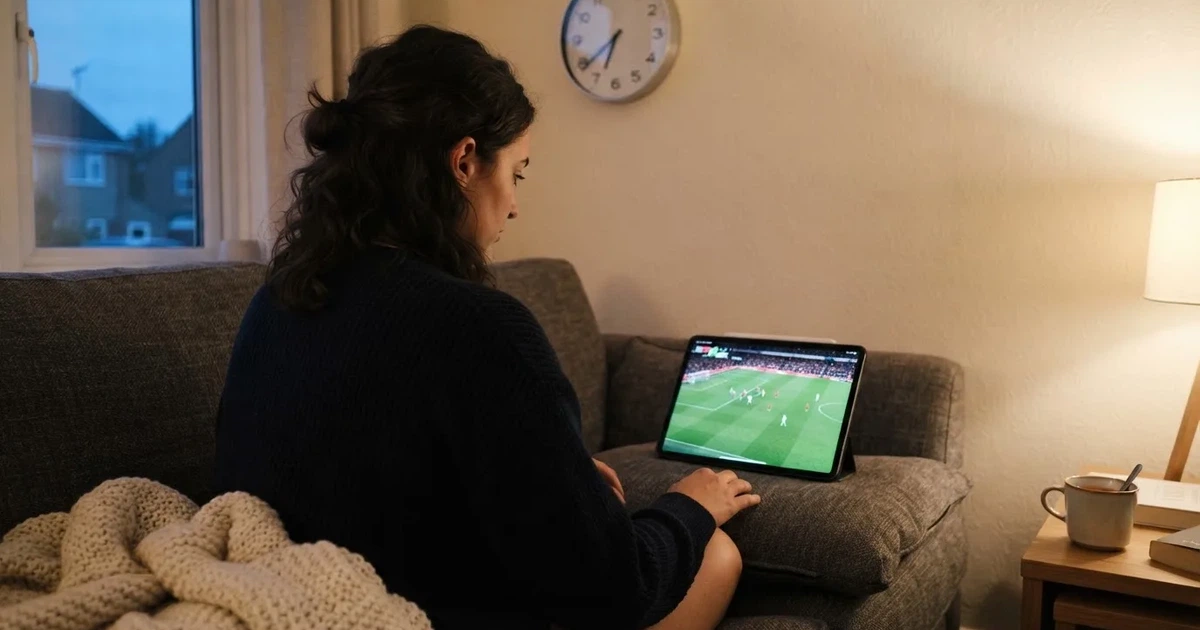
A free bet looks like the bookmaker paying you to open an account. It is the bookmaker paying you to behave in a particular way afterwards. The £10 in bonus credit arrives after you have placed a qualifying bet with real money at a price the operator chooses, must usually be turned over at least once on markets the operator narrows further, expires before most people get round to it, and almost never returns the stake alongside a win. Read past the headline number once and the picture changes.
This page walks through what British bookmakers actually offer in 2026, why the offer usually costs the bettor more than the headline suggests, and which operators are worth a look once the small print is laid out. The angle is cost: not which bonus is biggest, but what each one demands, what it leaves in the punter’s pocket, and where the offer quietly disappears.
Safer gambling sits ahead of any offer
Before the comparison, a word that the marketing tends to bury. A free bet cannot be claimed without an account, and an account at any of the operators named below means a fully verified identity, a linked payment method, and enrolment in GAMSTOP, the national online self-exclusion scheme that every GB-licensed remote operator must be part of. The same applies to free-bet credit as to a cash deposit, so the offer is not a way to test a site without paperwork.
The Gambling Commission’s rules around safer gambling have moved several steps forward in the last two years. A financial vulnerability check applies once a customer’s net deposits across a 30-day rolling window exceed £150: that check is a public-record look at county court judgments and the like, not an income or credit-reference check. A staged plan for fuller financial risk assessments has been announced and is not in force at a known start date. Deposit limits on a fixed time frame are mandatory; the second phase of those changes was postponed to 30 September 2026, so what currently applies is the first phase alone.
A bonus does not exempt the customer from any of this. Wagering requirements on bonuses are capped at 10x — a £10 bonus can require at most £100 of qualifying bets — and an offer that mixes product types (bet on football to get free spins, say) is banned altogether, in force since 19 January 2026. Whether the 10x cap also covers free bets that carry no wagering condition is not yet established.
If a sign-up offer feels like a reason to open more accounts than you can manage, the right response is to step away from the offer. GamCare runs the National Gambling Helpline, GambleAware signposts to local services, the NHS runs gambling clinics, and Gamblers Anonymous runs meetings. Every operator named in the comparison below offers deposit limits, time-outs and self-exclusion from inside the account, and GAMSTOP covers all of them at once.
What a free bet actually is, and what it is not
A free bet is a token the bookmaker credits to a customer’s account, redeemable on a bet at the prices the operator lists. The stake that bought the token is not your money; the winnings — when there are winnings — arrive without that stake attached. Place a £10 free bet at 5.00 and a winning return is £40 of profit, not £50. Most operators state this in the small print; Sky Bet does so explicitly, as do Betway and Coral. A few promotions stake-return the stake in specific conditions, but the default across British free bets in 2026 is “stake not returned”.

Two phrases need separating from the start. A free bet is a one-shot token. A bet credit or bonus credit behaves similarly but may carry a wagering requirement: a turnover multiple the customer must hit before any winnings become withdrawable. The 10x cap mentioned above is the ceiling on those wagering requirements, applied to bonuses. The free bets without a wagering condition — Sky Bet’s, for example — sit outside that cap, which is why they tend to look more generous on the surface.
A risk-free bet is a different creature. The name is the marketing department’s. In practice a stake-matched refund usually arrives as a free bet, not as cash, and the free bet carries its own conditions: minimum odds, an expiry window, sometimes a market restriction. Calling the original bet “risk-free” because the refund is a token with its own rules is the classic rebranding of a conditional offer.
A price boost or enhanced odds raises the price of a named selection, sometimes only for new customers on their first bet. The boost is the headline, but minimum stake, maximum stake and maximum extra winnings sit behind it. A bet boost that pays an extra tenner on a winning acca is a small extra on a bet the punter was already going to place; a one-off sign-up boost can be large but ties up the first wager at a price the operator dictates.
A no-deposit free bet — a token credited for opening an account, without a deposit — exists at some operators and is rare on the British market in 2026 because the verification regime makes anonymous play impossible. Where one is found, it carries the same stake-not-returned caveat as any other free bet, plus an expiry measured in days rather than weeks.
How a free bet is priced
Worked out as an average rather than a single result, a free bet’s real value depends on three things: the odds the punter takes it at, the stake, and the margin the bookmaker holds on that market. A simple two-way market priced at 1.90 / 1.90 carries a payout share of 95.0% and a margin of 5.0% (with an overround of 5.26%). The expected value of a £10 free bet on that market, with the stake not returned, sits in the band of £5 to £6, depending on whether the market is read on its own or against the bookmaker’s wider book. The same £10 at shorter odds (say 1.50 / 1.50) is worth less, because the expected winnings shrink faster than the stake cost the punter already absorbed; at longer odds (say 4.00) the headline gets bigger and the average does too, but variance does as well.
The honest summary: a £10 free bet that expires in seven days, returns no stake and must be used on a market the operator has chosen is worth roughly half its face value as an average. A free bet on a market the punter would have bet on anyway, at odds the punter would have taken, returns more of its face value than a free bet spent on a marginal price. A free bet that expires tomorrow is worth less than the same free bet that expires in a month, because the punter has less room to wait for the right match.
Bonuses and free bets — what the small print actually says
The cluster the marketing copy rarely quotes. The figures below are from each operator’s own published terms as of late 2026.
Betway. Free bets carry 1x wagering at odds of 1.75 (roughly 7/10 fractional) or higher — light by industry standards and well inside the 10x cap. The welcome offer for UK and Irish customers is four £10 tokens credited after settlement of a first £10 bet at minimum odds of 2.0 (1/1), with a 7-day expiry and debit-card deposits only. Minimum deposit £10.
Sky Bet. Free bets expire 30 days after crediting and may be used only on single or each-way markets, not multiples, with virtuals excluded. They are non-withdrawable and the stake does not return with the winnings. The 30-day window is unusually long among the offers in this comparison.
Coral. The “Get £40 in Free Bets when you bet £20” offer requires a qualifying bet at minimum odds of 2.0 (1/1), with £40 in free bets issued within seven days and expiring seven days after issue. The qualifying deposit and bet must use a debit card or instant bank transfer. Alongside the welcome offer, Coral runs a daily Reward Shaker, an Odds Booster across hundreds of markets, and free-to-play games such as Football Super Series with a £10,000 jackpot.
Unibet. Same headline shape as Coral — £40 in free bets for a £20 qualifying bet at minimum odds of 2.0 (1/1), seven-day expiry, debit card or instant bank transfer for the qualifying deposit — under a different licence holder. Unibet adds Best Odds Guaranteed on horse racing, Bet Builder, Uniboosts, live streaming and Cash Out across thousands of markets.
Spreadex. The £60-in-free-bets offer on a £10 fixed-odds bet is among the larger headline figures in this comparison; the fixed-odds leg must be at minimum odds of 1/2 (1.50 decimal), and the qualifying bet must be placed within 28 days of opening the account. Spreadex is dual-regulated — by the Gambling Commission for fixed-odds betting and by the FCA for spread betting — and the spread side carries the standard spread-betting warning that losses can exceed deposits.
BoyleSports. £20 in free bets for a £10 qualifying bet on the UK sports welcome offer (€30 in free bets for a €10 qualifying bet for Irish customers). The acca insurance that sits alongside requires opt-in, a £5 minimum stake, minimum odds of 1/2, and pays up to £20 back as a free bet that expires in seven days; the acca loyalty scheme wants five settled legs at minimum combined odds of 3/1.
Dabble. “Bet £10, Get £10 in Free Bets” on the first deposit, minimum odds applying, seven-day expiry and stake not returned. Smaller in nominal terms than the headline offers above, but the qualifying bar is also lower.
10bet. A 100% bonus up to £50 for UK sign-ups — a different shape again, because the headline figure scales with the deposit and is governed by the 10x wagering cap. Daily free bets and free spins also run alongside.
bet365. The welcome offer sits behind a login, but the product suite is the wedge: Bet Builder+ combining markets from one event into a single bet, Super Boosts, Winnings Boosts on Bet Builders and selected singles, and daily Bet Boosts. The free-bet token itself follows the standard stake-not-returned pattern.
William Hill. The Football Acca Boost runs until 30 May 2027 — a long horizon — covering accas of two or more legs with each selection at 1/5 or bigger. Boosts scale from 3% on a double to 200% on twenty legs, with a maximum boost of £10,000 per online bet.
Kwiff. The Supercharge feature can boost a bet’s odds mid-wager — from 2/1 to 20/1, for example — on singles or multiples across any sport, an unusual mechanism rather than a fixed welcome bonus. Kwiff also runs Bet Builder, Bet Builder+ (combining builders from different games) and a guaranteed weekend acca boost.
Paddy Power. The welcome offer sits behind the login, but the feature set is rich: Bet Builder+, Popular Bet Builders, Super Sub (a bet rolls over to the replacement if a selected player is substituted), expanded Win More markets and player and acca statistics.
QuinnBet. Free bets valid for seven days from credit, usable on any market at minimum odds of 1/2 (1.50 decimal), maximum odds of 50/1, straight accumulators allowed but Trixies, Patents and Yankees excluded.
Smarkets / SBK. The sportsbook arm of the exchange offers £60 in free bets on a £20 first-deposit bet at minimum odds of 3.0, settled within 48 hours, with Cash Out, Bet Builder and live horse racing streams alongside.
DAZN Bet. Cash Out, Bet Builder, daily bet boosts and in-play betting — with the standard caveat that cash-out availability is not guaranteed and bets stand if it is unavailable. Deposit, loss and wagering limits are available as safer-gambling tools.
A note on what is missing: wagering requirements, minimum qualifying odds, expiry windows and stake-return rules differ from offer to offer, and the audit a punter runs against any headline is the operator’s own terms page on the day the offer is claimed. The figures above are the published terms as of the dates shown; operators revise.
What the 10x wagering cap actually changes
Before the cap came in, an aggressive offer could demand 50x or more — a £10 bonus tied to £500 of qualifying bets, often at minimum odds the punter had to be lucky to find. The 10x ceiling flattens the worst end of the market, and the ban on mixed-product offers kills the “bet on football to get free spins” structure that used to draw punters into the casino. A bonus at 10x is still a serious undertaking on a small bankroll: at a £10 stake per qualifying bet, a £10 bonus needs ten bets to clear. The bookmaker’s margin bites on each one, which is why a tight bankroll does not love bonuses as much as the marketing would have it.
Payments, payout speed and what to check before depositing
The mechanics matter because the qualifying bet, the deposit and the eventual withdrawal all happen through it. Three points deserve attention before any offer is claimed.
Method eligibility. Coral’s and Unibet’s welcome offers both require the qualifying deposit and bet to use a debit card or instant bank transfer — Apple Pay, Google Pay and e-wallets do not qualify. Betway’s welcome offer is debit-card-only. e-Wallets like PayPal and Revolut are accepted for general funding at most operators but usually do not unlock the headline free bet. LiveScore Bet accepts debit cards, Apple Pay, PayPal, Pay by Bank (Open Banking) and Revolut Pay generally. Fitzdares accepts Apple Pay, Mastercard and Visa. Spreadex and 10bet list their qualifying methods in the offer terms.
Withdrawal times. Fitzdares processes Visa withdrawals on the same day, with Mastercard withdrawals up to 48 hours. Coral, Unibet, bet365 and William Hill all run fast-tracked Visa and bank-transfer rails once the customer is verified. The verification itself can take 24 to 72 hours on a first withdrawal — a Know-Your-Customer check on the source of funds at higher spend is normal, and not a sign of trouble. The pace slows if a deposit method cannot be reused for withdrawal (a common Apple Pay and Google Pay restriction); the workaround is a bank transfer back to a named account.
Credit cards. Credit cards are banned for gambling in Great Britain, including credit-card-funded e-wallet top-ups. The rule sits on top of every payment method at every operator named below, and a “credit card” on a bookmaker site means a debit card with a credit-card logo on it, not a credit account.
Cryptocurrency. No specific rule confirms whether cryptocurrency deposits are accepted at GB-licensed operators. The safer assumption is that they are not, because the verification regime and the British named-account rule work against anonymous crypto rails.
A small caveat on payment terms
Operators revise their payment pages more often than they revise their welcome offers. A punter who has read the welcome offer is halfway through qualifying for it and discovers the deposit method that qualified them is not eligible for a withdrawal has a real problem. The check is the cashier page on the day of the deposit, not the marketing page on the day of the welcome.
Predictions and strategy — what the punter controls
A prediction is not a tip. Nobody can name the winner of a Premier League match in advance with the consistency a free-bet promotion implies, and a tipster who claims otherwise is selling past performance in a market where past performance does not predict future results. What the punter controls is the price, the stake, the market, and the timing — and a free bet amplifies all four in directions that are not always friendly.
Where the offer’s value actually lives
The expected value of a free bet is highest when the punter already has a view at a price the operator is offering, and lowest when the punter chases a marginal price to use the token before expiry. A £10 free bet at 5.00 on a match the punter has done no work on is worth less than the same free bet at 3.00 on a match the punter has read into. The punter who treats the token as a reason to bet rather than as a reason to wait loses a chunk of its value before the bet is placed.
Three rules that follow from the maths and from the small print:
- Markets with a low bookmaker margin give more of every unit back to the bettor. Football match result markets in major leagues typically carry margins of 5–8%; outright tournament markets run higher, often well into double digits. The free bet is worth more on the lower-margin side.
- Minimum odds in the qualifying bet force a stake onto a market the punter might not have chosen. Reading the minimum-odds clause before placing the first wager, not after, is the single most useful habit the small print enables.
- Expiry windows are short at most operators. Sky Bet’s 30 days is generous; Coral’s, Unibet’s, BoyleSports’ and QuinnBet’s seven days is the rule. A punter who has two offers running at once has to find two qualifying bets inside a week, on markets that suit each offer. The punter who forgets one loses the token.
What a “free bets today” pitch usually means
Tournament dates drive the betting calendar, with high-profile events like Cheltenham, the Grand National and Royal Ascot creating peaks in interest. Many operators align their marketing to these periods, so players often find a concentration of sign-up deals and price boosts during the racing season. The value in these offers lies in their timing: a free bet is most useful when it supports a wager the player was already planning to place. Treating a promotion as a reason to wait for the right event, rather than a reason to bet impulsively, is the best way to extract value.
A “free football bets for today” pitch that arrives without a market for the punter to back is not a value proposition; it is a marketing email. The free bet token, once credited, sits in the account until the punter chooses a match, a market and a price. A pitch that tries to push the punter onto a market before the punter has done the work is the marketing telling the punter to do exactly the wrong thing.
Sports and tournaments the offers are usually built around
The British free-bet market clusters around four windows, and a punter who plans around them collects more value than one who chases offers daily.
Horse racing. Cheltenham, the Grand National and Royal Ascot drive a meaningful share of the headline offers each year. Best Odds Guaranteed is the long-running concession that pays the bigger of the price taken and the starting price; most major bookmakers offer it on UK and Irish racing. A free bet used on a BOG race has an interesting property: the punter takes an early price, the SP drifts in, and the punter is paid at the higher of the two. The free bet itself is unaffected, because the stake is not returned either way.
Football. The Premier League carries the heaviest betting turnover and the widest market coverage; the Championship and the Scottish Premiership carry thinner books and higher margins. World Cup and European Championship tournaments compress a season’s worth of betting into a few weeks, and the bookmaker margin on outright markets rises sharply during them. A punter planning around a major tournament has weeks rather than days to use a free bet; that changes which offer to claim.
Other sports. Tennis, darts, golf, US sports, rugby league and union, cricket and boxing all carry active markets at most operators. Bet Builders and same-game multis are densest on football and on US sports. A free bet spent on a niche market at a thin bookmaker gives more of its value back to the operator as margin, which is the same arithmetic as above in a different costume.
A practical sequence for a tournament offer
When a Cheltenham offer lands, the punter who already has a shortlist is faster than the punter who is starting from scratch. The order is: read the offer terms on the operator’s site, not the marketing email; check the qualifying method and minimum odds; check the free-bet expiry and the markets the token is restricted to; place the qualifying bet at the cheapest price that clears the minimum odds on a market the punter would have bet on anyway; redeem the free bet on a different market to the qualifying bet, at a price the punter has worked through. A second bookmaker’s offer runs alongside; the same sequence, with that operator’s terms, gives two free bets rather than one.
The sequence matters because the offer’s headline number is rarely the offer’s actual value. A punter who treats the offer as a checklist, claiming and forgetting, collects less than the punter who treats it as a small project with a deadline.
The comparison — ten British bookmakers, side by side
The table below pairs each operator’s licence holder on the Commission’s public register with what that operator’s own terms state on the offer side as of late 2026. Where a column would be a copy of the marketing email, it has been cut.
| Brand | Gambling Commission remote licence and licence holder | What the operator’s own terms say on the offer |
|---|---|---|
| Betway | 039372-R-319367-029 · Betway Limited | £40 in four £10 free bet tokens after a first £10 bet at minimum odds of 2.0; 7-day expiry; debit card deposits only; 1x wagering at 1.75+ on free bets |
| Spreadex | 008835-R-104580-022 · Spreadex Limited | £60 in free bets for a £10 fixed-odds bet; fixed-odds leg at minimum 1/2; 28 days to qualify; spread-betting side FCA-regulated, losses can exceed deposit |
| Fitzdares | 000400-R-103839-030 · Fitzdares Limited | Premium bookmaker with Apple Pay, Mastercard and Visa; Visa withdrawals usually same-day, Mastercard up to 48 hours; offer specifics in app |
| Swifty Sports | 058957-R-334734-006 · Swifty Global (UK) Ltd | Best Odds Guaranteed, Cash Out, daily price boosts, live streaming, in-play betting; Bet Builder listed as coming soon |
| London Bet | 066162-R-340278-004 · Thistle Bet Limited | App published by Thistle Bet Limited, UK-licensed and regulated; 17+ App Store age rating; offer specifics behind login |
| DragonBet | 064908-R-339041-003 · DragonBet Ltd | Price boosts on horse racing, football and rugby; will try to match or beat prices seen elsewhere |
| BoyleSports | 039469-R-319383-025 · Boylesports Enterprise | £20 in free bets for a £10 qualifying bet (UK); €30 in free bets for a €10 qualifying bet (Ireland); Acca Insurance to £20 back as a free bet, 7-day expiry |
| Paddy Power | 039439-R-319330-013 · PPB Counterparty Services Limited | Bet Builder+, Popular Bet Builders, Super Sub, expanded Win More markets, player and acca stats; offer specifics behind login |
| LiveScore Bet | 056859-R-332720-005 · LiveScore Betting and Gaming (Gibraltar) Limited | Debit cards (Visa, Mastercard), Apple Pay, PayPal, Pay by Bank, Revolut Pay accepted; offer specifics behind login |
| 10bet | 043173-R-322899-023 · Blue Star Planet Limited | 100% bonus up to £50 for UK sign-ups plus daily free bets and free spins; offer subject to the 10x wagering cap |
The columns carry what each operator states, not what the marketing email says they state. Where a bonus cell sets out a wagering requirement that looks lighter than the cap, that is what the operator publishes; where the cell says “behind login”, the offer’s headline figure is gated on the operator’s site, not on this page. No row is “the best”. The point of the comparison is that ten different offers carry ten different combinations of qualifying odds, expiry, stake return and eligible markets, and the right offer for a particular punter depends on which combination that punter can actually clear.
A note on the licence numbers. The Commission publishes a public register searchable by business name, trading name, domain or account number. The numbers in the table above are the account numbers as published; the long-form “remote licence” identifier is the same licence recorded under both formats. A punter who wants to check a licence visits the Commission’s register and types the account number, the trading name or the domain — and the licence type comes back as “remote general betting standard (real events)” for every operator in the table. There is no “best” licence tier in this group.
Why Coral and Unibet look the same
Two brands, two licence holders, two operators on the Commission’s public register — and the welcome offer reads identically, with one phrase (“notably re-positioning for the customer”) appearing on both sites. That is not a glitch; it is the licensing reality that several brands run under one licence holder, and that operators copy structures that work. The Coral licence holder is different from the Unibet licence holder (one is part of a large UK-facing group, the other is Platinum Gaming Limited of Gibraltar), but the offer terms sit in a tight cluster and the difference for the punter is the feature set and the in-app experience rather than the headline number.
Betway versus the rest on wagering weight
Betway’s 1x wagering at 1.75 is the lightest wagering load in the comparison. The free bet token does not need to be turned over many times before winnings become withdrawable, which gives the punter more of the token’s value back. Compare with a 5x wagering bonus, where every £10 of bonus needs £50 of qualifying bets before the winnings clear, and the difference in expected cost is not small. The trade-off is that Betway’s bonus is split into four £10 tokens rather than one larger one, which means four separate qualifying events rather than one.
Spreadex and the FCA layer
Spreadex is the only operator in the comparison that is regulated by two UK regulators — the Gambling Commission for fixed-odds betting and the FCA for spread betting. The welcome offer lives on the fixed-odds side; the spread-betting product sits on the FCA side and carries the standard warning that losses can exceed deposits. A punter who claims the free bet and then drifts into the spread-betting side without reading the spread-betting terms has crossed into a product with different mechanics and different consumer protections.
The smaller brands — what they offer in return for thinner marketing
Swifty Sports, London Bet, DragonBet and Fitzdares carry smaller marketing footprints than the major brands, but each holds a Commission licence and offers a feature set the punter should weigh against the welcome offer. Swifty Sports runs Best Odds Guaranteed, Cash Out, daily price boosts, live streaming and in-play betting; Bet Builder is listed as coming soon. DragonBet advertises price boosts across horse racing, football and rugby, with a stated willingness to match or beat competitor prices. Fitzdares is a premium bookmaker with fast Visa withdrawals. London Bet is published by Thistle Bet Limited and carries a 17+ App Store age rating. The welcome offer at each is gated behind the login in the app; the offer’s terms on deposit method, qualifying odds and expiry are the kind of detail a punter should check on the operator’s site on the day of the claim.
Legality and regulation in Great Britain
The Gambling Commission licenses every commercial bookmaker that takes bets from customers in Great Britain under the Gambling Act 2005, with the Gambling (Licensing and Advertising) Act 2014 extending the regime to operators based anywhere in the world whose remote facilities are used in Great Britain. A Curaçao, Maltese or Gibraltar licence is not a substitute, because the Commission licences the point of consumption, not the point of incorporation. Northern Ireland is outside the 2005 Act and has its own older law; a GB licence does not regulate Northern Ireland, and an offer valid in England, Scotland and Wales is not necessarily valid there.
Licence categories relevant to this page are remote general betting standard (real events) for fixed-odds sports books, remote general betting standard (virtual events) for virtual-sports products, remote general betting limited for narrower offerings, and remote betting intermediary for exchanges. Every operator named in the comparison above holds a remote general betting standard (real events) licence. The Commission’s public register, searchable by business name, trading name, domain or account number, is the whole test of whether a brand holds a licence; the register’s access date matters whenever a count is quoted.
Player-protection rules: GAMSTOP is the national multi-operator online self-exclusion scheme and a mandatory licence condition for online operators; minimum age 18; name, address and date of birth are verified before any customer can deposit or gamble (since 7 May 2019), and the verification covers bonus credit as well as cash deposits. Credit cards are banned for gambling in Great Britain since 14 April 2020, including credit-card-funded e-wallet top-ups. Advertising sits under the CAP and BCAP Codes enforced by the ASA, with social-responsibility rules on who may appear in marketing and restrictions on what may be advertised before the 9pm watershed.
Promotion rules in force since 19 January 2026: wagering requirements on bonuses are capped at 10x, and mixed-product offers — for example, bet on football to receive free casino spins — are banned. Whether the cap applies to free bets with no wagering condition, and any cap on the money value of a bonus, are not yet established. A £10 bonus at 50x wagering required £500 of qualifying bets under the old rules; under the cap it requires at most £100.
General Betting Duty is the operator’s tax on gross profits, currently 15% for most bets; from 1 April 2027 a new remote betting rate of 25% applies within it, while remote bets on UK horse racing, self-service betting terminal bets, pool betting and in-person betting stay at 15%. The customer pays no tax on betting winnings; this is general information, not tax advice, and a professional gambler should ask HMRC or an adviser. Spread betting has its own rates (3% financial, 10% other).
Offshore: providing gambling facilities in Great Britain without the licence the Act requires is an offence aimed at the operator, not the customer. A punter who bets on an unlicensed site loses British consumer protections — no GAMSTOP coverage, no Commission complaints route, no approved dispute-resolution body, no British redress if funds are withheld, and none of the bonus-cap, vulnerability-check or verification rules that bind GB-licensed operators. Enforcement is disruption, not blocking: cease-and-desist notices, search-engine referrals, work with registrars, hosts and payment providers; the Commission has been given, or is about to receive, court-order DNS blocking powers, but no ISP blocking regime is in operation. The honest framing: licensed = checks, limits, GAMSTOP, the bonus cap and a complaints route, but also verification before the first bet; unlicensed = none of those protections, no British redress and possible loss of funds. Neither is “the safe choice” by default.
How a free bet is priced, worked through
The arithmetic belongs to this page. A free bet whose stake is not returned has a realisable value that is smaller than its face value, and the difference comes from the odds the punter takes and the margin the bookmaker holds on the chosen market.
For a free bet whose stake is not paid back, value = free-bet amount × (odds − 1) ÷ odds × payout share of that market. The stake is not refunded on a win, so what the punter takes home is the profit only; the payout share of the market is the proportion of every unit bet on the market that comes back to bettors in aggregate, with the rest kept by the bookmaker as margin.
Take an illustrative two-way market priced at 1.90 / 1.90 in decimal (9/10 fractional). The payout share of that market, on the assumption the prices are perfectly balanced, is 1 ÷ (1/1.90 + 1/1.90), which simplifies to 1.90 ÷ 2 ≈ 0.95, or 95% of every unit bet. The margin is 1 − 0.95 = 0.05, or 5% — a tight book by industry standards.
A £10 free bet at 1.90 on that market has an expected value of £10 × (1.90 − 1) ÷ 1.90 × 0.95 ≈ £10 × 0.474 × 0.95 ≈ £4.50. A £10 free bet at 2.50 on the same market has an expected value of £10 × (2.50 − 1) ÷ 2.50 × 0.95 ≈ £10 × 0.6 × 0.95 ≈ £5.70. A £10 free bet at 5.00 has an expected value of £10 × (5.00 − 1) ÷ 5.00 × 0.95 ≈ £10 × 0.8 × 0.95 ≈ £7.60.
The headline figure is £10; the expected value is the figure in the second column; the gap is the cost of the bookmaker’s terms and the market’s margin, taken together. The honest summary: a £10 free bet on a low-margin market, redeemed at odds the punter has chosen with care, returns an average of roughly half its face value. A £10 free bet on a high-margin market, redeemed at marginal odds, returns less. The range across reasonable choices sits in a band of roughly £4.50 to £7.50 for a £10 token, before any restrictions on eligible markets cut it further.
A note on what this calculation does not do. It averages across many possible outcomes; it does not predict any single bet’s result. A punter who takes the free bet at 5.00 and the selection wins will collect £40 of profit and feel the calculation was pessimistic; a punter who takes it at 1.90 and the selection loses will have collected £0 and feel it was optimistic. The figure is a long-run average, not a guarantee for the bet in front of the punter.
Frequently asked questions
What are free bets?
A free bet is a token a bookmaker credits to a customer’s account after a qualifying condition has been met — usually a first deposit and a first bet at a stated minimum price. The token can be spent on a bet at the operator’s listed prices; the stake is rarely paid back alongside a win. Free bets expire, often within seven days, and the eligible markets are usually restricted.
How do free bets work in practice?
The operator credits the token to the account once the qualifying bet has settled. The punter then places a bet using the token as the stake, at odds and on a market the operator permits. A winning bet pays the profit only, because the stake was a token and not the punter’s cash; the winnings become withdrawable subject to any further wagering requirement attached to the bonus. Read the terms on the day of the claim — expiry, eligible markets, minimum odds and stake-return rules differ from operator to operator.
What is the maximum wagering requirement on a betting bonus in Great Britain?
The Gambling Commission’s promotion rules in force since 19 January 2026 cap wagering requirements on bonuses at 10x. A £10 bonus can require at most £100 of qualifying bets before winnings become withdrawable. The cap sits alongside a ban on mixed-product offers that combine betting with casino, bingo or lottery play. Whether the 10x ceiling also covers free bets that carry no wagering condition is not established in the published rules.
What do minimum odds and the wagering requirement mean in a sign-up offer?
Minimum odds are the lowest price the qualifying bet must be taken at for the offer to unlock — Coral’s and Unibet’s welcome offers require 2.0 (1/1 fractional), Betway’s 2.0, Spreadex’s 1/2 (1.50 decimal). The wagering requirement is the turnover the bonus itself must clear before winnings become withdrawable — Betway’s 1x at 1.75+ on free bets is light; an older 50x bonus would have needed £500 of qualifying bets on a £10 token. Both rules shape the offer’s real cost.
Why is the stake of a free bet not paid back with the winnings?
Because the stake was a token, not the punter’s cash. The bookmaker’s cost on the free bet is the winnings only, and the offer is priced around that. A free bet that returned the stake on a win would cost the bookmaker the stake as well, which would push the headline number down. The rule applies across most British free bets in 2026; a small number of promotions stake-return in specific conditions, and the operator’s terms state which.
A short note on reading the next page
A free-bet offer is the operator’s first handshake. The handshake tells the punter something about the operator — how generous the bonus is, how light the wagering, how generous the expiry — but it does not tell the punter whether the operator pays out quickly, settles disputes fairly or holds a clean licence. The Commission’s public register tells the last of those. The cashier page tells the second. The small print tells the first. The rest is the punter’s own discipline.
Free bets & offers – Best betting exchange
Content created by the «Best betting exchange» team
