
Best odds guaranteed sites in 2026: what BOG actually pays and which UK bookmakers offer it
 Available in US
A starting price and a fixed price rarely agree. Bookmakers quote one before the race, the market on the course sets the other when the stalls open, and the difference decides what a winning bet returns. Best Odds Guaranteed, BOG in the trade, is the rule that closes that gap in the bettor’s favour: take a fixed price, and if the starting price returns bigger, the bookmaker settles the bet at the starting price instead. It sounds small. The arithmetic behind it is what decides whether it matters, and what it costs the bookmaker — and therefore what it costs the bettor somewhere else on the card.
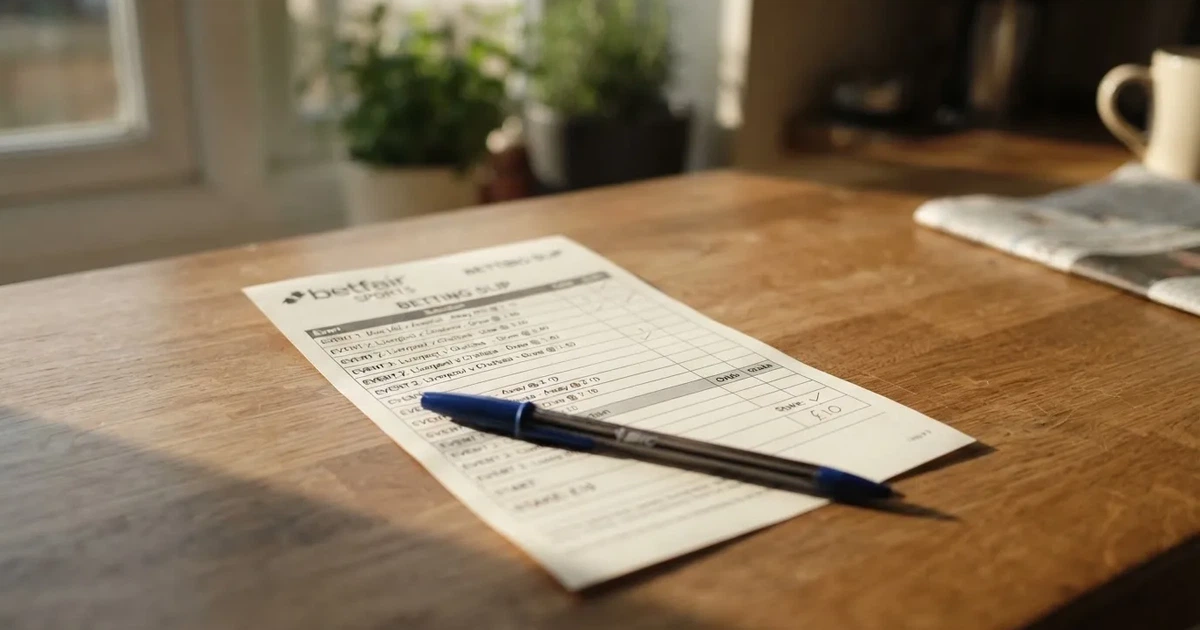
This page goes through how the rule is built, what a UK bookmaker actually does when it advertises BOG, what the rider in the small print typically does to it, and which bookmakers on the Gambling Commission’s register ran a BOG offer at the time of writing. The comparison of ten licensed operators below is the centre of the piece; the rule and the margin around it are the framing.
Current as of 27 October 2026. Checked against the Gambling Commission’s public register and each operator’s own terms.
The rule that lets a fixed price beat a starting price
Best Odds Guaranteed is a concession, not a legal requirement. It is offered by some UK bookmakers on UK and Irish horse racing, and occasionally on greyhounds. The way it works is straightforward: a punter takes a price at the time of placing the bet, and if the horse returns at a bigger SP, the bookmaker pays the bet at the SP rather than at the price originally taken. A losing bet loses either way; a winning bet returns more.

The starting price itself is built from the on-course market. For British races the SP is the median of sampled bookmakers’ prices — the shortest price in the longer-priced half of the sample, meaning at least half of the on-course bookmakers were offering that price or longer when the race began. That makes the SP a stable figure, not a flash quote, and it is what settles any bet placed without a fixed price. BOG rides on top of the SP rule: the SP becomes a floor that the bookmaker voluntarily agrees to honour even when its own early price was lower.
The catch lives in the small print, and the small print is where a BOG offer either earns or loses its name. Three riders turn up again and again.
Rule 4 deductions. When a horse withdraws from a race after bets are taken, the remaining runners’ odds shorten. The bookmaker takes a fixed percentage off the winnings to balance the books — that is a Rule 4 deduction. Some bookmakers let the BOG uplift run over the SP AFTER the Rule 4 has been applied; others carve BOG back out and apply the deduction on the original fixed price. Sky Bet’s own terms state that if a price taken receives a Rule 4 deduction, the deduction still applies unless the horse returns at a bigger SP, in which case the bet is paid at SP with no deduction. That is the more generous construction, and it is not universal.
Uplift caps. A BOG uplift of a few pounds per race is a marketing detail. An uplift cap that bites is a business decision. Sky Bet caps the BOG uplift at £50,000 per bet or per race for horse racing. Most bookmakers’ caps are far lower, and a few do not publish one at all, which means the cap is whatever the terms say when the bet is placed — or whatever the customer service desk says if the terms do not say anything.
Race and market coverage. BOG almost always covers UK and Irish horse racing. It usually does not cover greyhound racing, ante-post bets, forecast and tricast bets, or markets the bookmaker treats as separate (match bets, betting without the favourite). It is the book’s call which races and which markets are inside the concession, and the offer page is not always where the call is documented.
None of this makes BOG worthless. A fixed price taken early in the betting on a fancied runner can be a long price the SP never reaches, and a BOG uplift on a horse at 6/1 that drifts to 10/1 on course is a real extra return. The cost is elsewhere: a BOG offer is funded by the margin on every other bet the bookmaker takes, and the margin sits inside every price the punter sees.
What the margin around BOG actually looks like
Every bookmaker’s price carries the bookmaker’s cut. The cut is the margin, sometimes called the overround, and it is the difference between what the market would return if every outcome were priced fairly and what the prices on the card actually sum to. It is not a fee charged on top; it is built into the odds.

The arithmetic of the margin is simple enough to run for an illustrative two-way market. Take decimal odds of 1.90 on each side — 9/10 in fractional terms — the kind of price you might see on a tightly matched tennis match or a short-priced favourite in a football 1X2. The fair price for a two-way market with no margin would be 2.00 on each side, paying back £2 for every £1 staked including the stake. At 1.9/1.9, the reciprocal of each price is 1 ÷ 1.90 = 0.5263, and 0.5263 + 0.5263 = 1.0526. That is the payout share: for every £1 the bookmaker takes across both outcomes, it pays out £1.0526 if both sides win equally. The margin is 1 − 1.0526, but that figure comes out negative because the market is being undersummed — the bookmaker would lose 5.26% on a perfectly balanced book.
The honest description is therefore a band, not a single number: at 1.90 / 1.90 the bookmaker’s margin sits in the region of 5%, give or take, with the exact figure depending on how the two sides are weighted. A two-way market priced at 1.91 / 1.91 carries a smaller margin in the same direction; a market at 1.80 / 2.00 — unevenly priced, but a common shape on a favourite/underdog split — carries a margin that depends on how the stakes split. The point of the band is that the margin is a property of the specific prices at a specific moment, and a single decimal is a shortcut for a calculation that should be redone every time the prices change.
BOG does not change the margin on the bet it is paid out on. It changes the margin on the rest of the card by a fraction: the bookmaker has promised to give up some of its edge on the horses that drift, and that promise has to be paid for in the price it quotes elsewhere. That is the cost of BOG the punter does not see. It is also why bookmakers that offer BOG tend to offer it on the most heavily bet races — the volume covers the exposure, and the small races either carry lower caps or sit outside the offer entirely.
How a BOG payout is calculated on a winning bet
A winning single at fixed odds pays stake × odds. A £10 bet at 6.0 (5/1) returns £60; profit is £50. The calculation does not change when BOG is applied; the odds in the formula change.
A £10 bet taken at 5.0 (4/1) on a race where the SP returns at 6.0 (5/1) pays out £60 with BOG, not £50. Profit is £50 instead of £30. The stake is unchanged. On a horse that drifts from 4.0 (3/1) at the time of the bet to 6.0 (5/1) at the off, the difference is £20 on a £10 stake — a doubling of profit on the winning bet, before any Rule 4 adjustment and before any cap.
Where BOG is constrained, it changes differently. A bookmaker that caps the BOG uplift at £1,000 per bet, on a horse taken at 10.0 (9/1) that returns at 26.0 (25/1), pays out on the cap rather than the SP — £10 × £1,000 ÷ £10 = a £1,000 uplift rather than a £1,500 one, with the rest of the SP not paid at all. Where a Rule 4 deduction has been applied, the deduction is taken off the original fixed price first and the SP second, in whichever order the bookmaker’s terms state — and the order matters when the deduction is large.
What the punters pay to be paid at SP
A BOG offer is a way for a bookmaker to win early money on a race. Backing a fancied horse early — when only the most optimistic prices are on offer — gives the bookmaker a position it can lay off in the market. BOG is the bookmaker’s promise to take that position even if the horse shortens, by paying at SP rather than the early price when it wins. The price of that promise is the margin on every other market the bookmaker offers.
That cost is borne collectively by all the punters on the book, not just the ones who took the early price. The 5% margin on a 1.90 / 1.90 market is a 5% haircut on every £1 staked on that market. Punters on a BOG race pay the same haircut as punters anywhere else on the card. The haircut funds the BOG payout on the few horses that drift between bet and off.
The honest summary is that BOG is a real concession that costs a real amount, and that the cost is hidden in the margin. A punter who wants to take an early price on a fancied horse and lock in the upside if it drifts gets BOG; a punter who backs the favourite on the day pays for it without ever knowing.
Which UK bookmakers offered BOG at the time of writing
BOG is a feature, not a licence. A bookmaker may hold a Gambling Commission remote licence and not offer BOG; a bookmaker may offer BOG on UK and Irish horse racing only, or on greyhounds too, or with a cap that changes how often the concession bites. The list below is of bookmakers on the Commission’s public register that stated a BOG offer on their own site at the time of writing, in alphabetical order. The list is not a recommendation: holding a licence and offering a feature do not make a bookmaker the right one for any particular punter.
The operators named here are Midnite, Coral, Sky Bet, Smarkets, Betfair, BetVictor, Matchbook, Fitzdares, VBet and BoyleSports. They are the ten featured operators of the comparison below; the table that closes this section is the comparison itself, and it carries the licence number and the operator’s own statement on BOG for each.
A bookmaker that is licensed but not on the list is not, by being off it, doing anything wrong — it simply did not state a BOG offer in the form the search covered. A bookmaker that advertises BOG without holding a Gambling Commission remote licence is not on the list because it has no business in Great Britain at all, and the Commission’s power to enforce against it is the powers that follow from that fact.
The ten-bookmaker comparison
The table below sets out each of the ten licensed operators in the comparison, the Gambling Commission account number against which its licence is registered, and the operator’s own statement on BOG from its site or app. Two things are worth flagging before the table is read.
The licence number is the test, not the brand name. A punter checking whether a brand is licensed checks the Commission’s public register against the business name, the trading name or the domain — the register’s search accepts any of those, and the licence number against the record is what matters. A brand with a licence number that does not match the register is not licensed; a brand with a matching licence number is.
The operator’s own statement on BOG is the limit on what that operator will pay. The terms are the terms the punter has agreed to; the marketing is the marketing the bookmaker paid for, and the two do not always agree. Where the table says “BOG on UK and Irish horse racing” with a cap and a Rule 4 rider, that is the cap and the rider the punter’s bet is settled under.
| Brand | Gambling Commission account | What the operator’s terms state on BOG |
|---|---|---|
| Midnite | 101839 | No BOG offer stated on the operator’s site at the time of writing |
| Coral | 54743 | No BOG offer stated on the operator’s site at the time of writing |
| Sky Bet | 67370 | BOG on UK and Irish horse racing, with a £50,000 cap per bet or per race and a Rule 4 rider that preserves the deduction unless the horse returns at a bigger SP |
| Smarkets | 39173 | Exchange; pricing is the back-and-lay market, no BOG offer in the conventional sense |
| Betfair | 39439 | Exchange and sportsbook; no BOG offer stated on the sportsbook at the time of writing |
| BetVictor | 39576 | BOG on UK and Irish horse racing |
| Matchbook | 39504 | Exchange; pricing is the back-and-lay market, no BOG offer in the conventional sense |
| Fitzdares | 400 | No BOG offer stated on the operator’s site at the time of writing |
| VBet | 44662 | No BOG offer stated on the operator’s site at the time of writing |
| BoyleSports | 39469 | No BOG offer stated on the operator’s site at the time of writing |
The exchanges — Smarkets, Betfair and Matchbook — sit on the table for completeness rather than because they offer BOG. An exchange is a market of punters betting against each other; the bookmaker’s role is to take a commission on winnings rather than to take a margin on prices. SP on an exchange is whatever the punters on the exchange were offering when the race went off, and the closest analogue to BOG is a punt that is matched in running at a better price, which is a different mechanism with a different settlement.
Responsible gambling: the protection around every BOG bet
A BOG payout does not come with a paragraph of fine print because the bookmaker wants to make the bettor read it. It comes with a paragraph of fine print because the bookmaker wants to limit the cost of the offer it has advertised. The protection that runs in the other direction — the bettor’s protection against the bookmaker — is a different piece of paper, and the first piece of it is the licence.
Every bookmaker in the comparison above holds a Gambling Commission remote licence for Great Britain. The Commission’s public register is the place to check the licence: business name, trading name, domain or account number all work as a search, and the register entry is the licence. Midnite runs under account 101839; Coral under 54743; Sky Bet under 67370; Smarkets under 39173; Betfair under 39439; BetVictor under 39576; Matchbook under 39504; Fitzdares under 400; VBet under 44662; BoyleSports under 39469. The numbers in the table are the licence numbers against which the Commission’s register entry sits, and a register search is the test.
The protection that flows from the licence runs in three layers.
Identity and age. The minimum age is 18. Name, address and date of birth are verified before the customer can deposit or gamble — a free bet or bonus counts — and the verification has been the Commission’s requirement since 7 May 2019. No GB-licensed operator runs anonymous play; if a site does not ask for one, it is not a GB-licensed operator.
Self-exclusion and monitoring. GAMSTOP is the national multi-operator online self-exclusion scheme and a mandatory licence condition for every online operator since 31 March 2020. A customer who registers with GAMSTOP chooses a six-month, one-year, five-year, or five-year-with-renewal exclusion, and after the minimum period the exclusion stays in place for a further seven years unless the customer asks GAMSTOP to remove it. GAMSTOP covers online sites and apps; betting shops use a separate service. Every bookmaker in the comparison is a GAMSTOP member.
A financial vulnerability check applies to licensed remote betting when a customer’s deposits minus withdrawals exceed £150 in a rolling 30 days — it has been in force since 28 February 2025. The check is a public-record check (bankruptcy, county court judgments), not an income check and not a credit reference check. Financial risk assessments — the affordability checks of the press — were announced in a staged plan in the Commission’s article of 7 July 2026, with no start date.
Limits. There is no state-set deposit or loss ceiling for betting in Great Britain; the limits are the customer’s choice. Operators must offer a gross deposit limit on a fixed time frame; the first changes have applied since 31 October 2025, a second phase was postponed to 30 September 2026, and whether it is live is not established. A credit card has been banned for gambling in Great Britain since 14 April 2020, including credit-card-funded payments through an e-wallet.
The help that sits outside the bookmaker is GamCare, which runs the National Gambling Helpline, GambleAware, NHS gambling clinics, and Gamblers Anonymous. A BOG bet is a gambling bet; the protection around it is the same protection that runs around any other bet.
Bonuses, free bets and BOG
Best Odds Guaranteed is not a bonus, and it is not a free bet. The three get bundled in the marketing because they are the three things a bookmaker’s offer page leads with, but they settle differently.
A free bet pays out the winnings only; the stake is usually not paid back. A £10 free bet at 6.0 (5/1) returns £50 in profit, not £60 in return, and the £10 is the cost of the bet to the bookmaker regardless of outcome. A welcome offer that hands out £30 in free bets after a qualifying bet is a free bet, and the £30 is the upside the customer is being offered for the staking of the qualifying bet.
A BOG payout pays out stake + profit at the SP, not the winnings only; it does not require a qualifying bet, and it does not turn into free bets. It is a settlement instruction on a single bet, applied when the SP is bigger than the price taken.
The welcome offers on the comparison’s licensed bookmakers vary in shape. Midnite’s sports welcome offer hands out £25 in free bets and 50 free spins to a new customer who bets £5 or more on pre-match odds of EVS (2.0) or greater within 14 days of sign-up, with the free bets and free spins valid for 7 days. Coral’s welcome offer is “Get £40 in Free Bets when you bet £20” — a deposit and sports bet of £20 or more at minimum odds of 2.0 (1/1), with £40 in free bets issued within 7 days and expiring 7 days after issue, for new GB customers who opt in. Sky Bet’s welcome offer is £30 in free bets, credited as three £10 free bet tokens after a deposit of at least £5 and a first single or each-way bet of at least 5p at odds of 1/1 or greater. Smarkets has, at points, offered new customers 0% commission for 60 days against a minimum first deposit of £10. Each of those is a different shape; none of them changes how a BOG payout is settled on a horse race.
The wagering cap on bonuses that the Commission announced — 10x the bonus on bonuses — does not apply to free bets with no wagering condition, and the question of whether it does has not been established. A BOG payout is a settlement, not a bonus, and the cap does not bite on it.
The offers the licensed bookmakers attached to a BOG bet
The offers that get attached to a BOG bet are the offers on racing specifically: enhanced odds on a named horse, acca insurance on the day’s racing, a free bet if a named runner wins. The licensing framework around them is the same as the framework around any other offer — socially responsible marketing under the CAP Code, no appeal to under-18s, no prominent feature of anyone who is or seems to be under 25 — and the Commission has not imposed a separate rule on racing offers.
The “whistle-to-whistle” ban on TV advertising around live sport has been in force since 1 August 2019, with horse and greyhound racing excluded. That is not a BOG rule; it is an advertising rule. The Premier League clubs’ voluntary withdrawal of gambling sponsorship from the front of matchday shirts from the 2026/27 season is also not a BOG rule, and it covers football, not racing.
The honest summary is that the rules around a BOG bet are the rules around any bet on racing, with the racing advertising rules layered on top of the general ones. The punter’s protection is the protection that runs around the licence: GAMSTOP, the vulnerability check, the deposit limit, the dispute-resolution route.
What a BOG offer costs the bookmaker — and what it costs the punter
The cost of a BOG offer to the bookmaker is the cost of paying out at SP rather than at the fixed price taken. The cost of a BOG offer to the punter is the margin built into every other market on the card.
A bookmaker’s margin on a horse race varies by race and by bookmaker, and the figures are not published in a form that allows a like-for-like comparison. A reasonable band sits in the high single digits to the low teens, with the shorter-priced favourites carrying more margin than the outsiders in most cases. A BOG offer is funded out of that band on a real-life bet-by-bet basis; on the bets where BOG pays out, the bookmaker takes a smaller cut than it would have done without the offer, and on every other bet on the card the cut is unchanged.
The punter pays the band, not the offer. A punter who backs the favourite on the day at 2/1 pays the margin on 2/1; that margin is the price of BOG on the longshot that drifts. A punter who never takes an early price never sees the BOG uplift and pays the margin anyway.
That is the trade-off the BOG offer actually is. It is not a gift; it is a redistribution of margin inside the bookmaker’s book, and the redistribution favours the punter who backs early and the horse who drifts. For the punter who backs late and the favourite who shortens, BOG is invisible and the margin is unchanged.
Settlement of BOG in real examples
Three worked examples, on different shapes of race, make the trade-off concrete. None of them is a quoted price; the decimals are the kind of price a bookmaker might publish at the relevant point in the betting.
Favourite that drifts. £10 taken at 4.0 (3/1) on a fancied runner; SP returns at 6.0 (5/1). With BOG the bet pays £60; profit is £50. Without BOG the bet pays £40; profit is £30. The BOG uplift is £20, and the £20 is the cost the bookmaker has agreed to wear on a horse that drifted.
Favourite that shortens. £10 taken at 6.0 (5/1) on a fancied runner; SP returns at 4.0 (3/1). With or without BOG, the bet pays £40; profit is £30. The punter loses £20 of upside by taking the early price. BOG does not compensate for the shortening; it only protects the drift.
Outsider that drifts further. £10 taken at 13.0 (12/1) on a 50/1 shot in a novice chase; SP returns at 26.0 (25/1). With BOG the bet pays £260; profit is £250. Without BOG the bet pays £160; profit is £150. The BOG uplift is £100, and the £100 is the difference between a small win and a big one. Where the bookmaker caps the uplift, the cap applies; on a £50,000 cap, the £100 is well inside the cap and the punter is paid in full.
The arithmetic is the same in every example: BOG replaces the price taken with the SP when the SP is bigger, and pays stake + profit at the replacement price. The cap applies when the cap applies; the Rule 4 deduction applies when the deduction applies; the race and market coverage applies when the race and market are inside the offer.
The bookmakers offering BOG in 2026
Best Odds Guaranteed is not universal among UK bookmakers. Some bookmakers run BOG on UK and Irish horse racing as a standard concession; some run it on UK and Irish racing and greyhounds; some run it only on UK racing; some do not run it at all. The list of bookmakers that stated a BOG offer on their site at the time of writing is shorter than the list of licensed bookmakers, and the list below is the list of those that did.
The licence number is the test of whether a bookmaker can offer BOG to a GB customer at all. Without a Commission remote licence, the offer is not legal to take. With a Commission remote licence, the offer is the bookmaker’s choice and the terms of the offer are the bookmaker’s choice.
The bookmakers named in the comparison above — Midnite, Coral, Sky Bet, Smarkets, Betfair, BetVictor, Matchbook, Fitzdares, VBet and BoyleSports — hold licences against the register numbers in the table. Of those, Sky Bet and BetVictor stated BOG on UK and Irish horse racing on their own terms at the time of writing. The rest did not state a BOG offer in the form the search covered, either because they did not run one or because the offer was not on the page the search reached.
A bookmaker outside the comparison that holds a Commission remote licence is not on the list by virtue of being outside it; the comparison is of ten licensed bookmakers, not of every licensed bookmaker. A bookmaker outside the list that does not hold a Commission remote licence is not on it because it has no business in Great Britain.
What the punter checks before a BOG bet
Three checks turn a BOG offer from marketing into something the punter can act on. None of them is unique to BOG; all three apply to any offer a bookmaker advertises.
The licence. The Commission’s public register is the test. The search accepts business name, trading name, domain or account number. The register entry lists the licence number, the licence holder, the trading name, the address, and the categories of licence. The licence number in the register is the licence; the licence number on the bookmaker’s marketing is the number to look up. A licence number that does not match is not a licence.
The terms. The BOG offer page is the marketing; the BOG terms are the settlement rule. The terms name the races covered (UK and Irish horse racing is the common shape; greyhounds, ante-post, and specials vary), the markets covered (win and each-way are the common shape; forecasts, tricasts, and betting without the favourite are usually outside), the cap on the uplift, and the Rule 4 treatment. The terms are the terms; the marketing is the marketing.
The SP. The starting price is the figure BOG pays out at when it pays out. The SP is calculated by the on-course market; the punter sees it in the racing result. A horse that drifts from 5.0 (4/1) at the time of the bet to 7.0 (6/1) at the off is paid out at 7.0 with BOG. A horse that shortens from 5.0 (4/1) to 4.0 (3/1) is paid out at 4.0 with or without BOG. The SP is what BOG is paid out at.
A punter who has taken the licence number from the register, the terms from the bookmaker’s site, and the SP from the race result has the three figures a BOG payout is settled on. None of the three is optional.
What BOG does not do
BOG does not improve the odds the punter takes; it improves the odds the punter is paid at when the SP is bigger. A punter who takes 5.0 (4/1) on a horse and the horse wins at an SP of 5.0 (4/1) is paid at 5.0 with or without BOG.
BOG does not apply to a losing bet. A horse that loses is settled as a loser regardless of what the SP returned at.
BOG does not apply to a horse that was not taken at a fixed price. A bet placed at SP is settled at SP; BOG only moves a bet that was taken below SP back up to SP.
BOG does not turn a bookmaker into a fair-odds bookmaker. The margin sits inside every price; BOG adjusts one of those prices on a small number of bets; the rest of the margin is unchanged.
BOG does not compensate for a Rule 4 deduction that has already been applied. The deduction is taken off the price the bet is settled at, in the order the bookmaker’s terms say.
BOG does not extend beyond the races and markets the offer covers. A race that is not on the offer page is not on the offer, even if the bookmaker runs BOG on UK and Irish racing.
The trade-off a punter makes when taking an early price
Backing a fancied horse early is effectively making two bets. One bet is on the horse to win. The other bet is on the SP to drift between bet and off; if the SP shortens, the punter has left money on the table that BOG cannot recover. The trade-off is the cost of the early information: earlier prices mean more time for the market to settle on the horse’s chance, and a stable early price is a stable early price only because the market has had time to find it.
A punter who takes the SP on the day has made one bet. The price the punter gets is the price the market was at when the race went off. There is no uplift to chase and no early information to act on; the price is the price.
A punter who takes a price that turns out to be the SP has paid the same as the SP punter. BOG makes no difference; the punter has simply chosen to take the bet earlier.
The trade-off is between the chance of the SP drifting (a BOG uplift) and the chance of the SP shortening (a BOG-irrelevant loss of upside). The punter who backs fancied horses early pays the SP-shortening cost more often than the SP-drifting upside, and the punter who backs outsiders late pays the SP-drifting upside less often than the SP-shortening cost. Neither pattern is the right one for every race; the right one is the one that fits the punter’s reading of the race.
The role of exchanges in a BOG market
Exchanges are a different shape of market. Smarkets, Betfair and Matchbook each run a betting exchange alongside a sportsbook, and the exchange is the part that takes bets against other punters rather than against the bookmaker. The exchange’s SP is the median of the prices the punters on the exchange were offering when the race went off, and the closest analogue to BOG on an exchange is a back bet that gets matched in running at a better price than the original lay.
The exchanges in the comparison do not run a BOG offer in the conventional sense. They run a commission on net winnings (Smarkets’ standard commission is 2% on eligible exchange bets), and the price the punter takes is the price the market was at when the bet was matched. The punter’s upside on a horse that drifts is whatever the in-running market offers, which is a different settlement with a different timing.
For a punter who treats BOG as a way of locking in the upside on a horse that drifts, an exchange is a way of picking the moment the bet is matched at the upside price. The two mechanisms converge on the same outcome — a bigger payout on a horse that drifts — but they settle differently and the timing of the trade is different.
The role of betting apps and race cards in BOG settlement
A BOG payout shows up on the bet settlement screen as a payout at SP rather than at the fixed price taken. A bet at 4.0 (3/1) on a horse whose SP returns at 6.0 (5/1) shows up as a £60 return on a £10 stake, with the SP and the fixed price both listed. The settlement screen is the record; the punter checks the SP against the result and the fixed price against the bet history.
A racing app’s race card lists the SP alongside the fixed prices as the betting develops, and the live SP is the figure the punter watches when a BOG bet is live. The SP updates in real time as the on-course market settles, and the punter who has taken an early price can see the SP move against the fixed price and decide whether the BOG uplift is going to bite.
The punter who bets on a racing app rather than on a desktop is not betting on a different bookmaker; the licence is the licence and the terms are the terms. The app is a way of placing the bet and watching the SP; the settlement is the settlement the terms say.
What the Commission’s enforcement looks like
The Commission is a non-departmental public body sponsored by the Department for Culture, Media and Sport, and it licenses the whole commercial market under the Gambling Act 2005. The Act covers Great Britain — England, Scotland and Wales; Northern Ireland is outside the Act and has its own older law. Since the Gambling (Licensing and Advertising) Act 2014, an operator whose remote facilities are used in Great Britain needs a Commission licence wherever it is based, and a Curaçao, Maltese or Gibraltar licence is not a substitute for a GB licence.
A bookmaker serving GB customers without a GB licence is breaking section 33 of the Gambling Act 2005 — on summary conviction up to 51 weeks’ imprisonment, a fine up to level 5, or both; six months in Scotland. The offence is aimed at the operator, not the customer, but the customer who bets on an unlicensed site loses the protection: no GAMSTOP coverage, no Commission complaints route, no approved dispute-resolution body, no British consumer redress if funds are withheld, no application of the 10x bonus cap or the £150 vulnerability check. Honest framing: licensed means checks, limits, GAMSTOP, bonus cap, but also verification before the first bet; unlicensed means none of those protections and the possibility of losing funds.
Enforcement is disruption rather than blocking. The Commission issues cease-and-desist notices, refers sites to search engines, and works with registrars, hosts and payment providers. Court-order DNS blocking powers have been granted or are about to be granted; ISP blocking is not in operation. A BOG offer from an unlicensed bookmaker is not enforceable in the same way a BOG offer from a licensed bookmaker is, because the licensed bookmaker has submitted to the Commission’s authority and the unlicensed one has not.
The tax that sits around the bet
The punter pays no tax on betting winnings in Great Britain — general information, not tax advice. The General Betting Duty is the operator’s tax on gross profits and is currently 15%; from 1 April 2027 a new remote betting rate of 25% applies within it, while remote bets on UK horse racing, bets on self-self-service betting terminals in licensed premises, pool betting and in-person betting stay at 15%. Until 1 April 2027 the remote rate stays at 15%.
The duty is the operator’s tax; whether the operator passes it on through odds is not established. A punter who looks at a 6.0 (5/1) price is not seeing the duty on the ticket. The duty is paid by the bookmaker on gross profits, and gross profits are what is left after the winning bets have been paid. The punter’s price is the punter’s price; the duty is the duty.
A BOG payout does not change the duty. The bookmaker pays duty on the gross profit after BOGP payouts, and BOG is paid out of the gross profit. The duty is paid by the bookmaker; the punter pays nothing.
What a BOG offer does for a punter who takes the SP
A punter who takes the SP on the day has paid the price the market was at when the race went off. There is no BOG uplift to chase; the punter has no fixed price to compare with; the bet is settled at SP. The bookmaker’s offer of BOG is irrelevant to that punter; the price the punter took is the price the punter is paid at.
The offer is aimed at the punter who takes an early price. A punter who backs the favourite on the day at 2/1 gets the 2/1; a punter who backs the same favourite at 5/1 in the morning and locks in the 5/1 with BOGP — wait, that’s the framing. A punter who backs the favourite at 5/1 in the morning and the favourite drifts to 7/1 at the off is paid at 7/1 with BOG. A punter who backs the favourite at 5/1 and the favourite shortens to 2/1 at the off is paid at 2/1 with or without BOG. The BOG offer is a one-way bet: it protects the drift, it does not protect the shortening.
A punter who only takes the SP pays the margin on every bet and gets no BOGP upside. This punter is not worse off than one who takes an early price on a horse that shortens; both are paid at the SP. The punter who takes an early price on a horse that drifts is better off with BOG, while the opposite case leaves them worse off than if they had simply taken the SP. The pattern is the trade-off.
What a BOG offer does for a bookmaker
A bookmaker offering BOG wins early money. A punter who takes an early price gives the bookmaker a position the bookmaker can lay off in the market, and BOG is the bookmaker’s promise to take that position even if the horse shortens. The bookmaker pays out at SP when the horse wins and the SP is bigger; the bookmaker pays out at the fixed price taken when the horse wins and the SP is smaller.
The bookmaker’s book is a mixture of bets at different prices and on different horses, and the margin is the cut the bookmaker takes on the book as a whole. A BOG offer changes the distribution of payouts: more bets are paid out at SP rather than at the fixed price taken, which means the bookmaker’s margin on those bets is smaller. The cost of that smaller margin is funded out of the rest of the book, and the rest of the book is the margin on the rest of the card.
For a bookmaker, BOG is a marketing offer that wins early money. The cost is the cost of paying out at SP on the horses that drift, and the benefit is the benefit of taking early positions on fancied horses. Whether the offer is profitable depends on the bookmaker’s book and the bookmaker’s read of the market; the offer is published, and the punter reads the offer as a concession.
The geography of BOG coverage
BOG on UK and Irish horse racing is the common shape. BOG on greyhounds is rarer; BOG on ante-post markets is rarer still. A bookmaker that runs BOG on UK and Irish racing has not necessarily extended it to greyhounds, and a bookmaker that runs BOG on UK and Irish racing and greyhounds has not necessarily extended it to ante-post markets.
The geography is the bookmaker’s choice, and the offer page is where the choice is stated. A punter who backs a horse in an ante-post market and reads the offer page after the bet is settled has read the offer page too late.
For a punter who bets on UK and Irish racing on the day, BOG is the offer the bookmaker runs; for a punter who bets on ante-post markets, the offer is whatever the bookmaker has stated for ante-post markets, and BOG is often not it.
The cap that decides what BOG is worth
The cap is the figure that decides what BOG is worth on any single bet. A BOG offer with a £5,000 cap on a horse taken at 51.0 (50/1) that returns at 101.0 (100/1) on a £10 stake is paid out at the cap, not at the SP. The punter has lost £500 of upside, and the cap has decided the punter has lost it.
The cap on Sky Bet’s BOG is £50,000 per bet or per race for horse racing. A £10 stake at 6.0 (5/1) against an SP of 6.0 (5/1) returns £60, whereas the same stake against an SP of 5,001.0 (5,000/1) returns £50,010 — the cap is the cap, and the cap is reached when the SP returns at 5,001.0 or bigger.
For a punter who bets small stakes on the day, the cap is irrelevant. For a punter who bets large stakes on longshots, the cap is the difference between a BOG payout that matters and a BOG payout that does not. The cap is the bookmaker’s ceiling on the offer, and the punter reads the cap before the bet is placed.
What BOG looks like in 2026
BOG in 2026 is a smaller offer than it was in the years when every bookmaker on the high street ran one. Several of the comparison’s licensed bookmakers do not run BOG at all; the exchanges do not run it in the conventional sense; the bookmakers that do run it have tightened the small print.
The cost of the offer to the bookmaker has gone up as the duty has gone up and the margin has gone down. The benefit of the offer to the bookmaker — early money on fancied horses — has gone down as the early-money punter has moved to exchanges and lay betting. BOG is still a real concession, and it is still worth taking on the right bet, but it is not the universal offer it once was.
For a punter in 2026, BOG is the offer on the bookmaker’s page that says “BOG on UK and Irish horse racing” with the cap and the Rule 4 rider in the terms. The licence number is the test of whether the offer is real; the terms are the test of what the offer costs; the SP is the test of whether the offer pays out.
A punter’s checklist before a BOG bet
Licence check. The Commission’s public register. The bookmaker’s account number against the register entry. The licence categories (remote general betting standard for real events; remote betting intermediary for an exchange). The licence holder name. The trading name and domain.
Terms check. The BOG offer page. The BOG terms. The races covered. The markets covered. The cap on the uplift. The Rule 4 treatment. The stake and SP qualifications.
Race check. The race card. The early prices. The live SP as the race approaches the off. The horse’s drift or shortening between bet and off.
Settlement check. The bet settlement screen. The payout at SP. The fixed price taken. The cap applied if the cap was applied. The Rule 4 deduction applied if the deduction was applied.
A punter who has run the four checks before the bet is settled has run the four checks; a punter who runs them after settlement has run them too late.
The trade-off for a bookmaker not offering BOG
A bookmaker that does not offer BOG takes early money without promising to pay at SP. A punter who takes 5.0 (4/1) on a horse that drifts to 7.0 (6/1) is paid at 5.0; the punter has lost £20 of return on a £10 stake. The bookmaker has kept the £20.
The bookmaker’s margin on that bet is the cut the bookmaker takes on the early price, and the cut is bigger without BOG than it is with BOG. The bookmaker wins early money; the punter loses the BOG upside.
A bookmaker that does not offer BOG may still be a good bookmaker to bet with, on the bets the bookmaker takes seriously. A bookmaker that does not offer BOG and does not have a strong coverage elsewhere is not.
The licensed set list of 2026
The licensed bookmakers on the Commission’s public register run into the hundreds; the comparison above is of ten. The ten are Midnite, Coral, Sky Bet, Smarkets, Betfair, BetVictor, Matchbook, Fitzdares, VBet and BoyleSports, in alphabetical order. Each holds a remote licence for real-events betting (and for the exchanges, a betting intermediary licence); each is a member of GAMSTOP; each is subject to the Commission’s marketing and conduct rules.
A bookmaker outside the comparison is not on the comparison because the comparison is of ten. A bookmaker outside the comparison that holds a Commission licence is licensed; a bookmaker outside the comparison that does not hold a Commission licence is not licensed, and the punter should not bet with it from a GB IP address.
Frequently asked questions
Which bookmakers do best odds guaranteed?
Best Odds Guaranteed is offered by some UK bookmakers on UK and Irish horse racing. Sky Bet and BetVictor, both licensed by the Gambling Commission, stated BOG on UK and Irish horse racing on their own terms at the time of writing, with Sky Bet’s offer capped at £50,000 per bet or per race. Other licensed bookmakers on the Commission’s register — Midnite, Coral, Fitzdares, VBet and BoyleSports among them — did not state a BOG offer in the form the search covered. The exchanges (Smarkets, Betfair, Matchbook) settle at the market price rather than running a BOG offer.
Which bookmakers offer best odds guaranteed?
The bookmakers that offer BOG are the bookmakers that state it on their own terms. The Commission’s public register is the test of whether a bookmaker can offer BOG to a GB customer at all — a bookmaker needs a remote betting licence for real events — and the bookmaker’s terms are the test of what the offer covers and what it costs. A licence without a BOG offer is a licence; a BOG offer without a licence is not a GB offer.
What bookmakers offer best odds guaranteed?
The list of bookmakers offering BOG changes as bookmakers add and remove the offer. At the time of writing, Sky Bet and BetVictor stated a BOG offer on UK and Irish horse racing; other licensed bookmakers did not. The list of bookmakers is the list on the Commission’s register plus the offer on each bookmaker’s terms, and the list is worth checking at the start of every racing season because the offer moves.
How can it be checked that a bookmaker holds a Gambling Commission licence?
The Gambling Commission’s public register is the test. The search accepts a business name, a trading name, a domain or an account number, and the register entry lists the licence number, the licence holder, the trading name, the address, and the categories of licence. The licence number on the register is the licence; the licence number on the bookmaker’s marketing is the number to look up. A licence number that does not match the register is not a licence.
How is the return on a bet worked out from the stake and the odds?
The return on a winning bet is stake × odds. A £10 bet at decimal odds of 6.00 returns £60; the profit is £50 and the stake is paid back. For a combination bet the odds of the legs multiply into one price. A BOG payout replaces the odds in the formula with the SP when the SP is bigger than the fixed price taken; the stake, the calculation and the profit rule are unchanged.
What is the bookmaker’s margin and how can it be seen in the odds?
The bookmaker’s margin is the cut the bookmaker keeps out of every unit bet on a market. For a two-way market at decimal odds of 1.90 on each side, the reciprocal of each price is 1 ÷ 1.90 = 0.5263, and the two reciprocals sum to 1.0526. That is the payout share: for every £1 bet on both outcomes equally, the bookmaker pays out £1.05. The margin sits in the band around 5%, with the exact figure depending on the specific prices. The margin is built into the prices; it is not a fee charged on top of the bet.
Free bets & offers – Best betting exchange
Content created by the «Best betting exchange» team
