
Gaelic football betting odds, the licensed way
 Available in US
Pricing on Gaelic football varies a great deal once you look past the headline numbers. A match winner at 9/5, a total goals line, a handicap, a player market — each carries its own margin, and the licence that lets a British bookmaker take the bet is the same one that bounds what the welcome offer can ask of a new customer. This page walks through the sport, the odds, the markets and the offers as they sit on UK-licensed books in 2026, with the arithmetic done in the open and the cost of every gimmick laid out beside it.

Current as of 27 October 2026 · verified against the UK Gambling Commission’s public register.
The cost of a “free” welcome — what an offer really asks of a new account
Welcome phrases, in the article-language terms of the trade, are the small print. A £30 welcome can ask for £300 of qualifying bets before any winnings from the bonus are withdrawable; a “risk-free” first bet that pays out as a free bet on a loss is the punter paying for the second bet rather than the bookmaker paying for the first. These pages describe what an offer costs, in turnover and in time, before any reader turns over a deposit.
Most licensed bookmakers in Great Britain carry the same core safety kit — identity checks before the first bet, deposit limits in the customer’s hands, GAMSTOP self-exclusion, links to GamCare — but each brand draws its welcome offer differently. The headline number is rarely the headline that matters. A £10 deposit that unlocks four £10 free bets asks the punter for a qualifying sports bet within seven days; a £10 first bet that returns £20 in free bets asks for the same in a different shape; a 100% matched free bet up to £25 asks for the first wager to land between £5 and £25 on a minimum number of selections, each at 3/5 (1.60) or higher.
The mechanics come from the operator’s own terms and the Licence Conditions and Codes of Practice (LCCP) sit above them: from 19 January 2026, wagering requirements on bonuses are capped at 10x (so a £10 bonus at 50x would need £500 of bets; under the cap no more than £100), and mixed-product promotions that ask a punter to bet on football in order to claim casino free spins are out. Those are the floor, not the ceiling, and the floor is what keeps the arithmetic sharp
The licence line that belongs to every brand reviewed here sits in the public register, with the Commission account number that lets a reader check it. The brand review further down this page closes with the page’s own verdict — what an offer costs a punter of a given shape — rather than the marketing line a reader came in with.
Crypto deposits and the licensed route — what holds and what does not
Crypto and anonymity is the seam where the British licensed route and the rest of the market part ways. Identity verification before the first deposit has been a licence condition since 7 May 2019, including for a free bet or bonus, so no licensed operator in Great Britain runs an account without a name, an address and a date of birth matched against a public record. Bitcoin, Ethereum and the rest can sit in a punter’s wallet, but they cannot reach a UK-licensed betting account under a pseudonym.

The licence at the register entry is the only thing that decides this. An operator whose domain accepts the welcome of a customer in Great Britain needs a Commission remote licence, wherever the operator is incorporated — Curaçao, Malta or Gibraltar licences do not stand in for it (Gambling (Licensing and Advertising) Act 2014, sections 33 and 36 of the Gambling Act 2005 as amended). Credit cards are banned for gambling in Great Britain since 14 April 2020 (LCCP condition 6.1.2), including credit-card-funded e-wallet top-ups, so even a punter who wants to layer a crypto deposit through a card-funded wallet is stopped at that step.
The page does not list unlicensed brands, because a brand outside the register leaves the punter outside every protection that the LCCP puts in place: no GAMSTOP cover, no Commission complaints route, no approved dispute-resolution body, no British consumer redress if funds are withheld, and the 10x bonus cap does not bind. The honest framing is licensed-versus-unlicensed rather than anonymous-versus-tracked.
For the punters whose question is whether a GB-licensed book accepts a Bitcoin deposit at all, the page’s data does not establish that — it is the operator’s own deposit page that answers it, and the answer changes between brands and between months.
Bonus shapes, rollover and what is left when the wagering ends
Bonus shapes vary in three ways that decide what they cost a punter: the base the rollover applies to (the bonus alone, or bonus plus deposit), the wagering multiple itself, and the minimum price each qualifying bet has to clear. Each one cuts the value the punter ends up with, and none of them sits in the headline figure.
A rollover of x10 on a £20 bonus asks for £200 of qualifying bets at the minimum price the operator states, before any winnings from the bonus are withdrawable. The market the qualifying bets sit on carries the bookmaker’s margin, which means the punter pays that margin on the way to clearing the offer — the standard expected cost of a bet, applied £200’s worth of times. Under the 10x cap that came in on 19 January 2026, no GB-licensed bonus can ask for more than 10x; before that cap, brands ran offers at 30x, 40x and 50x, and the difference between the old ceiling and the new one is roughly the cost a punter no longer pays at the rollover stage.
A free bet is its own shape. The stake is usually not returned with a win — the punter keeps the winnings, not the winnings plus the free-bet stake — so the headline “£30 free bet” is worth a fraction of £30 on average. The fraction is the free bet’s odds multiplied by the market’s payout share, divided by the odds, on a single-bet free bet; on an accumulator free bet the per-leg price multiplies into one combined price and the same formula applies to the whole. The result is what the offer is worth on average, not what it wins on a given Sunday.
Some offers carry a stake that is returned with a win, which puts them closer to a cash bonus than to a standard free bet. The page describes each offer as the operator’s own terms state it — a cash bonus as a cash bonus, a free bet as a free bet, an acca insurance as an acca insurance, a price boost as a price boost — because each shape carries a different cost.
A deadline sits over all of it: free bets that expire in 7 days are not the same offer as free bets that expire in 30, and a punter who does not get a qualifying bet on in time is the punter who pays the full cost of the offer for nothing back.
Live betting, in-play and cash out — what controls the price
Live betting on Gaelic football is offered by GB bookmakers; the controls are the operator’s licence conditions and customer-protection duties, not a separate statute. There is no statutory cap on stakes or markets in-play, and the bookmaker’s house rules are the rule — the licence binds the brand, the brand’s risk team binds the price.
In-play price moves with the action. A goal (3 points) is worth three times a point (1 point) and since the 2025 rule changes a shot from outside the new 40-metre arc is worth 2 points, so a side going two goals up early has moved the scoreboard by a margin the market had not priced at the throw-in. The bookmaker’s trading desk re-prices continuously and the price the punter sees is the price for the next second, not the price for the next minute.
Cash out is the bookmaker’s offer to settle the bet early at a number the trader sets, and that number moves with the live price. A punter who cashes out takes the bookmaker’s number rather than letting the bet run to its settlement, and the gap between cash-out value and true price is the bookmaker’s cut of the in-play action. Auto cash-out, where the punter sets a trigger and the system closes the bet when the live price crosses it, takes the human timing out of the loop.
Bet Builder (same-game multi) on Gaelic football lets the punter combine markets from one match into one bet — match result, total goals, BTTS, player markets, handicaps — at a combined price the bookmaker sets. The combined price carries the bookmaker’s margin on each leg compounded into one number, and a Bet Builder with four legs at 5% margin apiece carries roughly 19% margin on the combination. Some brands run a “Bet Builder+” that adds in-play construction; others hold the same builder pre-match only.
In-play is the section of the book that takes the most customer-protection regulation. A financial vulnerability check (LCCP condition 3.4.4, in force since 30 August 2024) applies once a customer’s deposits minus withdrawals exceed £150 in a rolling 30 days (since 28 February 2025), and the trigger fires on live markets as readily as on pre-match. The deposit-limit rule sits beside it, and the same financial-controls apply to a live bet as to a Saturday-morning accumulator.
Predictions, form and what a tip really is
Predictions and tips are the part of the page the reader is most likely to come in with a question about and the part where the page draws the line hardest. Nobody has predicted outcomes, because nobody has, and a tip that names a winner is the one piece of advice on this page that can cost a reader real money if it is taken.
The published form behind a tip is what makes it useful or not. League position, head-to-head, recent scores, scoring rate, the venue, the weather, the referee, the panel of injuries — each is a fact a punter can check before placing. The interpretive layer on top of those facts is the tipster’s judgement, and the judgement is the part that is not knowable in advance. A “tip” that names a winner without the underlying form is a sales pitch, not analysis.
Bankroll management is the piece of strategy that holds across every market and every sport. A punter who stakes a fixed percentage of a defined bank on each bet — 1% or 2% per selection — survives the runs that a flat-stake punter does not. The opposite of bankroll management is chasing losses, which is the route that turns a quiet Saturday into a Sunday-morning problem and is the behaviour the safer-gambling tools on a licensed site are designed to catch.
The page does not name winners, predict outcomes or rate form beyond the data research carries. A reader who wants a tip reads the form, sets a stake and takes the price on offer. The arithmetic that follows sits beside that decision, in the open, so a punter can see what the bookmaker’s margin takes out of the bet before the bet is placed.
Markets on a Gaelic football match — what the odds on offer mean
A bookmaker’s odds on a Gaelic football match break into a small set of market families, each with its own margin and its own quirks. The match-result market (a side to win, or the draw if the format allows it) is the headline market and usually the lowest-margin one in the book. The handicap market moves the line by a score and asks the punter to back the adjusted outcome; the totals market offers an over/under on the total scoreboard. The player markets — first goalscorer, anytime goalscorer, total player points — are higher-margin and more variable in pricing.
The decimal form a British punter sees on a UK-licensed site is the same number as the fractional form (a/b) written the other way: 6/5 becomes 2.20, 5/1 becomes 6.00, 11/4 becomes 3.75, evens becomes 2.00. The arithmetic is odds = a ÷ b + 1. A bet of £10 at 6/5 returns £22 (£10 × 2.20 = £22) — £10 stake and £12 winnings — and a bet of £10 at 5/1 returns £60 (£10 × 6.00 = £60), £10 stake and £50 winnings.
The margin is the slice of every pound staked that the bookmaker keeps on average. For a two-way market priced at 1.90 / 1.90 (9/10 each), the payout share is 1 ÷ (1/1.90 + 1/1.90) = 1 ÷ (0.5263 + 0.5263) = 1 ÷ 1.0526 = 0.9500, so the margin is 1 − 0.9500 = 0.0500, or 5.0%. A two-way market priced at 1.85 / 1.85 (17/20 each) gives a payout share of 1 ÷ (1/1.85 + 1/1.85) = 1 ÷ (0.5405 + 0.5405) = 1 ÷ 1.0811 = 0.9250 and a margin of 7.5%. A market priced at 1.95 / 1.95 (19/20 each) gives a payout share of 1 ÷ (1/1.95 + 1/1.95) = 1 ÷ (0.5128 + 0.5128) = 1 ÷ 1.0256 = 0.9750 and a margin of 2.5%. The margin on a real Gaelic football match-winner market depends on the brand and the day, but for the 9/10 each example the figure the page works to is in the region of 5%, and the same at 17/20 each is roughly 7–8%, the same at 19/20 each is in the region of 2–3%. In every case the lower the margin, the better the long-run price for a punter who bets regularly.
An each-way bet is two bets of equal stake: one on the win, one on the place. The place terms — typically a quarter of the win odds for handicaps of a certain size, a fifth for longer fields — are set by the bookmaker. A £10 each-way bet is £20 staked in total: £10 on the win at the full price, £10 on the place at the place fraction. The punter gets a return on either leg without needing the other.
An accumulator — a single bet combining multiple selections, each at its own odds — multiplies the odds of the legs into one price and pays out only if every leg wins. A four-fold at 2.00, 2.00, 2.00, 2.00 carries a combined price of 16.00; a £10 stake returns £160. The combined price carries each leg’s margin compounded, and a four-fold with 5% margin on each leg carries roughly 19% margin on the combination, which is why the headline return on an accumulator looks large but the long-run value to the punter looks smaller than the same stake split across singles.
Spread betting on the same match is a different instrument from fixed odds. The bookmaker quotes a spread (say 8–10 total goals), the punter decides whether the actual total will be higher or lower than the middle of the spread, and the stake is multiplied by the number of points by which the result misses the spread. Losses can exceed the deposit. The Financial Conduct Authority regulates financial spread betting on indexes and currencies; the Gambling Commission regulates sports spread betting in Great Britain, and a separate licence category sits on the register for that activity.
The competitions — what the season looks like from a betting angle
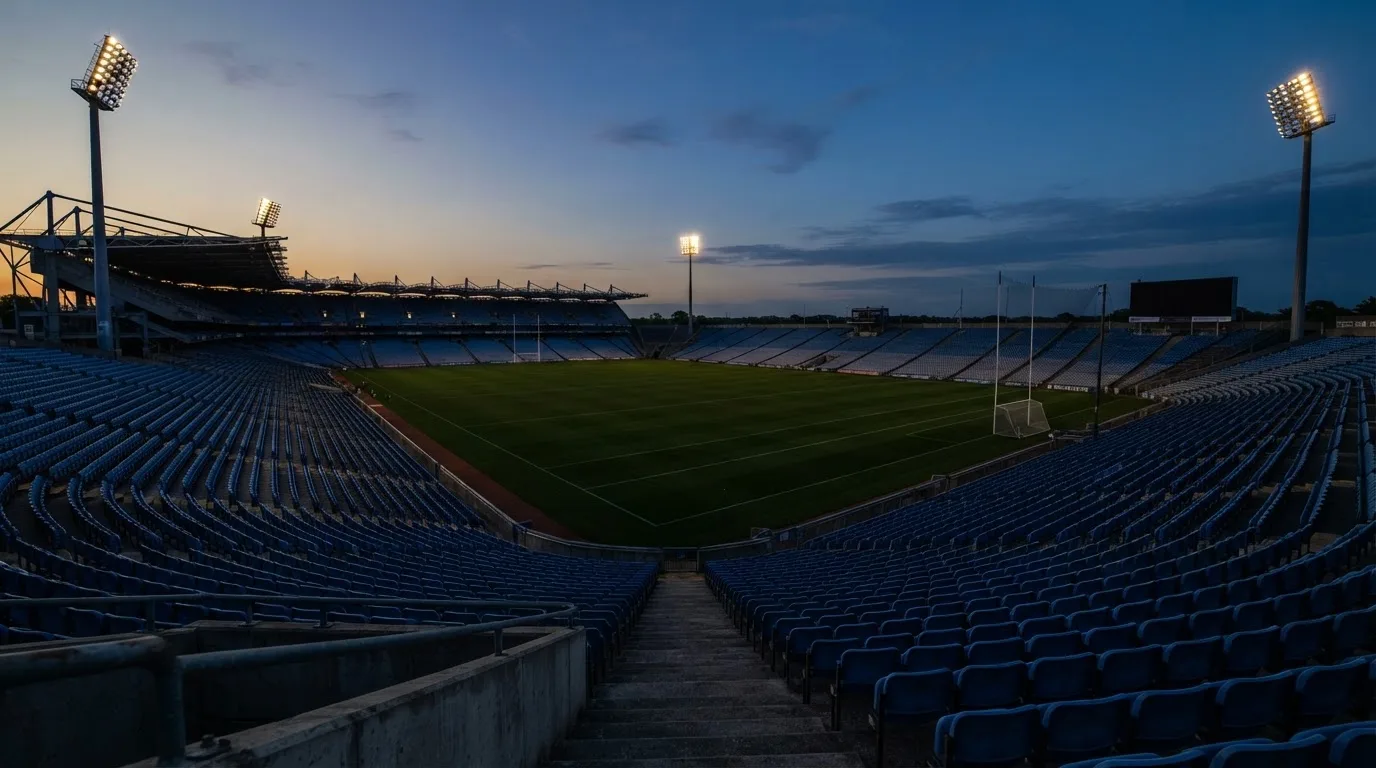
The Gaelic football season runs from January through to late summer, with the league and championship fixtures stacking up across the spring and the All-Ireland Senior Football Championship final closing the inter-county season at Croke Park in Dublin. Senior inter-county matches last 70 minutes (two 35-minute halves); most other adult matches last 60 minutes (two 30-minute halves). The pitch is a rectangular grass surface 130–145 metres long and 80–90 metres wide, so the geometry of the game is a long, wide rectangle rather than the rounded shape an association-football punter is used to.
The championship structure runs the 32 counties of Ireland through a provincial series (Leinster, Munster, Connacht and Ulster) and a qualifiers’ ladder back to an All-Ireland quarter-final and semi-final stage. The final is held at Croke Park, the national ground of the Gaelic Athletic Association (GAA), which governs the sport. Kerry hold the record for most All-Ireland Senior Football Championship titles, with 39, and the 2026 final — played on 26 July 2026 — saw Mayo beat Kerry 1–20 to 1–17 for their fourth title.
The club season sits beneath the inter-county one, with county championships feeding into All-Ireland club series in football and hurling. The All-Ireland Senior Club Football Championship final rounds the year off at Croke Park in mid-January. The club fixtures sit alongside the inter-county ones for most of the calendar year and give the bookmaker a continuous run of matches to price.
A scoring rule that the betting pages do not always spell out sits behind every total-points and handicap market: a goal is worth 3 points and a point is worth 1 point, and since the 2025 rule changes a shot from outside the new 40-metre arc is worth 2 points. A team that scores 1–20 — one goal and twenty points — has 23 points on the scoreboard (1 × 3 + 20 × 1 = 23), and the winning margin in the 2026 final was 6 points (Mayo 1–20 = 23, Kerry 1–17 = 20).
The bookmakers — what each one brings to a Gaelic football price
Ten licensed bookmakers sit below in the order research gives. Each is named by its brand, with its licence line and its current position on the subject of the page. None of the offers is reprinted as a code or as a working link; each is described as the operator’s own terms state it, with the page’s own verdict on what it costs the reader who takes it up.
Ladbrokes
Ladbrokes runs under Gambling Commission remote licence 054743-R-330863-014 (Commission account 54743), held by LC International Limited, with categories on the register for remote general betting standard (real events) and remote betting intermediary. The Ladbrokes Sports Betting App is published by Entain Operations Limited and is rated 4.66 from 101,255 ratings in the GB App Store. As the operator that shares its parent with Coral, Ladbrokes is one of two front-of-shirt brands of the Entain UK stable, and the in-play product and the football market depth sit at the upper end of the GB licensed market. For a Gaelic football punter comparing match-winner pricing across the field, Ladbrokes is a benchmark rather than a discount.
The verdict: Ladbrokes is the brand a punter compares to first when price-shopping the headline match-winner and handicap markets on a Gaelic football game, and the in-play product is deep enough to make the live markets usable. The depth costs the punter nothing extra at the price, and that is the point of the brand.
Paddy Power
Paddy Power runs under Gambling Commission remote licence 039439-R-319330-013 (Commission account 39339), held by PPB Counterparty Services Limited, licensed for remote general betting on real events. The Paddy Power Sports Betting app is published by Paddy Power PLC and covers football, horse racing, boxing, rugby, tennis, golf, darts, snooker and F1. Paddy Power shares its parent with Betfair, the betting exchange, and the price-boost and money-back specials that have defined the brand for two decades run alongside the exchange’s lay markets on the same platform. For a Gaelic football punter who wants the headline price-boost mechanic and a path into the exchange, Paddy Power is the single sign-up that opens both.
The verdict: Paddy Power’s price-boost specials move the headline price on a small stake rather than the long-run price on a stake of any size, and a punter who reads them as such gets what they are paying for. The brand is a path into the exchange for the punter who wants the boost mechanic and the lay market on one platform.
DAZN Bet
DAZN Bet runs under Gambling Commission remote licence 048756-R-327274-019 (Commission account 48756), held by DZBT Limited, which is licensed for standard remote betting. Deposits start at £5 by debit card, Apple Pay, Paysafecard, Trustly and Skrill, and at £20 by PayPal, with no processing fees. The DAZN name sits over the sportsbook from the broadcaster that built its business on combat sports and football, and the football product is the deep one on the platform. For a Gaelic football punter who wants the £5 deposit floor and the spread of e-wallets, DAZN Bet is the low-friction entry.
The verdict: DAZN Bet’s £5 deposit floor is the lowest on the page and the e-wallet spread is the widest, but the platform’s Gaelic football depth sits behind the bigger GB names and a punter chasing the headline price on a championship game will shop the price elsewhere. The brand appeals to the punter who prioritises the low deposit floor over the widest market book.
BetUK
BetUK runs under Gambling Commission remote licence 039198-R-319450-029 (Commission account 39198), held by LeoVegas Gaming PLC, which holds a standard remote betting licence. The sports welcome offer is £10 in free bets when a £10 bet is placed (€30 in free bets for a €10 bet for Irish players), and the welcome offer in the GB App Store framing is a deposit of £10 or more and a sports bet within 7 days of registering, unlocking four £10 free bets (two football accumulators of 4+ selections and two multiples of 2+), valid for 7 days, with opt-in required. BetUK sits in the LeoVegas stable and the casino product runs alongside the sportsbook on the same account.
The verdict: BetUK’s four £10 free bets are split between two football accumulators of 4+ selections and two multiples of 2+, which is a stronger nudge toward accumulators than the headline “four £10 free bets” reads as, and the 7-day window on each is tight. A punter who takes the offer with a Saturday-pile-of-fixtures plan gets value from it; a punter who lets the free bets expire pays for the offer and gets nothing back.
Sporting Index
Sporting Index runs under Gambling Commission remote licence 027343-R-324363-007 (Commission account 44181) — that licence line is the one on the register for the brand’s fixed-odds product, also licensed for standard remote betting. The app offers fixed odds and spread betting, with in-play betting, Bet Builder for football, auto cash-out and Multi-Markets. For a Gaelic football punter who wants the spread-betting instrument on the same platform as the fixed-odds bookmaker, Sporting Index is the only GB-licensed name on the page that offers both. Spread-betting losses can exceed the deposit.
The verdict: Sporting Index’s spread product is the seam on the page, and a punter who knows what a spread bet is and what the loss side looks like gets a second view on the same match from the same platform. The bettor who treats the spread product as a fixed-odds bet pays for the lesson, and the auto cash-out on the fixed-odds side is a defensive tool rather than an offensive one.
BoyleSports
BoyleSports runs under Gambling Commission remote licence 039469-R-319383-025 (Commission account 39469), held by Boylesports Enterprise, which holds a standard remote betting licence. The sports welcome offer for UK players is £20 in free bets when a £10 bet is placed (€30 in free bets for a €10 bet for Irish players). BoyleSports is the Irish bookmaker with the deepest GAA coverage, and the welcome shape matches the GB version at a different stake. For a Gaelic football punter comparing the GAA-specific markets — county championship specials, inter-county prop markets, club All-Ireland series pricing — BoyleSports sits ahead of the British high-street names that took up GAA coverage in the 2020s.
The verdict: BoyleSports is the brand with the deepest GAA-specific market book on the page, and the welcome offer is a clean £10-for-£20 shape that does not ask the punter to navigate accumulator-only free bets. A punter whose betting is GAA-led gets more from BoyleSports than from a GB high-street name.
Lottoland
Lottoland runs under Gambling Commission remote licence 038991-R-319408-020 (Commission account 38991), held by EU Lotto Limited, licensed to offer remote betting. The app combines casino, lottery betting, sports betting and scratchcards. Lottoland sits in the same product category as the GB lottery-betting brands that grew out of the National Lottery’s online launch, and the sportsbook runs alongside a lottery product that lets the punter bet on the outcome of foreign and domestic draws.
The verdict: Lottoland’s sportsbook is a slot in a multi-product app rather than the centre of the app, and the Gaelic football market depth sits behind the bigger names. The brand is for the punter who balances lottery betting with their sports activity, rather than for the dedicated Gaelic football punter.
Octobet
Octobet runs under Gambling Commission remote licence 062545-R-337248-006 (Commission account 62545), held by Octopus Game Limited, which holds the standard remote general betting licence for real events. The sportsbook welcome offer is 50% back as a free bet up to £50, plus a £10 casino bonus for new customers. Octobet is one of the newer brands on the page and the welcome shape asks the punter for a first bet to claim the free-bet refund. For a Gaelic football punter comparing the GB-licensed new-entrant cluster, Octobet is the brand that prices the welcome as a refund rather than a stake match.
The verdict: Octobet’s “50% back as a free bet up to £50” is a refund shape, not a stake-match shape, and a punter who takes it up is staking the first bet in the knowledge that a loss returns up to £50 as a free bet rather than as cash. The free bet is the headline, the first bet is the cost, and the punter who reads the offer that way gets what they pay for.
Kwiff
Kwiff runs under Gambling Commission remote licence 044448-R-323408-017 (Commission account 44448), held by Eaton Gate Gaming Limited, which holds the standard remote general betting licence for real events. The brand describes itself as a trademark operated by Spryme Ltd, and the app has a 17+ App Store age rating. Kwiff’s product mechanic — “supercharged” odds that randomly boost the price a punter sees — is the seam on the brand, and a punter who takes the headline price gets the boosted price on a fraction of bets and the base price on the rest.
The verdict: Kwiff’s supercharged-odds mechanic moves the headline price on a fraction of bets and the base price on the rest, and a punter who treats the boosted price as the price rather than as a probability-weighted bonus gets value from it. The brand appeals to the punter who accepts the random price variance as part of the market experience, rather than for the punter who benchmarks every single odds quote.
Betboro
Betboro runs under Gambling Commission remote licence 044181-R-324363-007 (Commission account 44181), held by Webmedia Development N.V., which holds the standard remote general betting licence for real events. The sports welcome offer is a 100% matched free bet of up to £25 on the first qualifying wager, requiring a debit card deposit of at least £10 and a first bet of £5 to £25 with at least three selections each at 3/5 (1.60) or higher. Betboro’s welcome is the most conditional of the GB-licensed welcomes on the page — three selections, a minimum price per leg, a stake band, a deposit method.
The verdict: Betboro’s 100% matched free bet up to £25 looks like the largest headline figure on the page, but the condition stack — three selections at 3/5 (1.60) each, a £5-to-£25 first bet, a debit-card deposit — narrows the qualifying shape to a treble or larger, and the punter’s first bet is paying the bookmaker’s margin on three legs compounded into one price. A punter who reads the condition stack before staking gets the offer; a punter who reads the headline pays the margin for nothing back.
A landscape view of the ten brands — licence, terms and what each book states
| Brand | Gambling Commission remote licence | Licence holder | Position on the page’s subject |
|---|---|---|---|
| Ladbrokes | 054743-R-330863-014 (54743) | LC International Limited | Deep in-play and price benchmark on headline Gaelic football markets |
| Paddy Power | 039439-R-319330-013 (39439) | PPB Counterparty Services Limited | Price-boost specials and a foot in the Betfair exchange on the same sign-up |
| DAZN Bet | 048756-R-327274-019 (48756) | DZBT Limited | £5 deposit floor and the widest e-wallet spread on the page |
| BetUK | 039198-R-319450-029 (39198) | LeoVegas Gaming PLC | Welcome offers four £10 free bets split between football accumulators and multiples, valid 7 days |
| Sporting Index | 027343-R-308898-011 (27343) | Sporting Index Limited | Fixed-odds and spread betting on the same platform, with auto cash-out on the fixed-odds side |
| BoyleSports | 039469-R-319383-025 (39469) | Boylesports Enterprise | Deepest GAA-specific market book on the page, with a £10-for-£20 welcome |
| Lottoland | 038991-R-319408-020 (38991) | EU Lotto Limited | Sportsbook sits in a multi-product app alongside lottery, casino and scratchcards |
| Octobet | 062545-R-337248-006 (62545) | Octopus Game Limited | Welcome offers 50% back as a free bet up to £50, plus a £10 casino bonus |
| Kwiff | 044448-R-323408-017 (44448) | Eaton Gate Gaming Limited | Supercharged-odds mechanic on top of base pricing, with a 17+ age rating on the app |
| Betboro | 044181-R-324363-007 (44181) | Webmedia Development N.V. | Welcome offers a 100% matched free bet up to £25 on a qualifying treble at 3/5 (1.60) or higher |
The reader checks each licence entry against the Gambling Commission’s public register, which can be searched by business name, trading name, domain or account number and is the whole test of whether a brand holds a licence. Several brands on the page run under one parent (Ladbrokes and Coral under Entain, Paddy Power and Betfair under Flutter, BetUK under LeoVegas) — the licence holder is the parent that owns the licence, the brand is the trading name that appears on the punter’s account.
The arithmetic, in the open — a worked margin on a two-way market
A two-way market priced at 1.90 / 1.90 (9/10 each, decimal 1.90 each) gives a payout share of 1 ÷ (1/1.90 + 1/1.90) = 1 ÷ (0.5263 + 0.5263) = 1 ÷ 1.0526 = 0.9500, and a margin of 1 − 0.9500 = 0.0500, or 5.0%. The same market at 1.85 / 1.85 (17/20 each) gives a margin of roughly 7.5%; at 1.95 / 1.95 (19/20 each) it gives a margin of roughly 2.5%. The band the page works to, on a 9/10-each match-winner market, is roughly 5%, give or take a tick either way depending on the brand and the day, and the same kind of band applies to the headline handicap and total-points markets the bookmaker runs alongside the 1X2.
The punter who prices every selection as the margin on each market compounded — a four-fold at 5% margin on each leg compounded is roughly 19% margin on the combination — sees why the headline return on an accumulator reads larger than the long-run value. The punter who backs a single selection at 9/10 each on a 5% margin market is paying 5p on every pound staked in the long run; the punter who backs a four-fold at 5% per leg is paying roughly 19p on every pound staked in the long run. The difference between the two is the cost of the accumulator, and the punter is paying it on top of the variance the accumulator adds to the bet.
The arithmetic sits beside the offer on the page because the offer’s cost is the arithmetic. A free bet at 5/1 on a market with a 5% margin carries a long-run value of the free-bet amount × (5/1 odds − 1) ÷ odds × market payout share, which lands at roughly 75p on the pound for a single-bet free bet; a free bet at evens on the same market lands at roughly 47p on the pound. The punter who reads the headline “£30 free bet” and treats it as £30 in cash pays for the gap between the two numbers.
The legal frame — what a Gambling Commission licence binds and what it does not
A Gambling Commission licence is a commercial licence to provide betting facilities to customers in Great Britain. The Gambling Act 2005 covers England, Scotland and Wales; Northern Ireland is outside the Act and runs on its own older law, so a GB-licensed operator is licensed for Great Britain and not for Northern Ireland. Since the Gambling (Licensing and Advertising) Act 2014, an operator whose remote facilities are used in Great Britain needs a Commission licence wherever the operator is based (sections 33 and 36 of the 2005 Act as amended); a Curaçao, Maltese or Gibraltar licence does not substitute. There is no state monopoly and no cap on the number of licences.
The licence categories that sit on the register for the brands on this page are remote general betting standard (real events), and on some brands remote betting intermediary (the licence for betting exchanges). The Commission’s public register can be searched by business name, trading name, domain or account number, and is the whole test of who holds a licence. Every GB-licensed online operator takes part in GAMSTOP. No unlicensed brand is reviewed on this page.
Financial spread betting is regulated by the Financial Conduct Authority, not the Commission, and a brand that runs both fixed-odds and spread products — Sporting Index is the brand on this page that does both — carries an FCA licence for the financial product and a Commission licence for the sports spread product. The two licences sit alongside each other on the same platform, and the brand’s terms name which product is which.
Identity verification before the first deposit is a Commission condition since 7 May 2019, including for a free bet or bonus. A punter who registers at a GB-licensed site is asked for name, address and date of birth, and those details are matched against a public record before the first bet is taken. The condition is the same for every brand on this page and the same for every GB-licensed brand that is not on this page.
There is no statutory cap on stakes in sports betting, no state-set deposit or loss ceiling, and no statutory list of permitted markets. The bookmaker sets its own maximum stakes, may restrict customers at its discretion, and may offer or not offer any market under its own licence conditions. The LCCP sits above the bookmaker’s terms and binds both.
Credit cards have been banned for gambling in Great Britain since 14 April 2020 (LCCP condition 6.1.2), including credit-card-funded e-wallet top-ups. Debit cards and bank-based payments are not covered by the ban. The ban sits at the operator, not at the card issuer, so a punter who holds a credit card and a debit card with the same brand can deposit with the debit card and not with the credit.
General Betting Duty is the operator’s tax on gross profits, currently 15%, with a remote rate of 25% coming in on 1 April 2027 for remote bets (UK horse racing, self-service betting terminals, pool betting and in-person betting stay at 15%, per HM Government policy paper of 26 November 2025). The duty sits with the operator and there is no established finding on whether it is passed on through the odds. The player pays no tax on betting winnings in Great Britain — a professional gambler should ask HMRC or an adviser, and this page is general information rather than tax advice.
Advertising is not licensed by the Commission; it runs through the CAP Code (non-broadcast) and BCAP Code (broadcast), enforced by the ASA, alongside the LCCP marketing conditions. The CAP Code section 16 sets the under-25 rule on who may appear in an advertisement, which is not a rule on who may bet. “Whistle-to-whistle” is an industry code rather than law: since 1 August 2019 betting advertisements have not been shown on TV from five minutes before a live sporting event to five minutes after it, before the 9pm watershed, with horse and greyhound racing excluded. The Premier League clubs’ withdrawal of gambling sponsorship from the front of matchday shirts from 2026/27 is voluntary rather than law.
Bonus conditions are capped at 10x wagering since 19 January 2026, and mixed-product promotions that ask a punter to bet on football in order to claim casino free spins are out. The cap is the floor, the offer is the ceiling, and the punter who reads both reads the cost.
Offshore, the loss of protection is the frame rather than the legal claim. A punter who bets with an unlicensed brand gives up GAMSTOP cover, the Commission complaints route, an approved dispute-resolution body, British consumer redress if funds are withheld, the 10x bonus cap and the £150 vulnerability check. Enforcement against an unlicensed brand runs through cease-and-desist notices, search-engine referrals, work with registrars, hosts and payment providers, and court-order DNS blocking powers that the Commission has been given or is about to receive. The honest framing is licensed-versus-unlicensed rather than safe-versus-unsafe.
Safer gambling — what the tools do and what they cost
Identity verification before the first deposit is the floor. Above it sits a stack of customer-protection tools, each a licence condition rather than a brand choice.
Deposit limits sit on every GB-licensed betting account and the punter sets them at the account level: a daily, weekly or monthly gross deposit limit on a fixed time frame, with the first changes under RTS 12 applying since 31 October 2025 and a second phase postponed to 30 September 2026. The punter can lower a limit at any time and the lower limit takes effect immediately; raising a limit takes 24 hours and a confirmation step. There is no state-set ceiling and the limit is the punter’s choice, not the operator’s.
Time-outs are a short break from the account: 24 hours, 48 hours, 7 days or whatever the operator offers. The punter cannot log in or place a bet during the time-out and the time-out cannot be lifted by the punter before it ends. A self-exclusion is the longer version, with a minimum period of six months and options for one year, five years, or five years with auto-renewal; after the minimum period the exclusion stays in place for a further seven years unless the punter asks GAMSTOP to remove it. GAMSTOP is the national multi-operator online self-exclusion scheme and a mandatory licence condition for online operators since 31 March 2020; it covers online sites and apps and the betting shops run a separate service.
A financial vulnerability check (LCCP condition 3.4.4, in force since 30 August 2024) applies to licensed remote betting when a customer’s deposits minus withdrawals exceed £150 in a rolling 30 days (since 28 February 2025): it is a public-record check, not an income check and not a credit reference check. The trigger fires once a punter’s net deposits cross the £150 mark and the operator runs a check on the public record. Financial risk assessments are announced in a staged plan (Commission article of 7 July 2026), with no start date, and the page writes them as “announced, staged, no start date” rather than “in force”.
Help lines and clinics run alongside the operator’s tools. GamCare runs the National Gambling Helpline, GambleAware funds treatment and education, the NHS runs gambling clinics in several regions and Gamblers Anonymous runs peer-support meetings. The page lists them by role rather than by brand, and a punter who wants to use one uses whichever fits.
The tools cost the punter nothing to set and the brand nothing to offer. The cost of a tool the punter does not set is the run that the tool would have caught, and that cost sits with the punter rather than with the operator.
How the odds are quoted, settled and paid
Odds on a GB-licensed book come in two forms. The fractional form (a/b) is the older and still-default presentation on British books: 5/1, 11/4, evens (1/1), 4/6, 1/2. The decimal form is the same number expressed differently: 6.00, 3.75, 2.00, 1.67, 1.50. The conversion is decimal = a ÷ b + 1, and the punter who reads both forms reads the same price.
A bet of £10 at 5/1 (6.00 decimal) returns £60 — £10 stake and £50 winnings. A bet of £10 at 11/4 (3.75 decimal) returns £37.50 — £10 stake and £27.50 winnings. A bet of £10 at evens (2.00 decimal) returns £20 — £10 stake and £10 winnings. A bet of £10 at 4/6 (1.67 decimal) returns £16.70 — £10 stake and £6.70 winnings. A bet of £10 at 1/2 (1.50 decimal) returns £15 — £10 stake and £5 winnings. The return formula is stake × odds and the profit formula is stake × (odds − 1).
A combination bet multiplies the odds of the legs into one price: four selections at 2.00 each combine into 16.00, three at 3.00 each combine into 27.00, five at 1.50 each combine into 7.59. The combined price carries each leg’s margin compounded, and the punter pays that compounded margin on the way to a payout that requires every leg to win.
Settlement is the bookmaker’s call. The result of a Gaelic football match is the score at the end of normal time (70 minutes for senior inter-county, 60 minutes for other adult matches) unless the market specifies otherwise; extra time and replays are separate markets. A market that says “match result” settles on the result at the end of normal time; a market that says “to qualify” settles on the result after extra time and replays. The bookmaker’s settlement rules name the result that counts for each market.
Payment of winnings goes back to the same payment method that funded the deposit, where the operator can route it that way, and to the punter’s bank account otherwise. The punter’s withdrawal is the punter’s withdrawal, and the time it takes depends on the payment method and the operator’s processing window.
A punter’s checklist before placing
Three questions carry a punter through the first bet of the day. Is the bookmaker licensed in Great Britain, and is the licence number on the Commission’s public register? Is the price on offer comparable across at least three books, and is the bookmaker’s margin the lowest the market offers? Is the offer the punter is claiming a free bet, a stake match or a refund, and what does each shape cost in qualifying turnover before any winnings are withdrawable? Each of those questions has an answer the punter can check before the bet is placed, and each of those answers is a number rather than a feeling.
A fourth question sits over all three. Is the stake the punter can afford to lose, and is the deposit limit set at the level that protects the next month? The punter who answers yes to the fourth question and yes to the first three has the bet they are looking for; the punter who answers yes to the first three and no to the fourth is the punter who should not place the bet at all.
Frequently asked questions
How do I bet on Gaelic football?
Open an account with a bookmaker licensed by the Gambling Commission for customers in Great Britain and verify your name, address and date of birth before the first deposit — that check is a licence condition. Choose the match, pick a market (match winner, handicap, total points, BTTS, player market or a Bet Builder combination), enter a stake and confirm the bet. Returns are stake × decimal odds; the bookmaker’s margin sits inside the price.
How can I check a bookmaker holds a Gambling Commission licence?
Use the Commission’s public register, which can be searched by business name, trading name, domain or account number. The account number on the licence line of each brand reviewed here lets you check that brand directly. The register entry is the test of who holds a licence — a brand’s own statement is not.
How is the return on a bet worked out from the stake and the odds?
Return = stake × decimal odds. A £10 bet at 6.00 returns £60; a £10 bet at 2.00 returns £20. Profit is the return minus the stake, so a £10 bet at 6.00 produces £50 profit. Combination bets multiply the odds of the legs into one price before multiplying by the stake.
What is the bookmaker’s margin and how can I see it in the odds?
The margin is the slice of every pound staked the bookmaker keeps on average. For a two-way market at 1.90 / 1.90, the payout share is 1 ÷ (1/1.90 + 1/1.90) = 0.9500 and the margin is 5.0%. Lower margins mean better long-run prices for the punter; the margin on a Gaelic football match-winner market sits roughly in the 4–6% band on a typical GB book.
How do fractional odds such as 5/1 convert to decimal odds such as 6.00?
Decimal odds = a ÷ b + 1, so 5/1 → 5 ÷ 1 + 1 = 6.00; 11/4 → 11 ÷ 4 + 1 = 3.75; 4/6 → 4 ÷ 6 + 1 = 1.67. Evens (1/1) is 2.00. A bet of £10 at 5/1 returns £60; the £10 stake, £50 winnings, and the same calculation in decimal is £10 × 6.00 = £60.
What safer-gambling tools does a licensed bookmaker have to offer?
Every GB-licensed online operator takes part in GAMSTOP (six months, one year, five years, or five years with auto-renewal). On top of that, each operator offers deposit limits (daily, weekly or monthly), time-outs (24 hours, 48 hours, 7 days) and self-exclusion. A financial vulnerability check fires when net deposits exceed £150 in a rolling 30 days. Help lines (GamCare, GambleAware, NHS gambling clinics, Gamblers Anonymous) sit alongside the operator’s tools.
Rugby, cricket & Gaelic – Best betting exchange
Content created by the «Best betting exchange» team
