
Hurling Betting Tips 2026: Reading Form, Value and Margin Without the Spin
 Available in US
Updated as of 27 October 2026 against the Gambling Commission’s public register and each operator’s own published terms.

Hurling betting tips circulate as if they were forecasts: a name, a price, a short reason. Most of them are not forecasts in any technical sense. They are opinions priced by bookmakers, dressed in the language of certainty, and the gap between those two things is what this page is about. Building a tip means reading form, weighing injuries, looking at the fixture list and the head-to-head, then comparing the price the bookmaker offers with a probability the tipster has reasoned towards. When the price sits above that probability, the bet has value. When it sits below, the bet is a donation. Neither state promises a winner; both states are about price, not prediction.
The point of working through this page is to make that step legible, and to make the surrounding costs visible. The margin sits inside every odds line. The verification check sits in front of every first deposit. The bonus cap and the wagering multiple sit between an offer and the money in your account. Each one is a real deduction from what a tip is worth.
Staying in Control Before a Single Bet Is Placed
Hurling runs on a short season with a handful of meaningful fixtures each weekend, which makes it unusually easy to over-commit. The same six or seven matches dominate the conversation for two months, and a losing streak on three of them can wipe out a fortnight’s staking plan. The protection lives in plain habits, applied before the slip is filled in.
A licensed bookmaker in Great Britain has to offer a GAMSTOP registration, a national multi-operator self-exclusion scheme that bars the account from every GB-licensed site and app at once. Exclusion periods run six months, one year, five years, or five years with auto-renewal; after the minimum period the exclusion stays in place for a further seven years unless the customer asks GAMSTOP to remove it. Every GB-licensed online operator is on GAMSTOP. Betting shops use a separate scheme.
A licensed bookmaker also offers deposit limits on a fixed time frame. From 31 October 2025 the first changes under the Commission’s Remote Technical Standards have applied; a second phase was postponed to 30 September 2026 and whether it is in operation is not established. Either way, limits are the customer’s choice. Operators also run timeouts, reality checks and product-specific blocks, and a deposit above £500 in a rolling 30-day window now triggers a financial vulnerability check – a public-record check such as a bankruptcy or county court judgment, not a credit reference.
Help is independent of the operator. GamCare runs the National Gambling Helpline. GambleAware funds treatment and research. The NHS runs gambling clinics in several English regions. Gamblers Anonymous runs local meetings. These are the routes a punter in trouble uses; they are not affiliated with a brand and they do not promote any bookmaker.
Two habits do more than any tool. First, a fixed weekly staking budget that cannot be topped up mid-week if it goes early. Second, a stop-loss: a number at which the account is closed for the day regardless of what looks like a banker on the slip. Hurling’s compact fixture list magnifies the value of both. A single All-Ireland quarter-final can swing a punter’s month, and that swing is bigger when three or four bets chase it at once.
Bonuses, Free Bets and What They Actually Cost
The marketing calls them free. The arithmetic calls them shoes with a price tag. A “free bet” pays out the winnings only – the stake is usually not returned – and a deposit bonus carries a wagering requirement that must be cleared before any withdrawal. From 19 January 2026 the Commission’s promotion rules cap that wagering requirement at 10x. A £10 bonus at 50x would have required £500 of qualifying bets; under the cap no more than £100.
What “free” means in practice
A £10 free bet on a winner at decimal odds 3.00 returns £30: the £20 profit, with the £10 stake not paid back. The same stake as cash would have returned £30 profit plus £10 stake for £40 total. The £10 missing is the cost of calling the bet “free”. On a loser, the cash bet also loses £10. The difference between the two states is what the offer really costs.
A wagering requirement turns a bonus into a programme of bets. A £50 bonus with a 10x wagering requirement means £500 of qualifying bets before any withdrawal. Only bets at or above the minimum odds qualify, and that minimum is set by each operator. Clearing £500 at a margin of 5% on the relevant market costs, on average, £25 in expected value. The bonus was £50; the cost of clearing it is roughly half that. The marketing word for this is “extra”; the accounting word is negative.
Mixed-product offers are gone
The same promotion rules from 19 January 2026 also banned mixed-product offers – promotions that require the customer to gamble on two or more product types, betting plus casino, betting plus bingo, betting plus lottery, to unlock the offer. An offer that gave free casino spins for placing a football bet is no longer permitted. Sport-only bonuses survive, with the 10x wagering cap.
What to read before claiming
Three clauses decide what an offer is really worth. The minimum odds say which selections count towards wagering; anything shorter is usually excluded. The expiry says how long the offer lasts; a bonus that expires in 48 hours forces bets the customer would not otherwise have placed. The market restriction says which sports count; a hurling-specific bonus usually means only hurling markets contribute. None of these appears on the offer’s headline.
Live Betting and Cash Out on Hurling
Hurling’s rhythm suits live betting. A two-goal burst in the third quarter can swing the match odds by a length in five minutes, and the in-play market prices that swing faster than any pre-match model. The opportunity is real; so are the costs.
In-play pricing and the margin
In-play markets carry a wider margin than their pre-match equivalents. The bookmaker hedges less and prices more conservatively because the information during a match – a red card, a substitution, a weather shift – arrives faster than the model can absorb it. A punter who sees “value” in-play is usually pricing against a market that has widened, not one that has narrowed.
GB bookmakers run in-play betting under their own licence conditions and customer-protection duties. The controls are operator-side, not statutory. A claim that in-play is “unrestricted” is not a legal conclusion.
Cash out as a price for certainty
Cash out pays out a live bet before the match ends at a price set by the operator. It is, structurally, the bookmaker offering to buy the bet back. The price is fair only if the punter believes the live probability still matches the cash-out figure, which is rarely the case on a fast-moving sport. Cash out is useful when the punter’s view of the game has changed more than the cash-out price has. On hurling, that window is small: scores land in clusters, and a three-book swing can make the price look like charity when it is in fact still inside the margin.
A practical pattern is to use cash out sparingly, as a stop-loss on bets that have gone wrong rather than a habit on bets that have gone right. The lock-in is psychologically comforting; it is rarely mathematically optimal.
Bet Types, Odds and How Hurling Markets Settle
The scoreboard in hurling uses two units: a goal, struck into the net under the crossbar, is worth three points, and a point, struck over the crossbar between the posts, is worth one. Most bookmakers settle match markets on the result at the end of normal time, including injury time; extra time does not count unless the market explicitly says so. League play and task group rules vary by competition, and one GB bookmaker’s Gaelic games rules make that position explicit: bets settle on the official result at the end of normal time including injury time.
Match result, handicap and totals
The classic market is the match result, three-way where a draw is possible. Senior inter-county hurling matches are 70 minutes, two halves of 35. Two-way match result markets collapse the draw into the team backed, with the stake returned if the game ends level; those markets carry a slightly wider margin.
Handicap markets give a head start, expressed in points, to one side. A team starting at +3 means the bookmaker adds three points to their final total before settling. Totals, sometimes called over/under, ask whether the combined score is above or below a line. Hurling totals are typically priced in bands of three or four points because scores come in clusters.
The accumulator question
An accumulator multiplies the prices of two or more legs into a single bet. A four-fold at decimal prices 2.00, 2.50, 1.80 and 3.00 carries combined odds of 27.00. Each leg carries its own margin; the combined margin is larger, not smaller, because the bookmaker’s edge compounds with the multiplication. An acca is a fun structure for a stake the punter can afford to lose; it is not a tool for finding value.
System bets cover combinations within a list of selections: a Trixie covers three selections in doubles and a treble (4 bets); a Patent adds the three singles (7 bets); a Lucky 15 covers four selections in singles, doubles, trebles and a four-fold (15 bets). The total stake is the unit stake multiplied by the number of bets. A £1 Lucky 15 costs £15; the upside is that one winner returns something, but the cost per combination is built in.
Best odds guaranteed
Best odds guaranteed, or BOG, is a horse-racing concession that pays the higher of the price taken and the starting price when the latter is bigger. It applies to win and each-way bets on UK and Irish racing from a set time on race day – 8 AM at William Hill, 9 AM at Fafabet, 10 AM at QuinnBet. QuinnBet applies a maximum benefit of £150 per customer per race. BOG does not apply to ante-post, tote or pari-mutuel bets. Hurling markets are not horse-racing markets, so BOG is not a hurling concession – its presence in a bookmaker’s terms is a feature of the racing product, not a feature of how the same bookmaker prices the championship.
The Sport, the Season and the Calendar
Hurling is played by teams of fifteen. Senior inter-county matches are 70 minutes long, two halves of 35. The Gaelic Athletic Association, the GAA, governs the sport from its base in Dublin. The championship pyramid runs from county panels through provincial championships to the All-Ireland series; club hurling runs in parallel from parish to club All-Ireland finals in early spring.
The 2026 All-Ireland Senior Hurling Championship
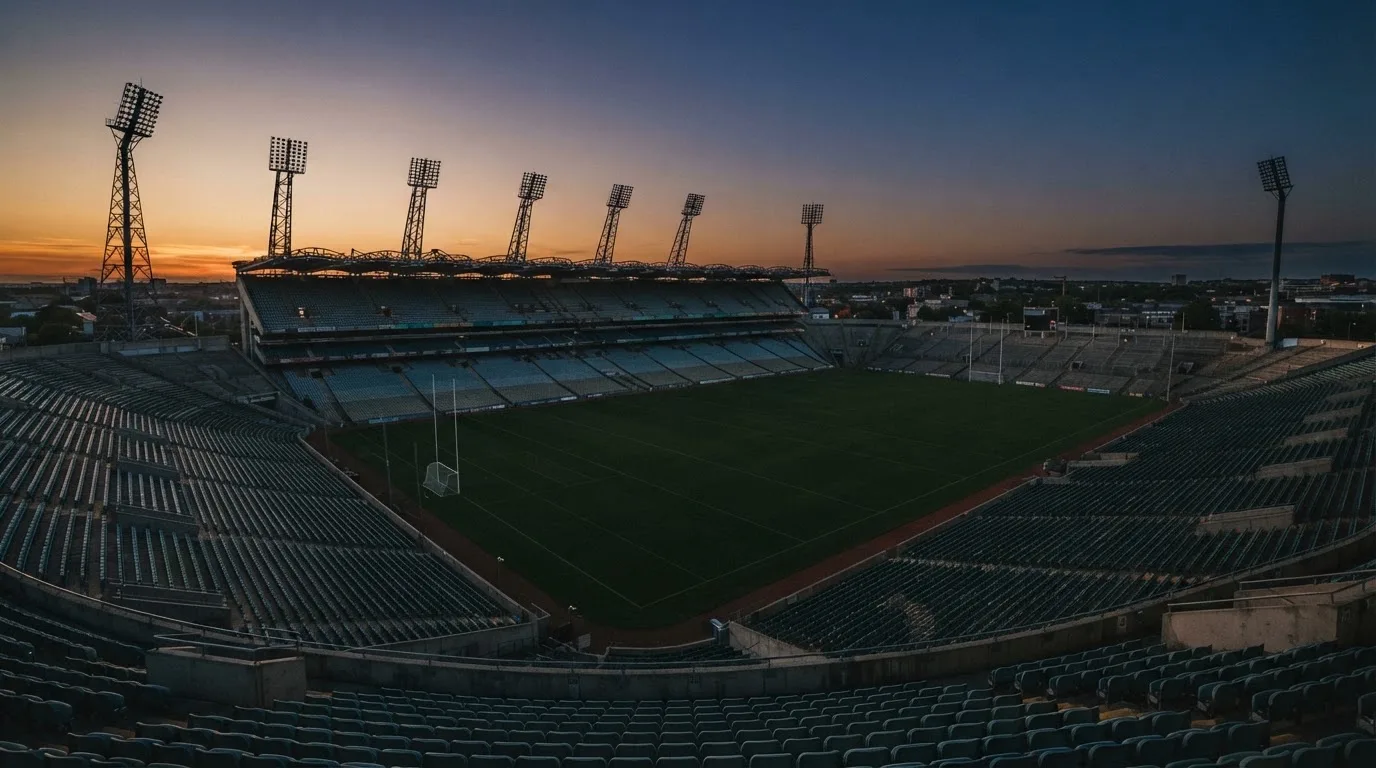
The 2026 championship ran its provincial round-robins before converging on the All-Ireland quarter-finals. Leinster sent six teams and Munster five into their respective groups; the top two in each province met in the provincial final and the third-placed team crossed into the All-Ireland quarter-finals. The final at Croke Park, Dublin, ended on 19 July 2026, with Limerick beating Galway to take the title. Tipperary had held the 2025 crown.
For a bettor, the calendar dictates the market. The provincial round-robins produce the widest handicap lines, because the strongest county in a small group is often a goal or more ahead of the weakest. The All-Ireland series produces tighter margins, sharper prices and more live-betting action because the contests are closer. Club hurling has its own rhythm: the county championships close in autumn, the All-Ireland club series runs through the winter, and the inter-county season resumes in spring.
Markets beyond the senior championship
Hurling also offers U20 and minor championships, both run under GAA governance and played under floodlights at provincial venues through the summer. Junior and intermediate championships exist at county level, but the markets thin fast beyond the senior tier. Some operators offer ladies’ hurling and camogie at senior inter-county level, where the rules are the same shape with a smaller squad size. None of these markets carries the depth of the senior championship; the prices are wider and the in-play coverage sparser.
Why the fixture list matters to a price
A bookmaker’s margin on hurling is wider than its margin on football or horse racing because the betting volume is smaller and the models less precise. A punter who reads fixtures closely – noting that a county is on a third game in ten days, that a key forward is returning from injury, that the venue favours a particular style – carries information the market price it does not always reflect. That is the legitimate edge, and it sits at odds with the “tip” framing that promises certainty.
The Ten Reviewed Bookmakers
Every brand below holds a Gambling Commission remote licence and appears on the Commission’s public register. The licence number is on the register against the company name; the site domain is a convenience for the reader’s own check, not a licence in itself. Operators licensed outside Great Britain – in Curaçao, Malta or Gibraltar alone – are not licensed to take bets from customers in Great Britain and are not listed here.
| Brand | Licence (Acc. No) & Holder | Hurling/GAA Terms |
|---|---|---|
| Kalooki Sportsbook | 057730 (Kalooki Sportsbook Ltd) | Hurling coverage inside broader Irish-sports vertical. |
| William Hill | 039225 (WHG (International) Ltd) | Deep championship price markets; GAA-focused football book. |
| Fafabet | 057385 (Taichi Tech Ltd) | Racing-first; GAA/hurling markets present but narrow. |
| Bet600 | 044731 (Tyche Tech Ltd) | Focus on racing speed; occasional hurling markets available. |
| Swifty Sports | 058957 (Swifty Global (UK) Ltd) | General live-betting focus; light hurling menu. |
| bet365 | 055148 (Hillside (UK Sports) ENC) | Deep GAA/hurling championship coverage; Bet Builder+ enabled. |
| Paddy Power | 039439 (PPB Counterparty Services Ltd) | Broad championship hurling menu; GAA football integration. |
| BoyleSports | 039469 (Boylesports Enterprise) | Irish-rooted GAA coverage across the championship. |
| 888sport | 039028 (888 UK Ltd) | Broad GAA hurling championship menu; non-specialist depth. |
| QuinnBet | 061011 (QuinnBet (Gibraltar) Ltd) | Competitive hurling coverage on headline championship fixtures. |
Kalooki Sportsbook
Kalooki Sportsbook is operated by Kalooki Sports Book Ltd (company number 12938274) and holds Gambling Commission account 57730 under remote general betting standard (real events). It is a GAMSTOP member. The brand operates a tighter welcome structure than the larger houses, and its hurling coverage sits inside a broader Irish-sports product rather than as a stand-alone vertical. For a smaller, named operator with a Commission licence and GAMSTOP coverage, Kalooki fits the bill, though the market range is thinner than at the larger houses.
William Hill
William Hill’s UK remote licence sits under account 39225 with WHG (International) Limited as the licence holder. The brand’s racing product is anchored by Best Odds Guaranteed from 8 AM on race day, on single and multiple bets; the offer excludes ante-post, tote and pari-mutuel bets. The Football Acca Boost covers accas of two or more legs at 1/5 or bigger, scaling from a 3% boost on a double up to 200% on twenty or more legs, with a maximum boost of £10,000 per online bet, running until 30 May 2027. Hurling coverage sits inside the wider GAA offering, and the depth of price markets on major championship weekends is among the strongest in the licensed set. William Hill serves as a heavy anchor for those prioritising racing BOG and football/GAA integration, with the welcome package being a secondary consideration.
Fafabet
Fafabet’s licence sits under account 57385 with Taichi Tech Limited as the licence holder. The brand pays BOG on UK and Irish racing from 9 AM on race days: if the starting price is bigger than the price taken, the bigger odds are paid. The racing product is the centre of gravity; the GAA and hurling markets are present but narrower than at the bigger houses. While the racing product is strong, those primarily targeting the All-Ireland series may find the menu too limited for a full provincial campaign.
Bet600
Bet600’s licence sits under account 44731 with Tyche Tech Limited as the licence holder. The brand’s BOG covers horse racing in a similar shape to the larger houses: if the starting price is bigger than the early or show price taken, the bet is settled at the SP. The brand positions itself on speed and price; the hurling menu is present but not deep. Bet600 is workable for those placing occasional hurling bets, but the menu lacks the depth required for heavy championship-weekend punting.
Swifty Sports
Swifty’s licence sits under account 58957 with Swifty Global (UK) Ltd as the licence holder. The brand offers Best Odds Guaranteed, Cash Out on markets including horse racing and football, daily price boosts, live streaming and in-play betting, with a Bet Builder listed as coming soon. The product is built around live coverage and racing; the hurling menu is light but the in-play tools are general rather than sport-specific. Those valuing the live-betting experience across multiple sports will find Swifty a solid choice, though the hurling menu is not yet as extensive as established competitors.
bet365
bet365’s UK licence sits under account 55148 with Hillside (UK Sports) ENC as the licence holder. The brand is the official global betting partner of the UEFA Champions League and the most downloaded sports betting app in the UK. The product carries Bet Builder+ (combining markets from one event into a single bet, pre-match and in-play), Super Boosts, Winnings Boosts on Bet Builders and selected singles, and daily Bet Boosts. In-play is paired with live streaming of events worldwide, Bet Track, Match Live and a Live Golf Tracker for following bets in play. The GAA offering runs deep into hurling across both the championship and club fixtures. bet365 remains the centre of gravity for the deepest in-play hurling product and the strongest Bet Builder options, prioritising product depth over welcome-structure variety.
Paddy Power
Paddy Power’s UK licence sits under account 39439 with PPB Counterparty Services Limited as the licence holder. The brand’s published app covers football, horse racing, boxing, rugby, tennis, golf, darts, snooker and F1; hurling sits inside the wider GAA offering alongside football. The brand’s house style leans on promotional headlines and money-back specials; the menu across hurling is broad during the championship season. Paddy Power is a serious contender for those seeking a strong GAA presence, whereas those wishing to avoid promotional complexity may find the house style less appealing.
BoyleSports
BoyleSports’ UK licence sits under account 39469 with Boylesports Enterprise as the licence holder. The sports welcome offer for UK players is £20 in free bets when a £10 bet is placed, with the Irish-player variant at €30 in free bets for a €10 bet. The brand’s roots are Irish; the GAA offering carries hurling and football across the championship calendar. BoyleSports represents a viable option for those prioritising an Irish-rooted operator with a strong GAA product, especially when compared to English-market racing specialists.
888sport
888sport’s UK licence sits under account 39028 with 888 UK Limited as the licence holder. The brand offers pre-match and in-play betting, Cash Out, Bet Builder, racing streams, BetFinder form tools, a live bet feed and daily boosted odds. The GAA offering carries hurling during the championship season; the menu is broad but not as deep as the largest houses. 888sport provides a broad championship menu, although dedicated championship-weekend specialists may find the overall depth more limited than at larger bookmakers.
QuinnBet
QuinnBet’s UK licence sits under account 61011 with QuinnBet (Gibraltar) Limited as the licence holder. BOG applies to Irish and UK horse racing from 10:00 AM daily on singles, multiples and system bets, with a maximum benefit of £150 per customer per race. The GAA offering carries hurling across the provincial round-robins and the All-Ireland series; the menu is competitive on the headline fixtures. QuinnBet is a strong fit for those prioritising BOG and a serious GAA offering, provided the £150 cap on race benefits is considered beforehand.
Verdict across the ten
Three patterns stand out. Racing-BOG product depth is strongest at William Hill; the live-betting and Bet Builder depth is strongest at bet365; the GAA-specific depth is broadest at the Irish-rooted houses – Paddy Power and BoyleSports. None of the ten promises a winning season. Each one offers a Commission licence, GAMSTOP coverage and the safer-gambling tools the rules require; the choice is about which product depth the punter actually uses.
What Hurling Betting Looks Like in Britain
Hurling sits inside a broader framework. The Gambling Act 2005 is the statute that governs commercial betting in Great Britain – England, Scotland and Wales. Northern Ireland runs under older, separate law. Since the Gambling (Licensing and Advertising) Act 2014 an operator whose remote facilities are used in Great Britain needs a Commission licence wherever it is based; sections 33 and 36 of the 2005 Act as amended are the hooks. A Curaçao, Maltese or Gibraltar licence is not a substitute for taking bets from customers in Great Britain.
There is no state monopoly and no cap on the number of licences. The Commission’s public register can be searched by business name, trading name, domain or account number. That register is the whole test of whether a brand holds a licence; no count of “licensed operators” should be quoted without its access date. Financial spread betting is regulated by the Financial Conduct Authority, not the Commission – Spreadex, for instance, is regulated by the FCA for spread betting and by the Gambling Commission for fixed-odds betting, and spread-betting losses can exceed the deposit.
The licence check itself
The minimum age is eighteen. Name, address and date of birth are verified before a customer can deposit or gamble, in force since 7 May 2019; the check covers free bets and bonuses, not just cash stakes. Credit cards have been banned for gambling in Great Britain since 14 April 2020, including credit-card-funded payments through an e-wallet. Debit cards and bank-based payments are not covered by the ban. A British named-account rule, a state list of permitted payment methods and any rule for or against cryptocurrency deposits at licensed operators are not established; describe payments qualitatively and only from each operator’s terms.
A licence check is a five-minute task. The Commission’s public register is searchable by trading name or domain; the brand’s licence number, the licence holder and the categories covered are listed. The point of the check is not the formality of the licence; it is the package that comes with it – GAMSTOP, the 10x wagering cap, the financial vulnerability check at £500 in 30 days, the Commission’s complaints route and an approved dispute-resolution body. An unlicensed brand offers none of those.
Bonuses, advertising and the tax line
Advertising is not licensed by the Commission; it runs through the CAP Code (non-broadcast) and BCAP Code (broadcast), enforced by the ASA, alongside the Commission’s marketing conditions. CAP Code section 16 says marketing must be socially responsible, must not be of strong appeal to under-18s, and no one who is or seems to be under 25 may be featured gambling or play a significant role in marketing, with an exception for marketing placed where a bet can be made directly; the rule concerns who may appear in the advertisement, not who may bet. The “whistle-to-whistle” ban on TV betting advertisements from five minutes before a live sporting event to five minutes after, before the 9 PM watershed, is an industry code, not law; horse and greyhound racing are excluded. The Premier League clubs’ withdrawal of gambling sponsorship from the front of matchday shirts, from 2026/27, is voluntary.
The promotion rules from 19 January 2026 cap wagering requirements on bonuses at 10x and ban mixed-product promotions. Operators are responsible for marketing by their affiliates; a promo code printed in an ad is the affiliate’s responsibility, not the operator’s exception.
The player pays no tax on betting winnings in Great Britain. General Betting Duty is the operator’s tax on gross profits, currently 15%; from 1 April 2027 a new remote betting rate of 25% applies within it, while remote bets on UK horse racing, bets on self-service betting terminals in licensed premises, pool betting and in-person betting stay at 15%. Spread betting has its own rates – 3% financial, 10% other. Until 1 April 2027 the remote rate stays at 15%. Whether operators pass duty on through odds is not established, and the player is not charged duty.
Offshore and the cost of “unlicensed”
Providing gambling facilities in Great Britain without the licence the Act requires is an offence under section 33 of the Gambling Act 2005 – on summary conviction up to 51 weeks’ imprisonment, a fine up to level 5, or both, with six months in Scotland. No offence aimed at a customer who merely bets on an unlicensed site was found. The framing for a customer is not “legal to use”; it is the loss of protection. An unlicensed site is not bound by GAMSTOP, the Commission’s complaints route, an approved dispute-resolution body, British consumer redress if funds are withheld, the 10x bonus cap or the £500 vulnerability check. Enforcement is disruption, not blocking; cease-and-desist notices, search-engine referrals, registrar and host and payment-provider pressure; the Commission has been given, or is about to receive, court-order DNS blocking powers, but ISP blocking is not in operation.
Working the Numbers: Reading the Margin
The margin is the slice of every pound staked that the bookmaker expects to keep. It is not a fee, not a commission in the agent’s sense, not a hidden charge on the deposit. It sits inside the odds, and reading it is the basic literacy of betting.
A worked example: a two-way market
Take a two-way market priced at decimal odds 1.90 / 1.90 – equivalent to fractional 9/10 on each side, evens minus a sliver. The “true” odds on a fair two-way market are 2.00 / 2.00. Each side of this market is 0.10 short of fair value. The calculation works like this. The implied probability of 1.90 is one divided by 1.90, which is roughly 52.6%. Add the implied probabilities of both sides: 52.6% plus 52.6% gives 105.3%. The excess over 100% is the margin. In this example the margin sits in the band of approximately 5%.
That 5% is the bookmaker’s expected take on every pound staked across the two sides of this market. A punter who reads “5% margin” and reads “95% payout share” is reading the same number from two sides. Neither figure is what any individual bet pays; it is the average across many bets.
What the margin means in practice
A punter who places ten £10 bets at a margin of 5% across many markets is expected, on average, to lose £5 of stake. A punter who places one £100 bet on the same markets faces the same expected loss, in absolute terms, scaled by stake size; the variance is wider on the single bet. The margin is the tax on the activity; the value of any individual tip is whether its price sits above the true probability by enough to clear it.
A quick conversion table
The two formats of odds used in British betting convert directly. Fractional odds a/b become decimal odds (a divided by b) plus one. Fractional 5/1 becomes decimal 6.00; the profit is 5 units for every 1 unit staked, plus the 1 unit stake returned. Fractional 11/4 becomes decimal 3.75; the profit is 11 units for every 4 unit staked, plus the 4 returned. Evens, written 1/1, becomes decimal 2.00; the profit equals the stake. Odds-on prices – shorter than evens – carry a decimal price between 1.01 and 1.99; fractional 4/6 is decimal 1.67, fractional 1/2 is decimal 1.50.
What a value bet looks like
A value bet is a price that sits above the punter’s reasoned probability of the outcome. A hurling match where the punter believes Team A is 60% likely to win, and the bookmaker offers 2.00 (implying 50%), carries value: the price exceeds the true probability. The same match at 1.60 (implying 62.5%) carries no value. The exercise of building a tip – reading form, weighing injuries, looking at head-to-head, adjusting for venue – produces a probability; the price is the test of whether the tip is worth taking.
No tip is ever certain. The probabilistic frame is what makes betting a market rather than a lottery; it is also what makes it impossible to promise one. A 60% bet loses four times in ten.
What to Read Before Placing a Hurling Bet
Six checks separate a thoughtful punt from a hopeful one.
The licence. Every brand reviewed above holds a Gambling Commission remote licence and is searchable on the Commission’s public register. The licence number is the test; the domain is not. A licensed brand offers GAMSTOP, the safer-gambling tools the rules require, the £500 vulnerability check at 30 days and the 10x wagering cap on bonuses.
The price. Read the odds in both formats. A decimal price above 2.00 on a two-way market is bigger than evens; a decimal price below 2.00 is odds-on. The implied probability is one over the decimal price; the implied probabilities of all outcomes in one market should be added to give the margin.
The settlement. Match-result markets on GAA fixtures typically settle at the end of normal time including injury time; extra time does not count unless stated. League play and championship play may settle differently; the operator’s sport-specific rules are the document that decides.
The bonus. A wagering requirement above 10x is not permitted at GB-licensed brands from 19 January 2026; an offer above that cap is either pre-dated, non-GB, or in breach. The minimum odds, the expiry and the eligible markets decide what the bonus actually costs.
The payment. Credit cards are banned for gambling in Great Britain since 14 April 2020, including via e-wallet. Debit cards and bank-based payments are not covered. Identity is verified before the first deposit, and source-of-funds questions at higher spend are normal under the money-laundering rules.
The exit. Cash out is a price for ending the bet early; it is rarely optimal but it is a tool. Self-exclusion is a tool that is easier to set up than to undo; it is the right tool when the staking plan stops working.
Building a Tip from the Fixtures
A tip is the answer to a specific question: is this price higher than the probability I have reasoned to? Building one takes four steps.
First, the form. The last three matches of each side, weighted for opponent strength, give a base rate. A team on a three-match winning streak against top-half opposition is in better form than a team on a three-match winning streak against bottom-half opposition; the figures look similar but they are not.
Second, the personnel. A key forward missing through injury shifts the scoring pattern; a key defender missing shifts what the opposition scores. The team announcement, usually published the evening before the match, is the first hard information.
Third, the venue. Croke Park is neutral and big; a county ground is small and partisan. Some teams travel better than others, and the home advantage in hurling is among the largest in field sports.
Fourth, the price. The bookmaker’s odds reflect the market’s view of the three previous steps, and the punter’s edge is whether the punter’s view is sharper. Where it is, the price carries value. Where it is not, the bet is a donation.
None of this predicts the result. It produces a probability. The price tests whether the probability is worth backing. That is the loop, and the loop is what tips are made of.
Frequently Asked Questions
What is a value bet and why is no tip ever certain?
A value bet is one whose price sits above the punter’s reasoned probability of the outcome. A bet at decimal odds 2.00 implies a 50% chance; if the punter’s reasoned probability is 60%, the bet carries value because the price exceeds the true chance. No tip is ever certain because probability is not prediction – a 60% bet loses four times in ten – and the punter’s reasoned probability is itself an estimate.
What is the bookmaker’s margin and how can it be seen in the odds?
The margin is the slice of every pound staked that the bookmaker expects to keep. It sits inside the odds. Take a two-way market at decimal 1.90 / 1.90: one divided by 1.90 is 52.6%, and adding both sides gives 105.3%. The 5.3 percentage points above 100% is the margin, sometimes called the overround.
How is the return on a bet worked out from the stake and the odds?
For a single bet, the return is the stake multiplied by the decimal odds, and the profit is the stake multiplied by the odds minus one. A £10 bet at decimal 3.00 returns £30 with £20 profit; the £10 stake is returned on top of the profit. For a combination bet, the odds of the legs multiply into one price.
How can it be checked that a bookmaker holds a Gambling Commission licence?
The Commission’s public register is searchable by business name, trading name, domain or account number. The brand’s licence number, the licence holder and the categories covered are listed. The point of the check is the package that comes with a licence – GAMSTOP, the £500 vulnerability check, the 10x bonus cap, the Commission’s complaints route.
Which tools for controlling play does a licensed bookmaker have to offer?
A licensed bookmaker offers GAMSTOP registration for multi-operator self-exclusion, deposit limits, timeouts, reality checks and product blocks. From 31 October 2025 the first changes under the Commission’s Remote Technical Standards have applied, with a second phase postponed to 30 September 2026. Help is independent of the operator: GamCare’s National Gambling Helpline, GambleAware, NHS gambling clinics and Gamblers Anonymous.
How do fractional odds such as 5/1 convert to decimal odds such as 6.00?
Fractional odds a/b become decimal odds (a divided by b) plus one. Fractional 5/1 is (5 divided by 1) plus 1, or 6.00; the profit is 5 units per 1 unit staked. Fractional 11/4 is (11 divided by 4) plus 1, or 3.75. Evens (1/1) is 2.00.
Rugby, cricket & Gaelic – Best betting exchange
Content created by the «Best betting exchange» team
