
Ice hockey betting odds 2026: how the price is built, what it costs, and who holds a GB licence
 Available in US
A short note before the analysis begins: the data on this page is current as of 27 October 2026 and has been checked against the Gambling Commission’s public register of Great Britain operators.
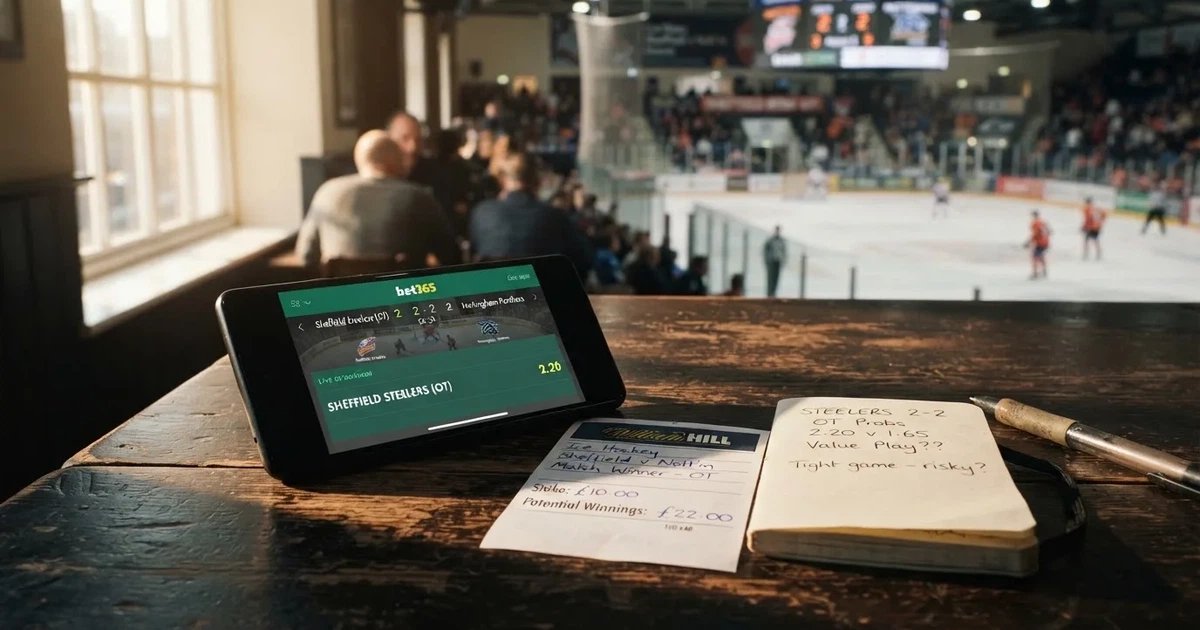
Ice hockey moves at a pace that punishes sloppy reading of a price. Three periods of twenty minutes, six players per side including the goaltender, ties broken by overtime and (in the NHL regular season) a penalty shootout — the structure of the game shapes every market the bookmaker sells. A bettor who treats a 1.91 line as identical to a 1.83 line on the same match is leaving money on the table. The differences look small in isolation; over a season they are not.
This guide is built around what an ice hockey price actually costs. Not the headline figure, not the marketing offer pinned next to it, but the number that survives once every layer of margin, rollover and stake rule has done its work. The page walks through the sport, the markets, the licensed bookmakers in Great Britain and the rules that govern them, with the cost lens held steady throughout.
Responsible gambling in Great Britain: what the framework actually does
Safer gambling in Great Britain runs through a small set of mechanisms a bettor meets before placing the first bet. Every licensed remote bookmaker is part of GAMSTOP, the national multi-operator self-exclusion scheme. Once registered, a customer cannot open new ones at any GB-licensed site or app for six months, one year, five years, or five years with auto-renewal. The minimum period chosen runs out, then the exclusion stays in place for a further seven years unless the customer contacts GAMSTOP and asks for removal.

Identity is verified before any deposit or stake can be placed. Name, address and date of birth are checked, and that check applies to free bets and bonuses too — a free-bet-only account is not anonymous. The aim is to stop a self-excluded person opening a new account under a different name.
A financial vulnerability check kicks in when deposits minus withdrawals exceed £150 in a rolling 30 days. It is a public-record check (bankruptcy or county court judgments, for example) and is not an income or credit-reference check. A separate set of financial risk assessments — the affordability checks that have appeared in the press — has been announced by the Commission in a staged plan, with no start date set.
A first deposit limit is offered on every licensed account. There is no statutory ceiling on what a customer can set; the ceiling is the customer’s own choice. Whether the operator’s first changes have applied since 31 October 2025 and whether a postponed second phase has now arrived at 30 September 2026 are not settled on the public record, so the practical move is to check the operator’s own page at sign-up.
Help is available outside the operators. GamCare runs the National Gambling Helpline. GambleAware funds treatment and research. The NHS runs gambling clinics. Gamblers Anonymous runs meetings. A bettor who finds the framework inconvenient is exactly the bettor for whom it was written.
The framework has a price in convenience. A punter who values anonymity above all else will read these checks as friction. The same punter should know that anonymity and the protections that sit behind it are part of the same package.
Crypto and anonymity: what is and isn’t possible at a GB-licensed bookmaker
Anonymous play at a GB-licensed site is not available. Identity is checked before the first deposit, and source-of-funds questions follow for customers whose spend rises. Cryptocurrency deposits are not banned by statute in Great Britain, but no operator in the featured set runs a Bitcoin-only or crypto-native cashier; the listed methods are debit cards, bank transfers and a handful of e-wallets.
A bettor who wants to place hockey bets from a pseudonymous wallet will need to look outside the licensed set. That choice trades the framework above for a different one: no GAMSTOP coverage, no Commission complaints route, no approved dispute-resolution body, and no British consumer redress if funds are withheld. The bettor does not commit a criminal offence by betting at such a site under the Gambling Act 2005 — the offence sits with the operator — but they also have no recourse when things go wrong.
The plain version: licensed sites take pounds and ask who you are. Unlicensed sites accept coins and ask nothing. Both are legal positions, and the second one is a bad trade for anyone who bets with money they cannot afford to lose.
Bonuses and free bets: what an ice hockey offer actually pays out
A “£10 free bet” sounds like ten pounds. It is rarely ten pounds of value, and on ice hockey specifically the difference can be larger than on football because the bookmaker’s margin on smaller hockey leagues is often wider.
The first cost is the rollover. Promotion rules in force since 19 January 2026 cap wagering requirements on bonuses at 10x. A £10 bonus with a 10x rollover needs £100 of qualifying bets before the bonus is withdrawable. Bets that count toward the rollover are usually restricted to minimum prices — minimum odds of 1.50 (1/2 fractional) are common — and any bet below the threshold simply does not count.
The second cost is the stake. A free bet whose stake is not returned with a win is worth less than the headline figure. Free bets on ice hockey typically follow this rule. A £10 free bet at decimal odds of 3.00 pays out £20 of profit, not £30 — the £10 stake stays with the bookmaker. The arithmetic is straightforward: take the free-bet amount, multiply by (odds − 1), divide by the odds, multiply by the payout share of the market the bet was placed on. On a market where the bookmaker keeps 5 % margin, the payout share is 0.95, and a £10 free bet at 3.00 is worth about £6.33 on average across all outcomes.
The third cost is the marketing. The promotional language leans on “free”, “risk-free” and “guaranteed” — every one of those words has a condition attached. A “Bet £10 & Get £10” welcome offer is a matched-stake structure that rewards first-time customers with bonus funds subject to rollover; it is a discount on the first bet, not a gift.
Mixed-product promotions are banned. An offer that requires a customer to bet on football in order to unlock free spins on slots, for example, can no longer be advertised by a licensed operator. Hockey-only promotions remain in scope, and the cap applies.
The verdict: a bonus is a marketing spend the bookmaker uses to attract a customer. Read the small print before the headline.
Mobile and app: where the ice hockey markets actually live
The mobile app is the betting shop for most punters in 2026. The bet365 app is described in its App Store listing as the most downloaded sports betting app in the UK, and the platform supports Bet Builder+ (combining markets from one event into a single bet, available pre-match and in-play), Super Boosts, Winnings Boosts on Bet Builders and selected singles, and daily Bet Boosts. Most of the licensed set carries a similar feature set, and the choice between apps comes down to which markets, which boosts and which in-play experience a bettor prefers.
Touch and speed matter on in-play ice hockey. A goal in the second period shifts the price within seconds; an app that lags behind the markets loses the bettor money before the bet is placed. Live streaming of NHL games is available on the larger apps, with audio commentary as a fallback for events without video rights.
Browser-based betting is the alternative for punters who do not want to install an app. The same markets are usually available, with a slight lag on in-play refresh rates. Browser betting does not require a download, which suits punters who bet rarely or who share a device.
Live betting and cash out: the moving picture
Ice hockey is built for in-play betting. The game moves in bursts: a power play, a goal, a timeout. Each event shifts the odds. Pre-match, in-play and live betting describe the same activity — a bet placed after the puck has dropped — and the controls are the operator’s licence conditions, not a separate statute.
In-play markets on hockey typically include the next goal, the period result, total goals and a moneyline that updates with the score. Some apps offer micro-markets on the next shot on goal or the next power-play outcome. The deeper the market, the wider the margin tends to run.
The cash-out feature lets a punter close a bet before the final outcome. An accumulator with four legs, three of them winning, can be cashed out for a fraction of the full return; a single bet on the underdog that has taken a 2-1 lead can be locked in. The cash-out price is the bookmaker’s own valuation of the remaining position, not the fair value, and it always sits below the true expected return — otherwise the bookmaker would not offer it. A punter who uses cash out on every winning position surrenders a steady slice of expected return over a season.
QuinnBet’s Best Odds Guaranteed applies to Irish and UK horse racing from 10:00 am daily on singles, multiples and system bets, with a maximum benefit of £150 per customer per race. BOG is a horse-racing concession and does not apply to ice hockey — the nearest equivalent on hockey is the operator’s price-boost feed.
Predictions and strategy: what a system can and cannot do
Hockey betting tips and predictions are easy to find; hockey betting systems that work in the long run are not. The bookmaker’s margin sits inside every price, and the only way a betting system beats a margin is to identify prices where the bookmaker has mispriced the outcome. That is hard, it is competitive, and it is the work that full-time sports traders do for a living.
A bettor who treats a tipster subscription as a path to profit is buying a product whose seller has every incentive to advertise past wins and hide losing runs. No published tipster track record can be checked in real time, and a tipster who claims a return on investment of 10 % or more is selling something close to magic.
What a bettor can do is manage the bankroll. Staking a fixed unit (say, 1 % of bank per bet) limits the damage of a cold streak. Keeping a record of every bet — the price, the stake, the result — gives a bettor their own data to work with. Reading the LCCP and the operator’s own terms before signing up means the rules are not a surprise later.
The honest position: a betting system that beats the margin in the long run does not exist as a product. A bankroll discipline that loses slowly is the practical alternative.
Bet types and odds: how ice hockey prices are built
Ice hockey betting odds are decimal or fractional expressions of probability with a margin layered in. A 1.91 / 1.91 line (9/10 fractional) on a two-way market is the simplest case. The implied probability of each side, before margin, is 1 ÷ 1.91 = 0.5236, or 52.36 %. Two sides × 52.36 % = 104.72 %. The 4.72 % above 100 % is the overround — what the bookmaker keeps of every unit bet on this market. A payout share of 95.28 % and a margin of 4.72 % are the same market seen from two sides, and the band a careful bettor watches for on a two-way price is roughly 4 % to 6 % on a sharp league and noticeably wider on a minor one.
That is the illustrative case the page uses, and the result lands as a band rather than a fixed figure. The exact margin depends on the event, the market and the operator. NHL and international tournaments are priced tightly; lower-division leagues and exhibition games carry wider margins because the bookmaker has less information and a smaller handle.
Three-way markets — home win, draw, away win — are common on football but rare on ice hockey because the game has an overtime and a shootout to break ties. The standard NHL moneyline is two-way: who wins the game including overtime and shootout. A three-way line that offers regulation-time result only is sometimes available, with shorter prices on the favourite and longer prices on regulation-time underdogs.
The puck line is ice hockey’s version of the spread. The standard puck line is ±1.5 goals: the favourite must win by two or more, the underdog can lose by one and still cover. Puck line prices sit closer to even money than the moneyline because the spread is wider than a typical margin of victory. The price on the −1.5 favourite and the +1.5 underdog are not identical; the bookmaker still keeps a margin on the spread.
Totals on ice hockey run around 6.0 to 6.5 goals. The exact line depends on the teams and the goaltender. Prices of 1.91 / 1.91 on either side of the line are common on NHL games; wider margins appear on lower-tier leagues.
Player props — first goalscorer, anytime goalscorer, shots on goal, total points — are offered on the larger apps and on the larger events. The margin on player props is wider than on game lines because the bookmaker has less information and the market is less efficient. A bettor who prices players by their underlying shot rate and compares it to the bookmaker’s price can find edges in this market more often than on game lines, though the edges are smaller and harder to convert.
Betting exchanges offer back and lay. A back bet is the standard bet — the punter thinks the outcome will happen. A lay bet is the bookmaker’s side — the punter thinks the outcome will not happen, and is offering a price to other punters who disagree. The exchange takes a commission on net winnings, typically 2 % to 5 %, and the prices are tighter than the bookmaker’s because the margin is replaced by commission. Betting exchanges run under a betting intermediary licence, not the standard remote general betting licence.
Spread betting on ice hockey, where offered, runs through firms that hold a separate spread-betting licence (Spreadex is regulated by the FCA for spread betting and by the Gambling Commission for fixed-odds betting; its terms state that spread betting losses can exceed the deposit). The cost of a spread bet is the full stake multiplied by the number of points the outcome differs from the bookmaker’s quote, in either direction. That is a different product from fixed-odds betting and a different licence category.
Each-way betting — two bets of equal stake, one on the win and one on the place — is a horse-racing convention and is not commonly offered on ice hockey. The place terms on ice hockey, where offered, vary by operator and by market.
Sports and tournaments: what the calendar looks like
The International Ice Hockey Federation (IIHF) is the highest governing body of ice hockey. Men’s ice hockey has been part of the Winter Olympics since 1924 and women’s ice hockey was added in 1998. The Olympic gold-medal game, since 2019, uses 3-on-3 overtime rather than a shootout.
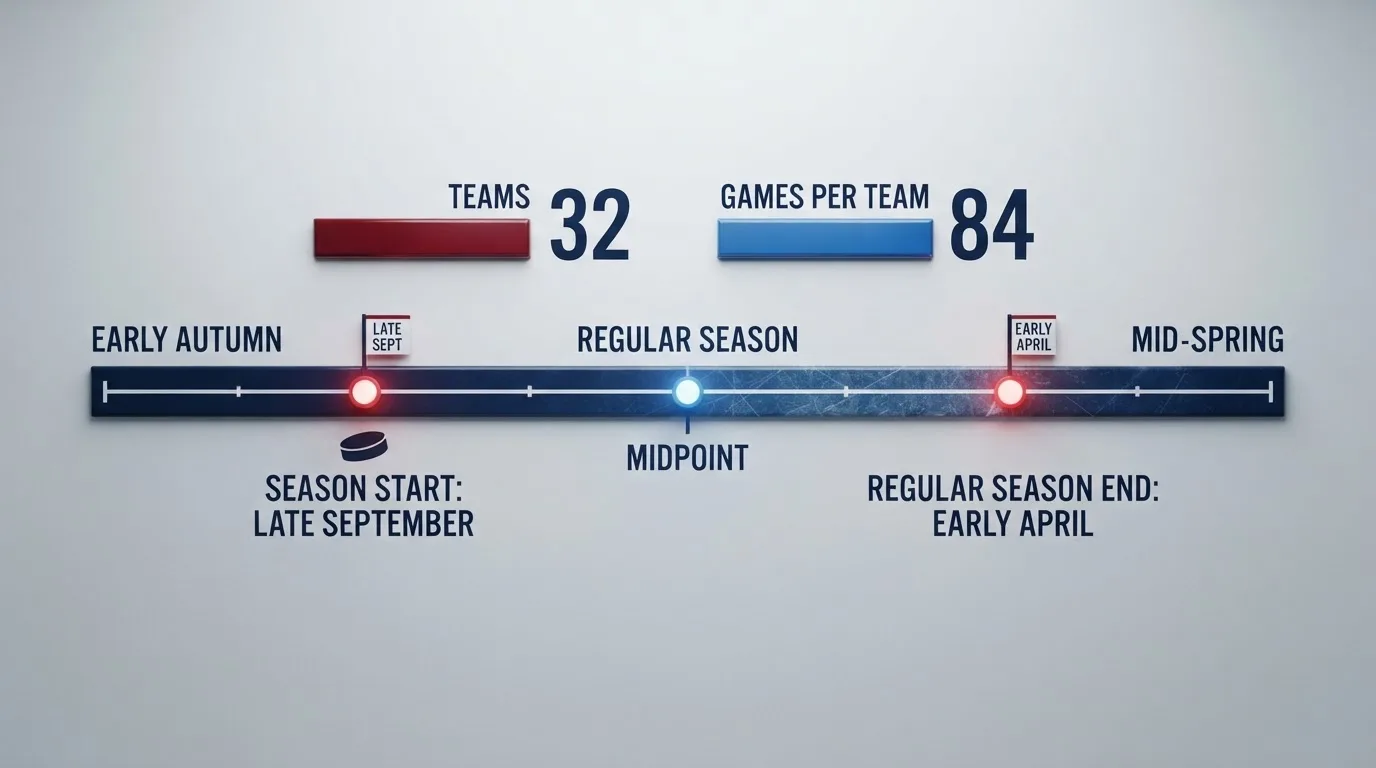
The 2026–27 NHL season starts on 29 September 2026 with 32 teams playing 84 games each, up from 82, and the regular season ends on 10 April 2027. The Carolina Hurricanes beat the Vegas Golden Knights in the 2026 Stanley Cup Final. NHL betting runs through the regular season, the playoffs and the Stanley Cup Final. Markets open weeks in advance for the Cup winner, the conference winners and the divisional winners, and the prices tighten as the playoffs approach.
The KHL, the SHL, the Liiga and the Champions Hockey League fill out the European calendar. Each league has its own season and its own schedule of fixtures, and bookmakers carry different slates of games from each.
The NHL regular season and the NHL playoffs are the markets with the deepest liquidity and the tightest margins. Smaller leagues are useful for bettors who have local knowledge the bookmaker does not, but the wider margin offsets much of the value.
Tournament formats matter for outright betting. The NHL playoffs are a four-round knockout; the Stanley Cup winner is the team that wins sixteen games. The Champions Hockey League is a group stage followed by a knockout. The Olympic tournament is a group stage followed by a single-elimination bracket. Each format shapes the price of an outright bet on the tournament winner, and a bettor who reads the format carefully will find outright prices that reflect the true probability more accurately than the bookmaker’s default.
The ten GB-licensed bookmakers in the comparison
The set below is the ten bookmakers that take a GB customer bet on ice hockey and hold a Gambling Commission remote licence. Each review carries the licence account number, the licence holder, and the part of the offer that sets the brand apart in this comparison.
Bet Ahoy — strongest welcome headline
Licence: Gambling Commission account 100094, held by Bet Ahoy Ltd; categories include remote general betting standard (real events). The welcome offer on Bet Ahoy pairs a £5 sports bet with a £5 accumulator when a new customer places £10. The structure is a matched-stake deal that rewards first-time customers with bonus funds. Wagering requirements and minimum-price rules apply, and the headline figure is the starting point rather than the end. Verdict: a tidy entry-point for a new customer who wants to test the platform, and the welcome structure is the strongest part of the offer set; the long-term value depends on the in-play markets and the price depth, which are ordinary for this segment.
DAZN Bet — strongest deposit ladder
Licence: Gambling Commission account 48756, held by DZBT Limited; licensed for remote general betting. Deposits at DAZN Bet start at £5 by debit card, Apple Pay, Paysafecard, Trustly and Skrill, and at £20 by PayPal, with no processing fees. The deposit ladder is the most accessible of the set for punters with a small budget, and the absence of processing fees means the price a bettor sees is the price the bettor pays. Verdict: a low-friction cashier and a sensible minimum-deposit structure, suited to a bettor who values the deposit side of the platform over the welcome headline.
Lottoland — strongest combined product
Licence: Gambling Commission account 38991, held by EU Lotto Limited; licensed for remote general betting. The Lottoland UK app combines casino, lottery betting, sports betting and scratchcards, and is licensed by the Gambling Commission for customers in Great Britain. A bettor who wants the sportsbook alongside lottery products and slots gets all four under one account. Verdict: a single-account punt across product types is convenient, and a customer who plays the lottery and the sportsbook in the same week does not need to manage two wallets.
888sport — strongest feature set
Licence: Gambling Commission account 39028, held by 888 UK Limited; categories include remote general betting standard (real events). 888sport offers pre-match and in-play betting, Cash Out, Bet Builder, racing streams, BetFinder form tools, a live bet feed and daily boosted odds. The feature set is the deepest in the comparison, and the racing streams are a useful add-on for a bettor who mixes ice hockey with horse racing. Verdict: a feature-rich platform for a bettor who uses Bet Builder, Cash Out and price boosts as part of their weekly routine.
QuinnBet — strongest racing concession
Licence: Gambling Commission account 61011, held by QuinnBet (Gibraltar) Limited; licensed for remote general betting. QuinnBet’s Best Odds Guaranteed applies to Irish and UK horse racing bets from 10:00 am daily on singles, multiples and system bets, with a maximum benefit of £150 per customer per race. BOG is a horse-racing concession and does not extend to ice hockey, but a mixed-product bettor who wants the racing concession alongside a sportsbook gets it here. Verdict: a sensible choice for a bettor who wants Best Odds Guaranteed on racing and a sportsbook alongside it; the ice hockey markets are ordinary for the segment.
Bar One Racing — strongest Irish footprint
Licence: Gambling Commission account 56516, held by Bar-One Racing Limited; licensed for remote general betting. Bar One Racing has rebranded as BAR 1 Betting and operates as an Irish independent bookmaker with shops across Ireland and horse racing sponsorships at Dundalk, Fairyhouse, Navan, The Curragh, Curraheen Park and Cork. Verdict: a bookmaker with a strong Irish shop footprint and a GB-licensed online platform; an ice hockey bettor who values the brand’s local Irish credentials over the depth of the in-play feed is the customer this brand suits.
Geoff Banks — strongest ante-post roster
Licence: Gambling Commission account 54095, held by GB Sports Advisors Limited; licensed for remote general betting. The Geoff Banks app is published by GB Sports Advisors Ltd and offers live in-play prices and ante-post prices on future events. Ante-post betting — a wager placed before the final field is declared — is the strongest part of the offer set. Verdict: a bookmaker built around the ante-post market and the in-play feed; a bettor who likes to take a price weeks ahead of the event and trade out closer to the start is the customer this brand suits.
10bet — strongest live-streaming combo
Licence: Gambling Commission account 43173, held by Blue Star Planet Limited; licensed for remote general betting. 10bet’s sportsbook covers football, tennis and horse racing, with Cash Out, Bet Builder and Live Streaming. The live-streaming package across three sports is the strongest feature on the platform. Verdict: an ice hockey feed for a user who wants streaming alongside the bets; the feed is part of a wider package rather than the main feature.
NetBet — strongest boost suite
Licence: Gambling Commission account 39170, held by Netbet Enterprises Limited; categories include remote general betting standard (real events). NetBet Sport carries Daily Boosts, Profit Boosts and free bet offers, plus a Bet Builder with instant dynamic odds and sports stats for major leagues. The boost suite is the deepest in the comparison, and the Bet Builder recalculates the price as markets are added — a useful touch for a bettor who likes same-game multiples. Verdict: an option for a user who checks the boost feeds as part of their weekly routine; the profit-boost structure rewards accumulator punters specifically.
Bet600 — strongest starting-price concession
Licence: Gambling Commission account 44731, held by Tyche Tech Limited; categories include remote general betting standard (real events). Bet600 pays Best Odds Guaranteed on horse racing: if the starting price is bigger than the early or show price taken, the bet is paid at the SP. BOG is a horse-racing concession rather than an ice hockey one. Verdict: a sensible BOG structure for a racing bettor who wants the SP paid out on the bigger price; the ice hockey markets are ordinary for the segment.
Comparison at a glance
| Brand | Gambling Commission licence | Licence holder | What the operator’s own terms state |
|---|---|---|---|
| Bet Ahoy | 100094 | Bet Ahoy Ltd | Welcome offer pairs a £5 sports bet with a £5 acca when a new customer places £10; subject to rollover and minimum-price rules |
| DAZN Bet | 48756 | DZBT Limited | Deposits start at £5 by debit card, Apple Pay, Paysafecard, Trustly and Skrill, and at £20 by PayPal; no processing fees |
| Lottoland | 38991 | EU Lotto Limited | Combines casino, lottery betting, sports betting and scratchcards under one GB-licensed account |
| 888sport | 39028 | 888 UK Limited | Pre-match and in-play, Cash Out, Bet Builder, racing streams, BetFinder, live bet feed, daily boosted odds |
| QuinnBet | 61011 | QuinnBet (Gibraltar) Limited | Best Odds Guaranteed on Irish and UK horse racing from 10:00 am, capped at £150 per customer per race |
| Bar One Racing | 56516 | Bar-One Racing Limited | Irish independent bookmaker with shops across Ireland and racing sponsorships at Dundalk, Fairyhouse, Navan, The Curragh, Curraheen Park and Cork |
| Geoff Banks | 54095 | GB Sports Advisors Limited | Live in-play prices and ante-post prices on future events |
| 10bet | 43173 | Blue Star Planet Limited | Sportsbook covers football, tennis and horse racing with Cash Out, Bet Builder and Live Streaming |
| NetBet | 39170 | Netbet Enterprises Limited | Daily Boosts, Profit Boosts and free bet offers, a Bet Builder with instant dynamic odds, sports stats for major leagues |
| Bet600 | 44731 | Tyche Tech Limited | Best Odds Guaranteed on horse racing: bets paid at SP if the starting price is bigger than the price taken |
Overview and core: how the licensed bookmaker market fits together
The GB-licensed bookmaker market for ice hockey is a layer cake. At the top, the largest apps — bet365, bet365’s rivals on the same tier — carry the deepest markets, the tightest margins on the NHL, and live streaming of every NHL game plus a deep set of European leagues. Below that, mid-tier apps carry NHL and the major European leagues with reasonable margins but shallower player-prop markets. Below that, smaller brands carry the headline leagues and rely on a boosted-odds feed to attract customers.
Every brand in the GB-licensed set uses GAMSTOP, runs the same identity-verification process before the first deposit, and is bound by the same LCCP conditions. A bettor who moves from one GB-licensed brand to another moves within the same framework; the differences between brands are commercial, not regulatory.
A bettor who wants to bet on ice hockey in Great Britain has three practical entry points: a large app for the deepest markets, a mid-tier app for a sensible everyday sportsbook, or a smaller brand for a sharper welcome headline. The right choice depends on how much the bettor bets, which markets they use, and which features they care about.
The question of “best ice hockey betting odds” does not have a single answer. A large app carries the tightest margin on the NHL moneyline, but a smaller brand may carry a sharper price on a minor league because of a pricing model the larger app does not run. The right answer is to hold accounts at two or three licensed bookmakers, compare prices on the bets that matter, and stake at the sharpest available line.
Legality and regulation: what a Gambling Commission licence actually buys
A Gambling Commission licence is a remote general betting standard (real events) licence. Several brands can run under one licence: Ladbrokes and Coral under one licensee, Paddy Power and Betfair under another. A brand with the licence can offer fixed-odds sports betting to customers in Great Britain, run pre-match and in-play markets, advertise under the CAP Code, and operate a cashier that accepts debit cards and e-wallets. The Commission does not list permitted sports or markets; the markets an operator offers are the operator’s choice within its licence.
Since the Gambling (Licensing and Advertising) Act 2014, an operator whose remote facilities are used in Great Britain needs a Commission licence wherever it is based. A Curaçao, Maltese or Gibraltar licence is not a substitute. Northern Ireland is outside the Gambling Act 2005 and runs its own older law; a GB licence does not regulate Northern Ireland. Financial spread betting is regulated by the Financial Conduct Authority, not the Commission.
The Commission’s public register can be searched by business name, trading name, domain or account number. A bettor who wants to check a brand holds a licence searches the register; a match on the account number or the licence holder is the test.
A licensed operator runs under the LCCP and the Remote Technical Standards (RTS). The LCCP covers social responsibility, marketing, self-exclusion and the financial vulnerability check. The RTS covers the technical implementation: identity verification, deposit limits, safer-gambling displays. A customer who wants to know what an operator’s licence requires can read both documents.
The 10x bonus cap, the GAMSTOP requirement, the financial vulnerability check and the credit-card ban (since 14 April 2020, including credit-card-funded e-wallet deposits) are all licence conditions, not statute. They are the practical shape of a GB licence in 2026.
General Betting Duty is the operator’s tax on gross profits, currently 15 %. From 1 April 2027 a new remote betting rate of 25 % applies within it, while remote bets on UK horse racing, bets on self-service betting terminals in licensed premises, pool betting and in-person betting stay at 15 %. Until 1 April 2027 the remote rate stays at 15 %. The player pays no tax on betting winnings in Great Britain. Whether operators pass duty on through odds is not established, and the practical answer is to read the price the operator publishes and stake accordingly.
Offshore brands can take a GB customer’s money, but they do so without a GB licence. The customer does not commit a criminal offence under the Gambling Act 2005 by betting at an unlicensed site; the offence sits with the operator under section 33 of the Act. What the customer loses is the framework: no GAMSTOP coverage, no Commission complaints route, no approved dispute-resolution body, no British consumer redress if funds are withheld, and no protection under the 10x bonus cap or the £150 vulnerability check. Enforcement against unlicensed operators runs through cease-and-desist notices, search-engine referrals, work with registrars and payment providers, and court-order DNS blocking powers that have been granted or are about to be granted. ISP blocking is not in operation.
The honest framing for a GB bettor: licensed = checks, limits, GAMSTOP, the bonus cap, but also verification before the first bet and source-of-funds questions for higher spend. Unlicensed = none of those protections and possible loss of funds. Neither is “the safe choice” by default.
Frequently asked questions
How do I bet on ice hockey?
Pick a bookmaker licensed by the Gambling Commission, register an account, verify your identity and deposit by debit card or e-wallet. Open the ice hockey section, choose a market — the moneyline, the puck line, the total, or a player prop — enter your stake and confirm the bet. In-play markets work the same way once the game has started.
How does ice hockey betting work?
A moneyline bet pays out if your team wins the game, including overtime and the shootout. A puck line bet at ±1.5 goals pays out if your team covers the spread. A total bet pays out if the combined score is over or under the line. Player props pay out on a specific player achievement. Each market is priced in decimal or fractional odds, and the bookmaker keeps a margin inside every price.
What is the best way to bet on hockey?
Stake a fixed unit of bankroll on each bet, hold accounts at two or three licensed operators for line-shopping, and read the LCCP and the operator’s own terms before claiming any offer. Bankroll discipline loses slowly; a “system” that promises a long-run return does not exist as a product.
How can I check that a bookmaker holds a Gambling Commission licence?
Open the Commission’s public register, search by business name, trading name, domain or account number, and check the licence status. The register is the only test of whether a brand is licensed in Great Britain; the domain extension (.com or .co.uk) proves nothing.
How is the return on a bet worked out from the stake and the odds?
For a single bet, multiply the stake by the decimal odds. The result is the total return, including the stake. Subtract the stake to find the profit. A £10 stake at decimal odds of 2.50 returns £25, with a £15 profit. For a combination bet, multiply the odds of each leg together to get one combined price, then multiply by the stake.
What is the bookmaker’s margin and how can it be seen in the odds?
The margin is what the bookmaker keeps of every unit bet on a market. To see it, add up the implied probabilities of every outcome on a market (each one = 1 ÷ decimal odds). The total will exceed 100 %; the excess is the margin. On a 1.91 / 1.91 two-way market, the implied probabilities are 52.36 % each, totalling 104.72 %. The overround is 4.72 % and the bookmaker margin is 4.5 %.
US & other team sports – Best betting exchange
Content created by the «Best betting exchange» team
