
New UK betting sites — what's genuinely new, and what the marketing leaves out
 Available in US
The phrase “new betting site” gets thrown around carelessly. A bookmaker that rebranded last quarter, a sportsbook that launched in another country five years ago and only this year got a Gambling Commission account, a platform still showing a “Launching Soon” placeholder — they all end up under the same heading. The honest test of “new” in the UK is the public register of the Gambling Commission: a fresh licence, in recent months, for remote general betting on real events, against a domain that customers in Great Britain can actually open. That test catches a few things the marketing misses, and it ignores a few things the marketing shouts about.
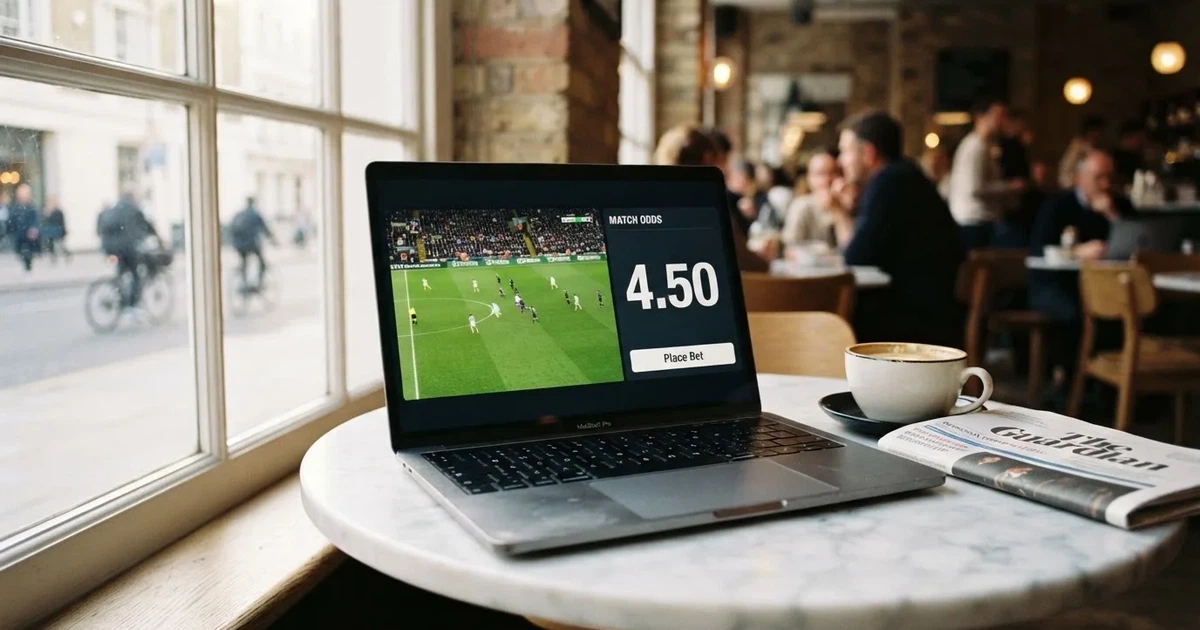
This guide walks the shelves a UK punter needs to weigh: the safer-gambling frame every licensed book sits inside, what bonuses and free bets really take to clear, how deposits and withdrawals actually behave, what cash out and live betting are worth, the sports and tournaments the new entrants cover, the newcomers themselves, a ranked shortlist against the rest, the overall landscape, and the legality that decides which shelf any of it lands on. Throughout, the lens is cost: what each shelf actually extracts from the punter’s wallet once the marketing language has been stripped back. That lens is deliberate — every “free” offer and every “best odds” headline comes with a price somewhere in the terms, and the price is what matters at the end of the month.
Currency stamped as of 27 October 2026, verified against the Gambling Commission’s public register of remote operating licences.
Safer gambling: the frame a UK punter cannot opt out of
Every bookmaker in this guide holds a Gambling Commission licence for remote general betting on real events, which means they all sit inside the same safer-gambling frame. That frame is not optional, and it has changed more in the last two years than in the decade before. Three pieces of it decide what a punter actually experiences: GAMSTOP self-exclusion, the affordability-style checks the Commission rolled out under “financial vulnerability”, and deposit limits.

GAMSTOP is the multi-operator self-exclusion scheme that every licensed remote bookmaker has to honour. Customers exclude themselves for six months, one year, five years, or five years with auto-renewal, and the exclusion sticks for another seven years beyond the chosen period unless the punter asks GAMSTOP to remove it. Once registered, a punter cannot deposit or open new accounts with any GB-licensed operator online — and that is the point of it. Anyone searching “new betting sites not on gamstop” is searching for unlicensed operators; the gambling is not the offence in Great Britain, but the consumer protections attached to a UK account simply do not extend to those brands. Funds are held by an entity with no Commission oversight, the ASA marketing rules do not apply, and there is no approved alternative dispute resolution body if a payout is withheld.
The second piece is the financial vulnerability check, which has been in force since late August 2024 and was extended by a Commission notice to cover customers whose deposits minus withdrawals exceed £150 in any rolling 30 days, from late February 2025. The check is a public-record lookup — county court judgments, bankruptcy, individual voluntary arrangements — not a payslip review. It is not an affordability gate in the press sense, but it does mean a punter can be asked questions about the source of funds at modest spend, not only at the headline “affordability” thresholds the Commission has been consulting on. The Commission’s own staged plan for fuller financial risk assessments was published on 7 July 2026 with no commencement date. Until one is set, a punter should expect the public-record check, not an income test, and should treat the press phrase “affordability checks” as forward-looking rather than current.
The third piece is the deposit limit regime. Operators must offer a gross deposit limit on a fixed time frame; the first changes have applied since 31 October 2025, a second phase was scheduled for 30 September 2026, and whether it is live at any given moment is not established. There is no state-set ceiling — a punter sets their own — but the tools are mandatory, and a bookmaker that does not surface them is not just lazy, it is non-compliant. Identity checks before the first deposit, since 7 May 2019, mean no anonymous play at a licensed site: name, address and date of birth are verified before money moves, free bets included.
That frame is the cheapest part of using a UK-licensed bookmaker and the most expensive part of leaving it. The next sections look at where else the marketing hides a price.
Bonuses and free bets: what the headline number actually costs
A new betting sites offers page in the UK looks like a price comparison. It is not. What it is, at root, is a wagering contract: the punter pays a multiple of the bonus in subsequent bets, often at a minimum price, often on specific markets, often inside a tight window. The headline number — “£30 in free bets” — is the maximum a punter could clear, not the average, and the gap between the two is where the cost sits.

Two numbers decide how much clearing an offer takes: the wagering factor and the minimum qualifying price. The wagering factor is how many times the bonus (or, for some offers, the bonus plus the deposit) has to be turned over in qualifying bets. A £10 free bet with no rollover attached is worth its face value minus the bookmaker’s margin on the market the punter takes, end of story. A £30 bonus with 5x wagering means £150 of bets at the qualifying price or above, and 5x is on the low end — offers at 10x or higher have been seen routinely, and the Commission’s promotional rules now cap wagering at 10x for any bonus, in force since 19 January 2026. That cap does not stop a punter from losing the bonus value to a long sequence of small bets at unfavourable prices; it stops the worst of the 50x rollovers.
The minimum qualifying price is the silent multiplier. A wagering factor of 5x at minimum odds of 1/2 (1.50 decimal) sounds like £150 of turnover on a £30 bonus; at minimum odds of 4/5 (1.80 decimal) the same bonus carries a heavier expected cost because the bookmaker’s margin on smaller-priced favourites is generally tighter, and the punter has to pick a narrower band of markets to satisfy the rule. Each-way bets count as two bets on the unit stake, so a punt that “feels like” £30 of clearing turns into £60 of qualifying volume the moment the each-way box is ticked. Bets settled as void, on cashed-out selections, or on markets the operator excludes do not count.
A free bet is its own special case. The stake is usually not returned with a win: a £10 free bet at 4/1 returns £40, not £50, because the £10 stake only existed as a token. That single rule is the difference between a “free bet” priced at 4/1 and a £10 cash bet at the same odds, which returns £50. Free bets also carry expiry windows — commonly seven or fourteen days — and a cap on winnings (a £10 free bet that wins at 50/1 may return only £200 or £500 depending on the terms, regardless of the displayed odds). Enhanced odds offers, price boosts, acca insurance and money-back specials each carry their own caveats, and a punter who treats them as interchangeable is reading the marketing rather than the small print.
The honest way to think about a UK welcome offer is as a discount on the first month of betting, not a windfall. The discount is real — clearing a 5x rollover at minimum price 1.50 on a market with a 5% bookmaker margin works out at an expected cost of about £7.50 on a £30 bonus — but it is not “free money”. The next shelf, on payments, is where the same small-print reading applies, and the cost is more often the punter’s own time.
Payments and payout speed: the cashier that decides whether the offer is reachable
New UK betting sites accept roughly the same set of payment methods as the established ones, with a few quirks. Debit cards (Visa, Mastercard) and the open-banking-style bank transfers are standard. E-wallets (PayPal, Skrill, Neteller) are accepted by some and excluded by others — often from the bonus itself rather than from deposits, on the grounds that punters who can move money fastest are also the easiest to arbitrage against the welcome offer. Apple Pay and Google Pay show up at the more app-led brands; Trustly and similar instant bank-payment schemes have become the default at the genuinely mobile-native books. Prepaid cards exist, but a credit card is illegal for gambling in Great Britain — since 14 April 2020 — including credit-card-funded payments routed through an e-wallet.
Withdrawal speed is where the marketing-versus-reality gap is widest. “Instant withdrawals” at a UK bookmaker almost always means instant in the cashier: the request is approved and the funds released to the payment provider immediately, and the provider’s own settlement time then decides when the money lands. PayPal and the open-banking rails are commonly minutes. Debit cards run on the card scheme’s settlement window — typically a few hours for Visa Fast Funds, up to a couple of working days otherwise. Bank transfers (Faster Payments) are usually within two hours in practice, occasionally next working day. E-wallets that the punter funded from a credit card are blocked from receiving gambling withdrawals in the first place; that is a card-network rule, not a bookmaker’s choice.
The bigger cost is the verification stall. The first withdrawal on a UK account triggers a fuller review than the first deposit — proof of address, source of funds at higher cumulative spend, and sometimes a photo ID recheck. A punter who has uploaded clean documents at sign-up is usually paid inside 24 hours; a punter who has not may wait days while the cashier asks for more. Several of the new entrants lean hard on app-based document upload precisely to compress that wait.
Identity verification is mandatory. There is no anonymous play, no deposit under a fake name, no way to skip the date-of-birth check. The books that list “no verification” or “no ID” are operating outside the Commission’s frame; the frame is the consumer’s protection, and skipping it forfeits the protection. For a fuller picture on deposits and withdrawals, the payments section that follows later unpacks each operator’s specific setup.
Live betting and cash out: what “in-play” actually gives the punter
In-play betting is the wagering menu that keeps updating after the event has started. A Premier League match kicks off at 15:00 and the match odds, the next-goalscorer market, the corners handicap and the over/under 2.5 line all reprice every few seconds until the final whistle. GB bookmakers offer in-play under the same remote general betting licence that covers their pre-match product; there is no separate “in-play licence” to check, but the controls on it — suspension of markets on key incidents, latency on price updates, the right to void bets placed after the outcome is known — are set by each operator’s own house rules.
Cash out is the feature that lets a punter close a bet before the event finishes, at a price the bookmaker quotes in real time. A £10 win bet at 5.00 on a football team that goes 2-0 up at half-time might be cashed out at a fraction of the full return — typically the implied value of the bet at the current in-play prices, less a bookmaker spread. Cash out looks like a free option, but the price is set by the bookmaker: there is no secondary market, no other bidder, and the quoted cash-out value is typically below the fair value of the bet at current prices. The bookmaker is buying the bet back at a discount, and the discount is the cost.
Bet Builder — also called same-game multi — is the feature that lets a punter combine multiple selections from the same match into one priced bet. Goalscorer + match result + total corners, for example. The combined price is set by the bookmaker, not assembled from individual market prices; the correlation between the legs is priced in, and the legs cannot be priced against each other in real time. That makes Bet Builder a separate market rather than a free combination of singles, and its margins are typically wider than the underlying singles.
The trio — in-play, cash out, Bet Builder — is now table stakes for a UK bookmaker that wants to look modern. A site that lacks cash out looks incomplete; a site that lacks in-play looks like a 2010s product. The differences between the new entrants are about depth: how many in-play events per matchday, how quickly the price updates on a Premier League goal, how aggressive the cash-out discount is on a five-leg acca. Those differences show up in the operator write-ups further down.
Sports, tournaments and the markets that actually move on the new books
The new UK betting sites are not betting on different sports from the established books; they are competing on coverage of the same sports, with some sharper pricing on the second-tier leagues and a more mobile-native experience on the bigger fixtures. Horse racing remains the British punters’ centre of gravity: every GB-licensed bookmaker on the new-entrant shortlist offers win and each-way betting on UK and Irish meetings, with Best Odds Guaranteed on at least the main bookmakers. BOG means that if the starting price returned by the racecourse is bigger than the price the punter took when placing the bet, the bigger price is paid — the punter keeps the upside on late market moves without losing the early value.
Football is the volume sport. Premier League, Champions League, the Scottish leagues, the EFL and the top European divisions are universal; the second-tier European leagues, the South American leagues, and the women’s game are where the new books vary. Some lean into niche leagues (Welsh football, League of Ireland); some try to out-price the established books on Premier League match odds and totals; some price up heavily on player props (shots, tackles, fouls) which have become the fastest-growing segment of football betting in-app.
Tennis, boxing, rugby (league and union), cricket, golf, darts and snooker are baseline. American sports — NFL, NBA, MLB, NHL — are now mainstream rather than niche, and a book without them looks thin to a younger punter. Esports are treated like any other event under a GB licence; virtual events (computer-simulated horse and dog racing, football, motor racing) are a separate licence category, and a book that runs them needs that category on its licence.
The margin question is the one most punters do not ask, and it decides how much each market costs. The overround — the sum of the implied probabilities of all outcomes — is the book’s edge on that market. A 1X2 market on a Premier League match priced at 5/4 (2.25) – 13/5 (3.60) – 12/5 (3.40) returns a margin of roughly 5–6%; the bigger the margin, the more of every pound staked the book keeps on average. New entrants do not necessarily run tighter margins than the established books — most run slightly wider on niche markets to compensate for the smaller liquidity — but the pattern varies market by market. Pricing is the only honest answer to “who has the best odds”, and pricing moves minute by minute, so any figure printed here would be out of date before the page was read.
The new bookmakers: what “new” actually means in the UK
A new UK betting site is, in the strict sense, a site that has received a Gambling Commission remote betting licence in the recent past. The Commission’s public register is the source of truth: a fresh account number under the “remote general betting standard (real events)” category, against a domain that is open to GB customers, defines the cohort. Sites that launched elsewhere years ago but only recently got their GB account count too, because they could not legally take GB customers without one. Sites that merely rebranded do not.
That strict reading leaves out a noisy chunk of the market. Some “new” sites hold a Curaçao or Maltese licence and target the UK through affiliate channels; without a Commission account they cannot lawfully advertise to GB customers, do not participate in GAMSTOP, and do not honour the £150 vulnerability check or the 10x bonus cap. Other “new” sites hold a Commission account but are operated by companies that have run UK-facing books for years under different brands; technically a new account, materially the same back office. A third group — the truly new entrants — has been built from a standing start in the last twenty-four months, often with a mobile-first product and a tighter sportsbook than the legacy books.
What the new entrants tend to share is a mobile-native product. The home screen is a fixture list, not a banner carousel; the bet slip is a swipe, not a tab; the cashier lives inside the wallet rather than behind a separate navigation node. Some lean into social features — sharing a bet, following tipsters — although the Commission’s marketing rules on tipster endorsements are tight. Some run on the same platform provider as a larger book (Digitain, FSB, White Hat) and differ mostly in branding and front-end pricing; others are built in-house and own their tech stack.
The distinction matters because the consumer protections attached to a GB licence are attached to the licence, not to the brand. Two brands under the same licensee are not independent operators: they share complaints handling, dispute resolution, AML controls and safer-gambling tooling. The Commission’s public register lists the trading names against each account, and a punter who wants to verify which legal entity sits behind a brand can search the register by domain. The verification shelf that follows the FAQ walks through that check.
The ten new UK betting sites ranked against the established set
The ten brands below hold a current Gambling Commission remote betting licence for real events and are the active comparison set for 2026. Each holds the licence category that lets it take bets on UK and Irish racing, the major football leagues and the rest of the mainstream sportsbook. None is the only licensed operator in its corner — the Commission’s register lists many more — and being on this shortlist is not a recommendation to open an account. It is a way of comparing the new entrants against each other on the same dimensions.
1. Betmaster
Betmaster is held by BM Solutions GB Ltd, registered in Malta, against Commission account 65699 in the remote general betting standard (real events) category. The site is built around a conventional sportsbook shell with the usual Premier League / Champions League / horse racing menu and a casino tab that runs alongside. What marks it out for new-entrants comparison is the back-end heritage: the operator has been running European-facing products for years, and the GB licence is a recent addition rather than a fresh start. Punters looking at Betmaster are looking at a familiar product with a fresh coat of paint, and the safer-gambling tools (deposit limits, GAMSTOP, timeouts) sit inside that product as standard.
For a punter who values a deep horse racing menu and is happy with a more conservative casino bundle, Betmaster suits. For a punter who wants the most aggressive price-boost cadence or the most modern in-play UI, the back-end heritage works against it. The honest read: a sound choice for the value-oriented punter who is happy to verify each market’s price against an established book rather than trust the brand’s headline.
2. NetBet
NetBet UK sits under Netbet Enterprises Limited against Commission account 39170. The sportsbook carries the trio of Daily Boosts, Profit Boosts and free bet offers, alongside a Bet Builder with dynamic odds and integrated sports stats for the major leagues. The Daily Boosts are short-window enhanced prices on a handful of football and racing markets; the Profit Boosts are accumulator multipliers applied to a punter’s own acca; the free bet offers tend to run on a weekly cycle tied to a featured league. The Bet Builder is one of the more usable versions in the new-entrants set, with the dynamic odds updating as the punter adds or removes selections.
NetBet suits a punter who likes to build accas and bet builders and to chase short-window boosts. The cost of that chasing is that the boosted prices are often tightened specifically to be un-beatable in normal market conditions — the edge is in the cadence rather than the margin. A punter who treats the boosts as the main reason to bet is paying for the entertainment; a punter who treats them as a topping on otherwise well-priced singles is getting a fair deal.
3. 888sport
888sport is held by 888 UK Limited against Commission account 39028, the UK arm of a long-running European-facing operator. The product covers pre-match and in-play betting, Cash Out, Bet Builder, racing streams, BetFinder form tools, a live bet feed and daily boosted odds. The racing streams are a strong suit for a book of this scale: live video on UK and Irish racing without separate subscription. The BetFinder form tools pull together pace maps, sectional times and trainer/jockey stats for serious racing punters.
For a racing-led punter who also wants mainstream football, 888sport is one of the more complete products in the comparison set. The cost of “complete” is that the pricing is not the sharpest in the market on football match odds — the established books have tighter margins on the Premier League — and the Bet Builder margins are wider than the underlying singles. Punters who trade on the strength of the racing product accept that compromise; those who price-shop every football match should look elsewhere.
4. BetMGM
BetMGM UK is published by LeoVegas Gaming p.l.c. against Commission account 39198, the local brand for the joint venture between MGM Resorts and LeoVegas. The product carries the casino-and-sports crossover DNA: integrated wallet, a casino tab that sits next to the sportsbook rather than inside a different app, and a polished mobile front-end. The sportsbook itself covers the standard menu — Premier League, horse racing, tennis, the major American sports — with a Bet Builder and Cash Out that work in the in-play view.
For a punter who wants a single wallet across sports and casino and prefers a clean mobile experience, BetMGM is a sensible pick. The shared-licence note matters here: BetMGM UK runs on LeoVegas’s platform, and the consumer protections (GAMSTOP, dispute resolution, safer-gambling tools) flow from that licence. The cost of the polish is a less aggressive promotional cadence than the pure-sportsbooks: there are fewer short-window boosts and more integrated casino-tied offers, which the Commission’s mixed-product promotion rules have curtailed since 19 January 2026.
5. Fafabet
Fafabet UK is held by Taichi Tech Limited against Commission account 57385. The product carries Best Odds Guaranteed on UK and Irish horse racing win and each-way bets from 9am on race days — if the starting price returned by the racecourse is bigger than the original price the punter took, the bigger odds are paid. That BOG commitment is the strongest part of the offer for a racing punter, because late market moves in the hours before a race are common and the upside without a ceiling is real.
The rest of the sportsbook is mainstream: Premier League, the major European leagues, tennis, American sports. The product is not the most aggressively marketed in the comparison set; it is more conservative, with fewer headline price boosts and a steadier promotional cadence. For a racing-led punter who is happy with mainstream football pricing, Fafabet suits. For a punter who wants a deeply featured in-play product or a leading-edge Bet Builder, the conservativeness costs something.
6. Lottoland
Lottoland UK is held by EU Lotto Limited against Commission account 38991, and the product is unusual in the comparison set: the app combines casino, lottery betting, sports betting and scratchcards. The lottery heritage shows up in the product surface — there are set-price jackpot bets on the major international draws — and the sportsbook sits alongside rather than being the main attraction. The sportsbook covers the mainstream menu (football, horse racing, tennis, golf) but is not the deepest in the comparison set; the value proposition is the combination.
For a punter who treats the lottery and the sportsbook as one wallet and one product, Lottoland is a sensible single-app home. For a punter whose betting is mostly sports, the combination product carries a cost: the sportsbook is a secondary tab rather than the front door, and the in-play and Bet Builder features are less developed than the pure-play sportsbooks. The Commission’s mixed-product promotion rules also apply — an offer that ties sports betting to casino or lottery is no longer a permitted promotion in Great Britain — and the product’s design has had to adapt to that.
7. Paddy Power
Paddy Power is published by Paddy Power PLC against Commission account 39439, a heritage brand that is included in the comparison set because it carries a current remote betting licence and is still launching new product features on the UK site. The sportsbook covers football, horse racing, boxing, rugby, tennis, golf, darts, snooker and F1 with the aggressive promotional cadence the brand is known for — money-back specials, enhanced odds, the headline-grabbing novelty markets that have made the brand a fixture of British racing journalism. The brand also shares the Betfair exchange licence and infrastructure under the Flutter group, which means the in-play product is built on the same depth of liquidity as one of the world’s largest exchanges.
For a punter who likes a high-volume promotional book with a racing-led core and headline offers, Paddy Power is the obvious choice in this set. The cost of the promotional cadence is tighter margins on the boosted markets: the offers are designed to look unmissable and to price back to fair once the headline is stripped out. Punters who treat the offers as entertainment and price-shop the underlying singles are getting value; punters who chase the offers as if they were arbitrage are paying for the noise.
8. DragonBet
DragonBet UK is held by DragonBet Ltd against Commission account 64908, a Welsh-rooted operator. The product features Welsh football and rugby markets alongside the mainstream menu: racing, American football, in-play betting and Bet Builder markets. The Welsh sports coverage is the differentiator; for a punter with a connection to the Welsh leagues or the Welsh rugby regions, DragonBet carries pricing and market depth that the broader books do not match.
For a Welsh-rooted punter, the product is a strong fit. For a punter whose interest is mainstream football and racing, DragonBet’s Welsh-led focus does not add anything, and the in-play and Bet Builder features are competent rather than best-in-class. The cost of supporting a niche focus is a slightly less competitive product on the mass-market sports, which the more generalist books price more aggressively.
9. VBet
VBet UK is held by SCGO Limited against Commission account 44662. The product carries a £10 free bet offer for new, verified customers who stake £10 or more on a first-ever bet that loses — a refund-style free bet on the first settled bet, paid as a free bet token rather than cash. That offer is one of the cleaner welcome products in the comparison set: the qualifying bet is a normal stake, the trigger is a settled loss, and the refund is a straightforward free bet. The rest of the sportsbook covers the mainstream menu (football, racing, tennis, basketball) with a Bet Builder and Cash Out.
For a punter looking for a low-friction welcome offer at a mainstream book, VBet fits. The cost of the refund-style offer is that the returned stake is a free bet token, and free bet tokens usually do not return the stake with a win — a winning £10 free bet at 4/1 pays £40, not £50. The free bet also carries an expiry window and may have a cap on winnings. Reading the terms before staking is the same discipline as for any free bet.
10. Fitzwilliam Sports
Fitzwilliam Sports is held by SBKI Limited against Commission account 48760, an Irish-rooted operator that holds a GB remote betting licence. The product carries instant deposits, fast withdrawals, deposit limits and timeouts, and the safer-gambling surfacing is more visible than at most of the comparison set: links to GambleAware, GamStop and Gamblers Anonymous sit prominently in the footer, and the responsible-gaming messaging is built into the cashier. For a punter who values a clean safer-gambling surface and a fast withdrawal experience, Fitzwilliam Sports is a sensible pick.
The sportsbook covers the mainstream menu (football, racing, golf, tennis) with a competent rather than best-in-class in-play and Bet Builder. For a punter whose priority is the safety tooling rather than the depth of the sportsbook, the product is the right shape. For a punter looking for the deepest market coverage on Premier League player props or the most aggressive promotional cadence, Fitzwilliam Sports is not the right tool.
The wider UK landscape in 2026
Outside the comparison set, three categories of operator compete for the new-entrant label. The first is the established UK books that have launched new product features or sub-brands in the last twelve months: the marketing shouts “new site” but the licence is decades old. The second is the offshore operators that hold a Curaçao, Maltese or Gibraltar licence and target UK customers through affiliate channels; these are not licensed at the point of consumption, do not participate in GAMSTOP, and are not subject to the 10x bonus cap. The third is the truly new entrants that have built a product from scratch and obtained a fresh Commission licence in the last twenty-four months — the cohort that the strict definition of “new” picks out.
The Commission’s public register is the test. A punter who searches the register by domain (or by the licence holder’s name) sees the licence categories, the issue date and the current status. A licence in “active” status against a domain that resolves and accepts GB registrations is the minimum. Anything less is a marketing claim that the licence does not back.
The wider market in 2026 is also shaped by the promotional rules that took effect on 19 January 2026: wagering requirements on bonuses are capped at 10x, mixed-product promotions are banned, and the bonus value a punter can extract in a single offer is structurally lower than it was under the old rules. The net effect has been fewer headline-grabbing welcome offers and steadier everyday promos. Punters who liked the old “£50 bonus with 50x wagering” model are finding fewer of those around; punters who prefer cleaner small ones are finding more.
Legality and regulation: what the Gambling Commission licence actually does
A UK-licensed bookmaker sits inside a frame set by the Gambling Act 2005 and the Licence Conditions and Codes of Practice (LCCP) the Commission issues under it. The frame covers Great Britain — England, Scotland and Wales — and Northern Ireland is outside the Act under its own older law. A bookmaker licensed for the GB market cannot lawfully advertise to NI customers under the GB frame; in practice the GB-licensed books do not differentiate, but a NI punter who reads the GB terms is reading terms issued for a different regulatory geography.
Since the Gambling (Licensing and Advertising) Act 2014, an operator whose remote facilities are used in Great Britain needs a Commission licence wherever it is based. A Curaçao, Maltese or Gibraltar licence is not a substitute. The Commission’s view is that point-of-consumption licensing protects the consumer: funds held by a GB-licensed operator are held under GB rules, dispute resolution runs through approved ADR providers, and the safer-gambling obligations (GAMSTOP, vulnerability checks, deposit limits, marketing rules) are mandatory.
A licensed operator that takes bets from a GB customer without a Commission licence commits an offence under section 33 of the Gambling Act 2005. The offence is aimed at the operator, not the punter; the Commission’s enforcement is disruption (cease-and-desist notices, search-engine referrals, registrar and host coordination, payment-provider pressure) rather than prosecution of customers. The Commission has been given or is about to receive court-order DNS blocking powers — meaning a court can order ISPs to block an unlicensed site at the domain level — but it is not yet routine and should not be described as in operation.
For a punter, the practical difference is in the protections, not the criminal law. A licensed operator must verify identity before the first bet, must offer GAMSTOP, must honour deposit limits, must operate under the bonus cap, must offer approved dispute resolution and must segregate customer funds under the LCCP. An unlicensed operator offers none of those, and if the operator withholds funds the punter has no GB consumer-rights route. The Commission’s framing is sober: licensed means checks, limits and a path back if something goes wrong; unlicensed means none of those. Neither is “the safe choice” by default, because the licensed frame is also a constraint on the punter’s anonymity and a friction on withdrawals.
Tax is the operator’s, not the punter’s. General Betting Duty is 15% on the operator’s gross profit on remote bets at the time of writing; from 1 April 2027 the remote rate rises to 25% within the duty while remote bets on UK horse racing, pool betting, in-person betting and self-service betting terminals stay at 15%, under the policy paper of 26 November 2025. Until 1 April 2027 the remote rate stays at 15%. The punter pays no tax on betting winnings in Great Britain; a professional gambler should ask HMRC or an adviser. The Commission’s statutory levy is a separate charge on operators, not a tax.
Advertising is not licensed by the Commission; it is regulated by the ASA under the CAP Code (non-broadcast) and the BCAP Code (broadcast). Section 16 of the CAP Code requires socially responsible marketing, no strong appeal to under-18s, and no one who is or seems to be under 25 may be featured gambling or playing a significant role (with an exception for marketing placed where a bet can be made directly). That rule concerns who may appear in an ad, not who may bet. The “whistle-to-whistle” rule — no betting ads on TV from five minutes before a live sporting event to five minutes after it, before the 9pm watershed, since 1 August 2019 — is industry self-regulation; horse and greyhound racing are excluded. The Premier League clubs’ voluntary withdrawal of gambling branding from the front of matchday shirts from 2026/27 is voluntary, not law; sleeves and hoardings stay.
How to verify a Gambling Commission licence in five steps
- Open the Commission’s public register search at its public-domain address.
- Type the bookmaker’s domain (without
www.) into the domain field. A licensed GB book resolves to a domain registered against a Commission account. - Confirm the licence categories include “remote general betting standard (real events)” if the book offers sports betting, or “remote betting intermediary” if it is a betting exchange.
- Note the licence holder’s legal name and the licence status (active, suspended, revoked). A licence in any status other than active is not safe to bet with.
- Cross-check the licence holder’s name against the trading names listed on the register. Two trading names under one holder are not independent operators.
The comparison table: licences and what the terms say
| Brand | Licence holder | Commission account | What the terms state on the offer subject |
|---|---|---|---|
| Betmaster | BM Solutions GB Ltd | 65699 | Sports welcome offer stated in the site’s own promotions page |
| NetBet | Netbet Enterprises Limited | 39170 | Daily Boosts, Profit Boosts and free bet offers; Bet Builder with dynamic odds |
| 888sport | 888 UK Limited | 39028 | Pre-match and in-play, Cash Out, Bet Builder, racing streams, BetFinder, boosted odds |
| BetMGM | LeoVegas Gaming PLC | 39198 | Sports and casino in one wallet; Bet Builder and Cash Out on the sportsbook |
| Fafabet | Taichi Tech Limited | 57385 | Best Odds Guaranteed on UK and Irish racing from 9am on race days |
| Lottoland | EU Lotto Limited | 38991 | Combined casino, lottery betting, sports betting and scratchcards |
| Paddy Power | PPB Counterparty Services Limited | 39439 | Football, racing, boxing, rugby, tennis, golf, darts, snooker, F1 with promotional cadence |
| DragonBet | DragonBet Ltd | 64908 | Welsh football and rugby markets, racing, American football, in-play, Bet Builder |
| VBet | SCGO Limited | 44662 | £10 free bet if first settled bet loses; mainstream sportsbook |
| Fitzwilliam Sports | SBKI Limited | 48760 | Instant deposits, fast withdrawals, deposit limits, timeouts; safer-gambling surfacing |
Frequently asked questions
Which UK betting sites give free bets for new users?
Every GB-licensed bookmaker on the comparison set runs a free bet or matched-bet welcome of some kind; the variation is in the trigger and the size. A refund-style free bet (a £10 free bet if the first settled bet loses, as at VBet) is the lowest friction, while matched offers at higher amounts carry more aggressive wagering conditions. The free bet’s value is the stake multiplied by the odds, divided by the odds, multiplied by the market’s payout share — a £10 free bet at 4/1 (5.00 decimal) on a 95% payout market is worth roughly £38 in expectation, not £50, because the stake is usually not returned with a win.
How can it be checked that a bookmaker holds a Gambling Commission licence?
Search the Commission’s public register by the bookmaker’s domain (without www.) and check that the licence status is active, that the categories include remote general betting standard (real events) if the book offers sports, and that the licence holder’s legal name matches the brand. Two trading names under one licence holder are not independent operators. A licence in any status other than active is not safe to bet with.
How is the return on a bet worked out from the stake and the odds?
For decimal odds, multiply the stake by the odds: a £10 stake at 4.00 returns £40, of which £30 is profit. For fractional odds, divide the first number by the second and add one: 4/1 is 4 ÷ 1 + 1 = 5.00 decimal. For an accumulator, multiply the decimal odds of each leg — three legs at 2.00, 3.00 and 4.00 give combined odds of 24.00, so a £10 stake returns £240. Each-way bets are two bets of equal stake (win and place), so the unit stake doubles.
What is the bookmaker’s margin and how can it show in the odds?
The margin is the share of every pound staked the book keeps on average on a given market; the payout share is what is returned to punters. For a 1X2 market at odds 2.25 / 3.60 / 3.40, the implied probabilities are about 44.4% / 27.8% / 29.4%, summing to about 101.6% — a margin of roughly 1.6%. A market with a margin of 5% returns 95% to punters over the long run. A price or margin printed here ages fast and should be read with the snapshot date the source gave.
How do fractional odds like 5/1 convert to decimal odds like 6.00?
Divide the first number by the second and add one: 5 ÷ 1 + 1 = 6.00. The conversion works for any fractional pair: 11/4 is 11 ÷ 4 + 1 = 2.75 + 1 = 3.75 decimal. “Evens” (1/1) is 2.00 decimal. Odds-on prices (shorter than evens, like 4/6) convert the same way: 4 ÷ 6 + 1 = 1.67 decimal. The stake is multiplied by the decimal odds to give the total return including the stake.
Betting sites & exchanges – Best betting exchange
Content created by the «Best betting exchange» team
