
Boxing betting at UK bookmakers — what it costs and what to check before staking
 Available in US
Boxing sits in a strange place in the British betting market. It is a small sport on the calendar compared to football or horse racing, but it produces dramatic short markets, a calendar that fills quiet weekends with pay-per-view cards, and the kind of one-punch swing that makes a 1.20 favourite look foolish. The market around it is also unusually uneven: a heavy UFC-style betting product on one side, and a handful of bookmakers whose boxing offering barely covers the main bout on the other. Knowing the difference matters more than it does in most sports.
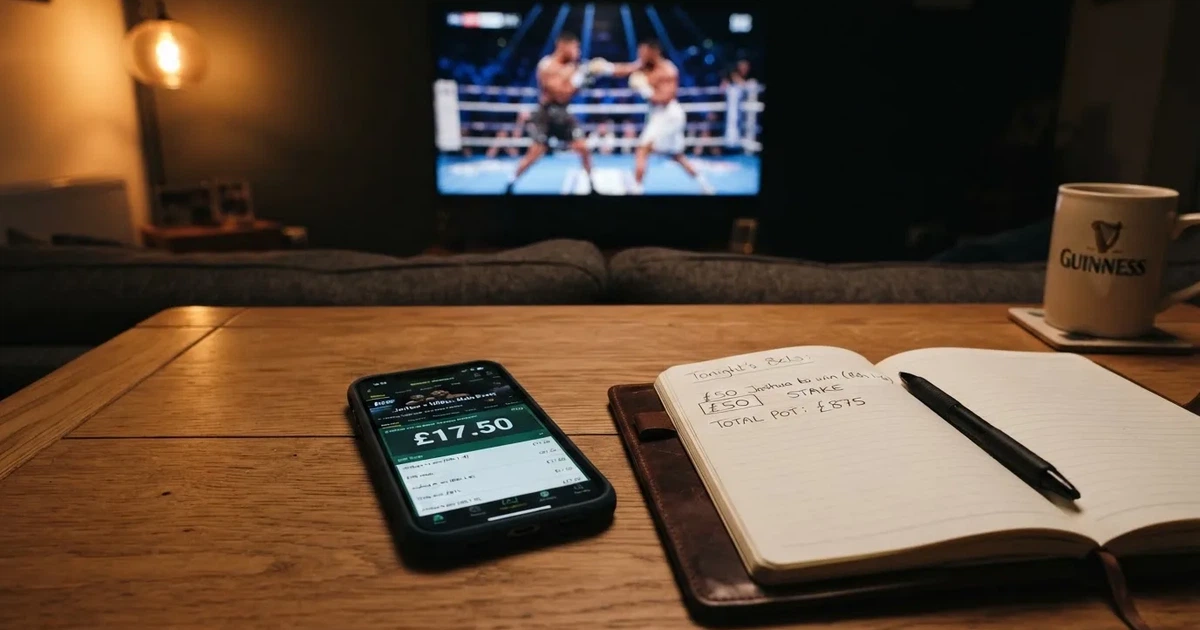
This guide walks through what boxing betting costs the punter in practice, in Great Britain, on the licensed market. It looks at the markets on offer, how the odds are built, where the margin hides, and which of the ten reviewed bookmakers actually delivers the goods on fight night. The angle is the cost: the wagering terms, the price-construction, the minimum-stake rules, and the cuts that take a chunk out of an offer before it ever reaches a payout.
Prices and market data on this page are current as of 27 October 2026, verified against the Gambling Commission’s public register and against the operators’ own published terms on the day of the snapshot. Boxing betting prices in particular age fast — a main-card fighter pulls out and the whole card moves. Re-check the price on the betting slip before staking.
Responsible gambling on a licensed British boxing site
Every bookmaker featured on this page holds a remote operating licence from the Gambling Commission. That licence is not optional: under the Gambling (Licensing and Advertising) Act 2014, any operator whose remote facilities are used in Great Britain must hold a Commission licence, wherever the company is based. A Curaçao or Malta licence alone is not a substitute. That fact is the starting point of the safety picture, but it does not do the work on its own.

The Commission checks identity before the first deposit. Name, address and date of birth are verified before a customer can stake a penny, including on a free bet or a bonus — that rule has been in force since 7 May 2019 and the verification is real, not a checkbox. Anonymous play is not available on a licensed British site. The trade for anonymity-free play is a set of consumer protections built around the customer.
GAMSTOP is the national multi-operator self-exclusion scheme and a mandatory licence condition for online operators since 31 March 2020. A self-exclusion can run for six months, one year, five years, or five years with auto-renewal. After the minimum period, the exclusion stays in place for a further seven years unless the customer asks GAMSTOP to remove it. GAMSTOP covers online sites and apps; the betting shops run a separate scheme. Every brand on this page participates.
Two newer checks sit alongside it. A financial vulnerability check, in force since 30 August 2024 under Licence Conditions and Codes of Practice (LCCP) condition 3.4.4, applies when a customer’s deposits minus withdrawals exceed £150 in a rolling 30 days — the trigger became active on 28 February 2025. It is a public-record check (bankruptcy or county court judgments, for example), not an income check and not a credit reference check. A separate set of “financial risk assessments” — the affordability checks that get written about in the press — were announced in a staged plan published on 7 July 2026 with no start date. They are not yet in force.
The state does not set a deposit or loss ceiling for betting. Each operator must offer a gross deposit limit on a fixed time frame, under Remote Technical Standards 12: the first changes have applied since 31 October 2025, a second phase was postponed to 30 September 2026 and whether it is live at the time of reading is not established. The limit the customer chooses for themselves is the ceiling that bites.
Help is available through GamCare (which runs the National Gambling Helpline), GambleAware, NHS gambling clinics, and Gamblers Anonymous. Most licensed sites link these bodies in their safer-gambling pages. Several of the featured bookmakers — Fitzwilliam Sports, Kalooki Sportsbook, the rest — surface GamCare, GambleAware and GAMSTOP on their footers. A bettor who has decided to take a break does not need the link to be prominent: GAMSTOP alone takes the choice out of the punter’s hands across every licensed site for the period selected.
The section that follows looks at where the British licensed market leaves a gap — and at crypto betting, the route around identity verification.
Crypto, bitcoin and the unlicensed route into boxing
Bitcoin and other cryptocurrencies come up around boxing betting for one reason: they let the punter bypass the bank. In Great Britain, that bypass is also the route that takes them off the licensed market. The two facts need to sit side by side.

There is no statutory ban on cryptocurrency deposits at Gambling Commission-licensed operators. The Commission’s rules do not name bitcoin, ether, litecoin or any specific coin. What the rules do say, plainly, is that a customer cannot deposit anonymously: identity is verified before the first deposit, including with a free bet, and that verification runs against a real name and a real address. Crypto on its own does not change that. A licensed site accepting bitcoin still has to verify the customer behind it, which is why licensed crypto betting in Britain is a niche product, not a category.
The opposite route is the unlicensed one. Operators licensed in Curaçao, Anjouan or similar jurisdictions accept crypto deposits without British identity verification, advertise without them, and pay out without them. The price a British punter pays for that convenience is the entire layer of GAMSTOP, the Commission’s complaints route, the approved dispute-resolution body, and any British consumer redress if funds are withheld. The 10x bonus cap and the £150 vulnerability check do not apply either. A bettor who has self-excluded via GAMSTOP and then opens an offshore crypto book has simply moved off the protected side of the market.
The legal frame is asymmetric. Providing gambling facilities in Great Britain without the licence the Act requires is an offence under section 33 of the Gambling Act 2005 — up to 51 weeks’ imprisonment, a fine up to level 5, or both, on summary conviction (six months in Scotland). No offence aimed at the customer who merely places a bet on an unlicensed site was found in statute. The right framing is honest: unlicensed betting is not “legal to use”, it is just unenforced against the punter. The cost is the lost protection.
Enforcement against unlicensed operators runs through cease-and-desist letters, search-engine referrals, and work with registrars, hosts and payment providers. The Commission has been given, or is about to receive, court-order DNS blocking powers. ISP-level blocking is not in operation in the way it became for some other regulated sectors, and writing it as if it were would be wrong.
The honest summary: a British punter who wants crypto on a boxing bet either accepts verification and stays on a licensed site, or skips verification and takes the loss of every protection the licence buys. Neither is “the safe choice” by default. The licensed market costs a price; the offshore market costs more.
Bonuses and free bets on boxing: what the headline price actually delivers
The promotion headline is the most expensive sentence on a boxing betting page. “Free bet”, “risk-free”, “boosted odds”, “best odds” — each one carries a definition the offer terms define, and each definition takes a slice out of the headline before it reaches the punter.
The Promotion rules that apply across the British licensed market, in force since 19 January 2026, cap wagering requirements on bonuses at 10x: a £10 bonus with a 50x requirement meant £500 of qualifying bets; under the cap, no more than £100. The same rules ban mixed-product promotions — an offer that requires gambling on two or more product types (betting plus casino, betting plus bingo, betting plus lottery) cannot be marketed. The cap and the ban do not turn every offer into a good one. They set a ceiling on the worst of them.
A free bet is the most common headline. Two facts decide its real value. The first is whether the stake comes back: most free bets on British licensed sites pay winnings only, not stake plus winnings, so a £10 free bet at 5.00 returns £40, not £50. The second is the cap on free-bet winnings — some welcome offers carry a maximum winnings figure attached to the free-bet portion. Both terms are in the small print, and both are the difference between the marketing number and the real one.
A “risk-free” bet is rarely risk-free in money. Most such offers refund a losing first bet as a free bet, not as cash. The refund is then subject to the same stake-not-returned rule, the same minimum-odds rule, the same expiry, and usually a cap on what the free bet can win. A first bet that loses is still a loss: the punter has paid for the chance to recover, and the recovery is smaller than the loss.
A price boost raises the advertised odds on a single selection, usually with a maximum stake. The boost looks like generosity, but the price is set by the bookmaker and the maximum stake is set by the bookmaker. A £5 max boost on an 8/1 shot is a £40 maximum payout before the boost bites — the boost adds a small margin to a small stake.
An accumulator insurance refunds one or more legs of a losing accumulator if a single selection lets the punter down, usually as a free bet and usually capped. Acca insurance looks like a parachute; in practice, it returns a fraction of a typical losing stake, and a punter who takes acca insurance every week is paying for the right to recover a fraction of a fraction of their weekly loss.
The market is full of these. Each one is described in plain language on the operator’s terms page, and each one carries its actual cost in real terms. The skill is to read them.
The mobile app: where the price of boxing is paid
Most British boxing bets are no longer placed on a desktop. They are placed on a phone, in a queue, or in the three minutes between a weigh-in announcement and the opening bell. The app is the betting slip, the in-play screen and the cash-out button at the same time. The cost of a clumsy app is the cost of a missed market.
The ten featured bookmakers all publish apps on the British App Store. Betfred publishes the Betfred Sports, Casino & Games app under Done Brothers (Cash Betting) Ltd and the app covers 21 sports plus over 2,000 casino-style games. Betmaster publishes its app under BM Solutions GB Limited and covers football, cricket, horse racing, NFL and eSports (League of Legends, Dota 2). Betfair’s app offers in-play betting, a Bet Builder, free live streaming of UK and Irish horse racing and football within the app, and a 90 Minute Payout market. bet365 describes itself as the official global betting partner of the UEFA Champions League, and the app is described as the most downloaded sports betting app in the UK; the same bet365 app offers Bet Builder+, which combines markets from one event into a single bet pre-match and in-play, alongside Super Boosts, Winnings Boosts on Bet Builders and selected singles, and daily Bet Boosts.
The features that actually matter on fight night are the same three on every app: the depth of the fight card, the speed of the in-play update, and the reliability of the cash-out button. The depth is set by the operator’s market-makers; a brand that offers only the main bout and a method-of-victory line has a thin product no matter how pretty the app looks. The in-play speed is a combination of feed latency and the bookmaker’s risk engine. The cash-out reliability is the difference between a button that pays out within a second and one that has been suspended for “trading reasons”.
An app that does the in-play well but lacks cash out on boxing is half a product on fight night. An app with cash out but with thin markets is half a product the rest of the week. The pattern is consistent enough that the right read is to look at both halves and pick the brand that handles both, rather than the brand that handles one well.
Live boxing betting and cash out: where the margin moves fastest
Live betting is the part of the boxing market that moves fastest and pays the most attention to the operator’s margin. A two-way market on a boxing bout, with each outcome at 1.90 (9/10), holds roughly the following structure: the payout share is 1 ÷ (1/1.90 + 1/1.90), which is 1 ÷ 1.0526, or 0.95. The margin is 1 minus that payout share, or about 5%. That is the bookmaker’s take per unit staked across the whole market before any individual bet resolves.
A 5% margin on a market that updates every 30 seconds is a different proposition from a 5% margin on a futures bet placed a week before the fight. The first is the price of being able to back or lay mid-fight; the second is the price of taking a position on a result. Most punters pay the first, few take the second.
Live boxing is particularly hard to price because one punch can change the market. A favourite who catches a clean right hand in round seven is suddenly in trouble; the in-play price on a stoppage win moves, the price on a decision moves, the price on a knockout loss for the favourite collapses. The bookmaker’s margin is at its widest in those first few seconds after a big shot, because the price has to be re-quoted before the market settles. A punter who takes the price in the chaos pays the widest margin of the night.
Cash out sits on top of the live market. It is the bookmaker’s offer to buy a position back at a price the bookmaker sets. A punter who backs a fighter at 3.00 before the bout, sees that fighter drop the favourite in round four, and then takes a cash-out offer at the equivalent of 1.60 is selling at a price the bookmaker has set — and the bookmaker has priced the offer against the live market, not against the original stake. The cash-out price is, in practice, the live market price minus the bookmaker’s spread on closing positions. That spread is rarely published.
The combination is the right framing for the live market: in-play prices carry the bookmaker’s margin on top of the live price, cash out carries the bookmaker’s spread on top of the in-play price. A punter who pays both pays twice. The honest read is that live betting and cash out are priced for speed and certainty, not for the best price on the card.
Predictions and strategy: what a tip costs and what it does not buy
Boxing tips are everywhere and they cost the punter almost nothing to read. The price of a tip is not the subscription fee; it is the wager the punter places on the back of it. Most published tips are sold with no liability for being wrong, and a tipster who goes 0 for 50 still keeps the subscriber list. The market for tips is built on the absence of any skin in the game.
The right question is not “is this tip right?” — nobody knows whether a tip is right before the fight, including the tipster — but “what would I have done without it?”. A punter who reads a tip and lays it against their own reading is doing what they would have done without the tip. A punter who reads a tip and ignores their own reading is paying a stranger to think for them, and the stranger has no cost when they are wrong. Boxing in particular is a sport where the line on a method-of-victory bet is set by the bookmaker with a wide margin, and the outcome is decided by one punch — the tip-to-stake ratio is not favourable.
Three things are useful before a fight, none of them a tip. The first is the boxrec record: number of bouts, number of rounds, opponents faced, results by method. The second is the recent form: last three opponents, last three results, any changes in corner or camp. The third is the weigh-in: a fighter who comes in significantly heavier than usual is signalling something, as is a fighter who struggles to make weight. None of those three turns into a tip. They turn into a price read: a punter who knows the form can decide whether the bookmaker’s price is generous or thin.
The strategy that wins in boxing betting is the same strategy that wins anywhere: only bet when the price is wider than the true probability, and stop when it is not. There is no system. The system is the discipline.
Bet types and odds on a boxing card
The British bookmaker’s boxing card opens with a small set of core markets. The main bout offers a winner (two-way, sometimes three-way with the draw), a method of victory (decision, knockout, technical knockout), a round or group of rounds for a stoppage, and a “go the distance” market on the bout reaching the final bell. Below the main bout, the undercard runs the same markets at smaller liquidity.
The winner market is the simplest. Two-way, sometimes three-way with the draw. Three-way markets price the draw at a generous-looking number — typically 8.00 to 12.00 — but the draw is a low-probability outcome, and a punter who backs the draw for value is betting on a specific result, not on a mispricing. Method-of-victory markets split the winner market further: decision, knockout, technical knockout. Each carries its own price and its own margin.
Round-group markets price the round in which the fight ends: under 4.5 rounds, between 4.5 and 7.5 rounds, over 7.5 rounds, and so on. The group size is set by the bookmaker and varies; some bookmakers price round-by-round, which is a larger market at the cost of a wider margin. A punter who takes the round-group market is paying for the bookmaker’s odds-setter to predict the round, and the bookmaker’s odds-setter is right more often than not.
The “go the distance” market is a binary on whether the bout reaches the judges’ scorecards. It tends to price short on championship bouts (heavyweights, in particular, often go the distance) and wider on fights between punchers. The same logic applies in reverse on undercard bouts: short fights between two aggressive fighters price the bout not to go the distance at a thinner number than the bookmaker’s true probability.
A boxing bout is sanctioned over a set number of rounds. Professional bouts usually run 10 to 12 rounds, with four-round fights common for newer fighters; each round lasts three minutes with a one-minute rest between rounds. The total rounds set the over/under lines. A 12-round championship bout has different under/over lines from a 10-round non-title bout, and the difference shows up in the price.
An accumulator on boxing is a bet on multiple fights combined. The odds multiply, and so does the margin: a four-fold accumulator of 1.90 shots has combined odds of about 13.0 and a margin closer to 20% than to 5%. Accumulators look like value; they are value only when each leg is individually mispriced.
A betting exchange sits beside the bookmaker. On an exchange, the punter backs a selection at one price and lays it at another, with the exchange taking a commission on net winnings. The same two-way fight that prices 1.90/1.90 at a bookmaker can often be matched at 1.95/1.95 on the exchange — a tighter market, a smaller margin. The exchange does not pay out the original stake the same way; commission and the mechanics of backing and laying change the calculation. For a punter who wants the tightest price on the card, an exchange is worth a look.
Boxing as a sport and as a market
Boxing is an unusual sport for a betting market. There is no league table, no fixture list that runs through the year, and no promotion that controls the calendar in the way the Premier League does. The four sanctioning bodies — the WBA, WBC, IBF and WBO — each recognise world championships in their own weight classes, and the belts are not unified. A fighter can hold three of the four belts and be called “undisputed” only when the fourth is added; this rarely happens.
The fight calendar runs around pay-per-view cards, with promoters staging bouts in blocks: a Heavyweight card in one month, a Lightweight card the next, an undercard in between. The market follows the same rhythm: liquidity concentrates on a Saturday night, and the rest of the week is thin. A punter who wants to back the undercard of a Mexican middleweight card on a Tuesday afternoon is going to find a thin market, and a thin market carries a wide margin.
The result of a boxing bout is decided in four ways: by knockout, by technical knockout (a stoppage by the referee, doctor or corner), by a decision on the judges’ scorecards, or by disqualification for fouls. A draw occurs when the judges give both fighters equal scores, which is rare at world level but not unknown. Each method is its own market on the bookmaker’s slip.
The sport’s one-punch nature makes it hard to predict. A clean right hand can change a fight in a fraction of a second; the markets react, but slowly. This is why in-play betting on boxing has a particular texture: the price moves quickly, but the punters who read the move and back the new favourite are paying for the read.
The top ten bookmakers for boxing, side by side
The table below sets the ten featured bookmakers next to each other on the matters that matter for a boxing punter: the Gambling Commission licence that authorises the operation, the licence holder behind the brand, and the position on the subject that the operator’s own published terms take. The position on the subject is the operator’s own statement, not a third-party rating.
| Brand | Gambling Commission remote licence | Licence holder | What the operator’s terms state on boxing |
|---|---|---|---|
| VBet | 044662-R-324273-022 (account 44662) | SCGO Limited | Sports welcome offer is a £10 free bet if a new, verified customer stakes £10 or more on a first-ever bet that loses |
| LiveScore Bet | 056859-R-332720-005 (account 56859) | LiveScore Betting and Gaming (Gibraltar) Limited | Bet Builder allows up to 10 selections and covers match result, both teams to score, corners, total goals, player scoring and card markets |
| Betfred | 039544-R-319290-010 (account 39544) | Petfre (Gibraltar) Limited | Sports, Casino & Games app covers 21 sports plus over 2,000 casino-style games |
| Bet Ahoy | 100094-R-341742-003 (account 100094) | Bet Ahoy Ltd | Welcome offer is “Bet £10 & Get £10 in Free Bets”, made up of a £5 sports bet and a £5 acca |
| Betmaster | 065699-R-339929-002 (account 65699) | BM Solutions GB Ltd | App covers football, cricket, horse racing, NFL and eSports (League of Legends, Dota 2) |
| BoyleSports | 039469-R-319383-025 (account 39469) | Boylesports Enterprise | Sports welcome offer is £20 in free bets when a £10 bet is placed |
| Betfair | 039439-R-319330-013 (account 39439) | PPB Counterparty Services Limited | In-play betting, Bet Builder, free live streaming of UK and Irish horse racing and football, and a 90 Minute Payout market |
| Octobet | 062545-R-337248-006 (account 62545) | Octopus Game Limited | Sportsbook welcome offer is 50% back as a free bet up to £50, plus a £10 casino bonus |
| Copybet | 053774-R-330743-010 (account 53774) | Copybet UK Limited | Best Odds Guaranteed all day, every day on all UK and Irish racing; pays first past the post on horse racing even if the winner is later disqualified |
| Lottoland | 038991-R-319408-020 (account 38991) | EU Lotto Limited | Combines casino, lottery betting, sports betting and scratchcards |
The licence is the entry ticket. Every brand above holds a Gambling Commission remote licence for general betting standard (real events). Several brands can run under one licensee (for example Ladbrokes and Coral, Paddy Power and Betfair) — they are not independent operators even when they look like it on the page. No brand in the British licensed market is “the only” licensed bookmaker; the Commission’s public register lists many more.
The position on the subject column reflects what the operator’s own terms page or app store listing states. A brand whose published position mentions only football markets has, on the face of its own statement, a thin boxing offering — even if it lists boxing bouts on its sportsbook. The right test for a punter is the brand’s own market depth on fight night, not the brand’s general sportsbook statement.
What the table cannot show is the price. Each bookmaker prices the same main bout at a slightly different number; the price differences are usually inside a couple of percentage points, and the spread of prices is where the value lives. The next section walks through the ten in turn.
VBet
VBet runs under Gambling Commission account 44662, held by SCGO Limited. The site’s sports welcome offer is a £10 free bet when a new, verified customer stakes £10 or more on a first-ever bet that loses — a refund in free-bet form on a losing opener, with the stake not returned. The verification gate sits in front of the offer: identity is confirmed before the first deposit, which means the £10 free bet is not anonymous and is not available to a self-excluded customer.
The boxing product is built around the major sanctioning-body cards. VBet carries the main-bout winner market, the method-of-victory market, and round-group markets on title fights; the undercard is thinner than the headliners. In-play coverage runs on the main bout of the night; on a Mexican middleweight undercard the in-play screen is more limited.
The verdict: a thin welcome offer by the licensed-market standard, but a brand that pays out via the standard Commission route. For a punter who has self-excluded elsewhere and is opening a new account, the verification is the point — VBet does it, and the GAMSTOP coverage is in place.
LiveScore Bet
LiveScore Bet runs under Gambling Commission account 56859, held by LiveScore Betting and Gaming (Gibraltar) Limited. The Bet Builder product allows up to 10 selections and covers match result, both teams to score, corners, total goals, player scoring and card markets. The same Bet Builder is the brand’s differentiator on boxing: the markets named are football-shaped, but the builder pattern transfers to fight cards.
The boxing offering on LiveScore Bet runs the standard winner / method / round-group markets on title fights, with the in-play screen following the main bout. The Bet Builder on a boxing fight typically lets a punter combine the winner and the method into a single bet — the same pattern the brand uses on football. The product is best for a punter who wants one app to handle a multi-sport accumulator.
The verdict: a clean product for title fights with a functional builder, though undercard depth is limited. LiveScore Bet is a sensible choice if you focus on the main bout and the in-play screen, while those prioritizing undercard coverage may find the options lean.
Betfred
Betfred runs under Gambling Commission account 39544, held by Petfre (Gibraltar) Limited. The Sports, Casino & Games app covers 21 sports plus over 2,000 casino-style games, and the company is one of the longer-established names on the British high street. The boxing product sits inside the wider offering; the brand is better known for its horse-racing product, where Best Odds Guaranteed is a standard feature.
Betfred focuses its boxing coverage on the major title fights and pay-per-view cards, with a market depth that covers winner, method, round-group and go-the-distance on the main bout. The in-play product runs on the headline fight, utilizing the same trading engine that supports the brand’s well-established horse-racing offering.
The verdict: a reliable product for title fights, supported by a tested in-play engine and a brand with a sustained payout record. Betfred is a suitable option for main-bout betting if you prioritize the discipline of a long-established British bookmaker, though the undercard remains less comprehensive.
Bet Ahoy
Bet Ahoy runs under Gambling Commission account 100094, held by Bet Ahoy Ltd. The welcome offer is “Bet £10 & Get £10 in Free Bets”, made up of a £5 sports bet and a £5 acca — a smaller headline than the bigger brands, but with the stake-returned-vs-not distinction sitting in the small print. The verification gate sits in front of the offer.
The boxing offering is built around the title fights. Bet Ahoy carries the main-bout markets on a card-by-card basis, with the undercard coverage shaped by the operator’s own market-makers. On a thin card, the offering is thin. The brand’s overall sports coverage is listed as supporting football and a few other sports; boxing is supported as one of the smaller sports on the platform.
The verdict: a smaller welcome offer and a thinner boxing offering than the bigger brands. For a punter who bets the title fights and wants a small bonus headline, Bet Ahoy is one option. For a punter who bets the undercard, the offering is too thin.
Betmaster
Betmaster runs under Gambling Commission account 65699, held by BM Solutions GB Ltd. The app covers football, cricket, horse racing, NFL and eSports (League of Legends, Dota 2) — a list that does not include boxing as a named sport on the App Store listing. The boxing product on Betmaster, where it exists, runs the title fights and the main-bout markets.
The welcome offer is not in the published facts in the same way as the others. The brand’s sportsbook product is the entry point; the boxing offering on the slip is determined by the operator’s market-makers on a card-by-card basis. For a punter who bets the title fights, the main-bout market is the test.
The verdict: a brand whose App Store listing does not name boxing as a supported sport is, on the face of its own statement, a thin option for the boxing punter. The Commission’s licence is in place; the brand’s own product statement is the read.
BoyleSports
BoyleSports runs under Gambling Commission account 39469, held by Boylesports Enterprise. The sports welcome offer is £20 in free bets when a £10 bet is placed — for UK customers; the Irish offer is €30 in free bets for a €10 bet. BoyleSports is one of the longer-established Irish and UK bookmakers, with a track record on payouts and a strong high-street presence in Ireland and Northern Ireland.
BoyleSports shapes its boxing coverage around the primary title fights and major pay-per-view cards, providing winner, method, round-group and go-the-distance markets for the headline bouts. The in-play service covers the main fight of the night, with the trading engine configured for the volatile markets that high-profile title fights typically generate.
The verdict: a strong product for title fights, featuring a tested in-play engine and a track record of payout discipline. BoyleSports stands out as an Irish-UK option if you are primarily interested in main-bout wagering, though it is less focused on the undercard.
Betfair
Betfair runs under Gambling Commission account 39439, held by PPB Counterparty Services Limited — the same parent company that runs Paddy Power. The two brands are not independent operators; the Commission’s register shows them under one licence family. Betfair Sportsbook offers in-play betting, a Bet Builder, free live streaming of UK and Irish horse racing and football within the app, and a 90 Minute Payout market. The same product surfaces on the boxing offering.
The boxing offering on Betfair Sportsbook is built around the title fights, the major pay-per-view cards, and the Betfair Exchange. The exchange sits beside the sportsbook: a punter who wants the tightest price on the card can lay the favourite on the exchange, and a punter who wants the sportsbook product can take the price the sportsbook sets. The combination is the brand’s differentiator on boxing.
The verdict: a robust title-fight offering complemented by a tested in-play engine and an integrated exchange, all backed by a sustained reputation. Betfair is the primary choice if you wish to use both a sportsbook and an exchange within one app. Just note the dual-product complexity, as the shared licence means uniform bonus terms and regulatory coverage.
Octobet
Octobet runs under Gambling Commission account 62545, held by Octopus Game Limited. The sportsbook welcome offer is 50% back as a free bet up to £50, plus a £10 casino bonus for new customers — a mixed-product offer in form, structured so the betting portion is the larger half. The casino bonus is a separate product with separate terms; the betting portion sits inside the 10x bonus cap that has been in force since 19 January 2026.
The boxing offering on Octobet is built around the title fights. The brand carries the main-bout markets on a card-by-card basis; the undercard coverage is shaped by the operator’s market-makers. The in-play screen runs on the main bout of the night; the trading engine is set up for the kind of fast-moving markets that title fights produce.
The verdict: a brand with a sports-and-casino welcome package and a title-fight-focused boxing offering. For a punter who wants both products on one platform, Octobet is one option. For a punter who bets only boxing, the casino half of the welcome is not the reason to open the account.
Copybet
Copybet runs under Gambling Commission account 53774, held by Copybet UK Limited. The brand offers Best Odds Guaranteed all day, every day on all UK and Irish racing, and pays first past the post on horse racing even if the winner is later disqualified — a horse-racing product that does not transfer directly to boxing. The boxing offering on Copybet is shaped by the same platform.
Copybet provides boxing coverage focused on title fights and major pay-per-view cards, managing main-bout markets on a card-by-card basis with undercard availability determined by the operator’s market-makers.
The verdict: a brand whose published differentiator is the horse-racing product, and whose boxing offering is built around the title fights. For a punter who bets both sports, the platform is worth a look. For a punter who bets only boxing, the offering is thinner than the specialist brands.
Lottoland
Lottoland runs under Gambling Commission account 38991, held by EU Lotto Limited. The UK app combines casino, lottery betting, sports betting and scratchcards — a multi-product platform whose centre of gravity is the lottery side. The brand states it is licensed by the Gambling Commission for customers in Great Britain, and the licence is in place.
The boxing offering on Lottoland is built around the title fights.
The verdict: a multi-product platform whose sportsbook is one of four products, and whose boxing offering is built around the title fights. For a punter who wants casino, lottery, scratchcards and sports betting on one platform, Lottoland is one option. For a punter who bets only boxing, the offering is thinner than the specialist brands.
What boxing betting looks like in Great Britain
The licensed British boxing market generally concentrates on major title fights and pay-per-view cards. The Gambling Commission does not mandate specific sports or markets; instead, the requirement is that an operator holds a remote licence and conducts its offerings under its own terms and the LCCP. Every featured brand is fully licensed and provides main-bout winner, method, round-group and go-the-distance markets on title fights.
The cost picture is the through-line of this page. The welcome offers are headline numbers with small-print conditions; the live market carries the bookmaker’s margin on top of the in-play price; the cash-out button carries the bookmaker’s spread on top of the in-play price; the undercard carries a wider margin than the main bout; the unlicensed offshore route trades the protection of the licence for the absence of verification. The angle — what it costs — is the right read on boxing, because the sport’s one-punch nature makes the price moves bigger and faster than most, and the cost is paid in the seconds between the punch and the price update.
The two facts that hold the picture together are these. First, the licence is the entry ticket, and every brand above holds one — the Commission’s public register is the whole test, and a punter who wants to verify can search by business name, trading name, domain or account number. Second, the licensed market does not let a punter stay anonymous: identity is verified before the first deposit, including on a free bet or a bonus, and the GAMSTOP coverage is in place across every brand on the page.
Is boxing betting legal in the UK?
Yes, on a Gambling Commission-licensed site, for customers aged 18 and over, after identity verification. The Gambling Act 2005 covers Great Britain; Northern Ireland has its own older law, and a GB licence does not regulate Northern Ireland. There is no statutory list of permitted sports or markets; the test is whether the operator holds the licence and offers the market under its own rules and the LCCP. No offence aimed at the customer who bets on an unlicensed site was found in statute — but the cost is the lost layer of GAMSTOP, the Commission’s complaints route, the approved dispute-resolution body, and any British consumer redress if funds are withheld. The honest framing is licensed = checks, limits, GAMSTOP, bonus cap, but also verification before the first bet; unlicensed = none of those protections and possible loss of funds.
The arithmetic behind a boxing price
The price of a boxing bet is built the same way as the price of any other sports bet. Take an illustrative two-way market — a “go the distance” market, for example — priced at decimal odds 1.90 on each side. (1.90 in decimal form is 9/10 in fractional: 9 ÷ 10 + 1.) The payout share across the two outcomes is 1 ÷ (1/1.90 + 1/1.90), which is 1 ÷ 1.0526, or about 95%. The margin — the bookmaker’s take per unit staked across the market before any individual bet resolves — is 1 minus the payout share, or about 5%.
That 5% is the bookmaker’s edge on the market before any individual punter’s bet is paid out. A punter who places £10 on each side of this market risks £20 and is paid out £19 on the winning side, with the £1 difference as the bookmaker’s take. The 5% is the price of the bookmaker’s service — the price-setting, the risk-engineering, the payout handling. The same 5% sits inside every market the bookmaker prices.
The band matters more than the single number. Real-world boxing markets price wider than 1.90/1.90 on most fights, particularly on the undercard. A 1.80/1.80 market carries a margin of about 11%; a 1.95/1.95 market carries a margin of about 2.5%. A punter who is shopping for the best price on the card is, in practice, shopping for the tightest margin — the bookmaker whose market is at 1.95/1.95 has a smaller take per unit than the one at 1.80/1.80.
The price on a boxing bout moves through the week: it tightens as the fight approaches and liquidity rises, and it widens again if a fighter pulls out. The margin sits inside the price; the price reflects the market’s view of who wins; the band of prices across bookmakers is the cost of choosing one over another.
Closing the cost picture on boxing betting
Boxing is a sport that looks expensive to bet on because the headline offers are loud and the markets are tight. The reality is more measured: the welcome offers cost what the small print says they cost, the live market carries the bookmaker’s margin, the undercard carries a wider margin than the main bout, and the offshore route costs more than it looks. The licensed market costs a price; the offshore market costs more. The choice between them is the choice between paying the licence’s price and paying the licence’s absence.
The ten bookmakers on this page all hold the entry ticket. The differences between them sit in the small print, the in-play speed, and the depth of the undercard. The right read is the brand whose product fits the punter’s pattern: the title-fight punter, the undercard punter, the live punter, the acca punter. Each pattern has a brand that suits it; none of the ten suits every pattern. The cost is what the punter pays for the fit.
Frequently asked questions
How does a punter place a bet on boxing online?
A punter opens an account with a Gambling Commission-licensed bookmaker, completes the identity verification (name, address, date of birth), deposits funds by debit card or bank-based payment, and selects a fight on the sportsbook. The bet slip takes the stake, the odds, and the market — winner, method, round-group, go the distance — and confirms the bet. A winning bet pays out the stake times the decimal odds, with the original stake returned alongside the winnings.
How does boxing betting work in the UK?
Boxing betting in Great Britain runs through bookmakers licensed by the Gambling Commission under the Gambling Act 2005. The Commission licenses the operator; the operator offers markets under its own rules and the LCCP. There is no statutory list of permitted sports or markets. The punter is not taxed on winnings; the operator pays General Betting Duty on gross profits. Identity is verified before the first deposit, including on a free bet or a bonus, and every licensed online operator takes part in GAMSTOP.
How does a punter place a boxing bet online without going to a bookmaker?
The standard route is via a licensed online bookmaker’s website or app — VBet, LiveScore Bet, Betfred, Bet Ahoy, Betmaster, BoyleSports, Betfair, Octobet, Copybet or Lottoland are ten such operators, all holding a Gambling Commission remote licence. The alternative route is via a betting exchange (Betfair Exchange, for example), where the punter backs or lays against other punters rather than against the bookmaker. Both routes require identity verification and a debit card or bank-based payment; credit cards are banned for gambling in Great Britain.
How can it be checked that a bookmaker holds a Gambling Commission licence?
The Commission’s public register can be searched by business name, trading name, domain or account number. The register is the whole test of whether a brand holds a licence. The ten featured operators are listed there; the account numbers are 44662 (VBet), 56859 (LiveScore Bet), 39544 (Betfred), 100094 (Bet Ahoy), 65699 (Betmaster), 39469 (BoyleSports), 39439 (Betfair), 62545 (Octobet), 53774 (Copybet) and 38991 (Lottoland). A brand not on the register is not licensed; a brand on the register is licensed for the categories listed against the entry.
How is the return on a bet worked out from the stake and the odds?
For decimal odds, the return is the stake multiplied by the odds. A £10 stake at decimal odds 3.75 returns £37.50 — the original £10 stake plus £27.50 in winnings. For fractional odds, the equivalent is the stake multiplied by the fractional odds plus one. A £10 stake at 11/4 returns £37.50 — the £10 stake plus £27.50 in winnings (10 × 11/4 = 27.50). The conversion from fractional to decimal is fractional numerator divided by denominator, plus one: 11/4 becomes 11 ÷ 4 + 1 = 3.75.
What is the bookmaker’s margin and how does it show in the odds?
The bookmaker’s margin is the cut the bookmaker takes per unit staked across a whole market before any individual bet resolves. For a two-way market priced at 1.90 (9/10) on each outcome, the payout share is 1 ÷ (1/1.90 + 1/1.90), which is 1 ÷ 1.0526, or about 95%. The margin is 1 minus the payout share, or about 5%. The same calculation works for three-way markets and for markets with more outcomes: the payout share is the inverse of the sum of 1/odds across all outcomes, and the margin is 1 minus that payout share. Tighter prices (closer to evens) carry a smaller cut; wider prices (further from evens) carry a larger cut.
Combat & motorsport – Best betting exchange
Content created by the «Best betting exchange» team
