
Curling betting in Great Britain: what a price really costs and where to place it
 Available in US
A curling match looks small on a sportsbook. The odds section may carry no more than a couple of match-winner lines, a few outright markets and, on the Olympic window, a handful of totals. That thinness is exactly why the cost of every bet matters: when a bookmaker offers only a handful of curling markets, there is little competition on any one of them, and the price quoted reflects whatever margin that operator chose to charge. Curling sits outside the major betting sports, which is part of what makes it interesting — and part of what makes it expensive.

This page is a working guide to curling betting for British readers in 2026. It covers how a bet on curling is actually constructed (what an end is, why the hammer matters, what “blanked” means to a price), what the legal frame in Great Britain allows, what each of ten licensed bookmakers brings to a curling sport, and how the bookmaker’s margin — the slice of every pound that never returns to punters — sits inside the odds themselves. The angle is cost: what this costs the reader.
Latest check: 27 October 2026 against the Gambling Commission’s public register and each operator’s published terms.
Staying in control of what you spend
Curling markets are sparse, and sparse markets invite two habits that cost money — chasing the next price and staying on a match long after it has stopped making sense. A few guardrails help.
GAMSTOP is the national multi-operator self-exclusion scheme. A punter who registers with GAMSTOP for six months, one year or five years is barred from every licensed online betting site in Great Britain for the period chosen, plus a further seven years after the minimum elapses unless they ask for it to be lifted. It is a free registration and it is the single most effective step a person who has lost the thread of their betting can take. Betting shops run a separate, in-shop self-exclusion process; GAMSTOP covers the online side.
The £150 figure that now sits inside the licence conditions is a vulnerability check threshold, not a limit. Since 28 February 2025, a licensed remote bookmaker must run a public-record check on any punter whose net deposits (deposits minus withdrawals) cross £150 in any rolling 30-day window. That is a bankruptcy and county-court judgment style check, not an income or credit reference check. The intent is to flag obvious financial distress early; it is not a budget. There is no state-set deposit or loss ceiling for betting in Great Britain, so any ceiling on what a punter spends is one they set — and the operator must offer a gross deposit limit on a fixed time frame.
The Commission has announced further affordability checks, staged and with no start date as of writing. Until a phase is in force, it is announced, not active; what is in force today is the £150 vulnerability check, the 10x cap on bonus wagering and the credit-card ban. None of these three is a substitute for a punter setting their own ceiling on a match-by-match basis.
Help is straightforward to find and free. GamCare runs the National Gambling Helpline; GambleAware funds treatment and has a self-assessment tool; NHS gambling clinics work with problem gamblers; Gamblers Anonymous runs local groups. A punter who feels the habit shifting from entertainment into need reaches one of them, and reaches it before the next event starts.
Two final points that read like boilerplate but aren’t. First, the minimum age for any gambling product in Great Britain is 18, and the licensed bookmaker will verify name, address and date of birth before the first deposit or stake — including a free bet — so anonymous play at a licensed site does not exist. Second, the player pays no tax on betting winnings in Great Britain. General Betting Duty is paid by the operator on its gross profits; from 1 April 2027 a new 25% remote rate applies within it, but until then the remote rate stays at 15%, and the punter’s net return on a winning bet is the stake multiplied by the decimal odds, minus the stake that returned as winnings.
The sport underneath the odds
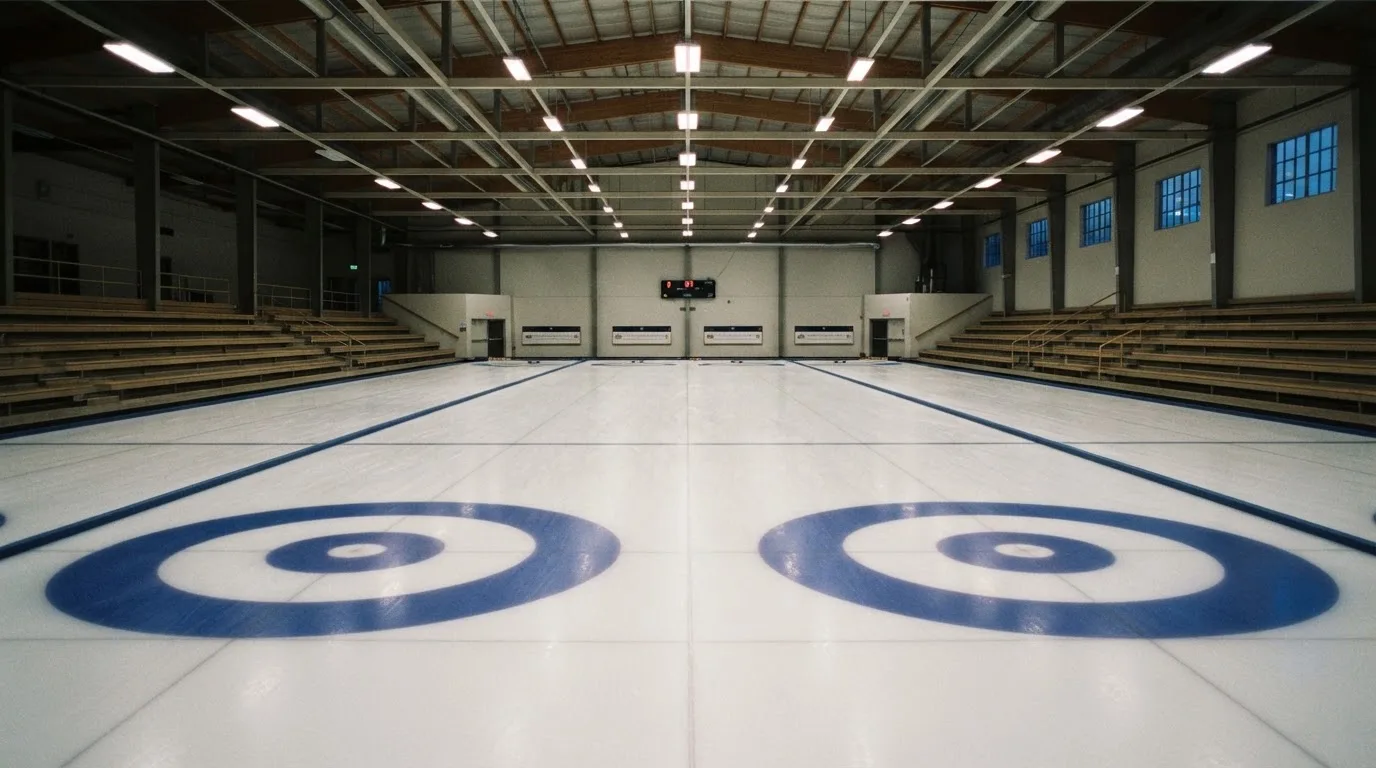
A curling team has four players (in mixed doubles it is two), and each player throws two of the team’s eight stones down a sheet of ice toward a circular target called the house. The team whose stone finishes closest to the centre of the house — the button — scores one point for every stone it has in the house that lies closer to the button than the opposing team’s nearest stone. Stones outside the house do not count. An end is complete once all sixteen stones have been thrown; games typically run eight ends at club level and ten at international level, with ties broken by extra ends until somebody scores.
Three things from that paragraph matter to a betting price.
First, scoring is incremental, not decisive. A team that lies three shots down at the fifth end is not out of the match; the hammer — the last stone of an end, prized because it lets a team score with one well-placed stone or blank the end and keep the hammer — moves to the team that did not score the previous end. If the end is blanked (no points scored), the hammer stays. So a price taken at 2-1 down is a different price from one taken at 5-2 down, and a price taken after the seventh end of a ten-end game is closer to the line than a price taken after the third.
Second, the hammer is a structural edge. The team with the hammer does not need to score multiple points; one stone inside the opponent’s nearest stone is one point. A team without the hammer typically plays to blank the end and keep the hammer for the next one, which means a tied game at the break is rarely tied by accident — it is often a strategic stalemate. Prices that price in the hammer advantage underweight a blank; prices that ignore it overstate the favourite.
Third, the format is finite. A ten-end game ends; an eight-end game ends sooner. In-play markets on curling exist but are thin, and a price quoted at the seventh end of an eight-end match is closer to the result than one quoted after the first. That matters when the margin of the market sits at 5% or 6% — a thin edge evaporates quickly once the structural edge has been priced in.
Curling stones weigh between 17.24 and 19.96 kg (38 to 44 lb) under World Curling Federation rules, and the sport has been on the Olympic programme since the 1998 Winter Games. Mixed doubles was added in 2018. World Championships are held annually in both genders and in mixed doubles; the European Curling Championships run separately. The betting calendar therefore has three peaks: the World Men’s, the World Women’s, the World Mixed Doubles, the European Championships, and the Olympic Winter Games every four years. Outside those peaks, the betting card at most bookmakers carries only the most prominent tour events.
Tournaments to follow in 2026
The curling calendar in 2026 is dominated by the run-up to the next Olympic Winter Games and by the European and World Championships cycle. The four-year Olympic cadence pulls the deepest betting card: match-winner markets across every session, group outrights, country-to-win-medal markets, and totals on ends scored. Outside the Olympics, the World Men’s and World Women’s Championships each carry outright winner, group winner, and head-to-head markets. Mixed doubles, added in 2018, has its own World Championship and a small but liquid outright market at the bigger sportsbooks.
The European Curling Championships run annually at A-Division level, with promotion and relegation between divisions. Outright winner markets on the A-Division event carry tighter margins than the World Championships because the field is smaller and the prices more concentrated.
Domestic leagues exist — the Grand Slam of Curling in North America, the Curling Champions Tour, various national circuits — but coverage at British bookmakers is patchy. A bettor looking for value in curling markets will find the most lines around the Olympic cycle and the World Championships, with sparser offerings on European Championships and the Grand Slam.
One structural quirk: because curling is a winter sport, the European and World Championships typically run between November and April. The summer months carry almost no top-level curling, which means the betting card for the sport contracts hard during the British summer. A punter who wants exposure to curling for most of the year is looking at a few months of concentrated fixtures and several months of almost nothing.
How a curling bet is priced
The odds on a curling match are set by a bookmaker in the same way as any other sport: each outcome carries a decimal price (or its fractional equivalent), and the implied probabilities of those prices, summed, exceed 100% by the bookmaker’s margin. For a two-way match-winner market — team A versus team B — the calculation is straightforward:
Implied probability from a decimal price = 1 ÷ price.
So a price of 1.90 implies 1 ÷ 1.90 = 0.5263, or 52.63%. A price of 1.90 on the other side implies the same. Summing the two: 0.5263 + 0.5263 = 1.0526, or 105.26%. The overround is 5.26%, and the bookmaker’s margin is the overround itself — the slice of every pound staked that, in expectation, never returns to punters. A fair two-way market at no margin would price both sides at exactly 2.00, summing to 100%.
This is where the cost to the reader shows itself. At 1.90 / 1.90, a punter staking £10 on either side gets £19 back if they win — £10 of stake, £9 of winnings. They lose the full £10 if they lose. Over many such bets, the 5.26% margin is what the bookmaker keeps on average. Punters do not see the margin as a line item; they see it in prices that look almost but never quite right. That gap — 5% to 8% on most curling match-winner markets, depending on the bookmaker and how close to the event the price was set — is what they pay for the service.
A worked illustration helps. Take a hypothetical two-way market at decimal odds of 1.90 / 1.90 (fractional 9/10 each side, an even match):
| Outcome | Decimal odds | Implied probability |
|---|---|---|
| Team A | 1.90 | 52.63% |
| Team B | 1.90 | 52.63% |
| Sum | — | 105.26% |
The payout share — the proportion of stakes returned to punters in the long run — is the reciprocal of the sum: 1 ÷ 1.0526 = 95.00%. The bookmaker’s margin is 1 − 0.95 = 5.00%, expressed as a percentage of stakes. That is the cost of the bet. Whether it lands at 5% or 6% or 8% depends on the bookmaker and the market; it is rare to see curling match-winner prices tighter than about 4.5%, and rare to see them wider than about 9% on a liquid fixture.
Outright markets — winner of the World Championships, winner of the Olympic gold — carry wider margins because the field is large and the longshots thin. A 12-runner outright at the typical overround of around 120% carries a margin of about 17% — which is the cost of being able to back a longshot at all. The narrowest curling margins sit on two-way match-winner markets close to the start of a game; the widest sit on outrights priced weeks ahead.
One point worth making plainly: the margin is what the bookmaker earns on average across many bets. It is not what any individual punter pays. A punter who places one bet at 1.90 and wins pays nothing in margin — they get £19 back on a £10 stake and the margin is irrelevant. The margin matters when the punter bets repeatedly over time, because the expected return on a stream of bets is the payout share multiplied by the stake, and the gap between that and the stake is what they have paid.
What is in a curling betting card
A typical bookmaker’s curling page during a peak period — say the World Men’s Championship — carries a handful of market types. Each has its own margin and its own quirks, and the cost to the punter varies by market.
Match winner (1X2 / head-to-head). The simplest market: pick team A or team B. Two-way, the tightest margin, usually 5% to 8% on a liquid fixture. This is the cheapest curling market to bet on.
Outright winner. Pick the winner of a tournament. The field is large (often 10 to 12 teams at a World Championship), and the overround runs 115% to 130% depending on the bookmaker and how early the prices were set. Margin is high — typically 13% to 23% — and the cost of a longshot is correspondingly steep. A £10 bet on a 50/1 shot returns £510 (£500 winnings plus £10 stake) if it lands; the price reflects a true probability closer to 100/1.
Group winner. Pick the winner of a group within a round-robin stage. Smaller field, tighter margin than outright winner but wider than match winner. Useful when a punter has a strong read on a group of three or four teams.
Handicap. A bookmaker applies a stone or end handicap to balance the two teams. A −1.5 end handicap on the favourite means they must win by two or more ends for the bet to pay. Margin sits between match winner and outright, typically 7% to 10%.
Total ends. Over/under on the number of ends played (in regulation, before extras). A market that prices in the format — ten ends for international play, eight for some domestic — and the expected closeness of the match. Margins can be wide because the market is thin.
Correct score (ends won). Pick the exact ends score, e.g. 7-5. A high-margin market because the field of possible scorelines is large. Useful for value when a punter has a strong read on hammer advantage and blank-end probability.
Team to score first. A market that depends heavily on who starts with the hammer. Margin tends to mirror match-winner margin.
The cheapest market on a curling card is match winner; the most expensive is outright winner. A punter who wants to minimise the cost of their betting will spend most of their stake in match-winner markets and use outrights sparingly, accepting the wider margin in exchange for the longshot payoff.
The cost of an offer
Most bookmakers offer a welcome promotion to new customers, and curling offers no special exemption — the same bonus cap that applies to football applies here. A worked example using the current bonus rules shows what a typical offer costs.
Suppose a bookmaker offers “bet £10, get £30 in free bets” to new customers, with the free bets split as £10 singles, £10 accumulators and £10 in-play tokens. The bonus carries a 10x wagering requirement (the current maximum under the January 2026 cap). The implied cost is the wagering requirement multiplied by the margin of the market the bonus is cleared on. If the punter clears the bonus on curling match-winner markets at a 6% margin, the expected cost is:
Required turnover = bonus × wagering factor = £30 × 10 = £300.
Bets placed = £300 ÷ stake per bet. If each qualifying bet is £10, that’s 30 bets.
Expected cost = turnover × margin = £300 × 6% = £18.
So a £30 free-bet bundle, cleared at a 6% margin, costs about £18 in expected value to clear. The punter ends up with the free-bet winnings minus the £18 of expected cost. That is a 60% haircut on the face value of the bundle.
This calculation is the gloss the bonus-turnover formula yields: how much the bonus costs to clear. It is not what any individual punter pays — some will run above the expected cost, some below — but it is the honest estimate.
The free-bet bundle’s stake is typically not returned with a winning free bet. So a £10 free bet at 1.90 returns £9 in winnings (stake not returned), and the punter’s profit on a winning free bet is £9, not £19. That distinction matters when sizing free bets; stake-not-returned free bets have a lower expected value than stake-returned ones, and the difference is built into the maths above.
Two other features of the current bonus landscape are worth flagging.
Mixed-product promotions are out. Since 19 January 2026, an offer that requires gambling on two or more product types (such as “bet on football to get free spins”) is banned at licensed operators. So a curling punter will not see an offer that gates a sports free-bet on casino play.
The 10x cap is the maximum. A bookmaker may set wagering below 10x; some do. A £10 bonus at 5x needs £50 of turnover; at 10x it needs £100. Lower wagering is friendlier to the punter; higher wagering is capped at 10x under the current rules.
How odds are written in Britain
British bookmakers quote odds in fractional form by default — 5/1, 11/4, evens — alongside the decimal equivalent. The conversion is:
Decimal odds = (a ÷ b) + 1, for fractional odds a/b.
So 5/1 in fractional becomes (5 ÷ 1) + 1 = 6.00 in decimal. 11/4 becomes (11 ÷ 4) + 1 = 2.75 + 1 = 3.75. Evens (1/1) becomes 2.00. Odds-on prices — shorter than evens — quote as fractions less than 1, e.g. 4/6 or 1/2; 4/6 becomes (4 ÷ 6) + 1 = 0.667 + 1 = 1.67.
Fractional odds read as profit per unit stake. 5/1 means £5 profit for every £1 staked; the stake is returned on top, so a winning £10 bet at 5/1 returns £60 (£50 profit plus £10 stake). Decimal odds read as total return per unit stake. 6.00 means £6 returned for every £1 staked, of which £5 is profit and £1 is stake. The maths is interchangeable; the convention varies. British punters used to fractional odds find 5/1 more readable; those used to decimal find 6.00 more so. Both quote the same bet.
Reading a British bookmaker’s terms
Each licensed operator publishes terms that govern how curling bets are settled. Five clauses are universal across the ten operators reviewed below.
Settlement. Bets are settled on the result at the conclusion of the match, including any extra ends needed to break a tie. A match abandoned before completion is usually voided and stakes returned, though some operators settle on the result at the point of abandonment.
Extra ends. Extra ends are part of the match for settlement purposes. A bet on a tied game at the end of regulation is settled as a loss; a bet on a team to win after extra ends is settled on the final result.
Hammer and blanked ends. Standard market settlement: the hammer is the last stone of an end, and a blanked end scores zero to both sides while keeping the hammer with the team that threw last. Some operators settle specific markets (e.g. team to score first) on the first scoring end, ignoring blanks; others treat a blank as zero points and let the next scoring end decide.
Minimum and maximum stakes. Each operator sets a minimum stake (usually £0.05 or £0.10 online, sometimes £1 for telephone bets) and a maximum stake that varies by market. Maximum stakes on curling are usually lower than on football or horse racing because liquidity is thinner; a bookmaker may restrict a customer to a maximum of £100 or £500 on a curling match winner regardless of the price.
Best Odds Guaranteed (BOG). Two of the ten operators reviewed below — Fafabet and Bet600 — offer Best Odds Guaranteed on horse racing, paying the bigger of the price taken and the starting price (SP). Curling does not have a starting price, so BOG does not extend to curling markets.
One term that does not apply to curling is Rule 4, a bookmaker rule that deducts from winning bets when a horse withdraws from a race. Rule 4 is a horse-racing settlement rule; it has no curling analogue.
Legal frame: betting on curling in Great Britain
Curling is a permitted betting subject at every licensed British bookmaker. There is no statutory list of permitted sports or markets in Great Britain; the Gambling Act 2005 (as amended by the Gambling (Licensing and Advertising) Act 2014) requires a Gambling Commission licence for any operator whose remote facilities are used in Great Britain, and once a bookmaker holds a remote general betting standard (real events) licence, it can offer markets on any sport at its own discretion under its own rules and the Licence Conditions and Codes of Practice (LCCP).
That last sentence carries a quiet implication: there is no Commission-approved list of curling markets, no Commission-set margin, and no Commission-set maximum stake. The bookmaker decides what to price and at what margin, subject to the LCCP’s social responsibility conditions. A punter looking at two bookmakers’ curling cards will find two different markets, two different margins, and two different maximum stakes. The market is competitive but not standardised.
Verification. A licensed bookmaker must verify a customer’s identity, address and date of birth before the first deposit or stake, including a free bet or bonus. This has been in force since 7 May 2019. There is no anonymous play at a licensed site; the punter who wants to bet on curling without verifying who they are is looking at an unlicensed site.
Bonuses. Wagering requirements on bonuses are capped at 10x since 19 January 2026. Mixed-product promotions (an offer that requires betting and casino play, for example) are banned. Free bets with no wagering condition may or may not fall under the cap; the published position is not established.
Advertising. Marketing is regulated by the CAP Code (non-broadcast) and BCAP Code (broadcast), enforced by the ASA. The 25-year rule — no one who is or seems to be under 25 may be featured gambling in a broadcast advertisement — sits in CAP Code section 16 and applies to the advertisement, not to who may bet. Whistle-to-whistle is an industry code, not law: betting advertisements are not shown on TV from five minutes before to five minutes after a live sporting event, before the 9pm watershed.
Payments. Credit cards are banned for gambling in Great Britain since 14 April 2020, including credit-card-funded e-wallet payments. Debit cards, bank transfers and most e-wallets are not covered by the ban. Cryptocurrency deposits sit in a grey zone: no rule for or against has been established at licensed operators, and a punter should expect to check the bookmaker’s terms.
Self-exclusion. GAMSTOP is mandatory for licensed online operators since 31 March 2020. Self-exclusion periods are six months, one year, five years, or five years with auto-renewal; after the minimum period the exclusion stays for a further seven years unless the customer asks GAMSTOP to remove it.
Vulnerability check. Since 28 February 2025, a licensed remote bookmaker must run a public-record check on any punter whose net deposits cross £150 in a rolling 30-day window. The check is a bankruptcy and county-court judgment style check, not an income or credit reference check.
Affordability checks. The Commission has announced staged affordability checks with no start date. Until a phase is in force, write it as announced, not as active.
Offshore. A Curaçao, Maltese or Gibraltar licence is not a substitute for a GB licence at the point of consumption. Providing gambling facilities in Great Britain without the licence the Act requires is an offence under section 33 of the Gambling Act 2005, with enforcement aimed at the operator, not the customer. A punter using an unlicensed site loses GAMSTOP coverage, the Commission’s approved dispute-resolution route, British consumer redress if funds are withheld, the 10x bonus cap, and the £150 vulnerability check. No ISP blocking is in operation; the Commission has been given or is about to receive court-order DNS blocking powers. A punter’s honest framing is: licensed = checks, limits, GAMSTOP, bonus cap; unlicensed = none of those protections and possible loss of funds. Neither is “the safe choice” by default.
Comparison: the ten licensed bookmakers
The table below sets the ten bookmakers reviewed on this page side by side. The columns cover the licence that authorises them to take remote bets in Great Britain, and what each operator’s own published terms say about the way curling bets are settled.
| Brand | Gambling Commission remote licence | What the operator’s terms state |
|---|---|---|
| Fitzdares | 000400-R-103839-030 (Commission account 400; Fitzdares Limited) | Cash out, accumulators, Lucky 15s, specials and antepost markets on horse racing, football, tennis, rugby, cricket, golf and American football; curling is not named on the App Store description, so curling availability is operator-specific |
| BetMGM | 039198-R-319450-029 (Commission account 39198; LeoVegas Gaming PLC) | Welcome offer: four £10 free bets (two football accas of 4+ selections and two sports multiples of 2+) for new UK customers depositing £10 and placing a sports bet within 7 days; minimum odds apply; free bets valid 7 days; opt-in required |
| Kwiff | 044448-R-323408-017 (Commission account 44448; Eaton Gate Gaming Limited) | Trademark operated by Spryme Ltd; App Store age rating 17+ |
| Lottoland | 038991-R-319408-020 (Commission account 38991; EU Lotto Limited) | App combines casino, lottery betting, sports betting and scratchcards; sports betting is one product among several |
| Midnite | 101839-R-342850-001 (Commission account 101839; Midnite Limited) | Welcome offer: £25 in free bets and 50 free spins for new customers betting £5+ on pre-match odds of EVS (2.0) or greater within 14 days; free bets valid 7 days; in-play, acca builder, popular accas and price boosts with maximum-stake limits |
| Octobet | 062545-R-337248-006 (Commission account 62545; Octopus Game Limited) | Welcome offer: 50% back as a free bet up to £50 plus a £10 casino bonus for new customers |
| Unibet | 045322-R-324275-019 (Commission account 45322; Platinum Gaming Limited, Gibraltar) | Operated since 1999; welcome offer: £40 in free bets when you bet £20 (min odds 2.0 / 1/1); free bets expire within 7 days; deposit and bet via debit card or instant bank transfer |
| Fafabet | 057385-R-333191-006 (Commission account 57385; Taichi Tech Limited) | Best Odds Guaranteed on UK and Irish horse racing win and each-way bets from 9am on race days; if SP is bigger than the original price, the bigger odds are paid |
| Bet600 | 044731-R-323941-016 (Commission account 44731; Tyche Tech Limited) | Best Odds Guaranteed on horse racing; if SP is bigger than the early or show price taken, the bet is paid at SP |
| BetGoodwin | 002927-R-327985-008 (Commission account 2927; Goodwin Racing Limited) | Welcome offer: bet £10 and get £15 in free bets (£5 sports bet, £5 acca, £5 Sub-Cover bet) |
Every brand in this table holds a Gambling Commission remote general betting standard (real events) licence. That is the single fact that makes a brand eligible for this list; it is not a recommendation. Several of these operators run under a parent company that holds other licences — BetMGM runs under LeoVegas Gaming PLC, Unibet under Platinum Gaming Limited, Lottoland under EU Lotto Limited — and that structure is normal in the British market.
The ten bookmakers, reviewed
Fitzdares — premium positioning, sportsbook depth uncertain on niche
Fitzdares holds Gambling Commission remote licence 000400-R-103839-030 under Fitzdares Limited (Commission account 400), authorised for standard remote general betting on real events. This operator’s published App Store description names cash out, accumulators, Lucky 15s, specials and antepost markets on horse racing, football, tennis, rugby, cricket, golf and American football, with in-play live odds. Curling is not named, so a punter interested in curling markets at Fitzdares checks the operator’s own betting slip for current availability; the licence permits it, the marketing does not promote it.
The verdict here is about what the operator actually offers. A premium-positioned bookmaker that does not name curling in its public-facing descriptions is one where curling markets, if they exist, sit in a thin section of the card. Fitzdares is a premium operator for the major sports; a punter interested in curling must check the betting slip for availability on the day.
BetMGM — strong welcome offer, parent-company orientation
BetMGM holds Gambling Commission remote licence 039198-R-319450-029 under LeoVegas Gaming PLC (Commission account 39198), authorised for remote general betting standard (real events). The sports welcome offer is four £10 free bets — two football accas of 4+ selections and two sports multiples of 2+ — for new UK customers who deposit £10 or more and place a sports bet within 7 days; the free bets are valid for 7 days with minimum odds and opt-in required. The structure suggests a bookmaker oriented to football accumulators and major sports; the welcome offer’s football-specific framing is the giveaway.
The verdict turns on what the punter wants. A football acca punter will find the welcome offer well-targeted; a curling punter will find the welcome offer largely irrelevant to their betting, because the structure rewards multiples on football and multiples on other sports, not singles on curling. BetMGM is a sensible choice for a punter whose betting portfolio includes football accas and whose curling interest is occasional.
Kwiff — supercharge model, niche marketing
Kwiff holds Gambling Commission remote licence 044448-R-323408-017 under Eaton Gate Gaming Limited (Commission account 44448), authorised for remote general betting standard (real events). The brand describes itself as a trademark operated by Spryme Ltd and carries an App Store age rating of 17+. Kwiff’s marketing centres on a “supercharge” mechanic that randomly upgrades odds on selected bets; curling is not named in the public-facing description.
The verdict is short. Kwiff suits the punter who likes the supercharge mechanic on the major sports and is happy to check whether curling is priced on the day. For a punter whose primary interest is curling, the operator is not the natural first stop.
Lottoland — lottery-led, sports as a complement
Lottoland holds Gambling Commission remote licence 038991-R-319408-020 under EU Lotto Limited (Commission account 38991), and holds a GB licence for remote general betting. The brand’s app combines casino, lottery betting, sports betting and scratchcards, and it states it is licensed by the Gambling Commission for customers in Great Britain. Lottery betting is the lead product; sports betting is a complement.
A punter looking for a sports-led curling bookmaker will not find Lottoland the natural choice. The verdict: for a punter prioritising a combined lottery and casual sports account, Lottoland fits; those looking for a deep curling card will look elsewhere.
Midnite — esports-first, sportsbook growing
Midnite holds Gambling Commission remote licence 101839-R-342850-001 under Midnite Limited (Commission account 101839), and holds a GB licence for remote general betting. The brand’s site cites in-play events, an acca builder, popular accas and price boosts with maximum-stake limits. The sports welcome offer is £25 in free bets and 50 free spins for new customers who bet £5 or more on pre-match odds of EVS (2.0) or greater within 14 days of sign-up; the free bets are valid for 7 days.
Midnite’s history is esports-led, and the sportsbook sits alongside it. The verdict is about positioning. A punter who wants esports alongside sports betting will find Midnite a natural fit; a punter whose interest is purely curling will find a sportsbook that is growing into the major sports but does not yet have the depth of a football-first bookmaker.
Octobet — modest welcome offer, broad sportsbook
Octobet holds Gambling Commission remote licence 062545-R-337248-006 under Octopus Game Limited (Commission account 62545), and holds a GB licence for remote general betting. The sportsbook welcome offer is 50% back as a free bet up to £50, plus a £10 casino bonus for new customers. The structure is simple — half back as a free bet, capped at £50 — and the headline matches what many British bookmakers offer.
The verdict is about size. A punter depositing £100 to clear the maximum free bet at 50% back will get a £50 free bet, which is moderate by current British welcome-offer standards. The curling card at Octobet is worth checking on the day of a major fixture.
Unibet — established operator, strong welcome offer
Unibet holds Gambling Commission remote licence 045322-R-324275-019 under Platinum Gaming Limited, Gibraltar (Commission account 45322), and holds a remote GB betting licence. The brand states it has operated since 1999. The sports welcome offer is “Get £40 in Free Bets when you bet £20”: a deposit and sports bet of £20 or more at minimum odds of 2.0 (1/1), with free bets expiring within 7 days, for new GB customers using a debit card or instant bank transfer.
Unibet is the longest-established operator in this comparison, and the welcome offer is competitive — £40 free bets for a £20 qualifying bet is a 2:1 ratio, which is at the better end of the British market. The verdict: Unibet is an established choice for major sports, and a punter should confirm curling markets as fixtures arrive.
Fafabet — Best Odds Guaranteed on horse racing, modest curling card
Fafabet holds Gambling Commission remote licence 057385-R-333191-006 under Taichi Tech Limited (Commission account 57385), and is licensed for remote general betting standard (real events). The brand pays Best Odds Guaranteed on UK and Irish horse racing win and each-way bets from 9am on race days: if the starting price is bigger than the original price, the bigger odds are paid. The BOG offer is a horse-racing-specific feature; it does not extend to curling.
The verdict is about the operator’s centre of gravity. Fafabet’s BOG offer positions it strongly for horse racing; curling sits outside that centre of gravity, so the curling card is likely modest. A punter whose primary interest is curling will find other operators better targeted; a punter whose interest includes horse racing will find Fafabet well-positioned on that side.
Bet600 — BOG on racing, modest curling card
Bet600 holds Gambling Commission remote licence 044731-R-323941-016 under Tyche Tech Limited (Commission account 44731), and is licensed for remote general betting standard (real events). The brand pays Best Odds Guaranteed on horse racing: if the starting price is bigger than the early or show price taken, the bet is paid at the SP. Like Fafabet, the BOG feature is horse-racing-specific.
The verdict mirrors Fafabet’s. Bet600 is positioned strongly on horse racing; curling sits outside the centre of gravity. A punter looking for a deep curling card looks elsewhere; a punter whose interest includes horse racing will find Bet600 well-positioned on that side.
BetGoodwin — modest welcome offer, racing-led
BetGoodwin holds Gambling Commission remote licence 002927-R-327985-008 under Goodwin Racing Limited (Commission account 2927), and is licensed for remote general betting standard (real events). The sports welcome offer is “Bet £10 & Get £15 in Free Bets”, made up of a £5 sports bet, a £5 acca and a £5 Sub-Cover bet. The structure is racing-led, with the Sub-Cover bet a horse-racing-specific product.
The verdict: BetGoodwin is a racing-led bookmaker with a modest sports welcome offer. Curling sits outside its centre of gravity, so the curling card is likely modest. A punter whose primary interest is curling will find other operators in this comparison better targeted.
Reading the comparison
A few patterns emerge from the ten reviews above.
The first is that curling sits outside the marketing centre of every operator listed. None of the ten names curling in its public-facing App Store description; the sports named are horse racing, football, tennis, rugby, cricket, golf, American football, esports, and lottery. That is not a comment on whether curling markets exist at each operator — every operator holds a remote general betting standard (real events) licence, which is the licence category that covers curling — but on whether curling is a marketed product. It is not, at any of the ten.
The second is that welcome offers vary widely in structure: BetMGM and Unibet lead on free-bet bundle size; Midnite and BetGoodwin offer smaller bundles with more conditions; Octobet and Lottoland lead on simplicity. A punter optimising on bonus value alone will pick Unibet (2:1 ratio on £20 qualifying for £40 free bets); a punter optimising on simplicity will pick Octobet (50% back as a free bet, capped at £50).
The third is that horse-racing-specific features (BOG at Fafabet and Bet600; the Sub-Cover bet at BetGoodwin) cluster at operators with a racing-led heritage. Curling punter who also bets on horse racing gets a natural two-sport fit at these operators; curling-only punter does not.
The fourth is that the parent-company structure means a single licence can sit behind several brands. BetMGM runs under LeoVegas Gaming PLC; Unibet under Platinum Gaming Limited; Lottoland under EU Lotto Limited. A punter comparing brands at the operator level should remember that the licence sits with the parent, not the brand.
Worked numbers: return, margin and free-bet value
Three calculations matter to a curling punter.
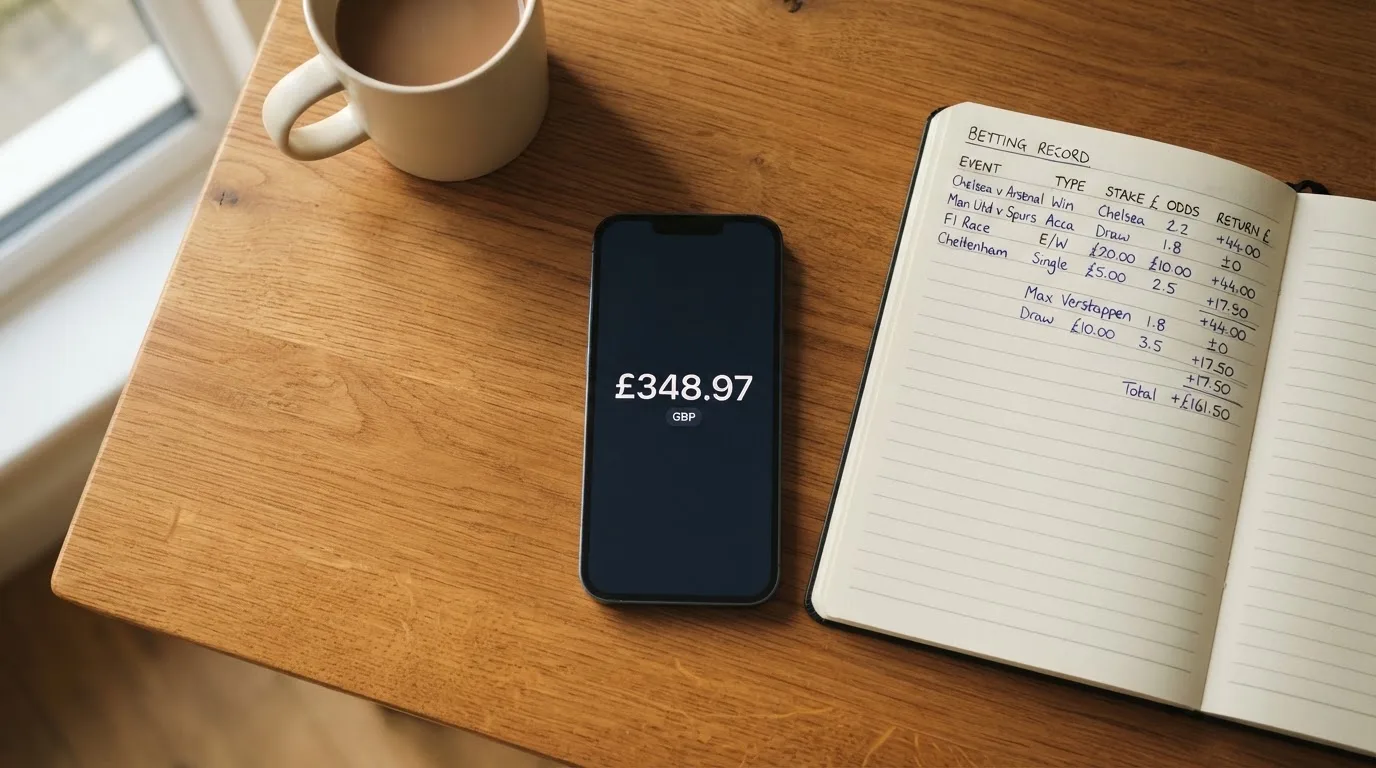
Return on a winning bet. Stake × decimal odds = total return. Stake × (decimal odds − 1) = net profit. A £10 bet at 2.50 returns £25 (£15 profit plus £10 stake). The formula holds for singles and combines; for a combination bet the odds of the legs multiply into one price. So a £5 accumulator with three legs at 1.80, 2.20 and 1.95 has combined odds of 1.80 × 2.20 × 1.95 = 7.722, and a £5 stake returns £38.61 (£33.61 profit plus £5 stake) if all three legs win.
Margin of a two-way market. Payout share = 1 ÷ (1/odds₁ + 1/odds₂ + …). For a two-way market at 1.90 / 1.90, the payout share is 1 ÷ (1/1.90 + 1/1.90) = 1 ÷ (0.5263 + 0.5263) = 1 ÷ 1.0526 = 0.95 or 95%. The margin is 1 − 0.95 = 0.05 or 5%. For a tighter market at 1.95 / 1.95, the payout share is 1 ÷ (0.5128 + 0.5128) = 1 ÷ 1.0256 = 0.975 or 97.5%, and the margin is 2.5%. The tighter the prices, the lower the margin, the cheaper the bet.
Free-bet value (stake not returned). For a free bet whose stake is not paid back, value = free bet amount × (decimal odds − 1) ÷ decimal odds × payout share of the market the free bet is placed on. A £10 free bet at 1.90 on a market with a 95% payout share has a value of £10 × (0.90 ÷ 1.90) × 0.95 = £10 × 0.4737 × 0.95 = £4.50. That is the expected value of the free bet, on average across many bets at that price and market. It is not what the free bet wins on any single occasion.
The three formulas are the gloss the calculation rules yield: return is what a winning bet pays back, margin is what the bookmaker keeps of every unit bet on the market, and free-bet value is what the free bet is worth on average. Each is a statistical estimate over many bets, not a guaranteed outcome for any single punter.
A short glossary of British betting terms
The list below covers the British-specific terms that appear on a curling punter’s betting slip and on a bookmaker’s terms page.
BOG (Best Odds Guaranteed). A horse-racing feature: if the starting price is bigger than the price taken, the bet is paid at the bigger price. Does not apply to curling.
SP (starting price). The odds prevailing at the start of a horse race. Does not apply to curling; curling has no equivalent concept.
Each-way. A two-bet structure: one bet on the selection to win, one bet on the selection to place (typically top three or four, depending on the field). The stake doubles. Used in horse racing; rarely offered on curling.
Accumulator (acca). A combination bet with four or more legs. All legs must win for the bet to pay.
Bet builder / same-game multi. A combination bet on a single event, combining multiple markets (e.g. match winner + total ends). Available at most major British bookmakers.
Cash out. Settling a bet before the event has concluded, at a price offered by the bookmaker. The cash-out price is the bookmaker’s estimate of the current value of the bet, less the bookmaker’s margin.
Antepost. A bet placed before the final field is known. Used in horse racing; occasionally offered on curling outright markets before the final team list is confirmed.
Stake not returned. A free bet whose original stake is not paid back with a winning bet. The standard structure at most British bookmakers.
Wagering requirement. The multiple of a bonus that must be staked before the bonus winnings can be withdrawn. Capped at 10x in Great Britain since 19 January 2026.
Vulnerability check. A public-record financial check (bankruptcy, county-court judgments) triggered when net deposits cross £150 in a rolling 30-day window. In force since 28 February 2025.
GAMSTOP. The national multi-operator online self-exclusion scheme. Mandatory at licensed online operators since 31 March 2020.
LCCP. Licence Conditions and Codes of Practice, the Gambling Commission’s rulebook for licensed operators.
A punter’s pre-match checklist
Three checks before placing a curling bet.
Check the margin. The cheapest curling match-winner markets carry a margin around 5%; the most expensive outright markets carry a margin around 17% to 23%. A punter looking to minimise cost spends most of their stake at the cheap end.
Check the format. A ten-end international match and an eight-end club match have different scoring potentials. Prices set without regard to the format under- or over-state the favourite.
Check the hammer. A team with the hammer in the last end has a structural edge; a price that ignores it overstates the underdog. The hammer moves to the team that did not score the previous end, and stays after a blank.
A punter who runs this checklist before each bet is not guaranteed a winning record — no checklist can do that — but they are guaranteed to be paying a known cost for a known bet.
Closing note on what this costs
Curling sits outside the major betting sports, and the cost of a curling bet is correspondingly higher than the cost of a football or horse-racing bet at the same bookmaker. Match-winner margins of 5% to 8% are typical; outright margins of 13% to 23% are common. Welcome offers cap at 10x wagering under current rules, which means a £30 free-bet bundle cleared on curling at a 6% margin costs about £18 in expected value to clear — a 60% haircut on the face value of the bundle.
A punter who bets on curling with their eyes open is one who knows the margin of the market they are entering, the format of the match they are betting on, and the structure of the offer they are claiming. The arithmetic above gives them the numbers; the rest is judgement.
Frequently asked questions
How is the return on a bet worked out from the stake and the odds?
Take the decimal odds and multiply by the stake to get total return. To get net profit, multiply the stake by (decimal odds minus 1). A £10 bet at 2.50 returns £25, of which £15 is profit and £10 is the original stake. For an accumulator, multiply the decimal odds of each leg together first, then multiply by the stake.
Can you bet on curling in Great Britain?
Yes. Every bookmaker reviewed on this page holds a Gambling Commission remote general betting standard (real events) licence, which authorises curling markets under the bookmaker’s own terms. There is no statutory list of permitted sports in Great Britain; the licence category and the LCCP govern what may be priced.
How is it checked that a bookmaker holds a Gambling Commission licence?
The Commission’s public register is searchable by business name, trading name, domain or account number. A punter enters the brand’s name into the register and checks the licence category — for remote betting, the relevant category is remote general betting standard (real events). The licence number and licence holder are listed on the register; the ten brands reviewed on this page sit on it.
What is the bookmaker’s margin and how is it seen in the odds?
The margin is the slice of every pound staked that, in expectation, never returns to punters. For a two-way market at decimal odds 1.90 / 1.90, the implied probabilities are 52.63% and 52.63%, summing to 105.26%. The overround is 5.26% and the margin is 5%. Tighter prices (closer to 2.00 / 2.00) mean a lower margin; wider prices mean a higher margin.
How do fractional odds such as 5/1 convert to decimal odds such as 6.00?
Decimal odds = (numerator ÷ denominator) + 1. So 5/1 becomes (5 ÷ 1) + 1 = 6.00; 11/4 becomes (11 ÷ 4) + 1 = 3.75; evens (1/1) becomes 2.00. Fractional odds read as profit per unit stake; decimal odds read as total return per unit stake. The two formats quote the same bet.
Tennis, darts & cue sports – Best betting exchange
Content created by the «Best betting exchange» team
